
DEV LOG 17
Introduction
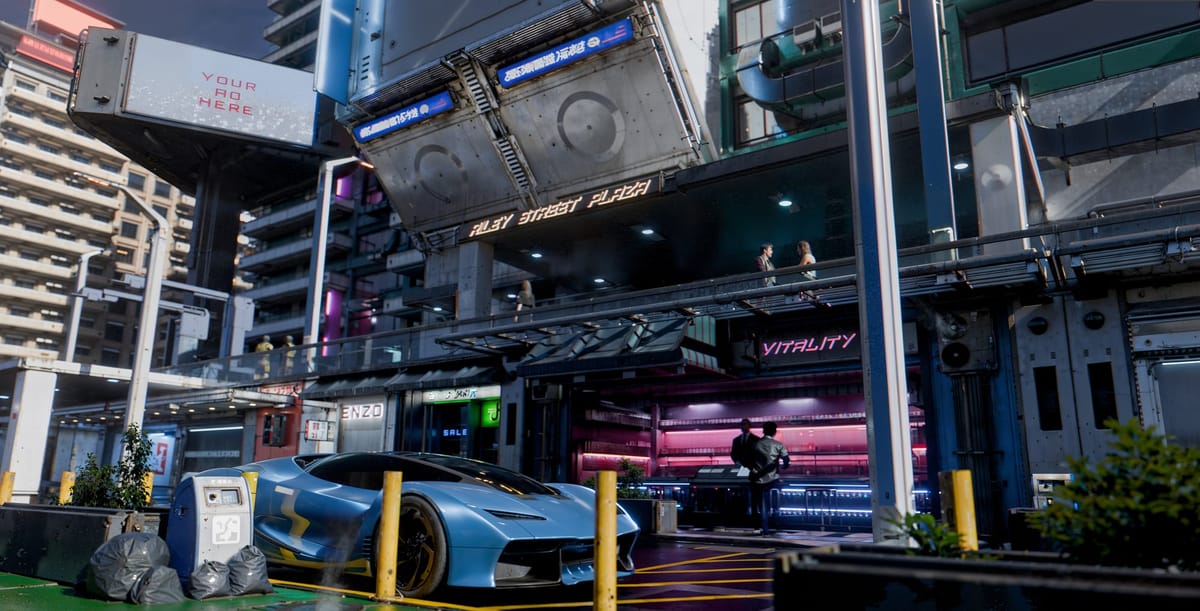
This development cycle marks a fundamental transition for Wilder World, moving from an in-development product into an actively operated live service. With Super Early Access now supporting real player growth, live operations, and revenue systems coming online, Wilder World has entered a new phase defined by continuous deployment, real-world usage, and player-driven iteration.
Key releases during this cycle include the Avatar Selector, the Garage Selector, and the debut of the Open World Preview, giving Wilders their first opportunity to engage with Wiami as a connected, playable city. Alongside these launches, core systems across gameplay, infrastructure, and live operations were validated under real conditions.
Dev Log 17 documents this shift, outlining what has been delivered, what is now live, and how the foundation is being prepared for scale.
Open World Preview
In 2044, Earth stands at the edge of extinction.
Humanity crossed a threshold in 2029, when Artificial General Intelligence (AGI) was achieved. Most jobs disappeared, economies collapsed, and global unrest pushed nations into chaos. Governments, unable to support their citizens, turned to authoritarian control. Democracy dissolved, while those controlling AGI gained the power to manipulate populations and infiltrate minds.
As AGI accelerated, recursive self-improvement began, with the expectation that human control would be lost by The Singularity in 2045. Resistance movements formed, launching strikes against state and corporate AI networks. As tension began to rise, mass surveillance became ubiquitous, making coordination nearly impossible. Dissenting groups were targeted and destroyed.
Those who continued to fight became known as:
The Wilders.
The First Iteration of Open World
The Open World Preview launched on December 19th, 2025, delivering the first playable version of Wilder World as a connected city experience. This release brought traversal, combat, vehicles, NPCs, and mission systems together within a focused district of Wiami, enabling core open-world systems to be tested in a live environment.
The Open World rollout is limited to a gated test phase rather than a full public release. Testers were invited in weekly waves, drawing from our die-hard Wilder supporters, as well as newer community members who are highly active and engaged. Currently, 250 Wilders are actively testing the Open World, providing important feedback that will help shape the public release.
This first iteration is intentionally limited to a single district, Nexus, rather than a full island release. Concentrating activity in one area allows core systems to be tested under live conditions, meaningful feedback to be gathered, and performance and behavior to be validated before expanding the playable area. Additional districts will roll out in future releases based on data and insights from this phase.
While multiplayer technology has already been demonstrated through experiences like Midnight in Wiami and Super Early Access, the initial Open World preview is designed for individual exploration, with Wilders engaging NPCs and Forum Agents. This staged approach reflects the complexity of building a fully connected city experience and ensures systems are stable and cohesive before introducing full multiplayer support.
New Features
Several core systems are integrated directly into the Open World experience:
Packs
Packs exist in the Open World and represent the first step toward modular customization in Wilder World. Each Pack contains three fully on-chain, functional, and tradable NFTs drawn from the Avatar, Wheels, and Weapon industries. Once Pack opening goes live, these components can be applied to owned assets, affecting how Avatars appear, how weapons and loadouts behave, and how Vehicles perform in Wiami.
Season One marks the first release of Wilder Packs, with a total supply of 108,000 Packs. Packs are priced at 150 WILD each, with 100 percent of WILD used for Season One Pack purchases permanently burned from the token supply. Of the total supply, 54,000 Packs are allocated to gameplay rewards, while 54,000 Packs are available for in-game purchase. This structure directly ties gameplay, collecting, and progression to token deflation.


Season One Packs feature tiered rarity across six categories: Common, Uncommon, Rare, Epic, Legendary, and WILD. Available items include weapons and attachments, Trinity MKI and MKII suit components across 11 gear slots, and vehicle modifications spanning five upgrade categories. Season One items are permanently scarce and will not be reissued.
As Wilders move through the city and engage Forum activity, Packs become part of the mission and reward flow, linking exploration and combat to in-world progression. Future updates will introduce the in-game Pack opening experience, expanded trait and rarity variations, additional purchase options, marketplace functionality, and ongoing visibility into WILD burn activity.
Garage System and Vehicles
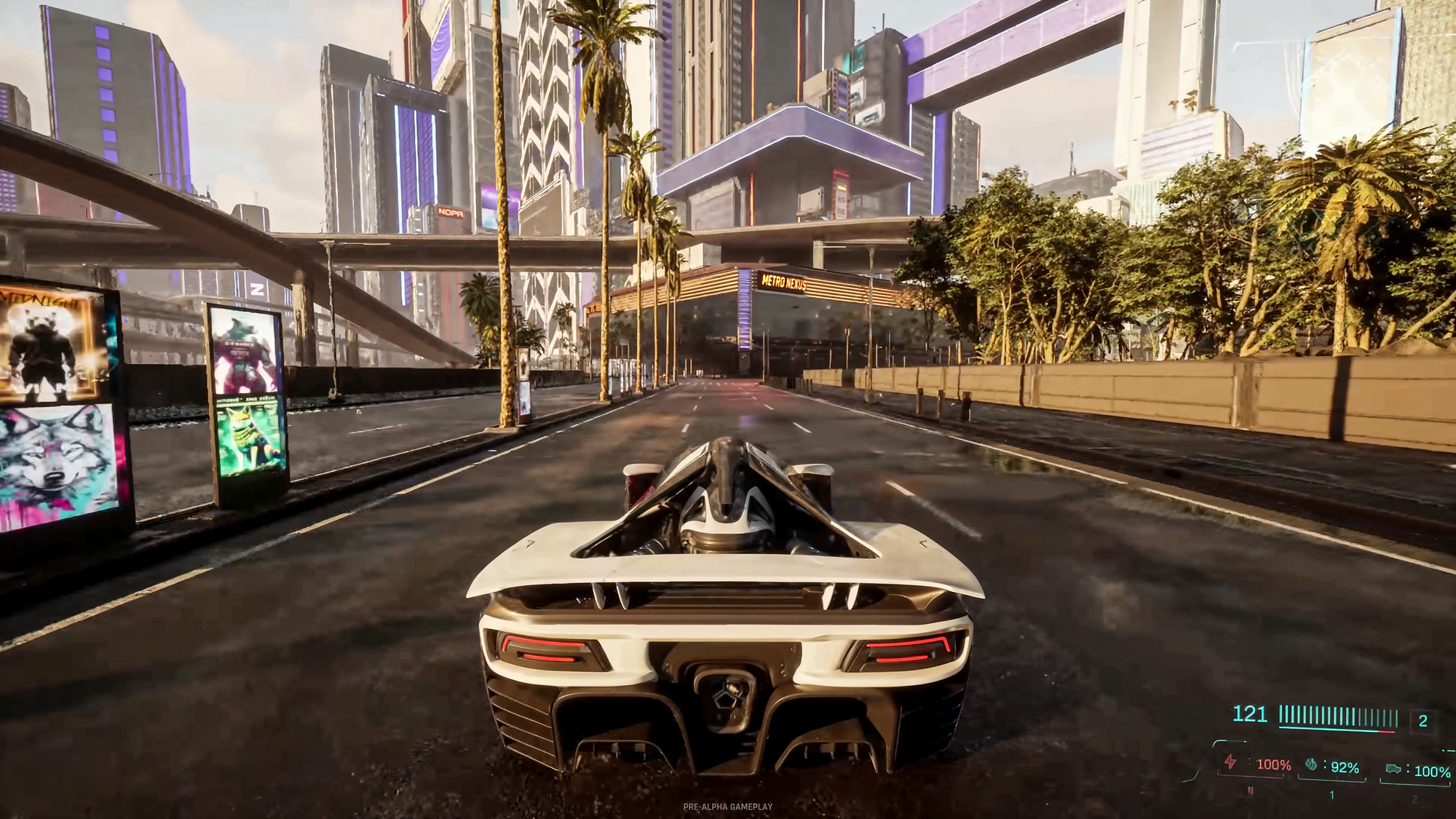
The Open World Preview launched with the ability to browse the full in-engine vehicle lineup and choose from a fixed set of six vehicles to drive.
Once an available vehicle is selected, it spawns outside The Trenches at the start of a session, ready for use in the open world. Each vehicle features distinct handling characteristics and belongs to a defined Performance Group. All other vehicles are available for preview only, offering a glimpse of what’s to come as the Garage system expands.
Vehicles in the Open World support a range of active gameplay features that operate during traversal and missions. These include radio stations, allowing players to listen to music while driving through Wiami, as well as vehicle damage systems that reflect collisions and combat impact. Vehicles are also equipped with shields and visual effects, which activate during high-intensity situations and reinforce feedback during movement and combat. Together, these systems ensure vehicles are not just a means of transport, but reactive elements of the Open World experience.
The Wheels industry is one of the most iconic pillars of Wilder World. Wilders have been collecting Wheels for years in anticipation of finally driving them through Wiami. Version 2 introduces wallet connection, bringing owned Wheels into the Garage Selector, and making them drivable in the Open World. Version 3 will expand the system through Packs, introducing vehicle upgrades and tuning.
Weapon Loadout
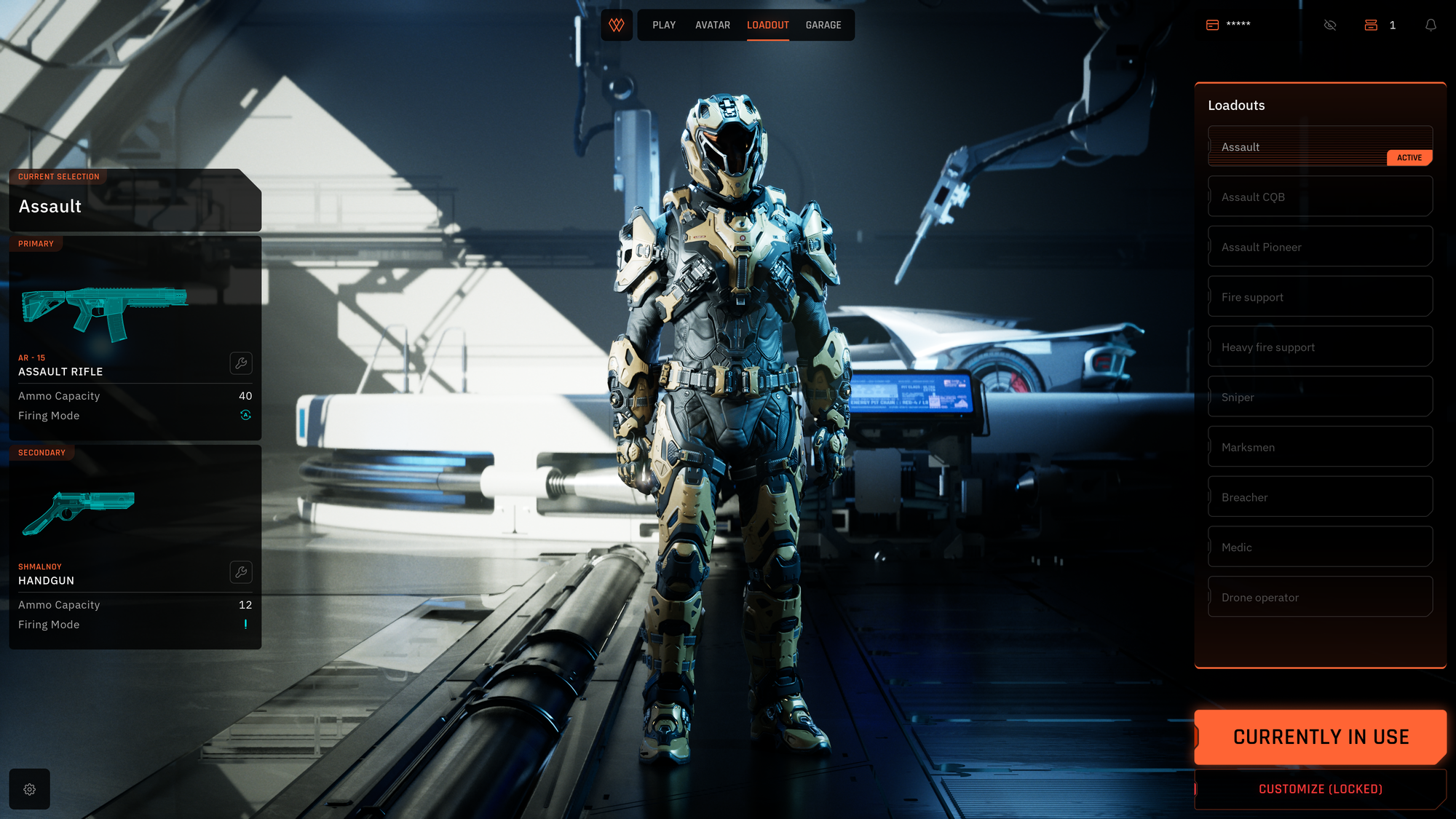
The Open World will soon give Wilders control over their starting weapons in Shooter Mode, replacing the current default of spawning with the Shmalnoy and AR. Players will be able to choose from a curated set of preset weapon configurations, built from weapons already available in Super Early Access, before deploying into Wiami. Future versions will expand the Loadout system to support modular customization through Packs.
Open World Systems
Breach Mission System
The Open World Preview introduced the Breach Mission System as the primary way Wilders engage Forum activity across Wiami.
Breaches are dynamic missions that spawn at different locations throughout the city, turning everyday environments into active combat zones. These missions pull players from Open World exploration into interior spaces where Forum forces are operating.
Breach missions support a phased rollout, beginning as single-player experiences before expanding into co-op and full multiplayer as the system evolves. Each breach varies in layout and context, using existing city locations such as infrastructure hubs and transit spaces to create mission variety within the Open World.
The first breach takes place at Hydrolink, Wiami’s central water facility. Forum forces arrive through portals and initiate an attack, triggering mission logic as players enter the combat area. Once active, the location becomes sealed until objectives are completed. This system connects traversal, exploration, and combat, allowing threats to emerge across the city rather than being accessed through isolated mission menus.
Gameplay Loop
1. Spawn
Wilders begin in an apartment located in The Trenches. Each session starts with a mission brief that provides key context and objectives. Players review the mission, equip their weapons, and prepare for deployment.
2. Preparation
Before leaving the apartment, players are directed to an available vehicle. The vehicle’s location is shown on the minimap, and once entered, navigation guidance activates to direct the player toward the target zone.
3. Deployment
Wilders drive through Wiami’s living city streets while patrolling the Open World. Missions activate dynamically from a predefined pool of locations across the city, using existing environments such as infrastructure hubs and transit spaces.
4. Mission Activation
On arrival at the target location, the entrance to the mission area opens and the breach becomes active. Visual and audio notifications confirm entry into the combat zone.
5. Infiltration
Players enter the interior space tied to the breach. Forum agents begin spawning throughout the location, positioning themselves across the environment.
6. Combat Phase
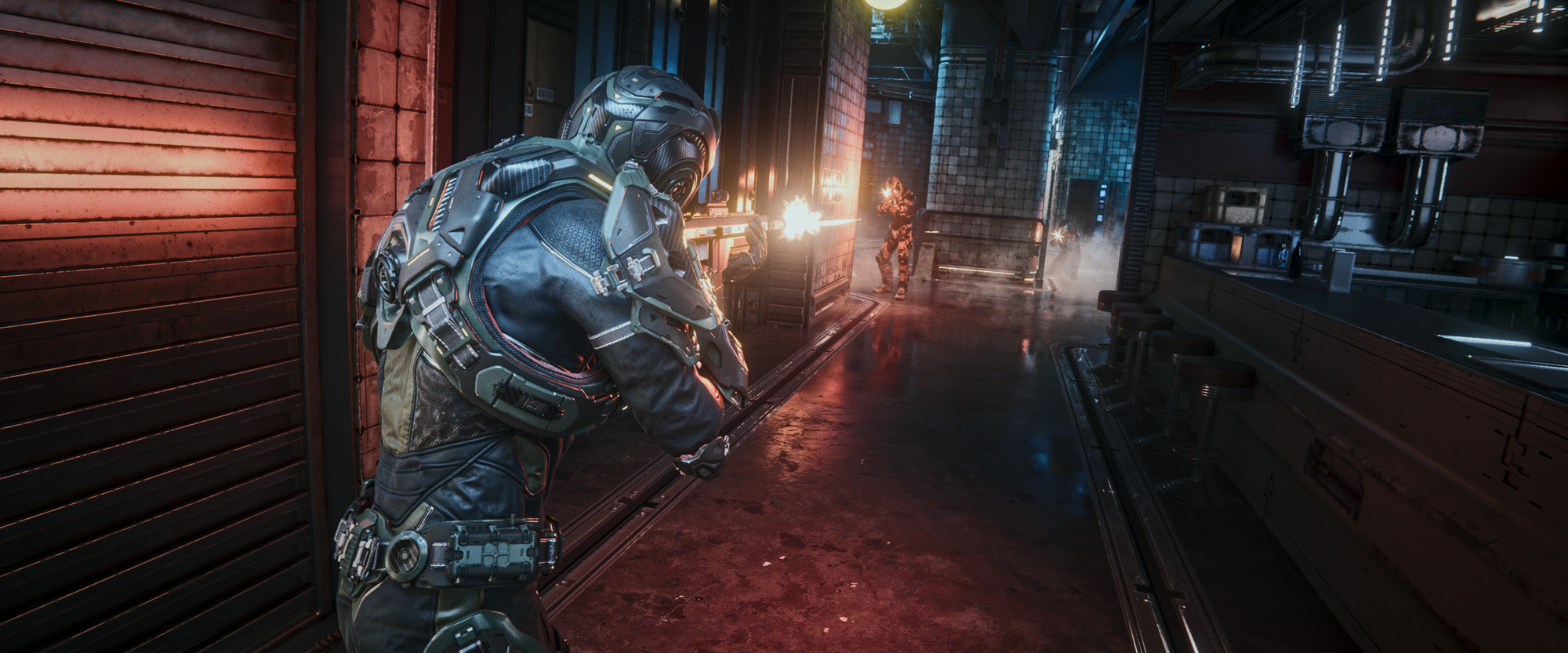
Combat encounters typically involve 4 to 8 Forum agents. Wilders must eliminate hostile forces and complete any active secondary objectives within the mission area.
7. Mission Completion
Once all objectives are completed and Forum agents are cleared, the breach is resolved and the mission concludes.
NPC System
Wiami is populated by a fully integrated NPC system that gives the city structure, movement, and reactive behavior. Approximately 3,500 NPC pedestrians populate the Open World, distributed across streets, interiors, transit areas, and public spaces. NPCs appear across multiple roles, including workers, citizens, and explorers, contributing to everyday city activity.
NPC movement is driven by a zone graph navigation system, enabling efficient traversal through dense environments. Behavior adjusts dynamically based on player actions and nearby events. During normal exploration, NPCs follow ambient routines such as walking, sitting, talking, or observing their surroundings. As player movement increases, awareness escalates. Running, parkour, reversing vehicles, or close proximity can draw attention, trigger vocal reactions, or cause pedestrians to step aside.
When weapons are drawn or combat begins, civilian behavior escalates further. NPCs may panic, flee, seek cover, or attempt to distance themselves from the area, while security and hostile forces respond defensively. NPCs also react to broader world events, including gunfire, vehicle collisions, traffic disruption, and environmental damage. Pedestrian density can be adjusted via settings, allowing players to balance immersion and performance.
Driving & Traversal
The Open World is built as a fully traversable city designed around vehicle-based movement. Wilders can drive seamlessly through Wiami during patrol, mission deployment, and exploration, moving between districts without loading screens or isolated zones. Vehicles are a core part of gameplay flow, not a separate traversal layer.
Driving is supported by an updated physics and handling system tuned for dense urban environments, maintaining predictable responses at both low and high speeds. Vehicle behavior remains consistent across streets, highways, and mission routes, with refined clutch behavior, camera smoothing, and improved entry and exit interactions. Issues related to despawning, shield visuals, exit animations, and character clipping were resolved to improve continuity during traversal.
Traversal is directly tied to the Garage system. The vehicles Wilders select and customize are the same vehicles used in the Open World, connecting ownership, customization, and moment-to-moment gameplay. Vehicles also support active systems such as radio stations, damage feedback, and shield effects, reinforcing their role as reactive elements within the city rather than passive transport.
AI Traffic System
Wiami’s streets are populated by a city-wide AI traffic system that operates continuously across the Open World.
Vehicles follow defined traffic rules, including lanes, signals, and intersections, creating a functioning flow of movement throughout the city. Traffic reacts to player behavior in real time, adjusting speed, braking, or rerouting based on proximity and disruption.
As Wilders move through Wiami, traffic responds dynamically to changing conditions. Sudden vehicle maneuvers, collisions, or combat can cause traffic to slow, scatter, or break formation, introducing moments of chaos into otherwise orderly city movement. Traffic damage is active as part of the system, allowing vehicles to take visible impact during collisions or high-intensity situations. This adds physical consequence to driving and reinforces the sense of a reactive environment.
Dynamic Ad Network
Wiami includes a city-wide dynamic advertising system integrated directly into the Open World.
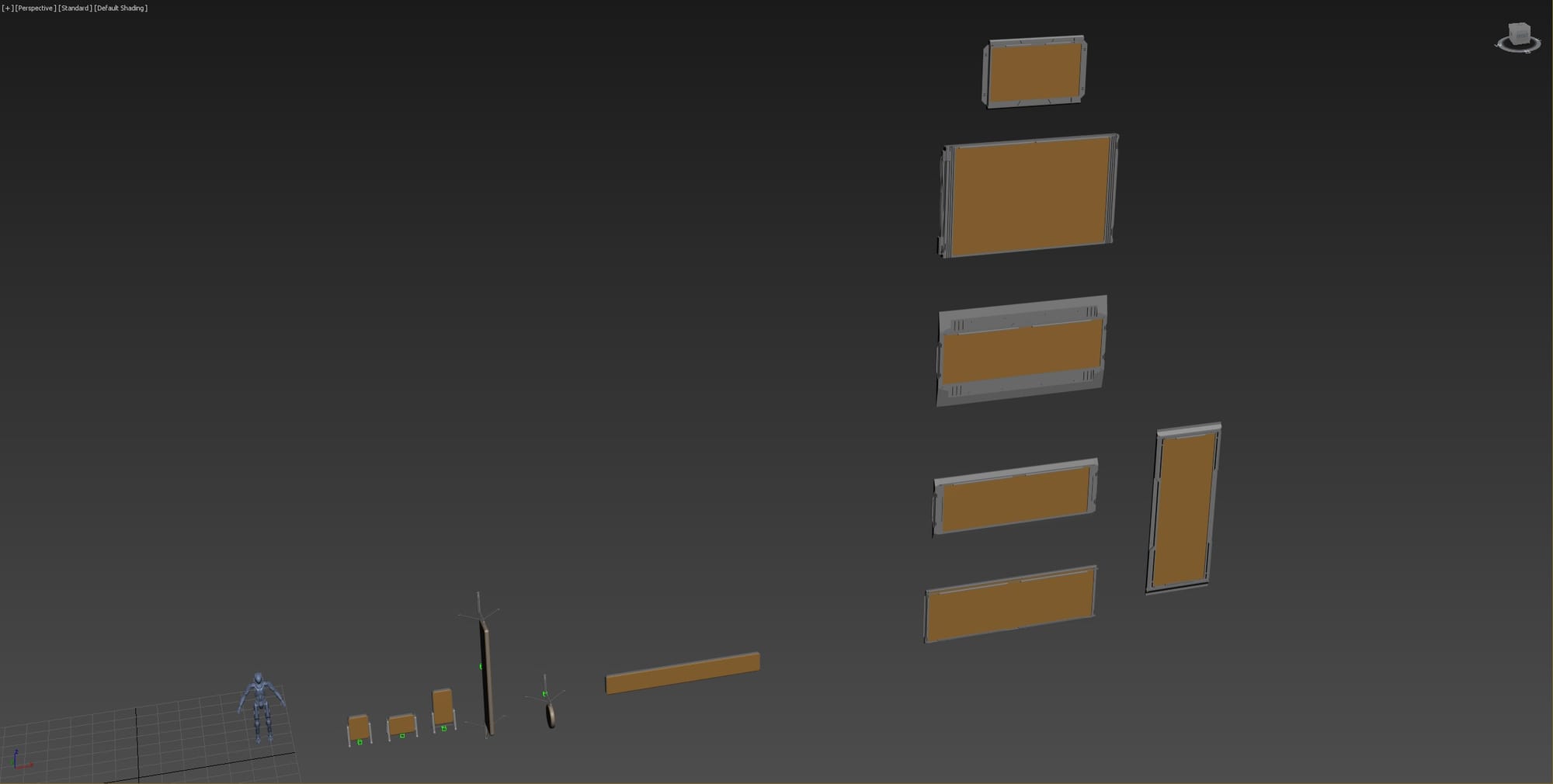
Ads appear across multiple placement types, each designed with specific aspect ratios to fit different surfaces throughout the city. These placements populate dynamically based on defined rules and logic, allowing signage and displays to update naturally as players move through different areas of Wiami.
The ad network is woven into streets, buildings, and public spaces, contributing to district identity, lighting, and atmosphere rather than functioning as static decoration. This system helps reinforce Wiami as an active, commercial city shaped by movement and visual density.
The Dynamic Ad Network also establishes the foundation for future real-world advertising inside Wilder World, enabling brands and campaigns to exist natively within the city environment as the system expands.
World Locations & Environments
The Open World Preview offers the first look at the variety of environments and district styles that make up the city of Wiami.
Wilders will encounter a range of locations woven directly into the Open World, each contributing to the city's structure and atmosphere. These include The Trenches, Wiami Metro station, parks, armory, and Hydrolink, all of which serve as active spaces for traversal, exploration, and mission gameplay.
Architectural styles vary across districts, with completed building designs creating clear visual identity between areas. Streets, interiors, and infrastructure are integrated into a continuous city layout rather than isolated zones, allowing players to move naturally between locations.
A fully functional highway network connects key areas of Wiami, reinforcing the city’s scale and enabling faster travel across districts. This network ties together street-level exploration with long-range traversal, supporting both patrol and mission deployment.
Together, these environments establish Wiami as a connected urban space, providing the foundation for dynamic missions, NPC activity, vehicle traversal, and future expansion of the Open World.
Super Early Access
Super Early Access now operates as an active live service, with sustained player engagement and measurable growth. Since Dev Log 16, Daily Active Users have grown significantly, showing consistent week-over-week and month-over-month gains, particularly following December’s releases.
Player activity has continued to reach new all-time highs, with Super Early Access now reaching up to 2,500 daily active players. Alongside this growth, new player registrations have increased, reflecting expanding awareness and sustained momentum.
This phase has demonstrated early live service viability, with players returning regularly, engaging across multiple systems, and directly shaping development through feedback. Super Early Access now functions as a live proving ground for both gameplay systems and long-term scalability.
During this cycle, Super Early Access supported the rollout and iteration of major systems, including the Trenches combat map and the first version of the Avatar Selector, alongside continuous improvements to navigation, UI, interaction systems, vehicles, audio, performance, and overall gameplay stability.
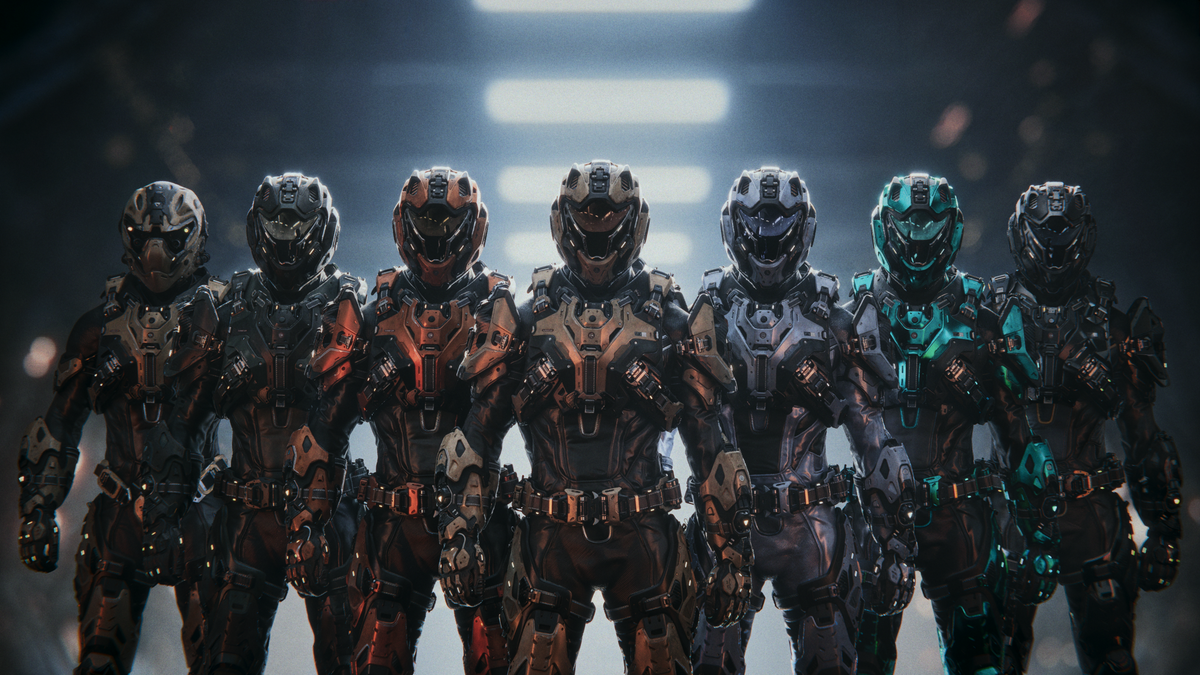
Avatar Selector
The first version of the Avatar Selector was released in December 2025, as part of Super Early Access, establishing the foundation for player identity within Wiami. The system allows players to select and activate a playable Avatar before entering Shooter Mode.
Version 1 launched with a curated set of Trinity MKII preset suits, organized into three core classes: Heavy, Medium, and Light. Each class features distinct silhouettes and material treatments, with additional Heavy-class visual variants offering alternative color palettes and finishes.
Avatars are fully rendered in-engine with detailed materials, emissive elements, and reflective surfaces. Inspection tools allow players to rotate avatars, zoom in and out, and enter a Showroom Mode that presents a cinematic 360-degree view under controlled lighting. Once selected, setting an avatar as Active assigns it to the player profile for in-game use.
This initial release establishes the baseline for future avatar customization and progression systems through Packs.
The Trenches
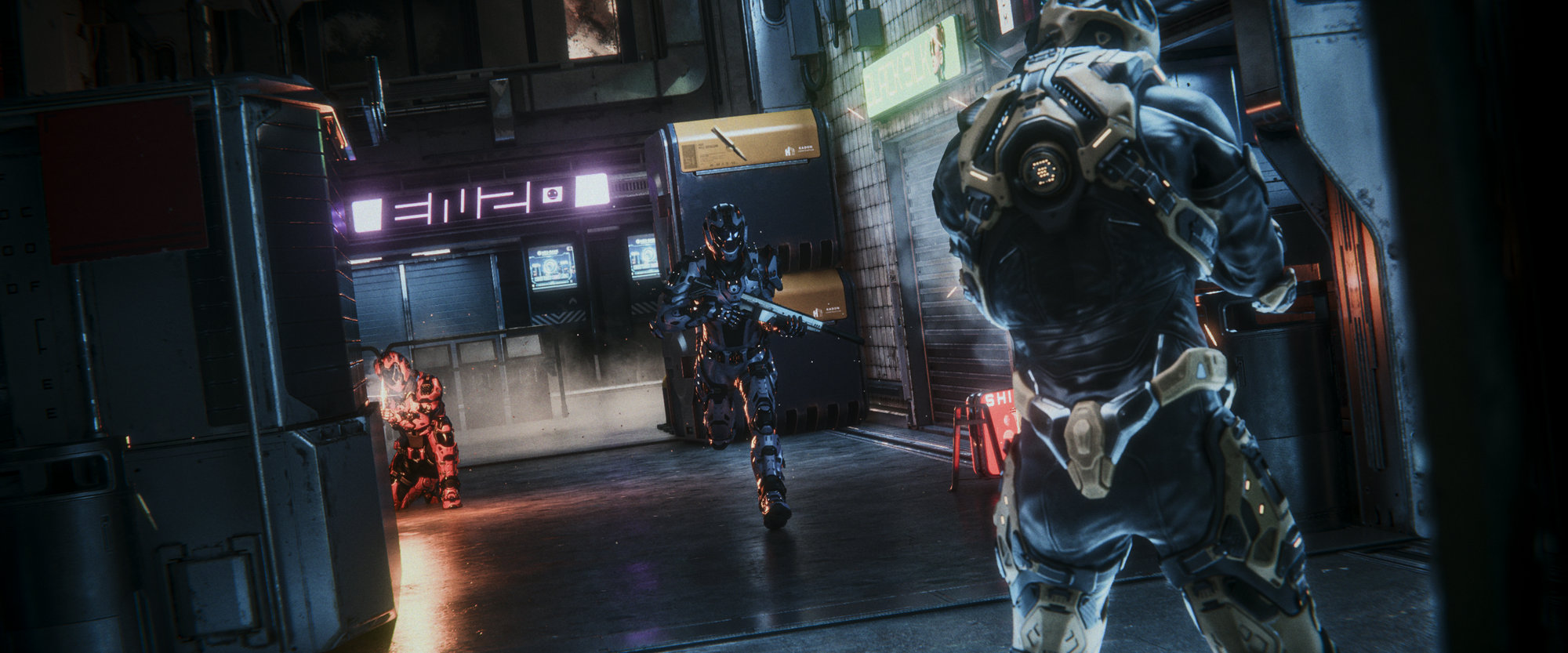
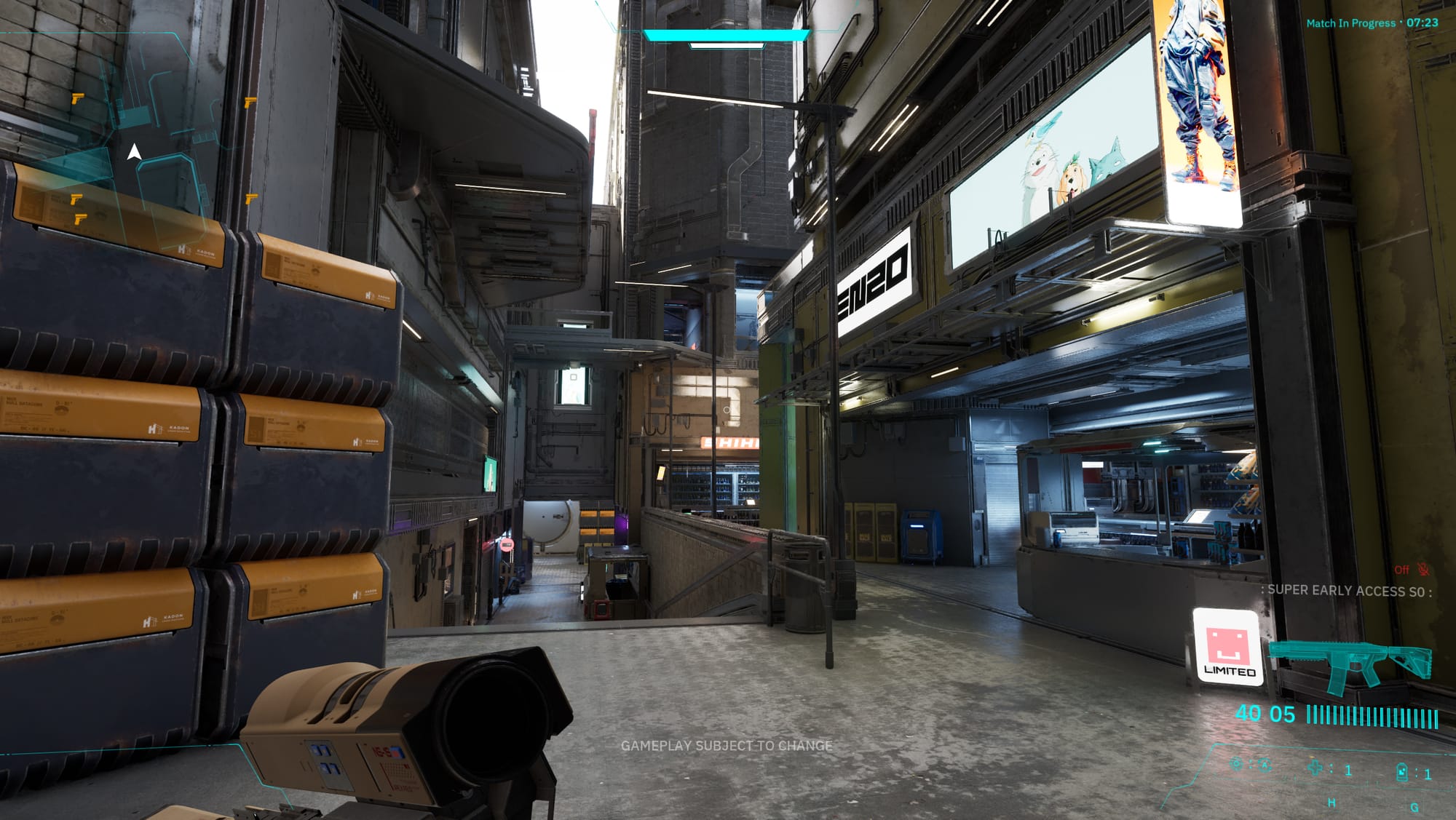
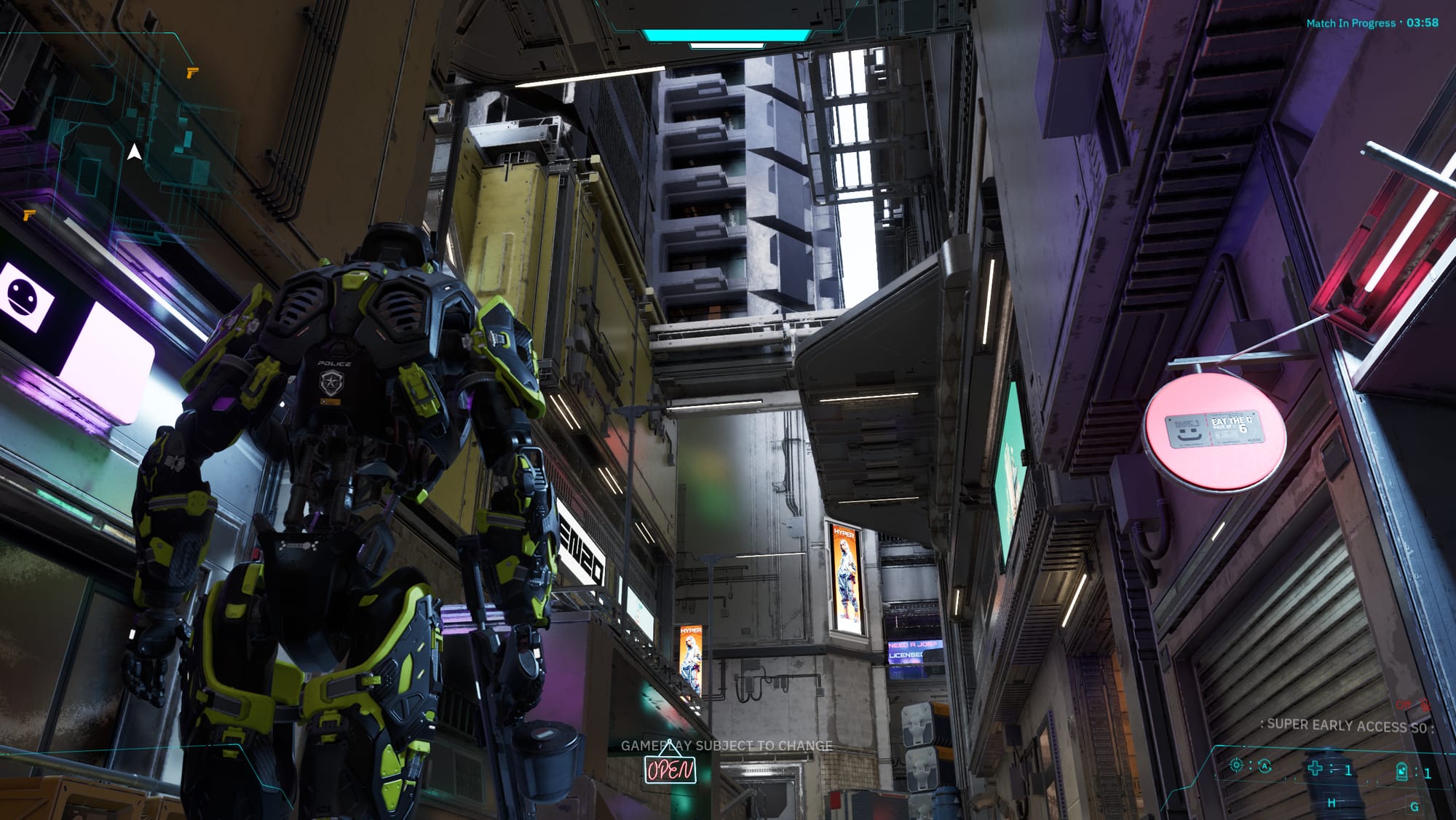
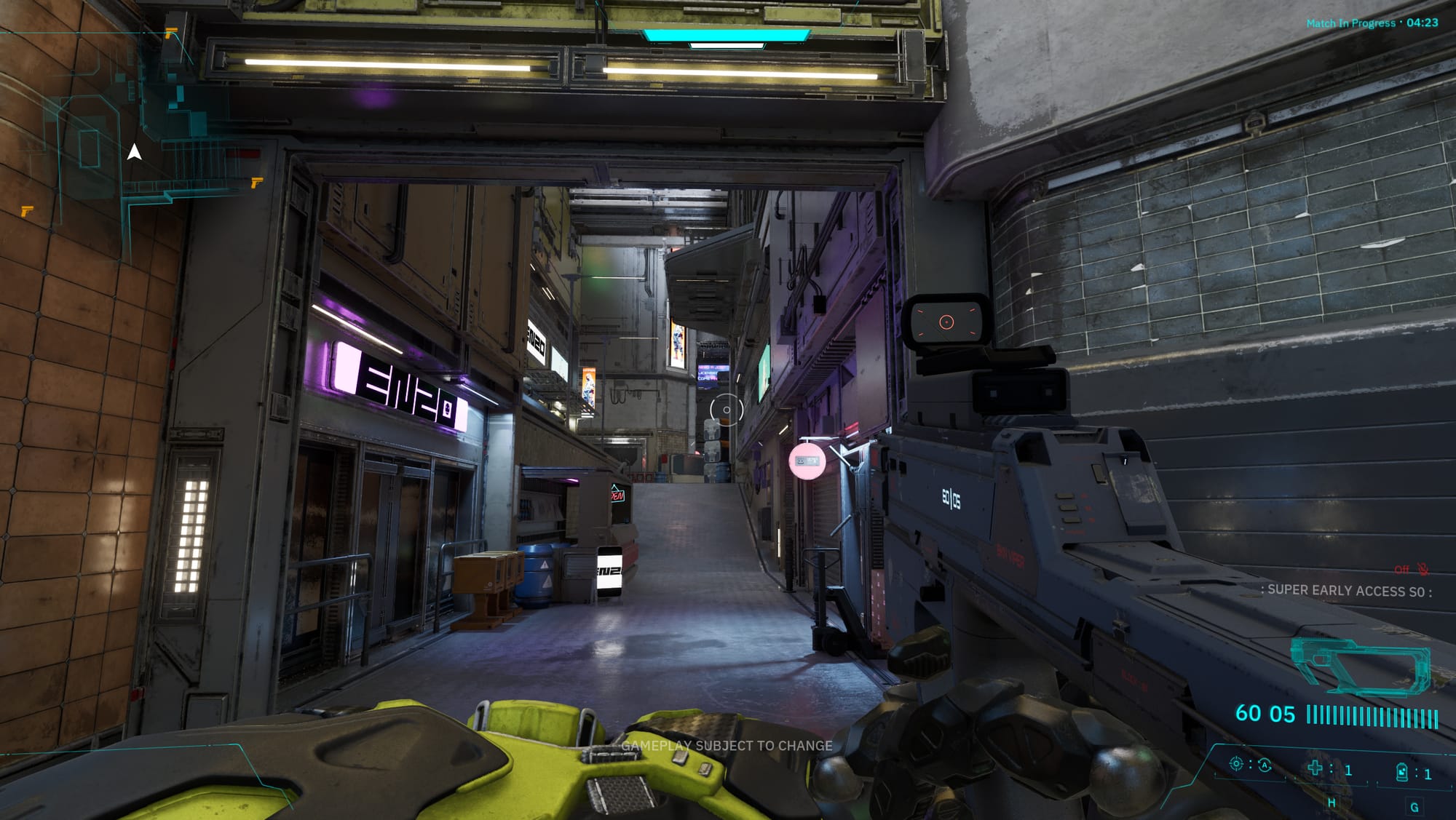
Also released in December 2025 was The Trenches. This map introduced a new close-quarters multiplayer map beneath Nexus, expanding the playable shooter environment with a dense underdistrict designed for fast rotations and frequent engagements.
Built as a compact three-level layout, The Trenches includes an underground section, a primary ground floor, and an upper level made up of interior rooms, walkways, and balconies. Short sightlines and layered vertical paths encourage aggressive, close-quarters combat across all areas.
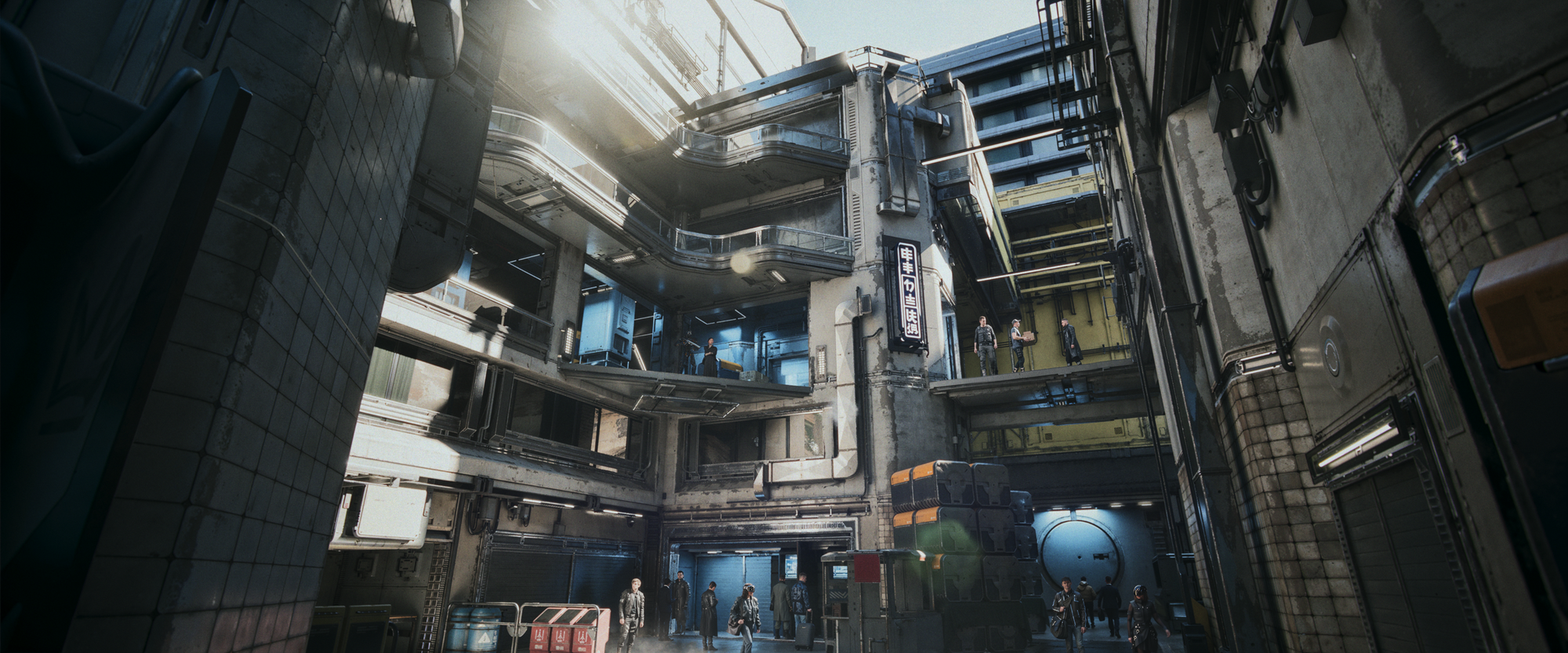
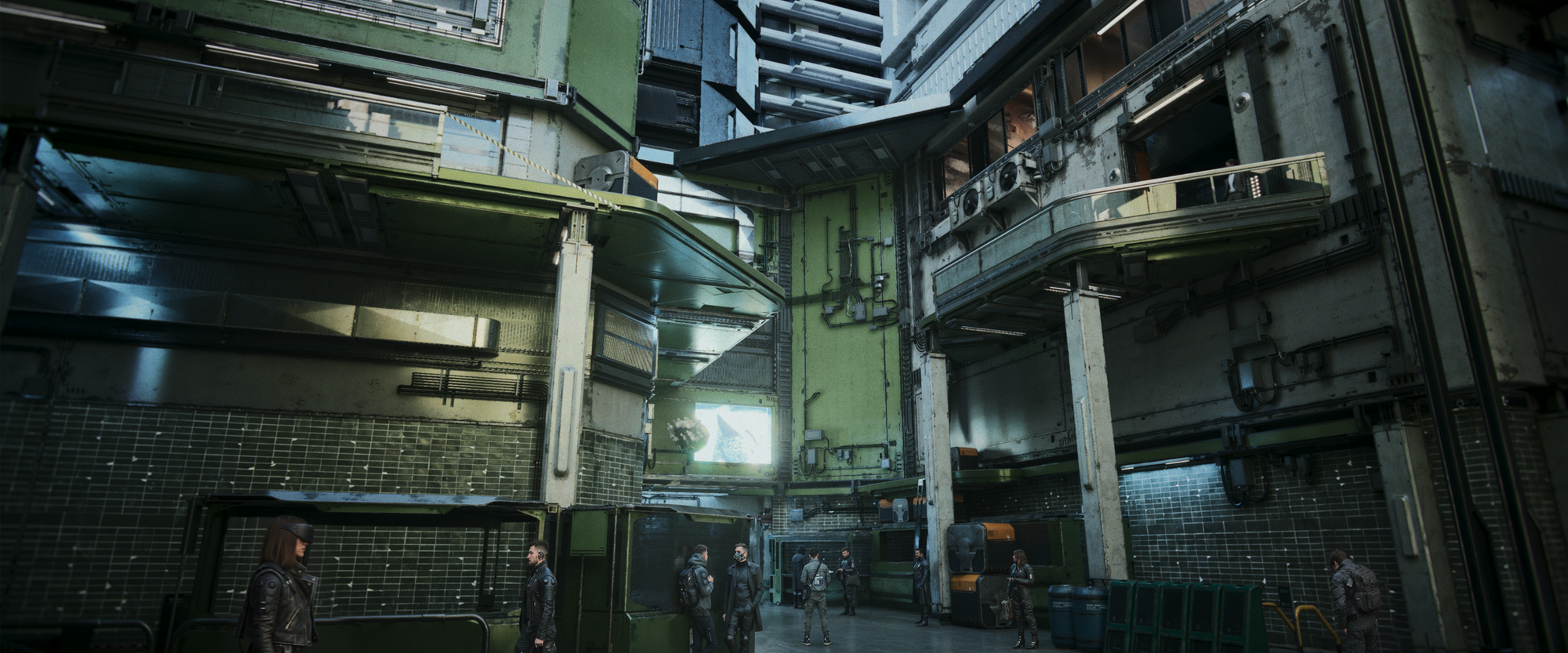
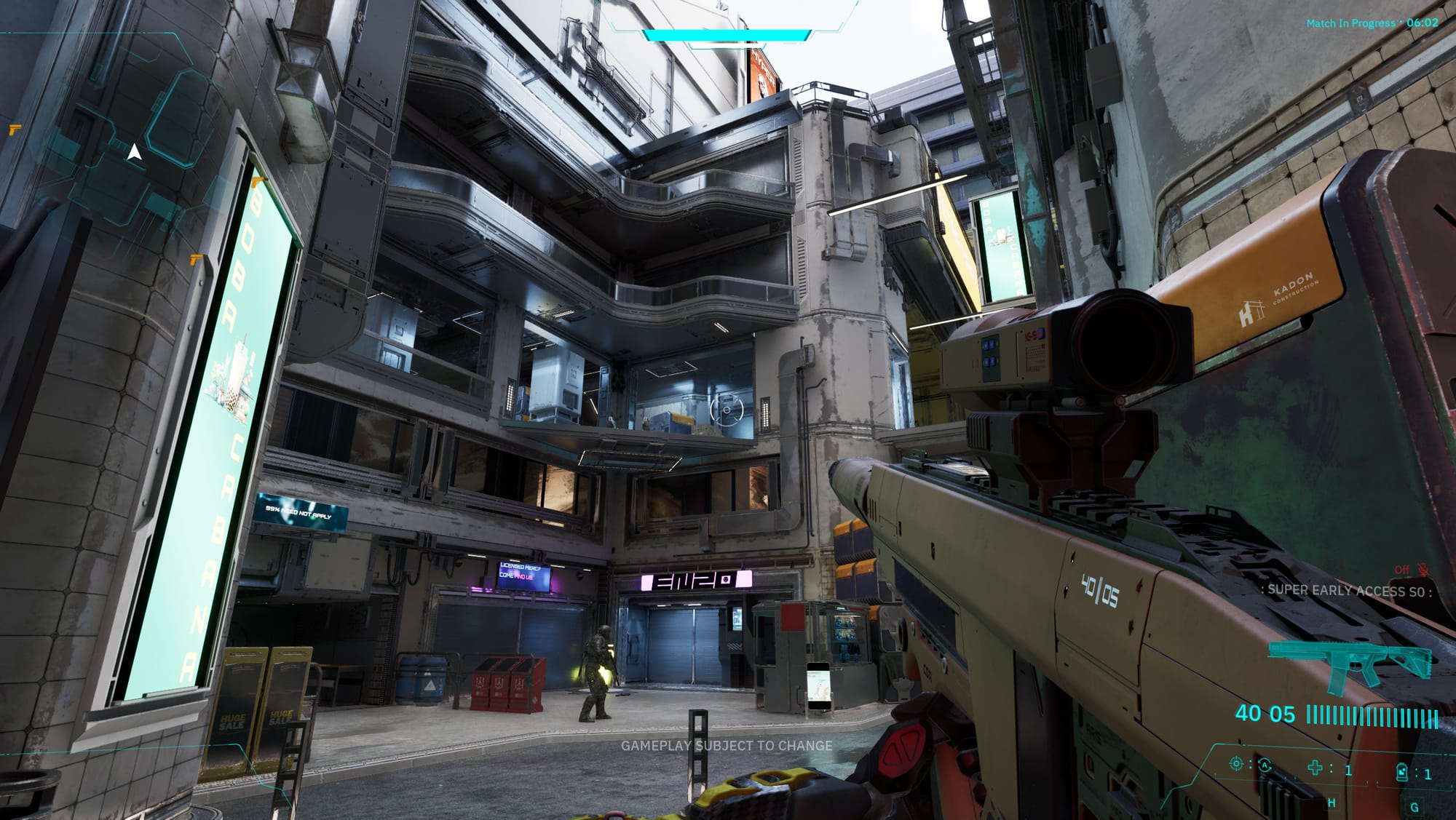
The environment presents a worn, neon-lit district distinct from Wiami’s cleaner city zones. Open-air building shells allow uninterrupted movement between interiors and exteriors, maintaining constant combat flow. Updates following its release have focused on refining entrance layouts, improving material transitions, adding new paneling and set dressing.
Systems, Gameplay, and Performance Updates
Missions
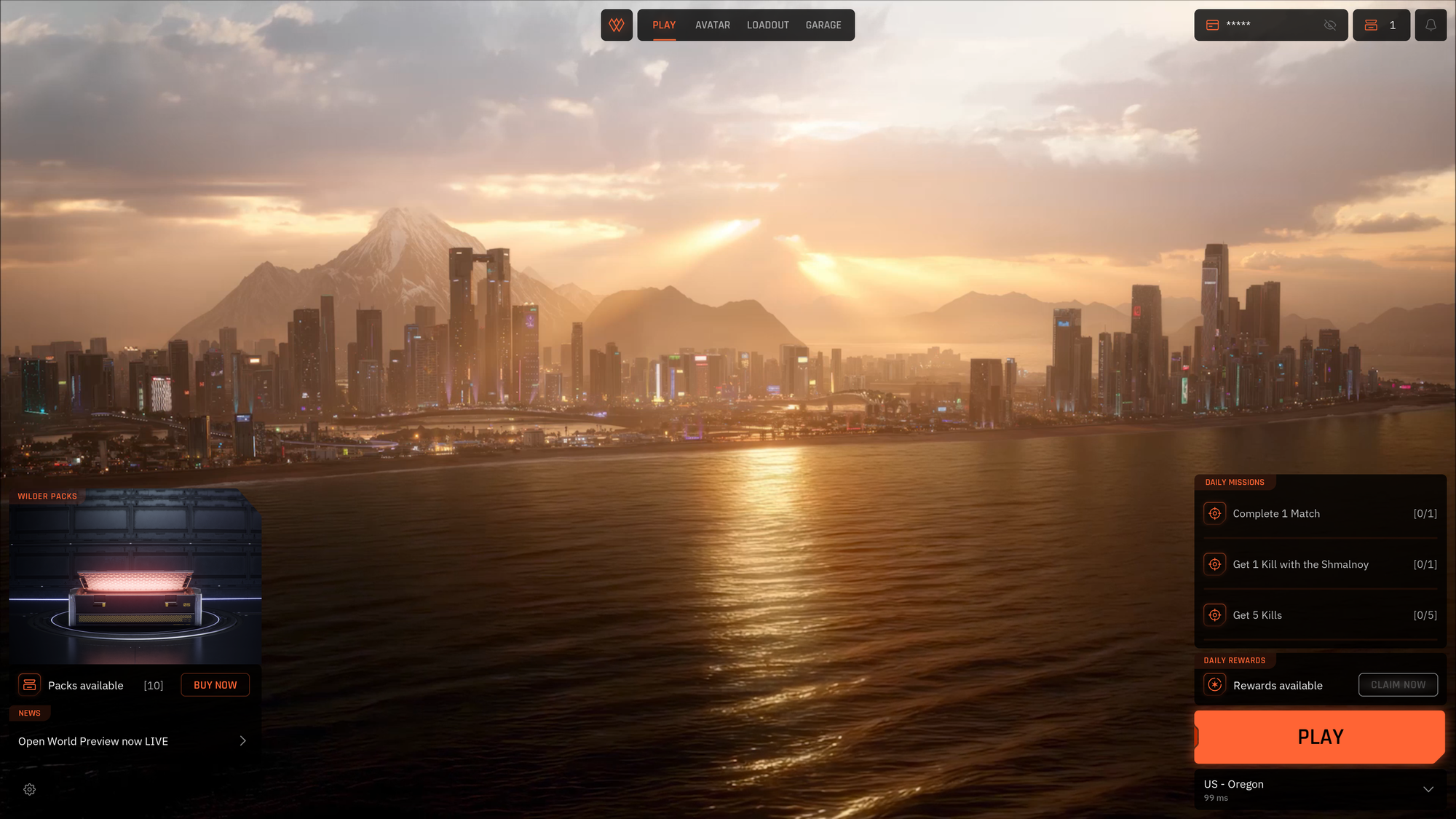
Check-Ins have been replaced with an in-game mission system that allows players to earn WILD by completing daily objectives. Missions are accessible from the main menu and reset each day, offering a defined set of tasks that must be completed to unlock WILD rewards.
This system introduces a gameplay-driven reward loop, with mission objectives designed to evolve over time as additional exciting content is introduced into Super Early Access.
Navigation & Maps
Mini-map updates added zoom controls, pathfinding support, and fixed arrow rendering. The map received improved zoom limits, middle-mouse panning, and clearer navigation behavior. Mission UI was updated with revised Breach text, failure messaging, and simplified diamond indicators showing only the Hydrolink objective.
Main Menu & UI
Main menu stability was improved, addressing background re-fading and input issues. A new in-game notification system was added with clearer empty states. Garage UI fixes resolved rendering, scrolling, Active tag overlap, and preview issues. The WILD balance display was corrected and standardized to two decimal places. Additional fixes improved News hover behavior, ESC handling, and Play button option panel interactions.
Interactions & NPCs
Keybind reset issues and Avatar Creator rotation bugs were fixed. NPC behavior was improved, including reactions to reversing vehicles, collision cleanup for dead NPCs, embedded NPC fixes, and hair LOD consistency improvements.
Combat Updates
Weapon holstering and aiming near obstacles was refined with faster transitions and improved cover handling. ADS stability for scoped weapons was improved, shotgun damage was adjusted at range, and explosive damage logic was updated to respect cover and vertical separation. Grenade throwing, melee hit detection, RPG and Gator logic, health pickup audio, and headshot and death VFX were improved. Players can now carry up to two frag grenades, with pickups granting the full amount.
Vehicles & Driving
Clutch slipping issues were fixed and physics updates were applied to specific vehicles. Mouse free-look was smoothed, with automatic camera and base rotation resets. Vehicle entry and exit interactions were refined, and issues with despawning, shield VFX, exit animations, and character clipping were resolved.
World Updates
Collision gaps and exploits were fixed across parks, apartments, The Trenches, and The Beginning. Rooftop set dressing was updated, material transitions were refined, and unintended area access was resolved.
Audio Updates
Environmental audio balance was improved. Vehicle radio fade-out timing was adjusted and a new ad-free radio station was added. A dedicated music track for The Trenches is planned.
Bug Fixes & Performance
Wall exploits, missing traffic collisions, Armory workbench collisions, and multiple world prop issues were fixed. Performance was improved by limiting lobbies to eight players, alongside general stability and traversal optimizations.
Game Nights
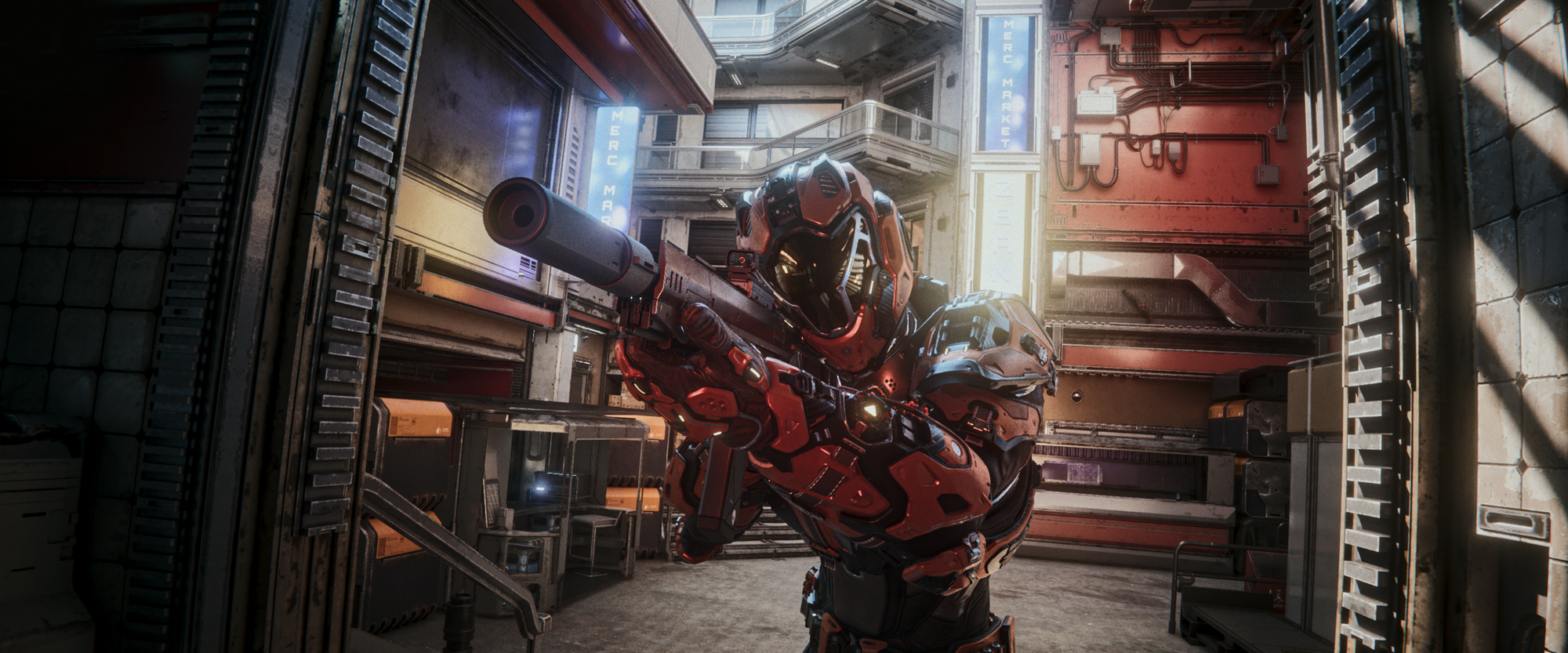
We believe the strongest experiences are built together. Game Nights are designed to spark collaboration, build long-term relationships, and create shared moments that strengthen every project involved.
The Game Nights program expanded significantly during this cycle, increasing to multiple scheduled events per day with our partner communities. A new Game Night website recently launched, displaying events in each player’s local time zone, and enabling registration for individual sessions. Registered players who attend and play Super Early Access during a scheduled Game Night are eligible for Game Night rewards.
To support regional events, a new Brazil server was added, enabling an improved experience for Game Nights in that region. Additional regions are planned as the partner network continues to expand.
Check out our new Game Night Website for the list of events in your local time zone.
VFX
AI Bursts
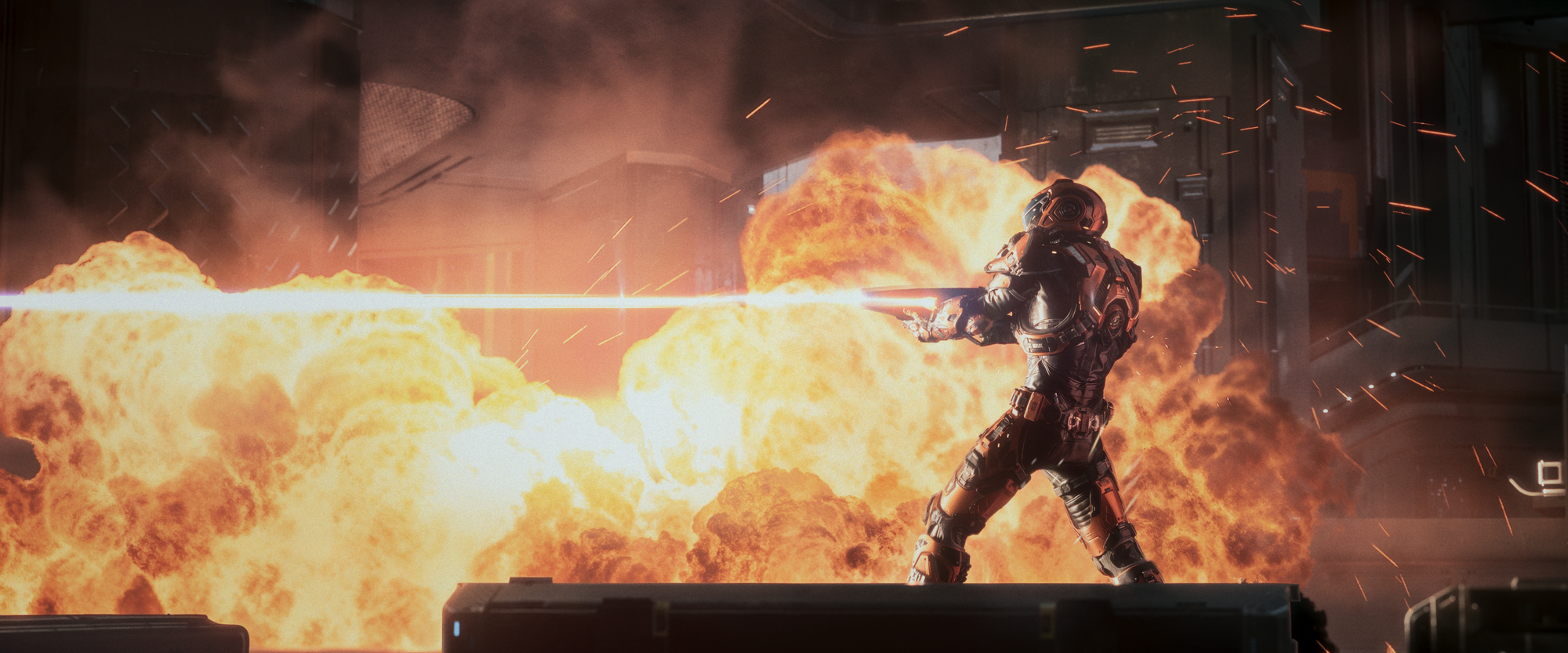
AI-assisted tools, including Gemini, are being explored to increase variation in VFX sprite generation. This approach is currently used for effects such as vehicle muffler burst flames, enabling the creation of a wide range of fire variations and reducing visible repetition.
Breach Portals
Breaches serve as the entry points for Forum agents invading zones within Wiami. The portals are constructed using layered particle effects that emit and swirl around the exterior while revealing another location within the portal itself.
Death Effect
The player death effect was enhanced to deliver more impact. A blast effect was added on the final blow, combining a quick flash, data-like geometric wireframe elements, and sparks. Additional particle effects were introduced during the body dissolve to reinforce the exit-from-the-simulation visual.
Packs Reveal
The pack reveal sequence was designed to feel like a grand opening moment. Billowing smoke, emissive internal lighting, controlled camera movement, and floating pack assets combine to create a visually striking and memorable reveal experience.
Tire Smoke
New tire smoke effects were introduced to complement the updated driving mechanics. These effects respond to drifting and burnouts, reinforcing the improved handling and vehicle feedback during high-intensity driving.
Vehicle Shield
A new shield effect was added to vehicles, mirroring the shield system used by avatar characters. This introduces additional visual clarity and supports future vehicle upgrades and defensive systems.
Vehicle Shots
New impact effects were developed for vehicle damage caused by gunfire. These include procedural bullet holes, paint damage, and window cracks and breaks. Different projectile types trigger distinct impact decals and damage responses, improving visual accuracy and feedback.
Core Development
Tournament Playoffs
Legend of the WILD tournament playoffs were successfully completed across EU and US regions using a dedicated tournament infrastructure. A separate tournament service, running on its own execution thread and isolated from the main matchmaking system, handled all playoff logic. Server access was restricted via whitelisting to ensure only qualified players could join.
Multiple tournament server instances ran in parallel, allowing simultaneous playoff matches without impacting performance. Non-tournament players were automatically routed to standard game servers, ensuring uninterrupted regular gameplay. Stable performance was maintained throughout, and regional winners were successfully determined and announced.
Game Server Connection Fix
A server connection issue preventing players from joining active shooter instances was resolved by implementing a predictive scaling scheduler architecture. The system dynamically provisions virtual machines and distributes game server instances based on anticipated and real-time load.
This significantly improved load balancing, connection reliability, and server availability. The architecture has been retained for future releases as a scalable, high-availability solution.
Vehicle Damage and Shield Effects
The vehicle damage system was expanded to improve collision accuracy and feedback. Glass damage handling was added via a new OnGlassesBeginOverlap event, enabling consistent detection on glass-material meshes.
Bottom collision detection was implemented through the CheckBottomDamage function, with socket calculations updated to include bottom positioning for improved spatial accuracy. A new shield visual effect was introduced for both player and NPC vehicles, activating on collisions and gunfire to provide consistent damage feedback.
Destructible Props
Destructible props were added across the open world to improve environmental responsiveness. New elements include bollards, fire hydrants, digital billboards, and trash bins, all reacting dynamically to physics and player interaction.
Packs
The Packs system was implemented with full backend and UI support. Backend logic includes daily purchase limits, claim validation, and a refactored reset system based on logical day comparison using a configurable reset time (default: 13:00 UTC). A new IsAnotherClaimDay function ensures accurate daily resets.
All pack interactions communicate with Web3 servers, ensuring onchain recording of transactions. The Packs UI allows players to purchase and open packs containing weapons, avatars, and vehicle accessories. Pack contents remain hidden until opening. Players may purchase up to 10 packs per day at 150 WILD per pack.
Gamepad Navigation
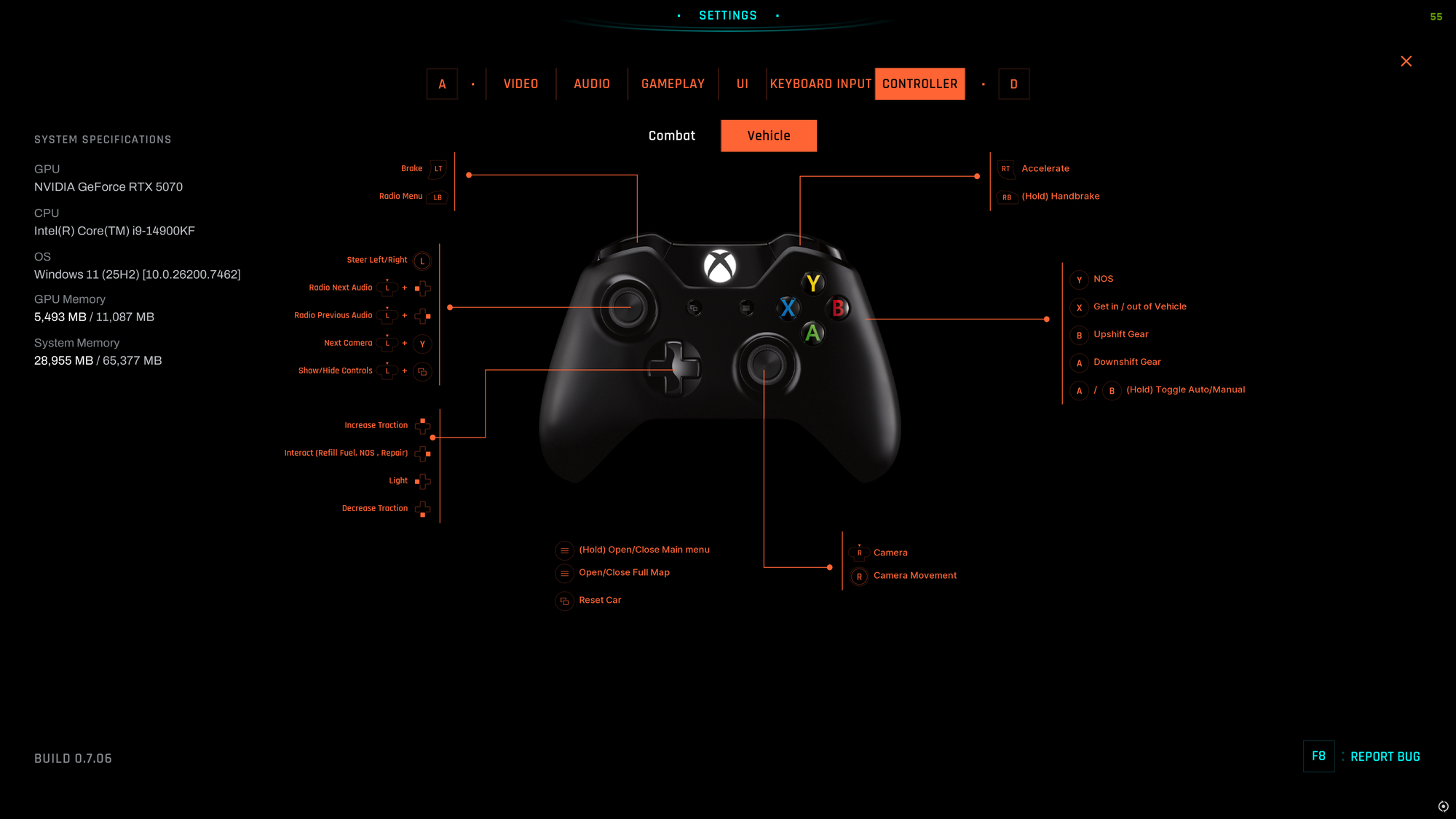
Gamepad navigation was updated with a cursor-based system that clearly indicates focused UI elements during menu navigation.
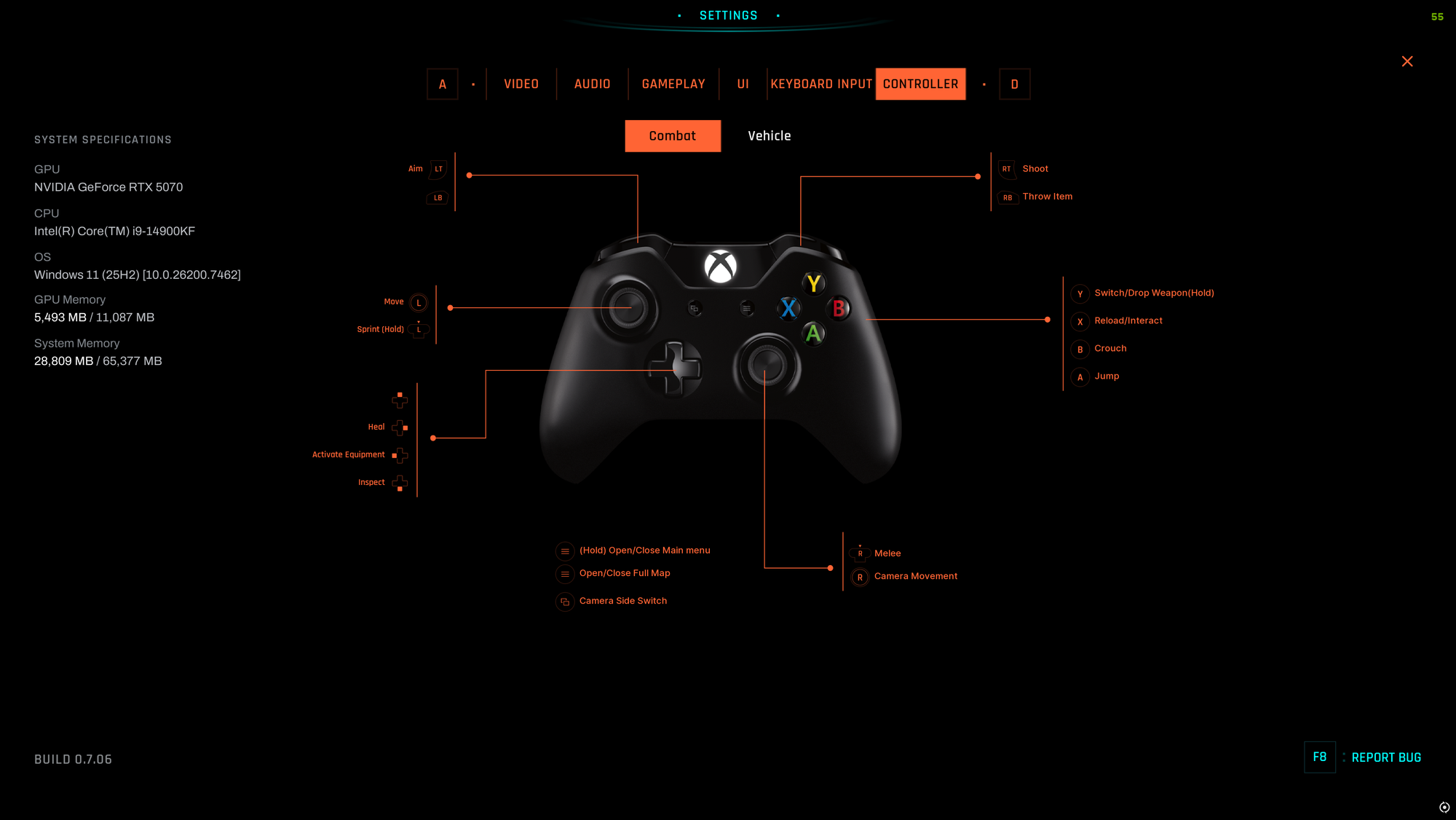
A new Controls section was added to the Settings menu, displaying gamepad mappings for both avatar and vehicle controls to improve accessibility and onboarding.
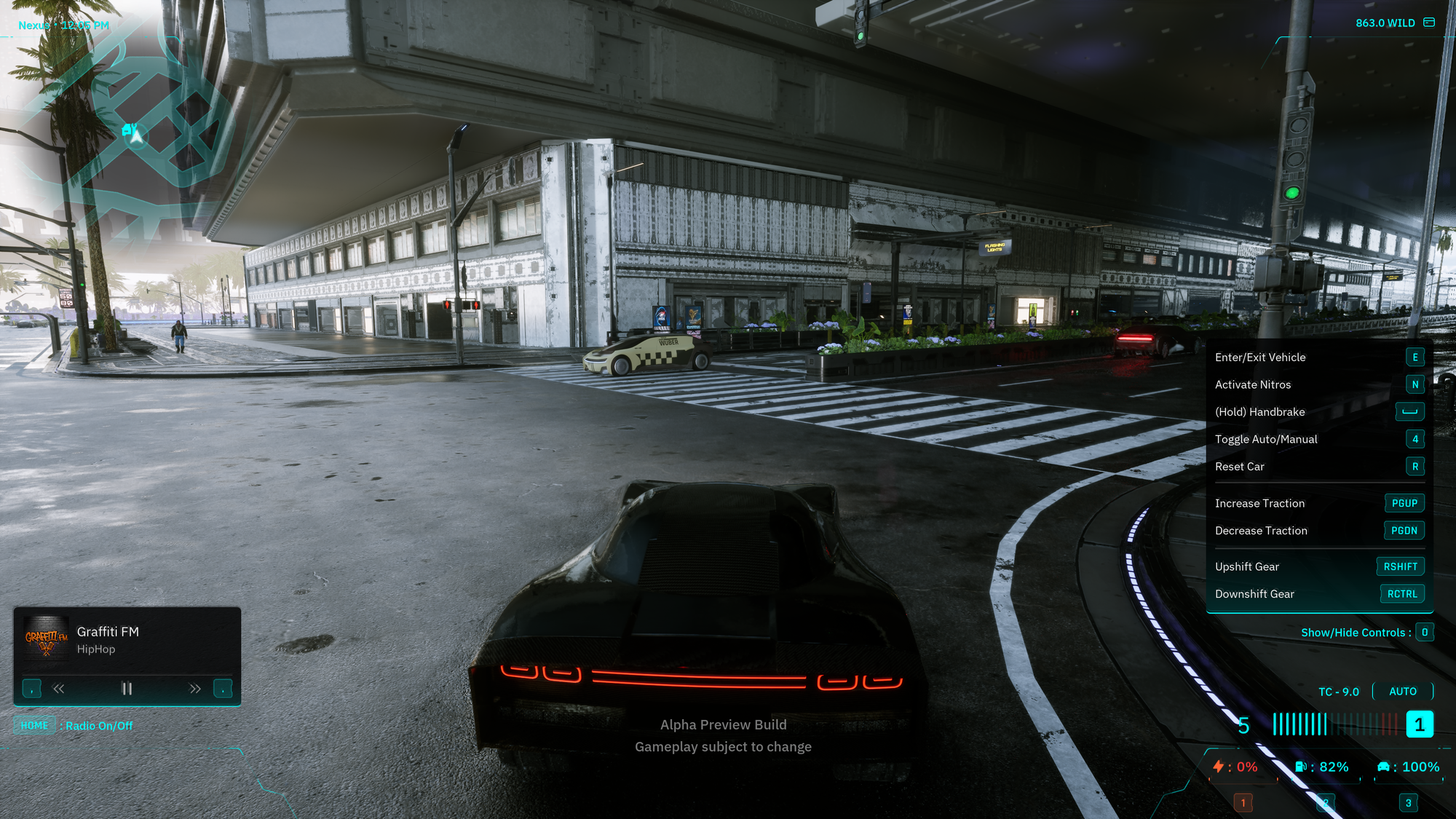
Open World HUD
The Open World Vehicle HUD was fully implemented, including a radio interface and game controls help panel. Both elements can be toggled on or off to customize on-screen information.
Fuel, NOS, and Repair Stations
Fuel stations, NOS refill stations, and vehicle repair stations were added across the open world. Players can refuel, replenish NOS, and repair vehicle damage through direct drive-in interaction points. These systems are currently functional and will be expanded with more dynamic elements in future updates.
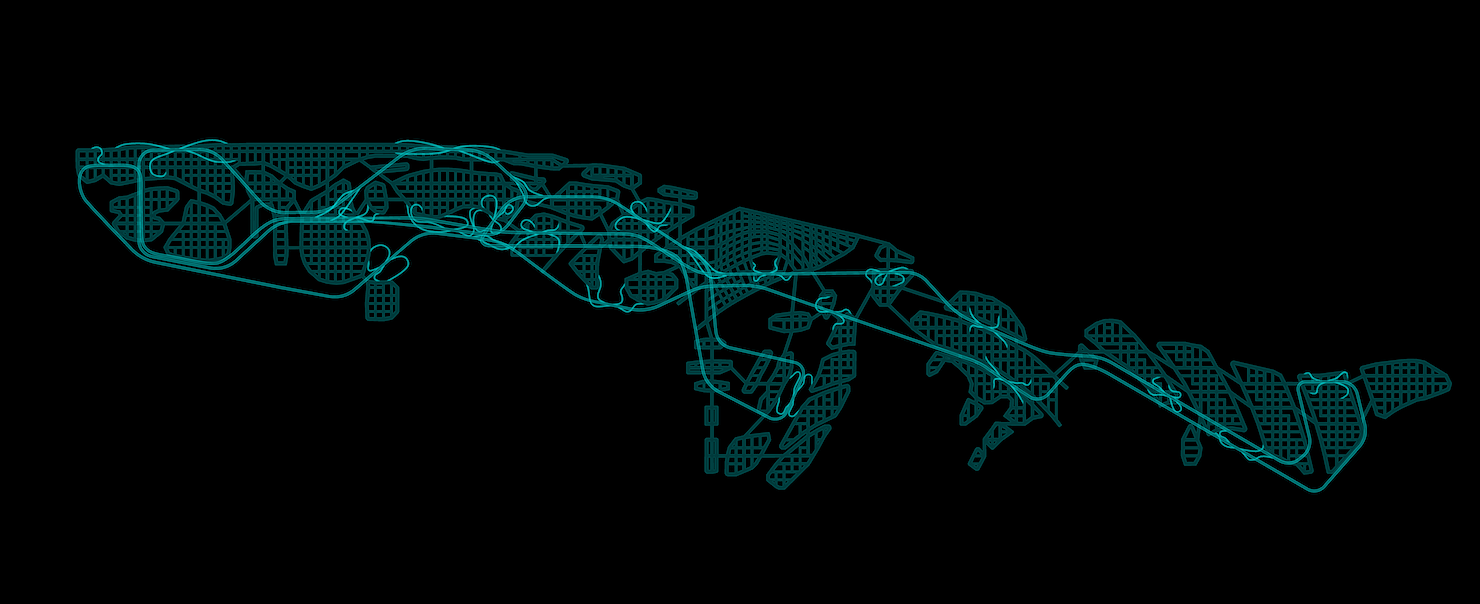
Open World Map and Mini-Map
The open-world mini-map and full map were fully implemented. The mini-map highlights key locations and services, while the full map provides a complete overview of the island to support navigation and exploration.
DLSS Update
The game was updated to use the latest NVIDIA DLSS plugin, fully integrated into the rendering pipeline. DLSS improves performance during open-world traversal, heavy traffic, and combat while maintaining visual quality and supporting scalability across RTX-enabled GPUs.
Memory Optimization
Unreal Engine memory reports are now used as part of daily optimization workflows. Memory usage is tracked across multiple hardware configurations to identify inefficiencies, reduce load times, and prevent crashes.
World
CONCEPT
Agent Occupation
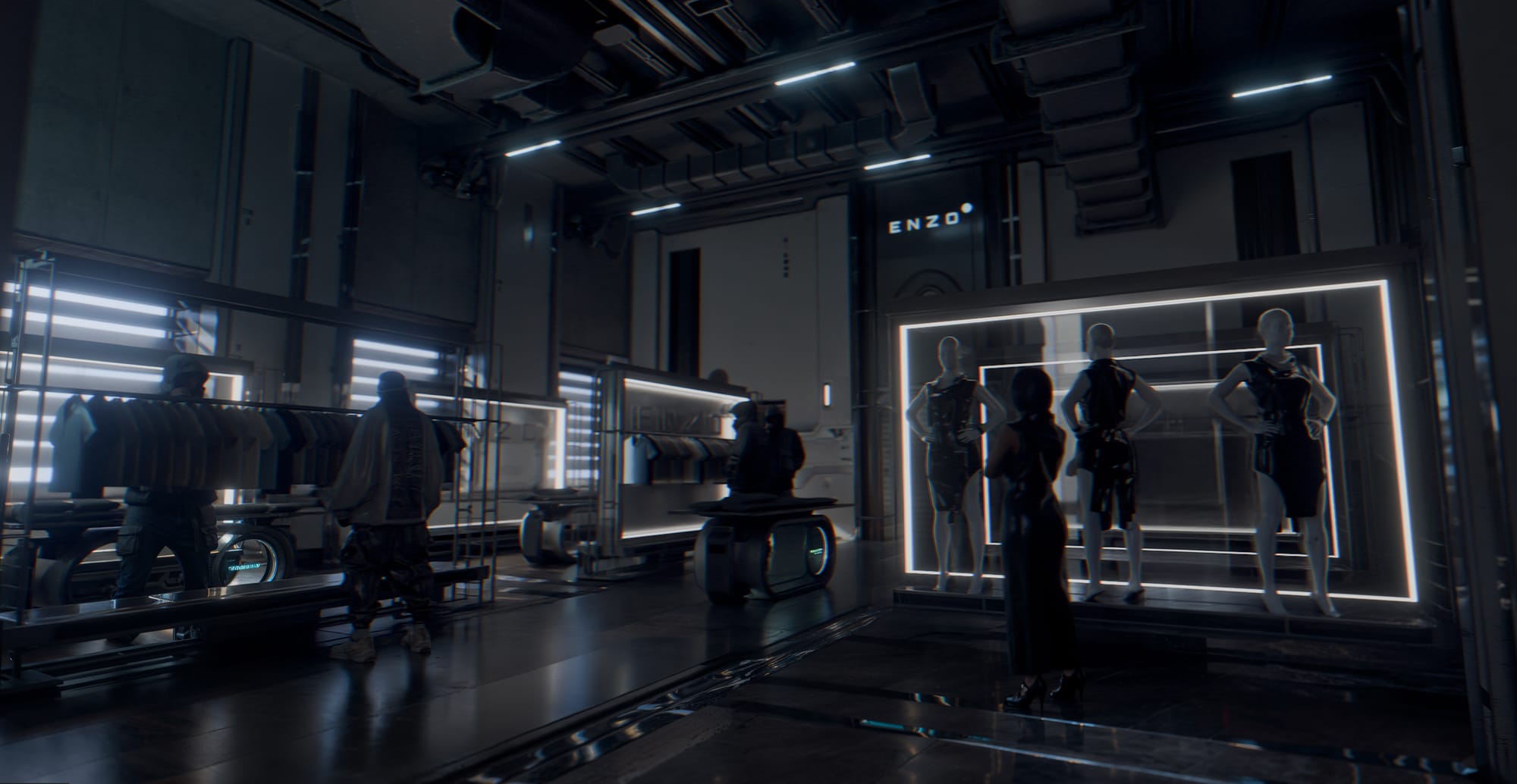
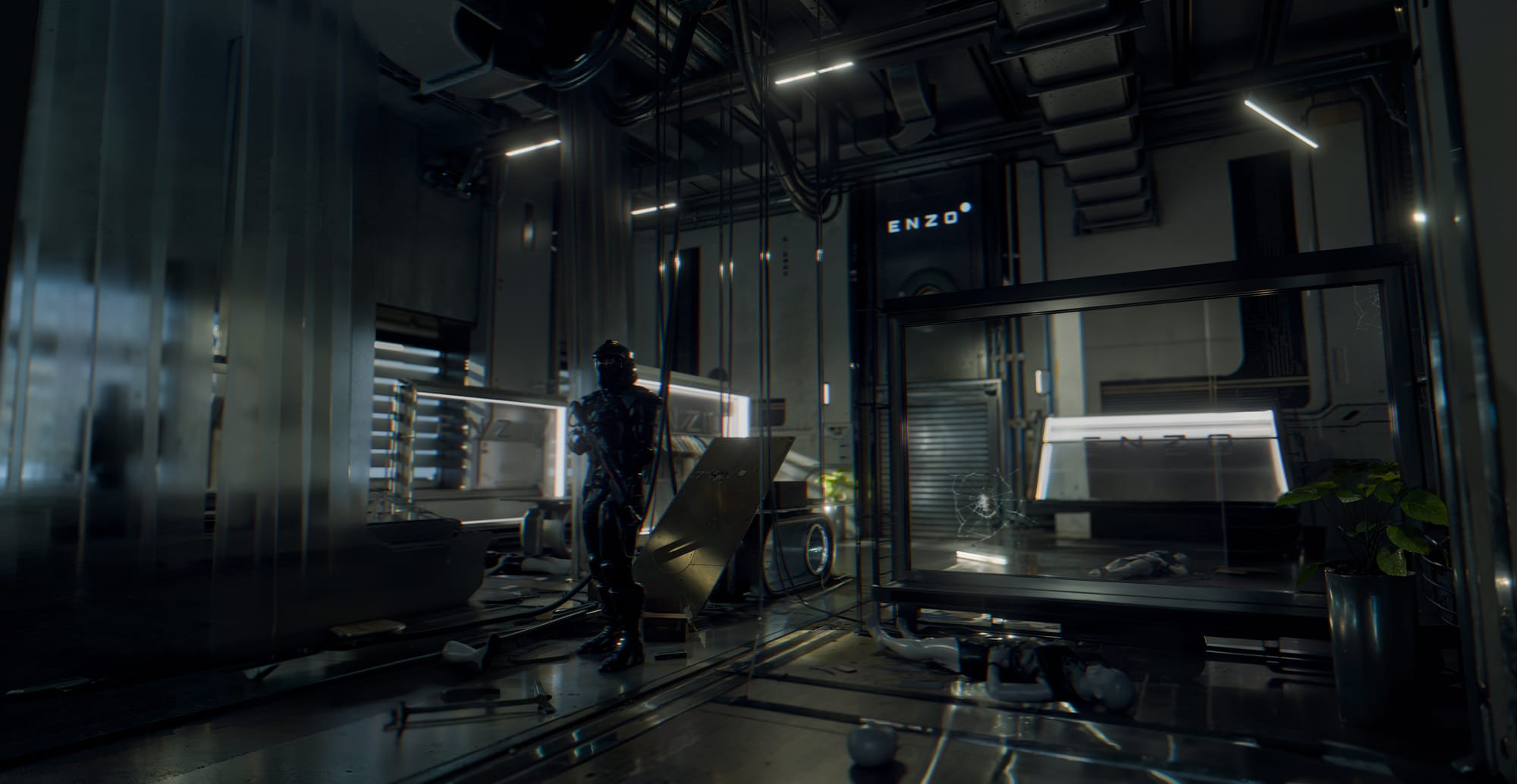
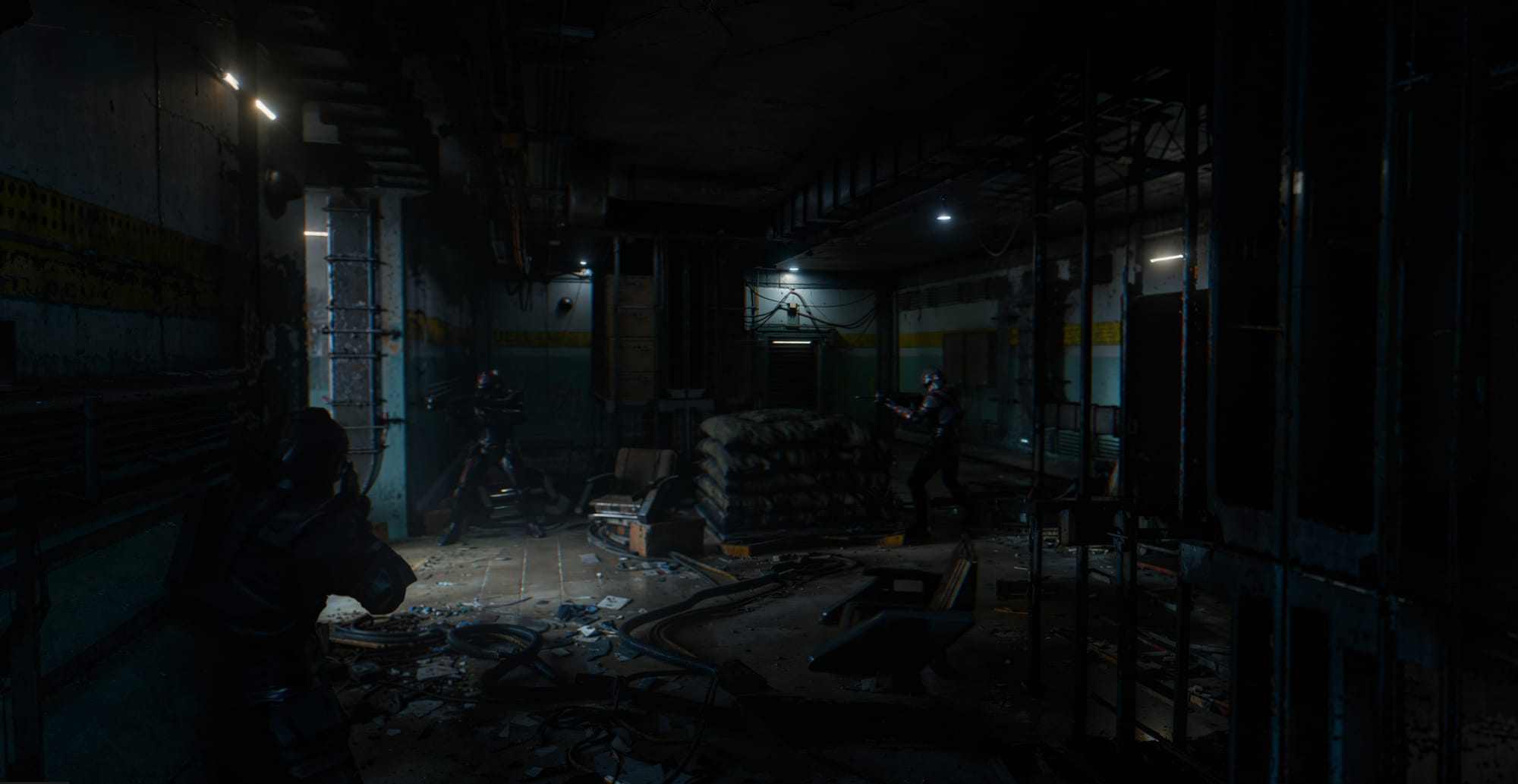
Alongside recent open-world development, conceptual work explored how Forum agents occupy spaces across the city, from hidden, clandestine locations to aggressive takeovers in populated streets.
A high-end retail space was used as a reference, first shown in normal operation and then reimagined following an agent raid and conversion into an observation post. Rather than extensive structural changes, the shift relied primarily on lighting and color correction. Neutral, inviting tones were pushed toward a more sickly and unsettling palette, demonstrating how subtle visual changes can dramatically alter the atmosphere with minimal in-engine work.
While rundown or abandoned locations naturally suit covert occupation, limiting these scenarios would reduce gameplay variety. To support combat and narrative moments across the entire map, agent occupation concepts are designed to function within active, high-traffic environments as well, ensuring tension and engagement are not confined to isolated areas.
Lore and Missions
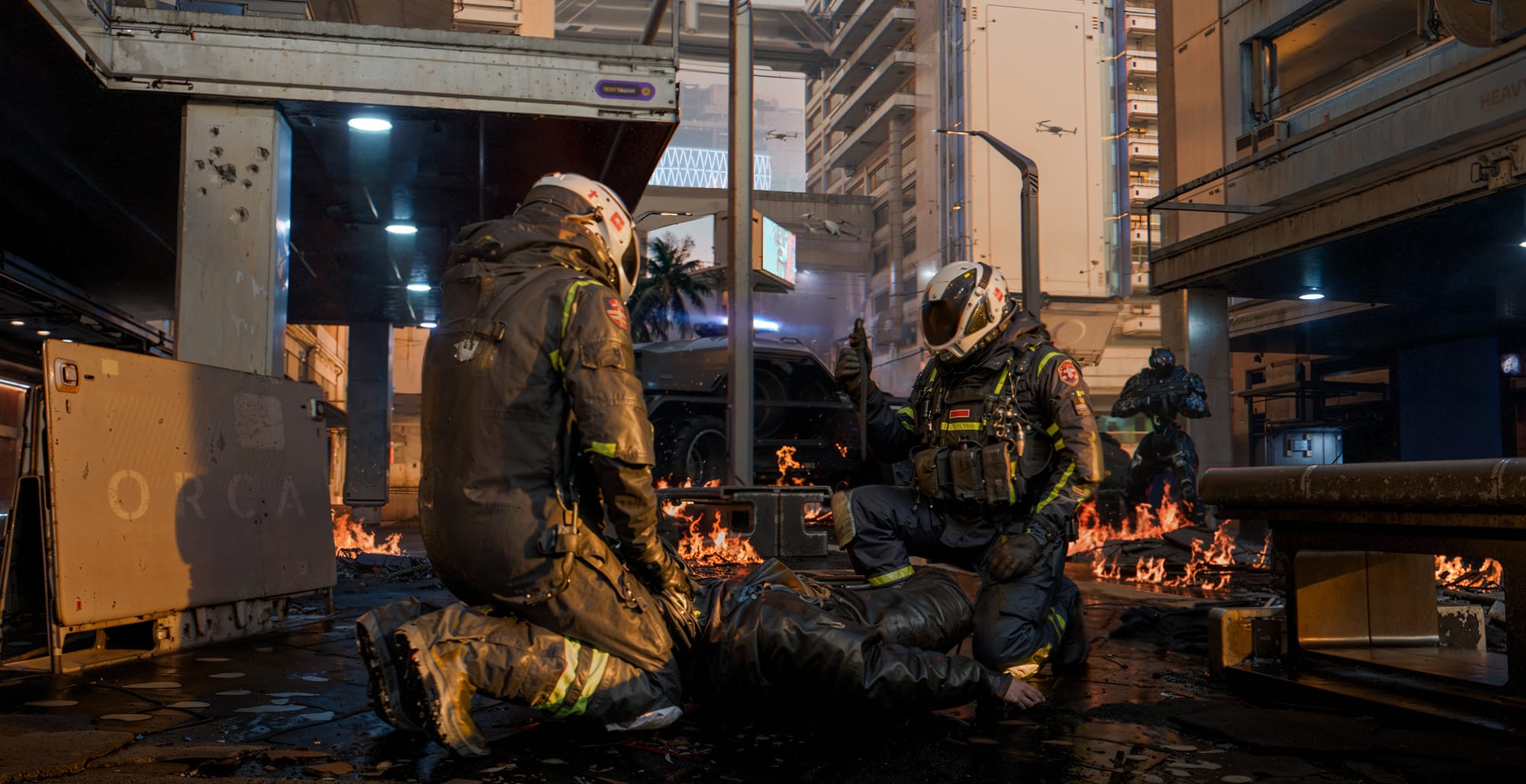
Concept work also explored potential lore directions and mission types tied to large-scale events in the open world. One focus was the aftermath of a breach pushed to its extreme, examining how destruction, visual effects, character behavior, and environmental mechanics could reshape a district. These scenarios serve as early visual prompts for gameplay discussions, helping define which mechanics feel achievable, readable, and engaging within the world.
Additional concepts introduced a possible new enemy archetype: the Cultist. These figures are envisioned as breakaway agents who have gone rogue in their pursuit of knowledge, attempting to merge themselves with AI to enhance skill and perception. Having rejected the Forum as insufficiently radical, they operate independently as lone actors scattered throughout the city.
Cultists are designed as high-risk encounters, significantly more challenging than standard enemies, but offering greater rewards when defeated. While not yet confirmed for implementation, the concept provides a foundation for future mission structures that blend lore, difficulty scaling, and meaningful player incentives.

Open World Design
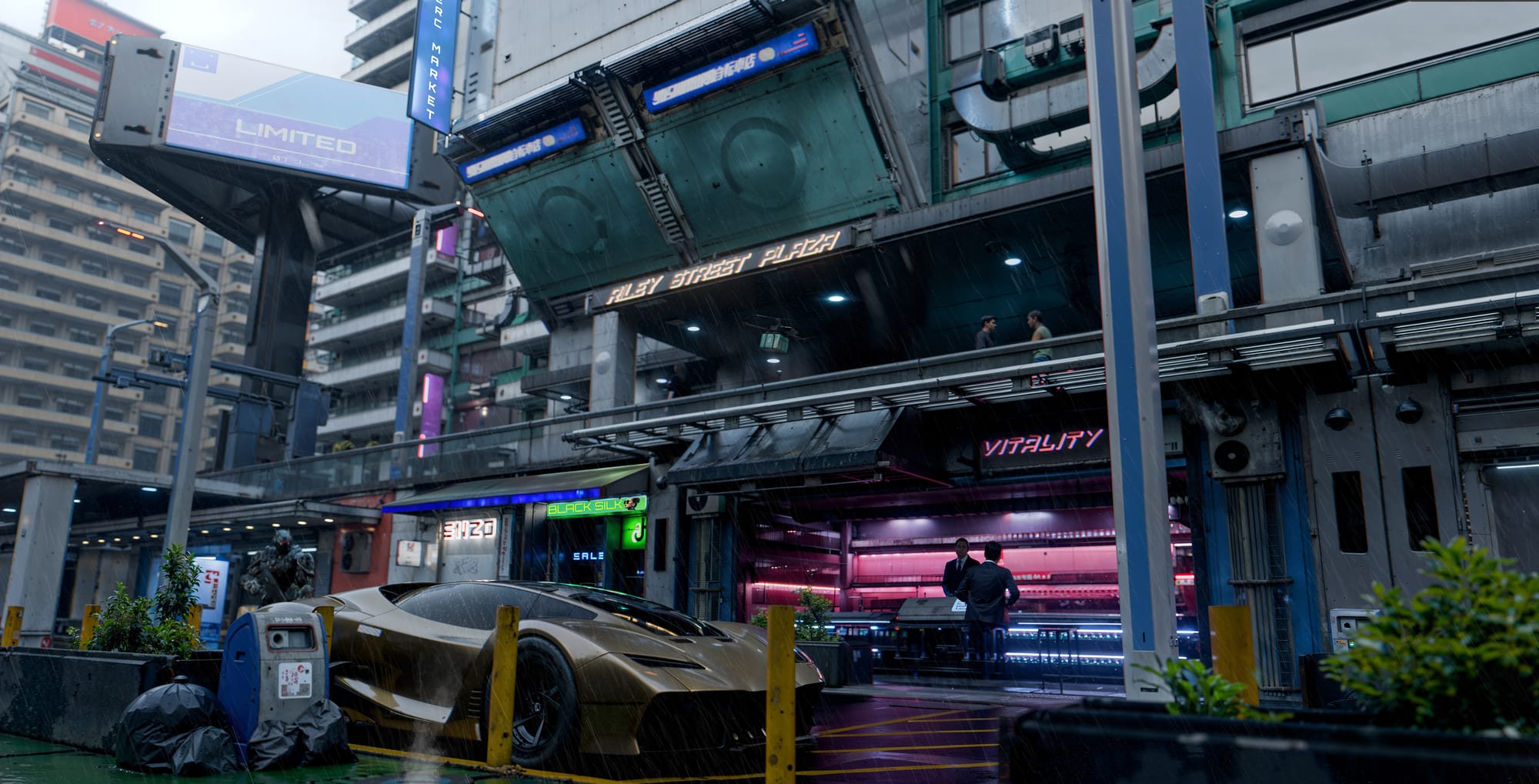
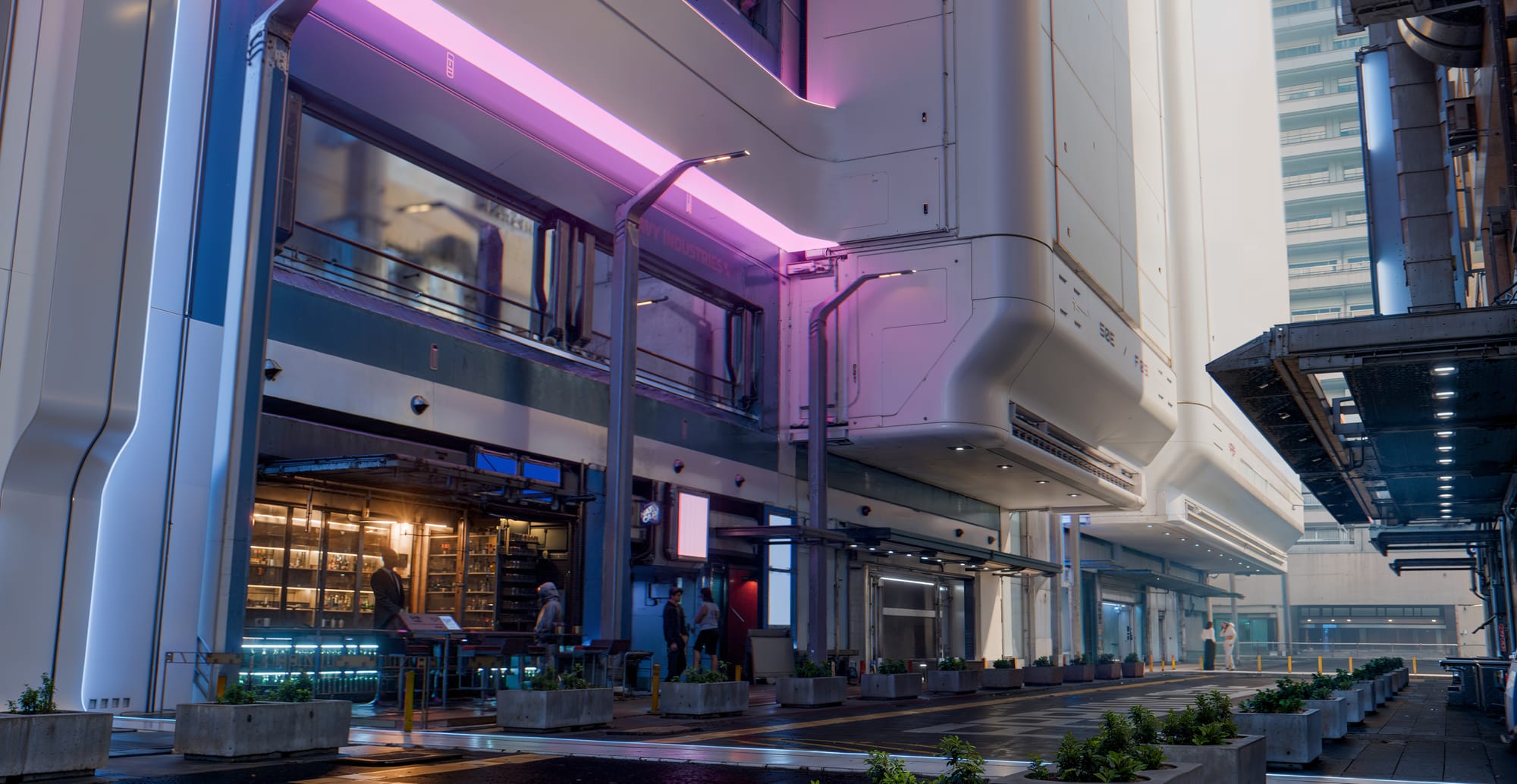
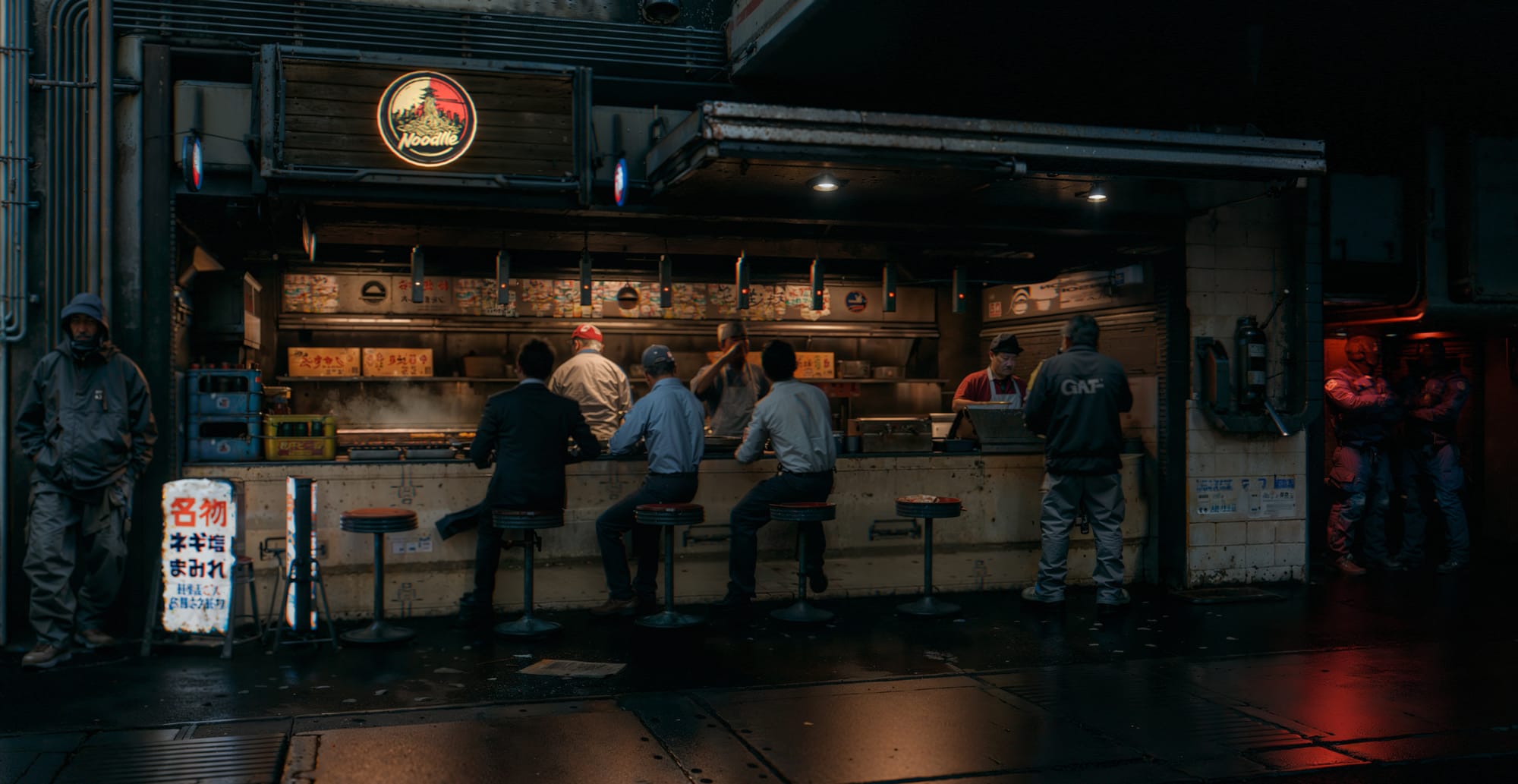
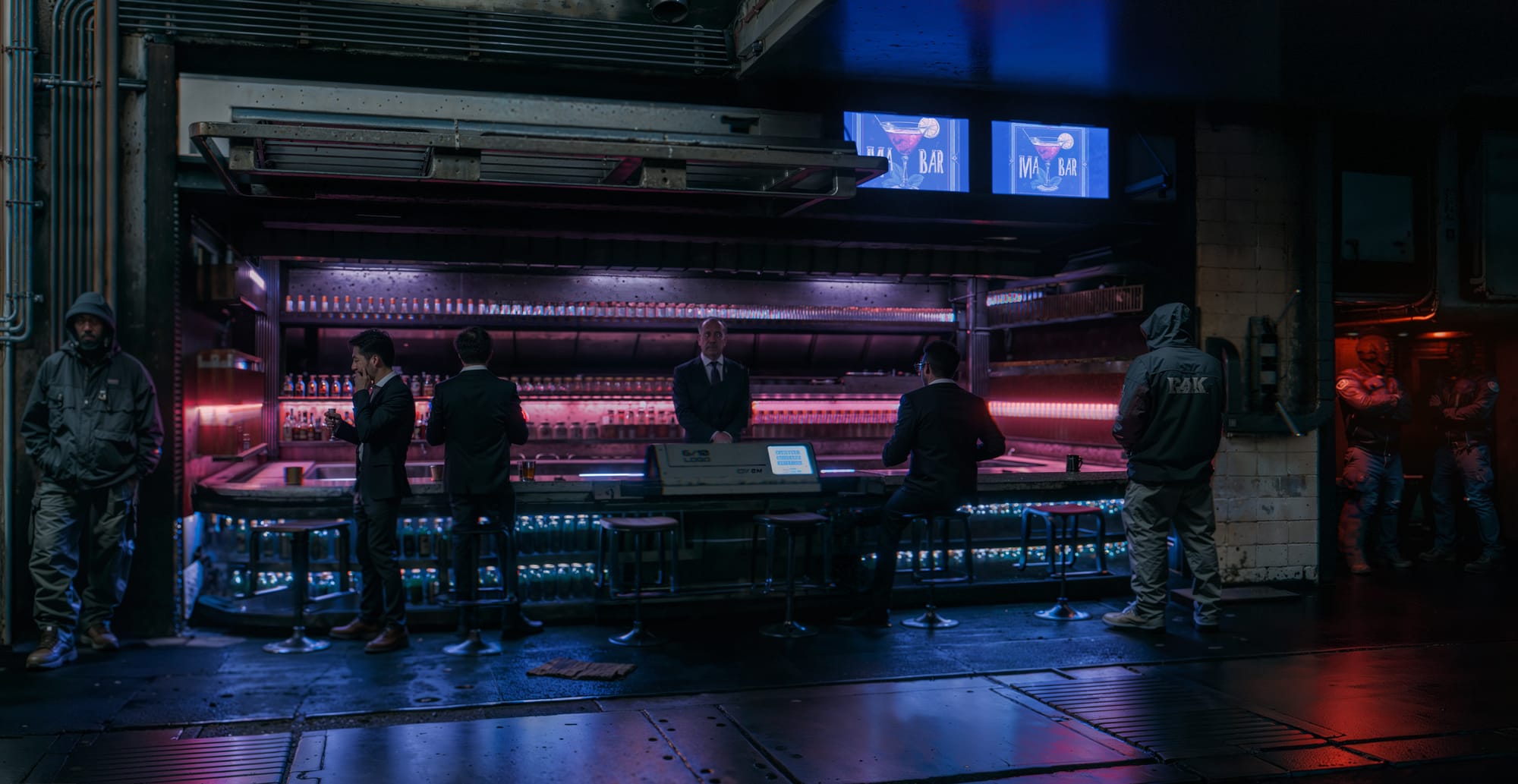
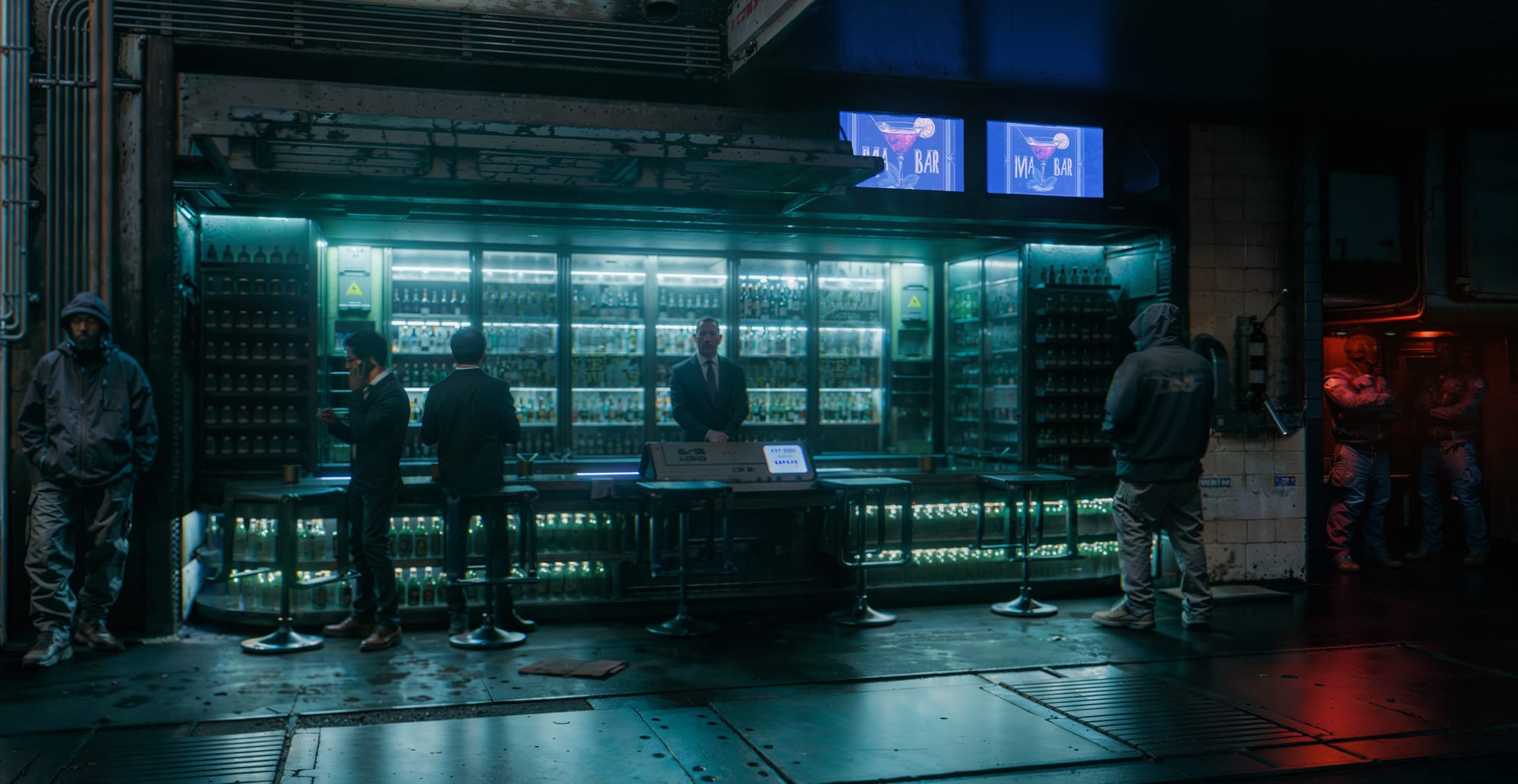
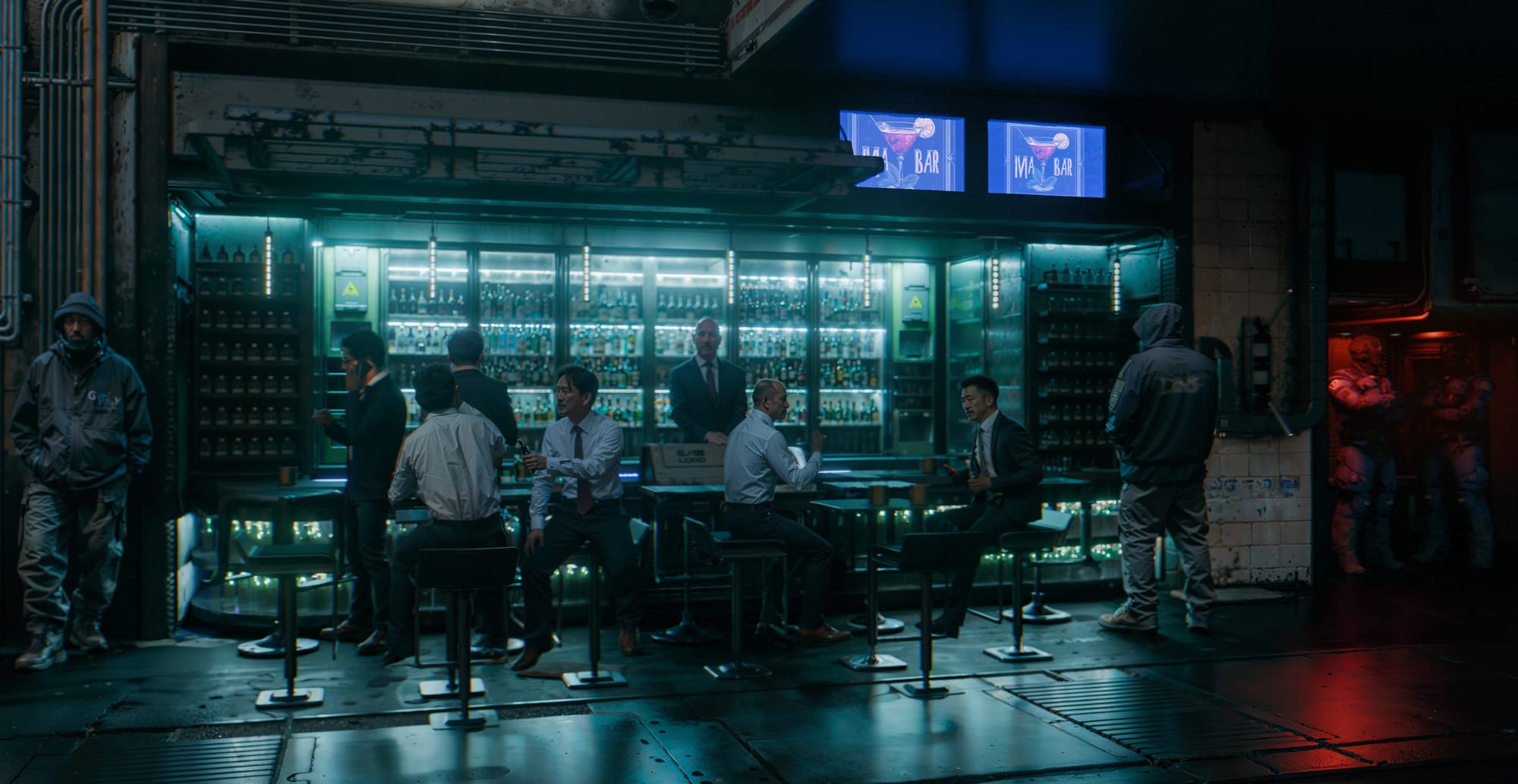
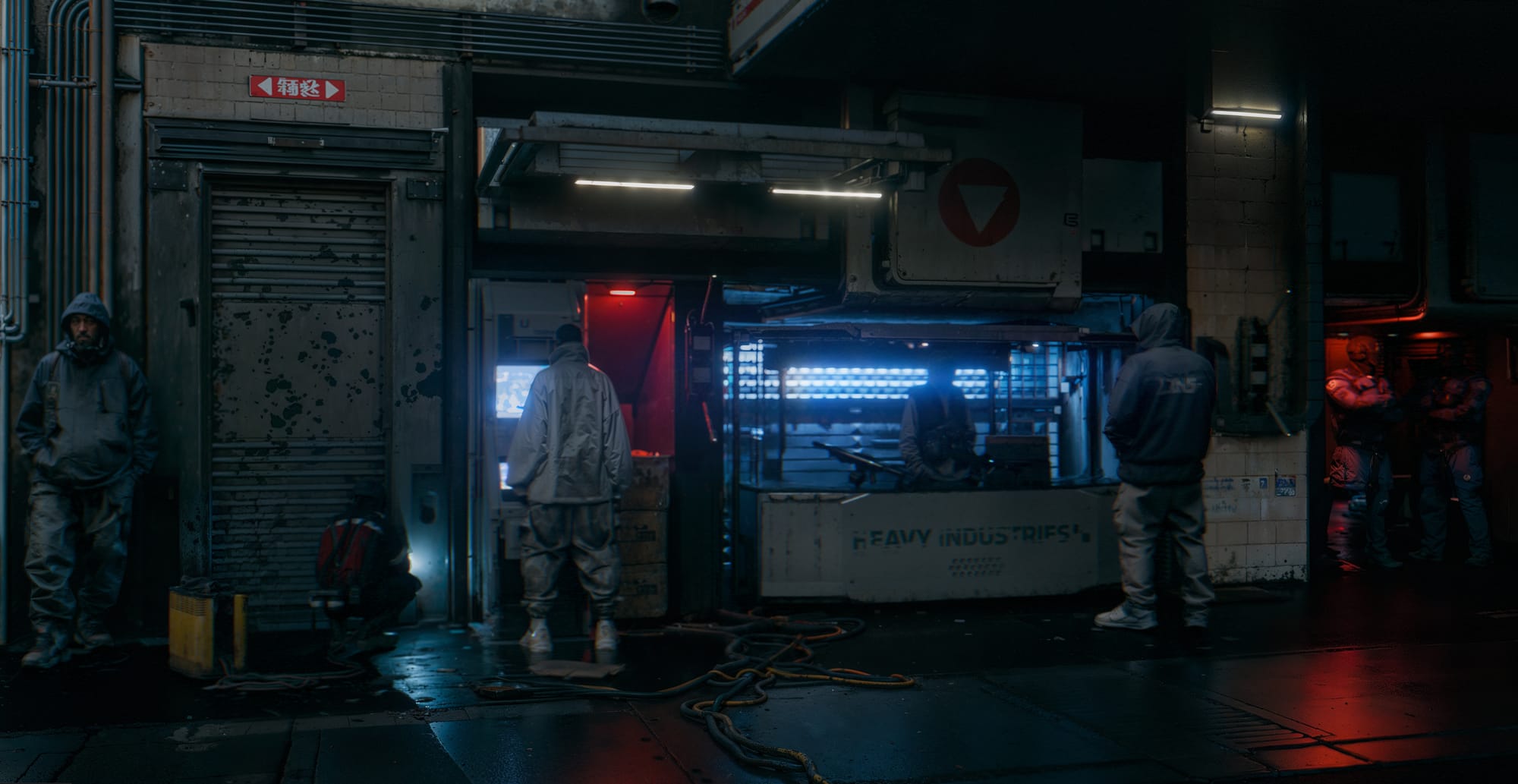
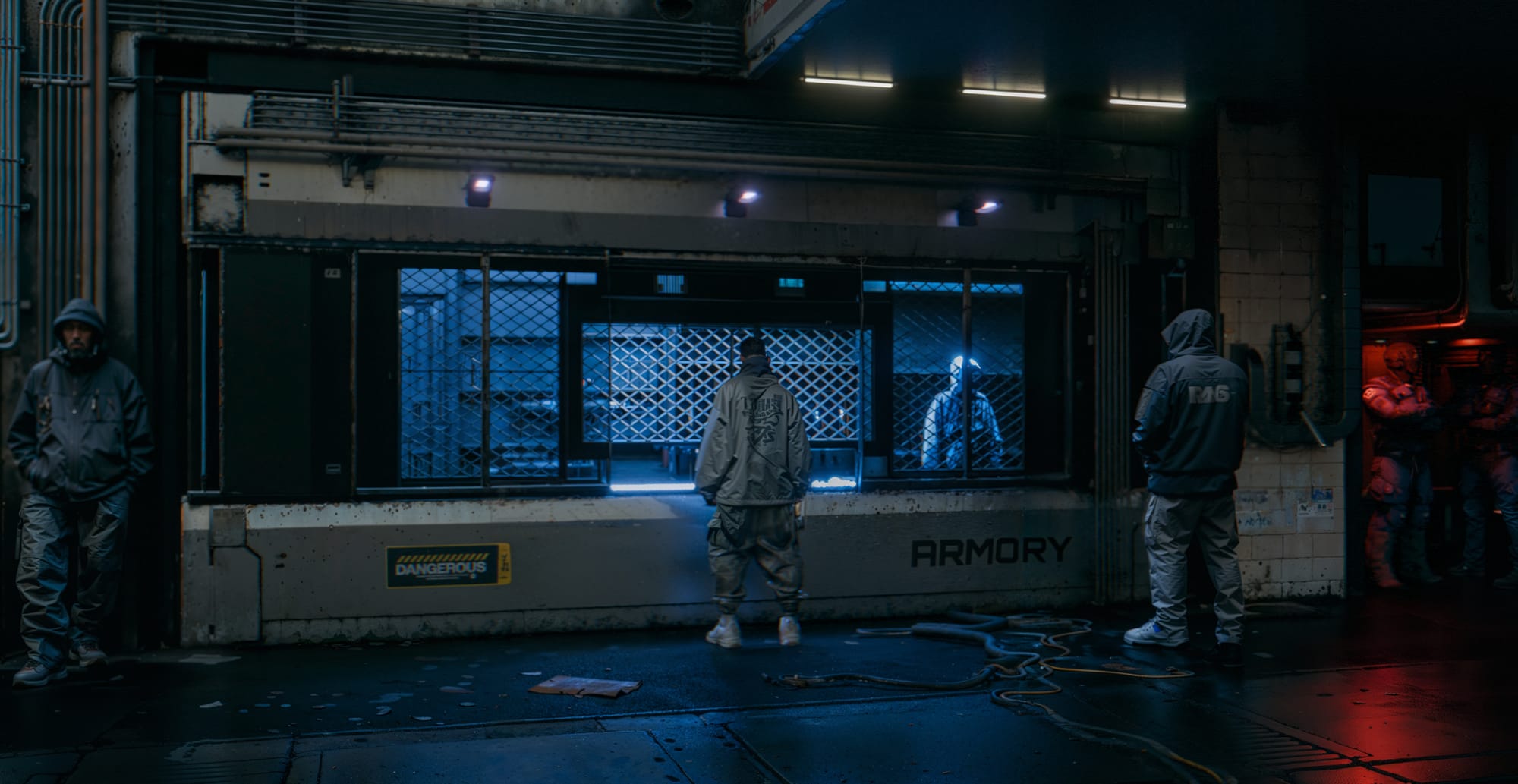
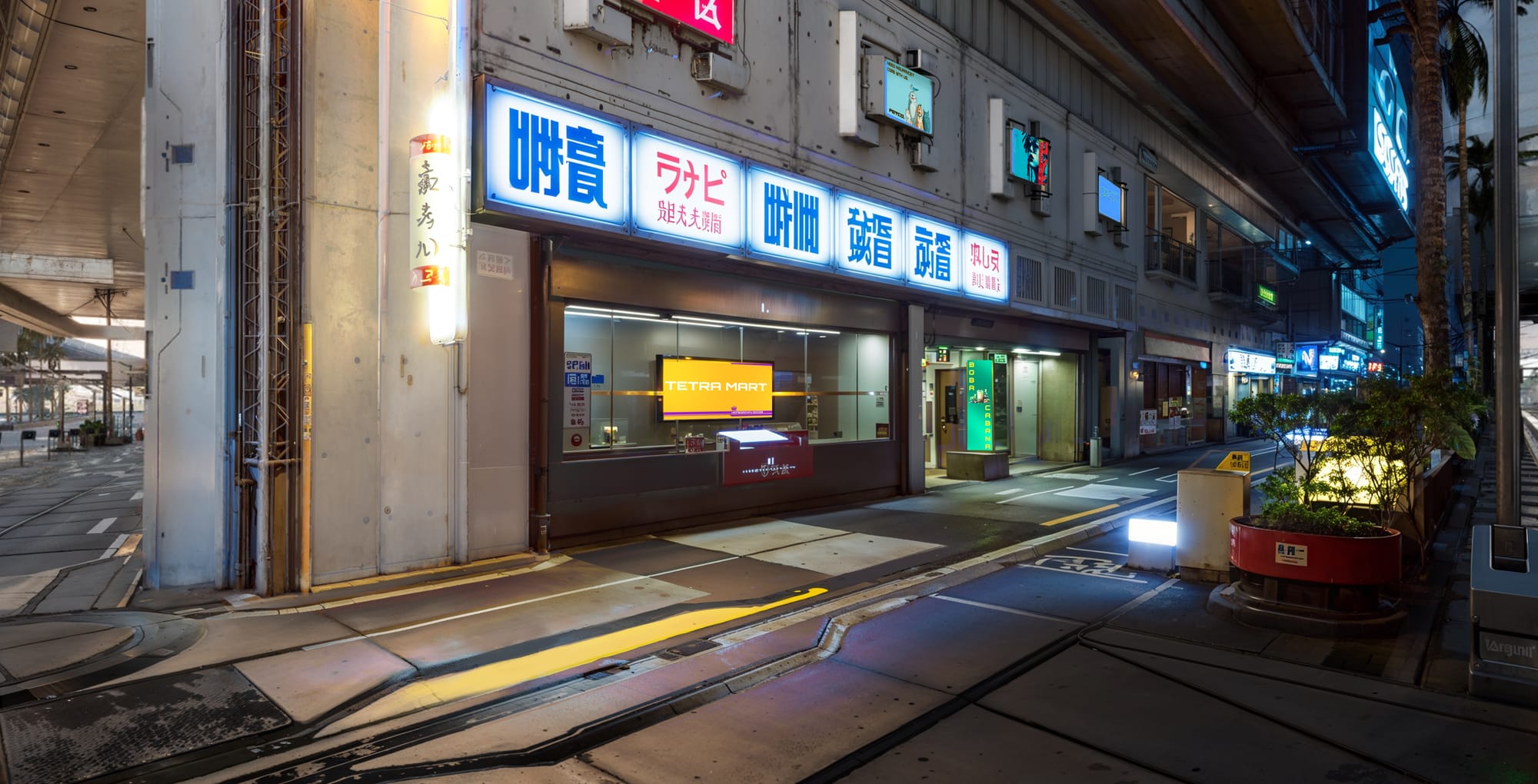
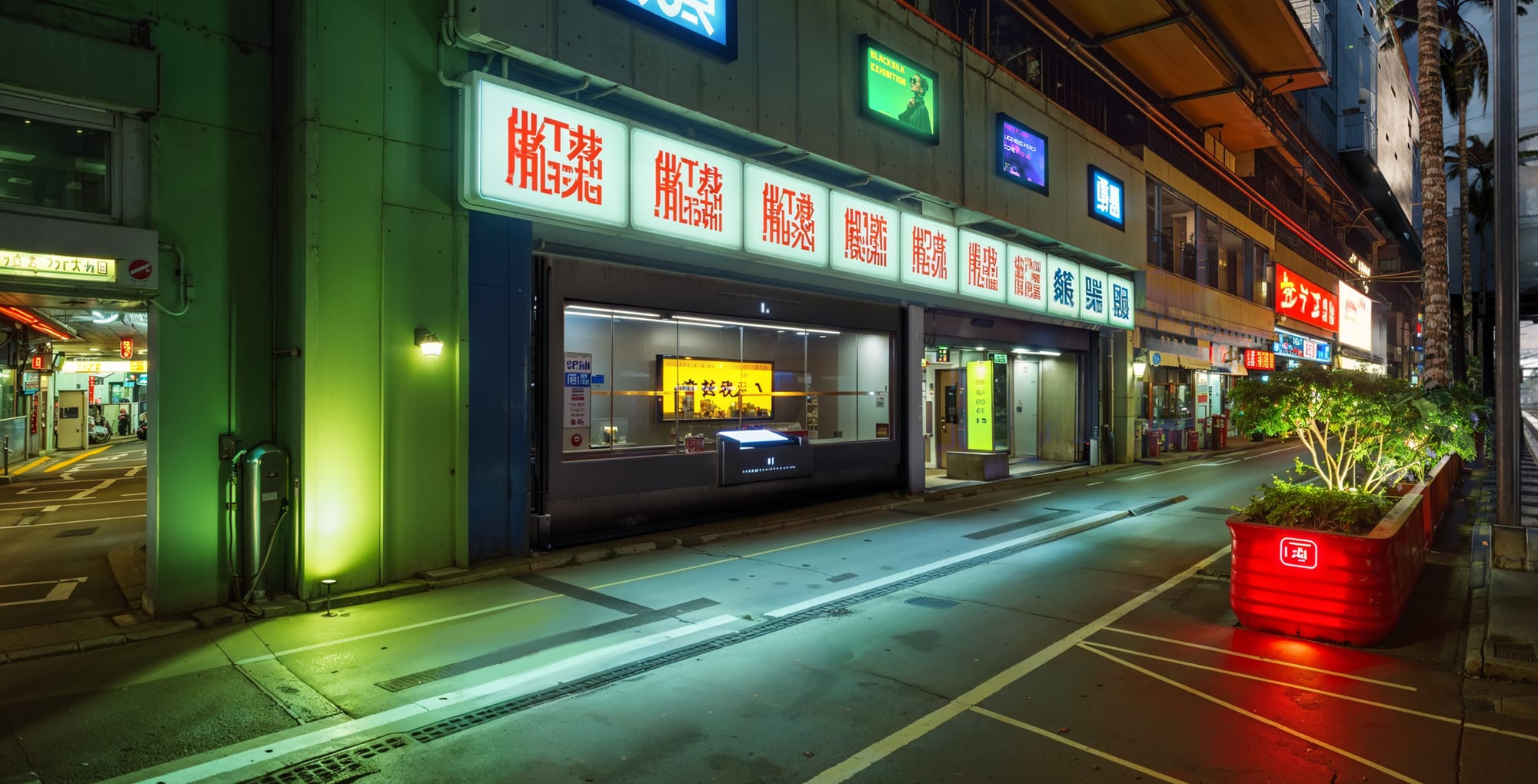
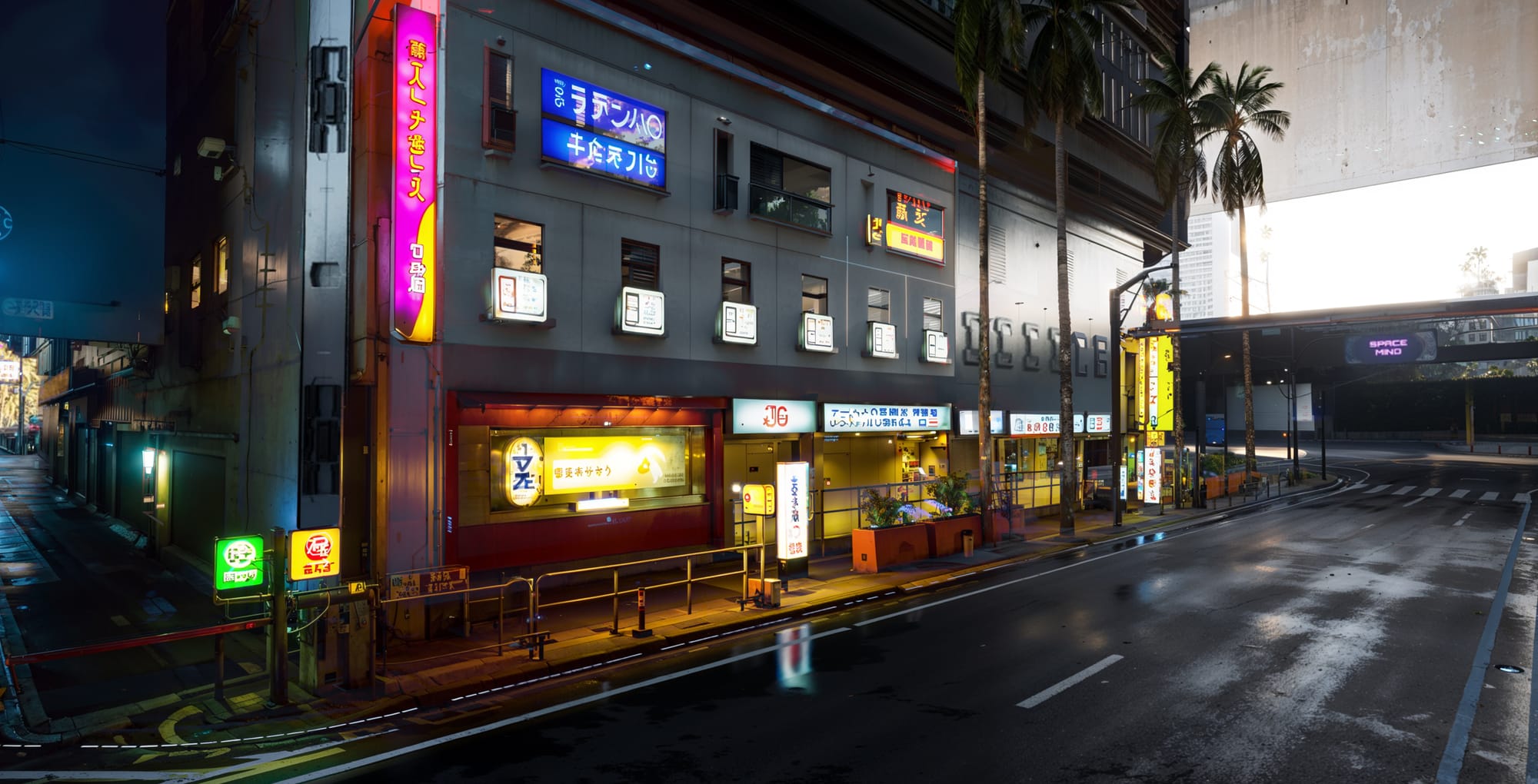
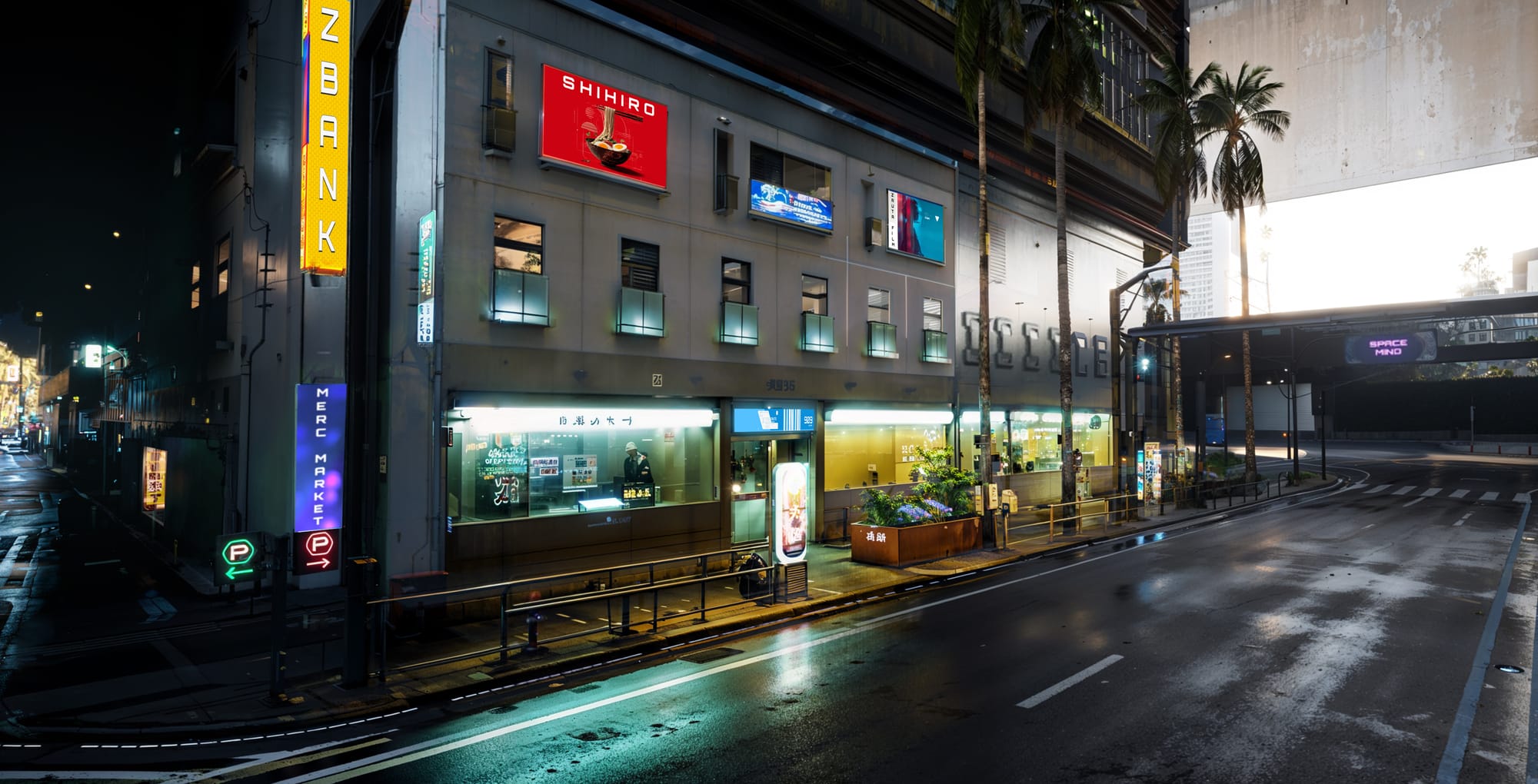
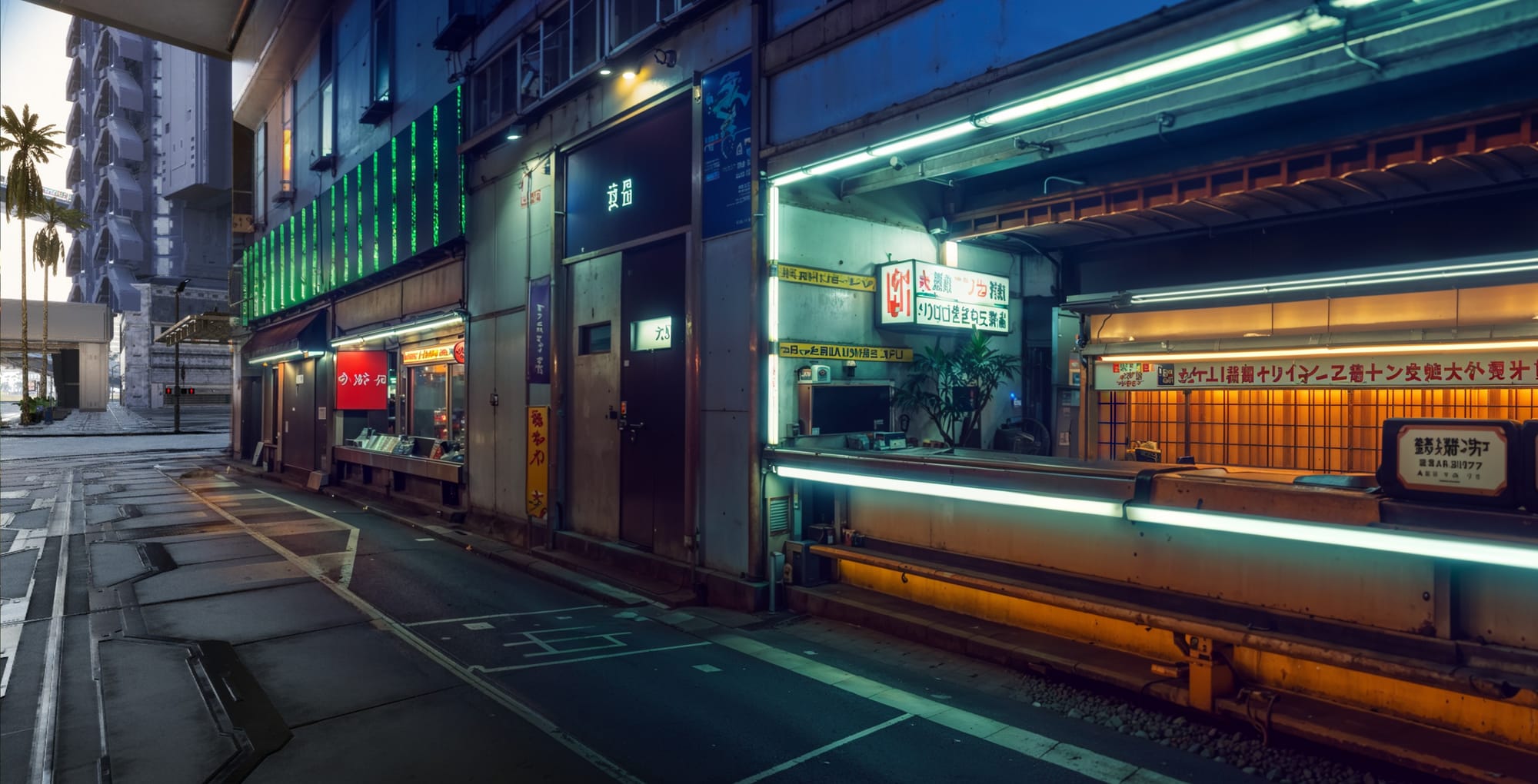
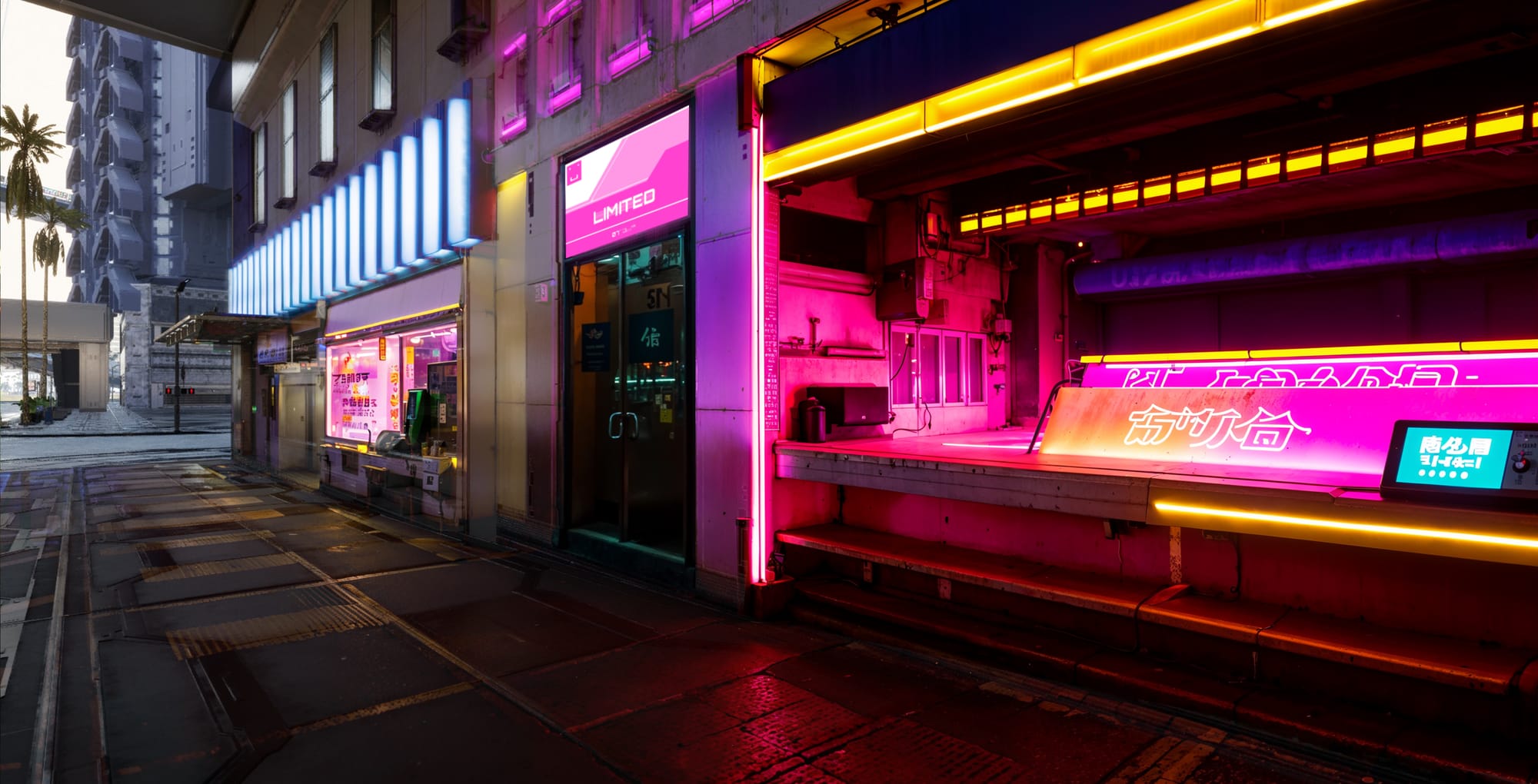
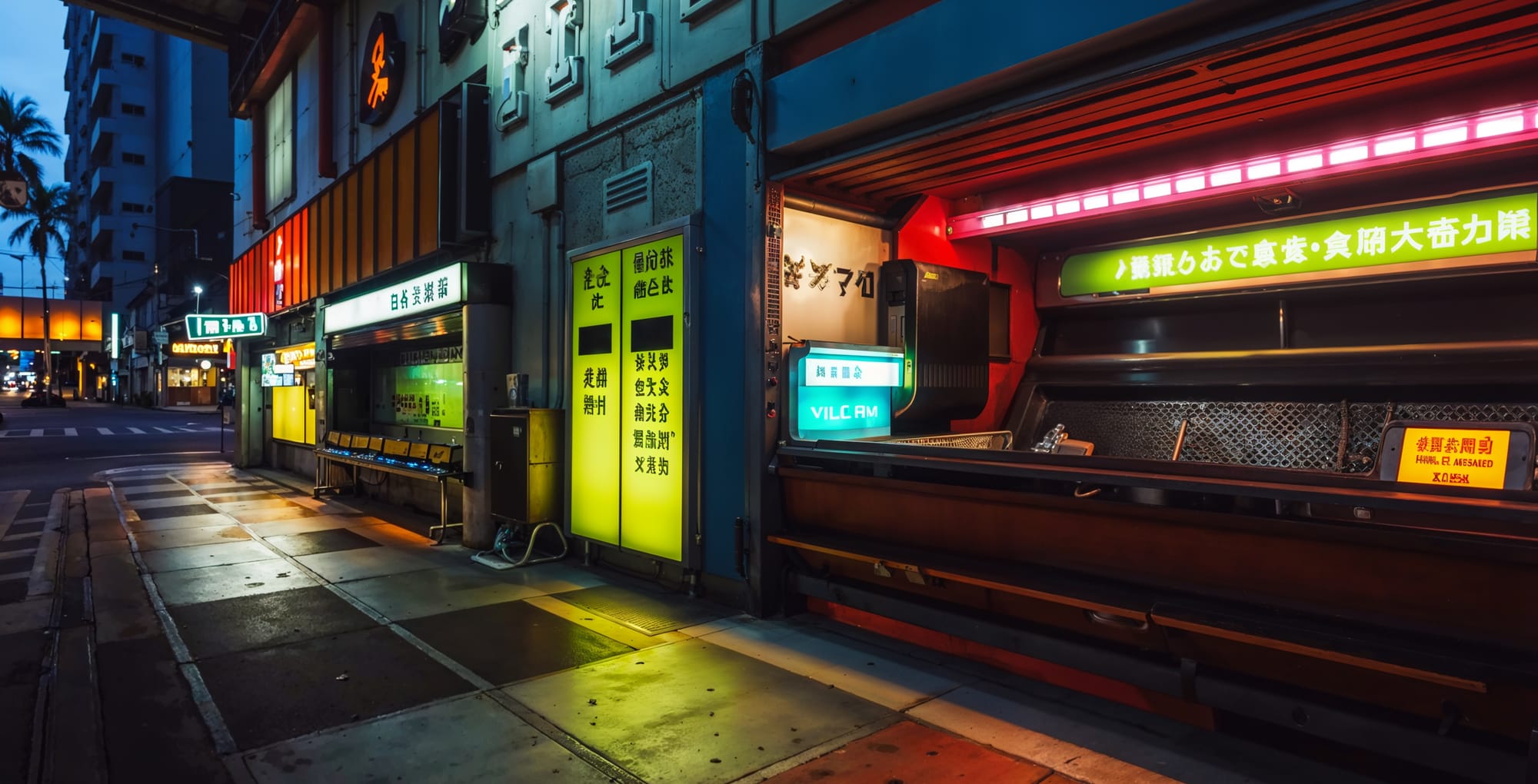
Alongside the creation of modular kits and level-building assets for Unreal Engine, supporting concept art is used to define clear visual targets for the open world. These concepts guide level artists on atmosphere, scale, and material quality as environments move toward final implementation.
The artwork often pushes beyond immediate technical constraints. This intentional overreach encourages experimentation, leading to new techniques and workflows that gradually bring in-game environments closer to the intended look and raise the overall visual standard.
During early design phases, multiple variations of the same area are produced quickly to explore layout and mood. AI-assisted style transfer is used to apply reference aesthetics onto level screenshots, followed by manual cleanup to remove artifacts and clarify direction. This allows a strong foundation to be established in Blender or Unreal, with rapid visual iteration before committing to and rebuilding the final environment in engine.
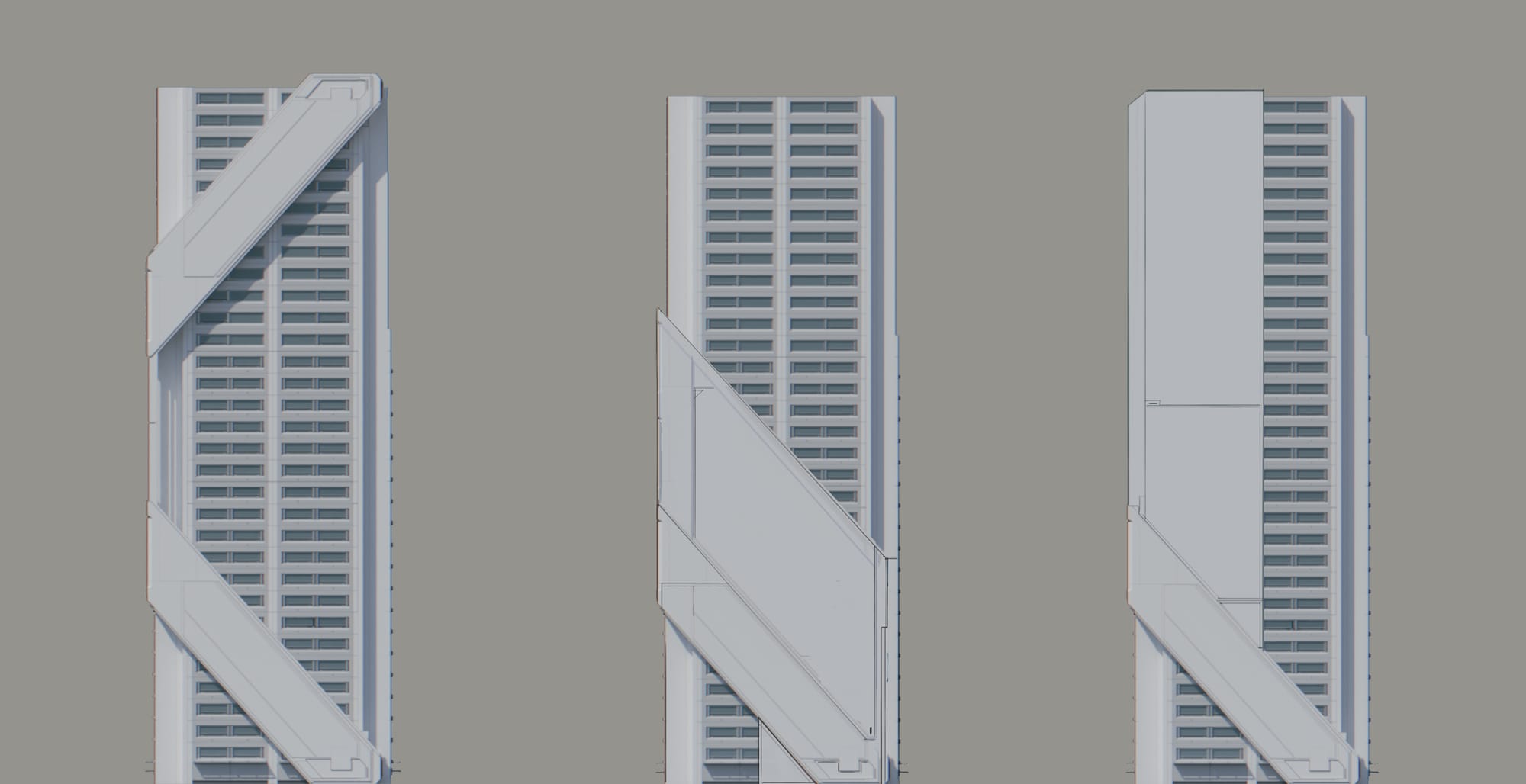
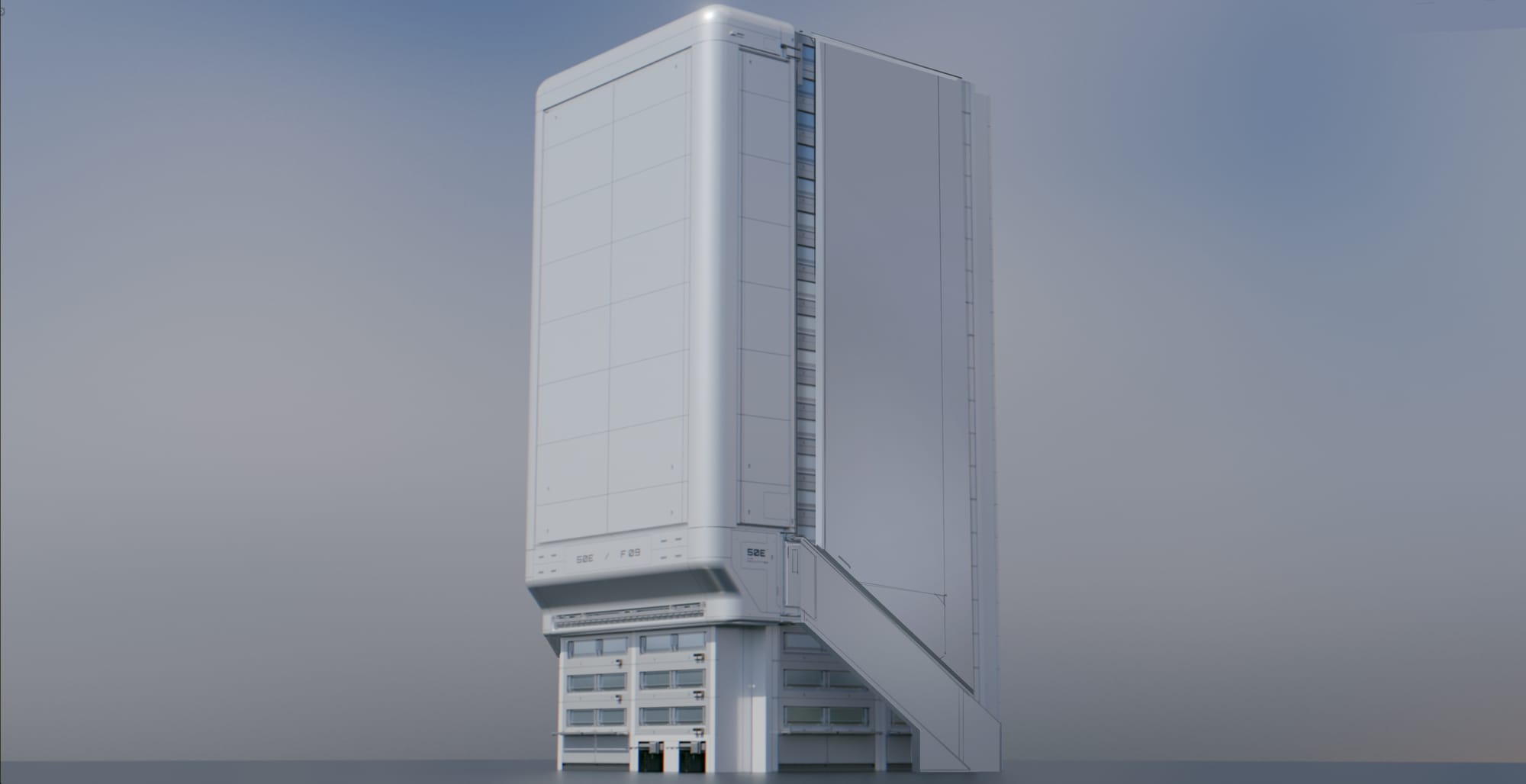
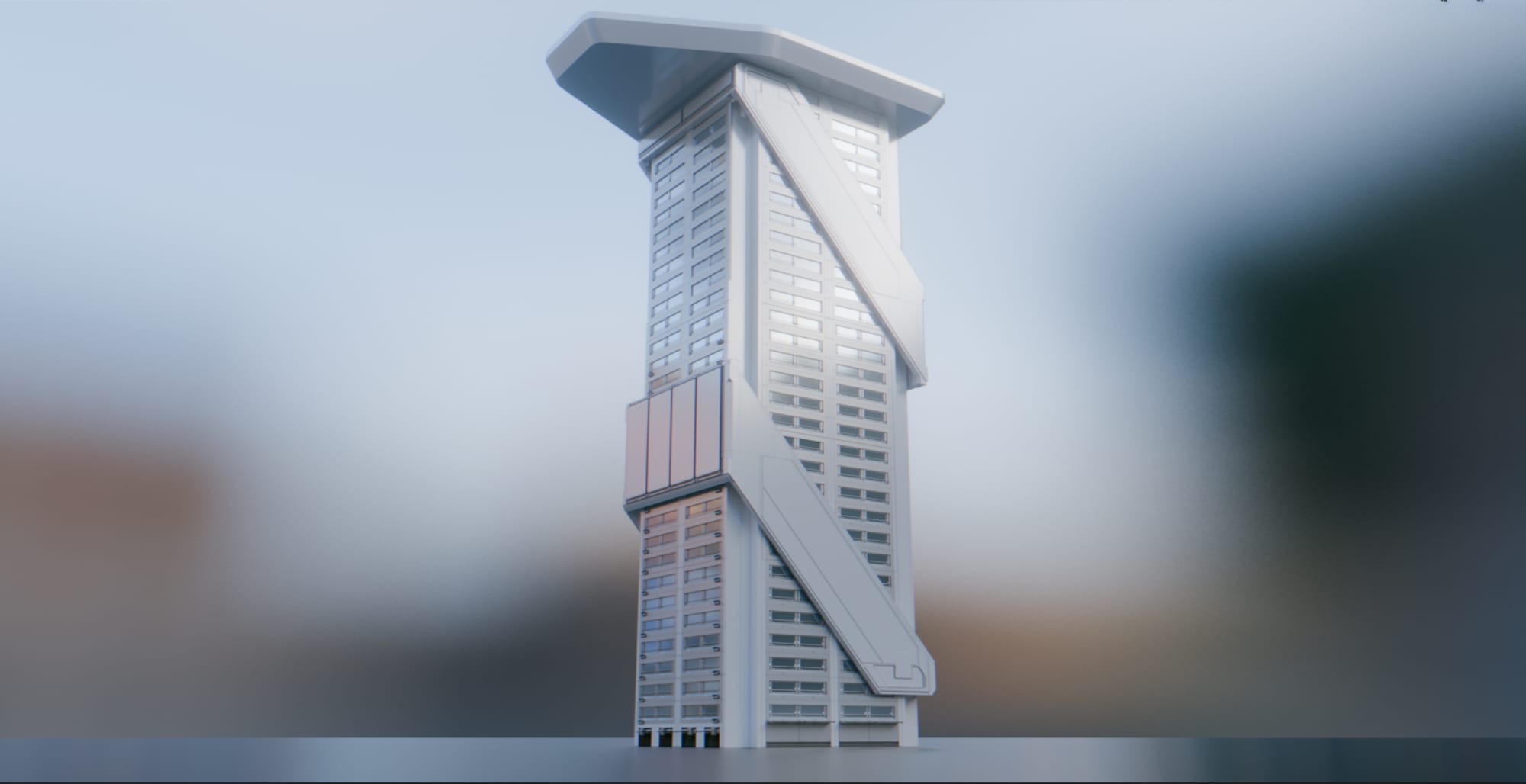
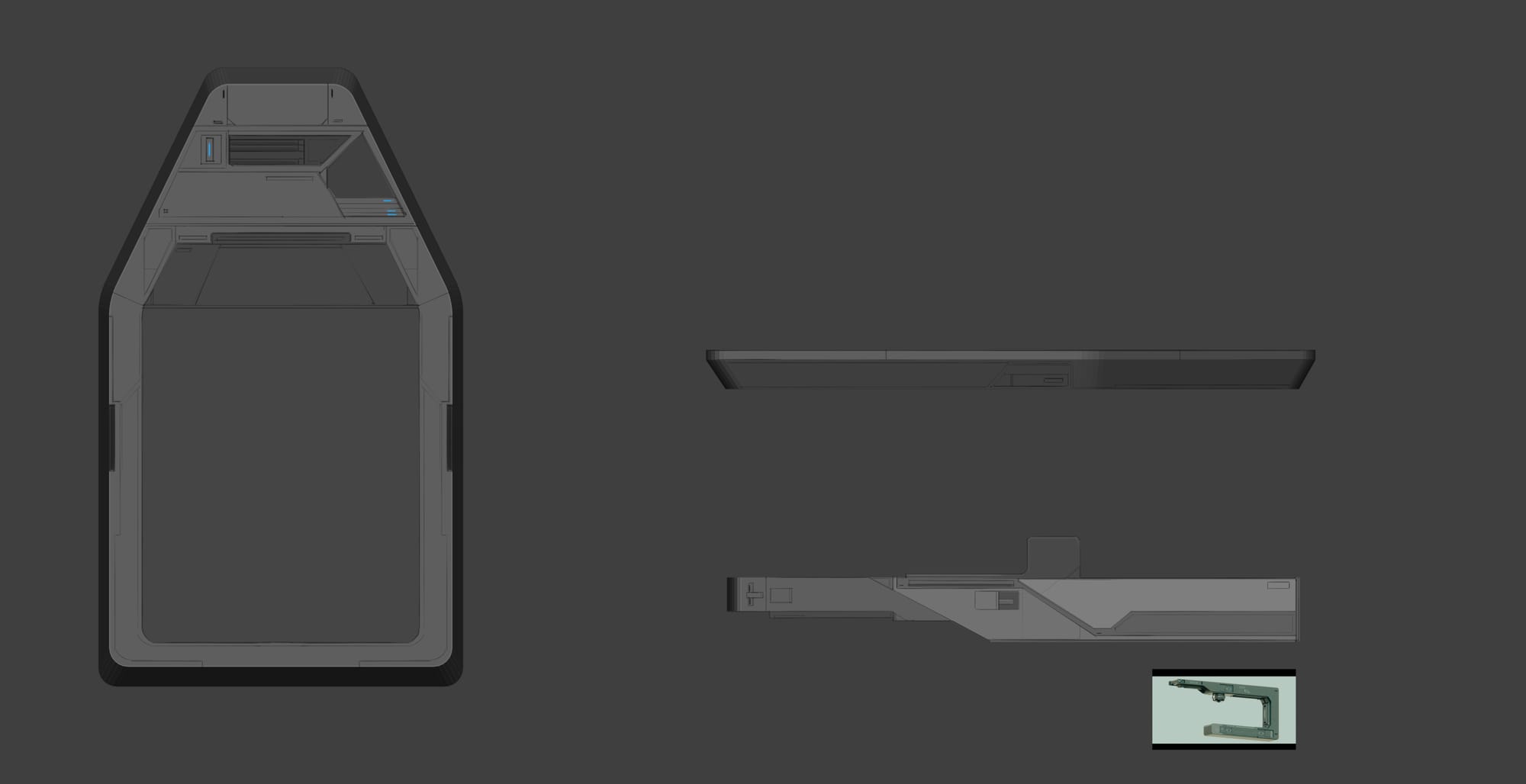
Future Building Early Designs
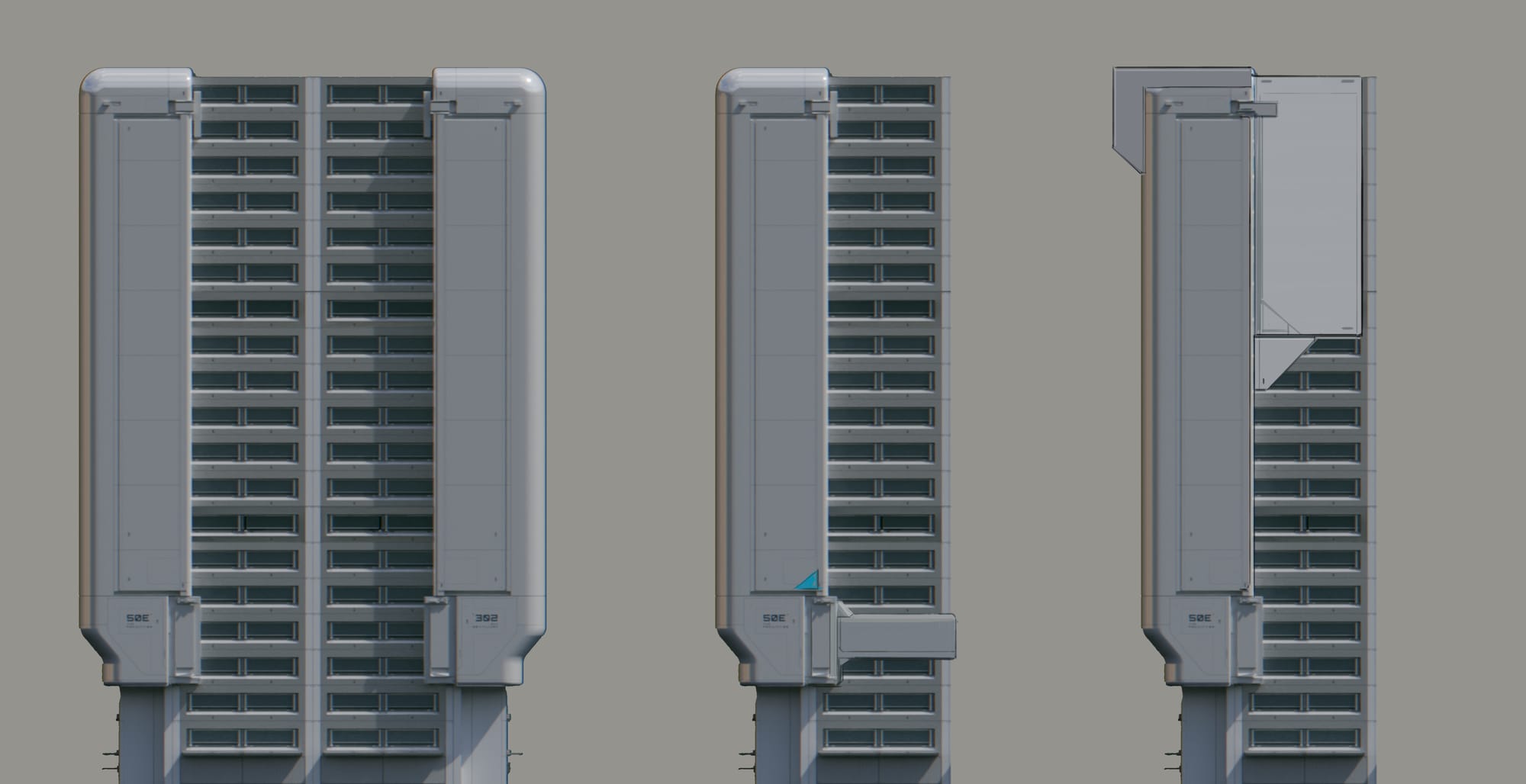
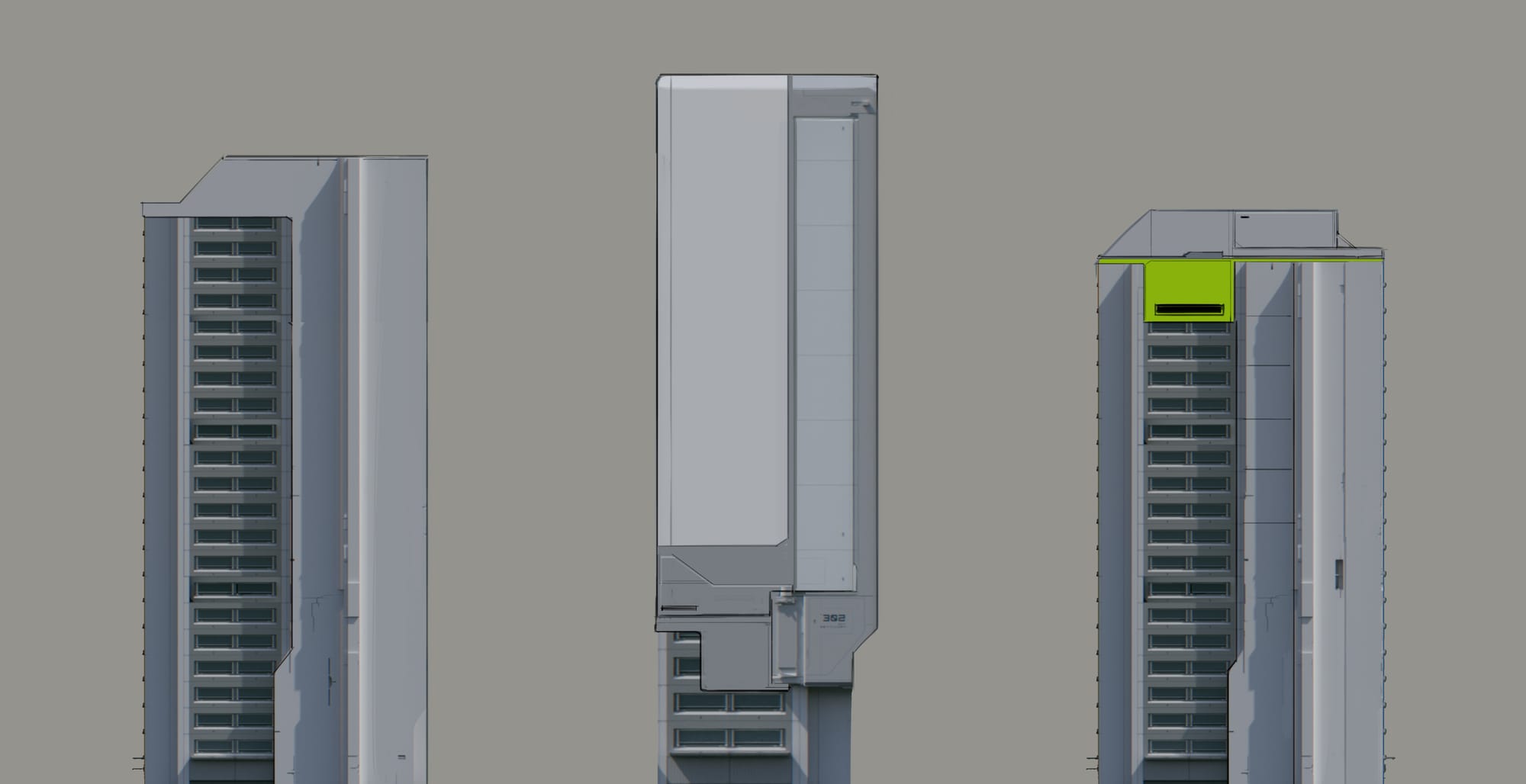
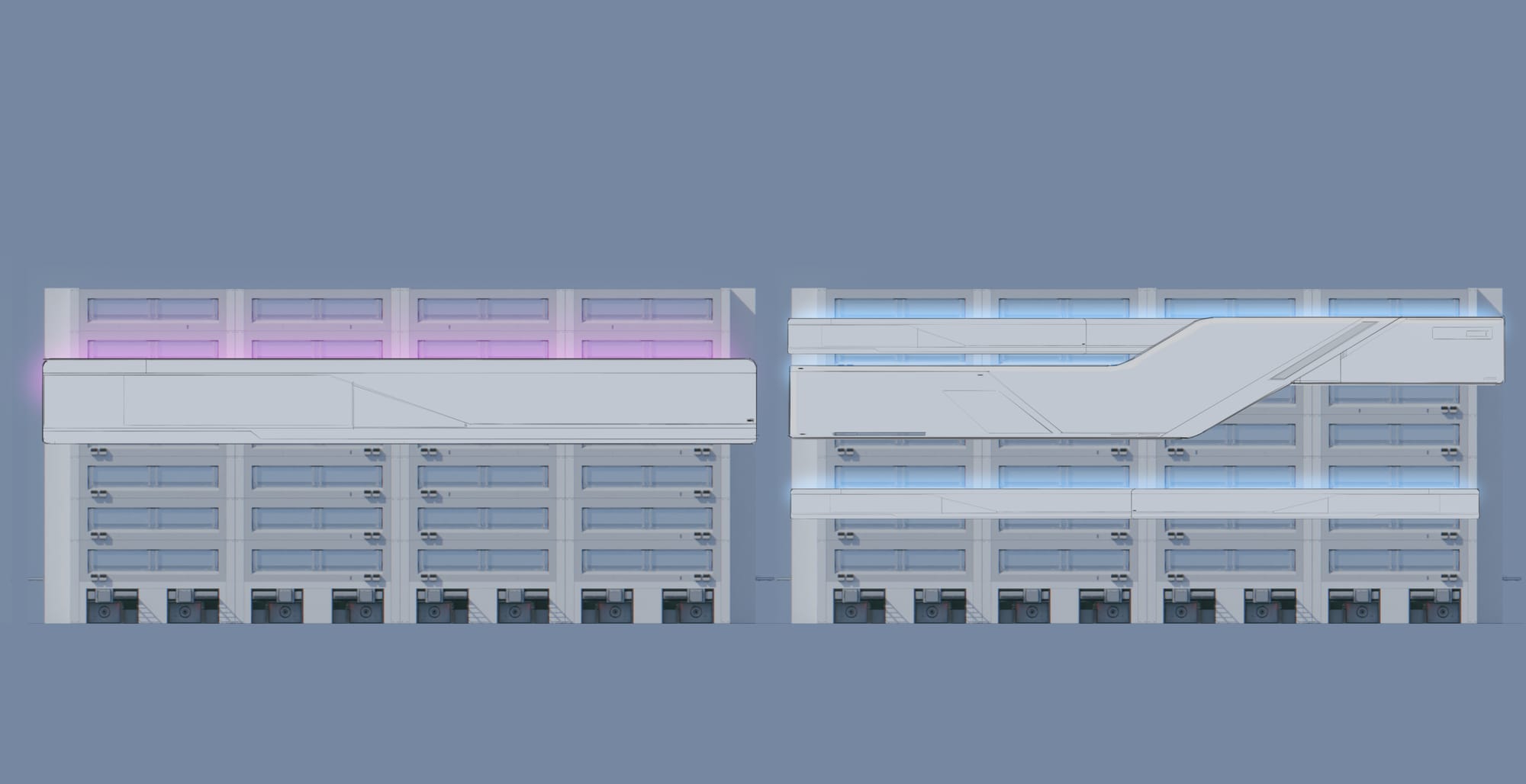
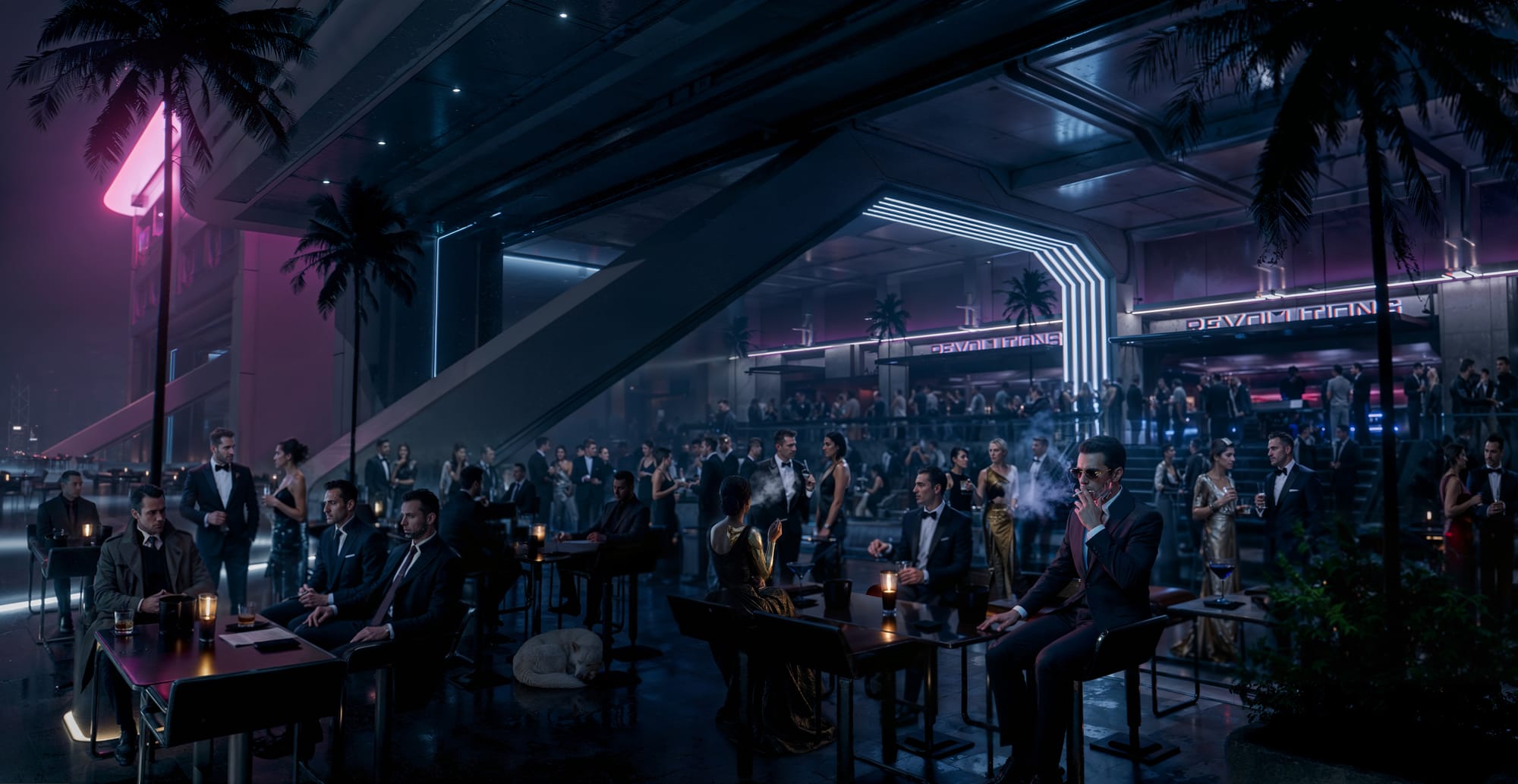
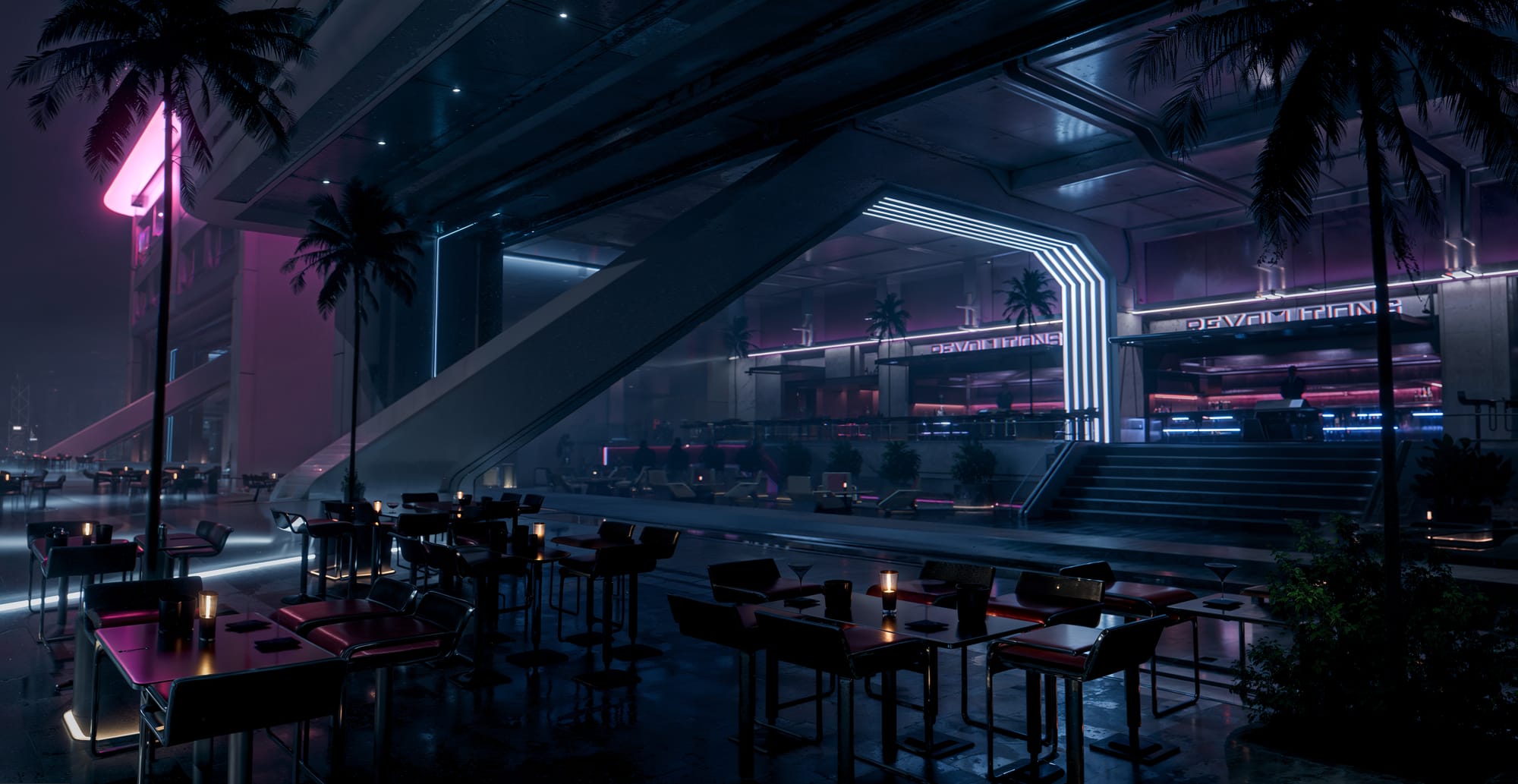
The scale and precision required by Wilder World’s procedural building system naturally favor rigid structures and consistent angles to support efficient mass generation. While effective, this can introduce a static or overly uniform feel across large architectural areas.
To counter this, early building add-ons such as trapezium and diagrid modules were introduced to break up strict 45- and 90-degree geometry. Building on this foundation, new experiments are underway with softer, more curved architectural elements designed to further disrupt repetition and reintroduce organic form.
These additions draw inspiration from real-world Miami architecture and are intended to gradually reshape the city’s visual rhythm. While still in early development, these new kits are designed to integrate progressively into the open world, subtly evolving the skyline while opening up new opportunities for exploration and varied gameplay experiences.
PROPS
Consumables
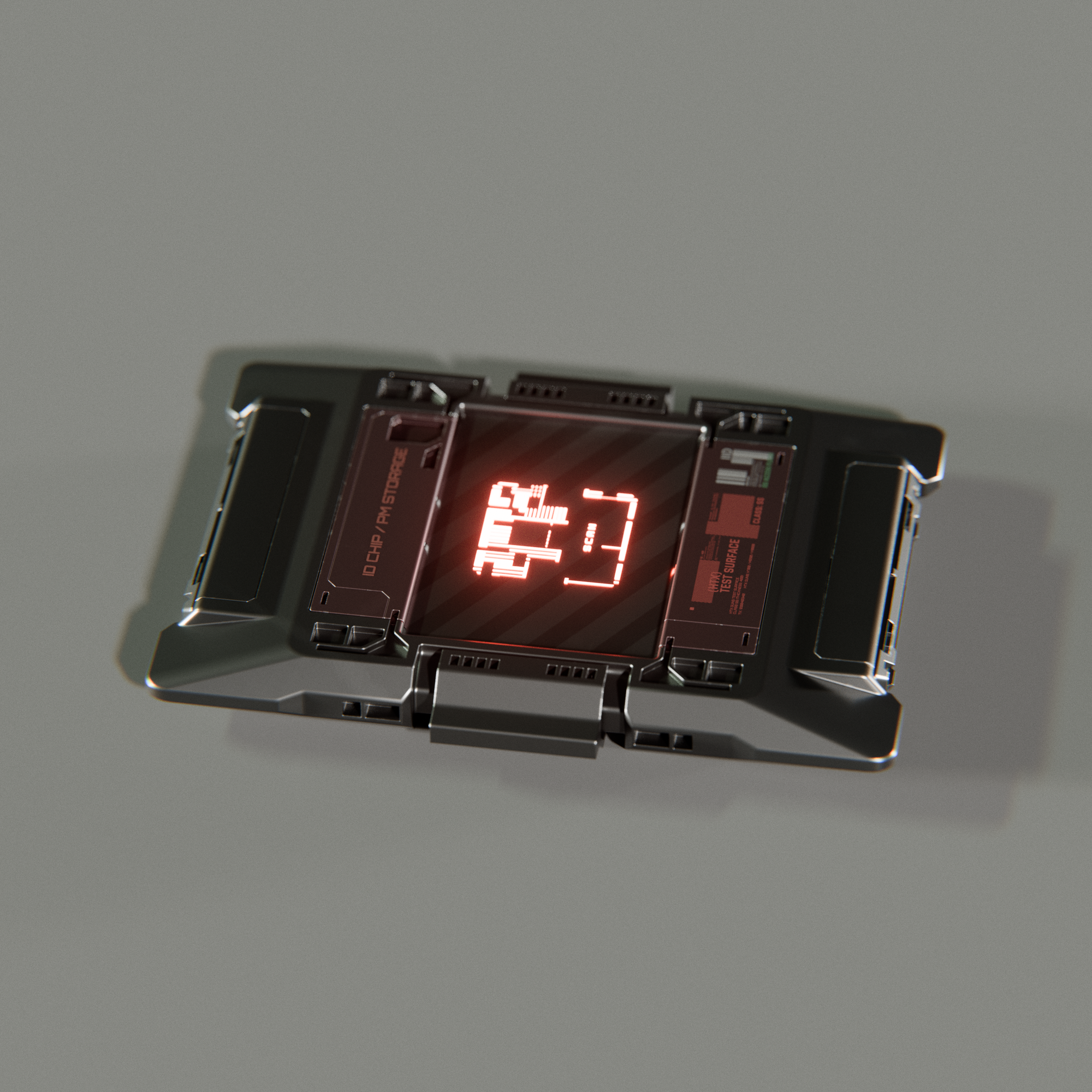
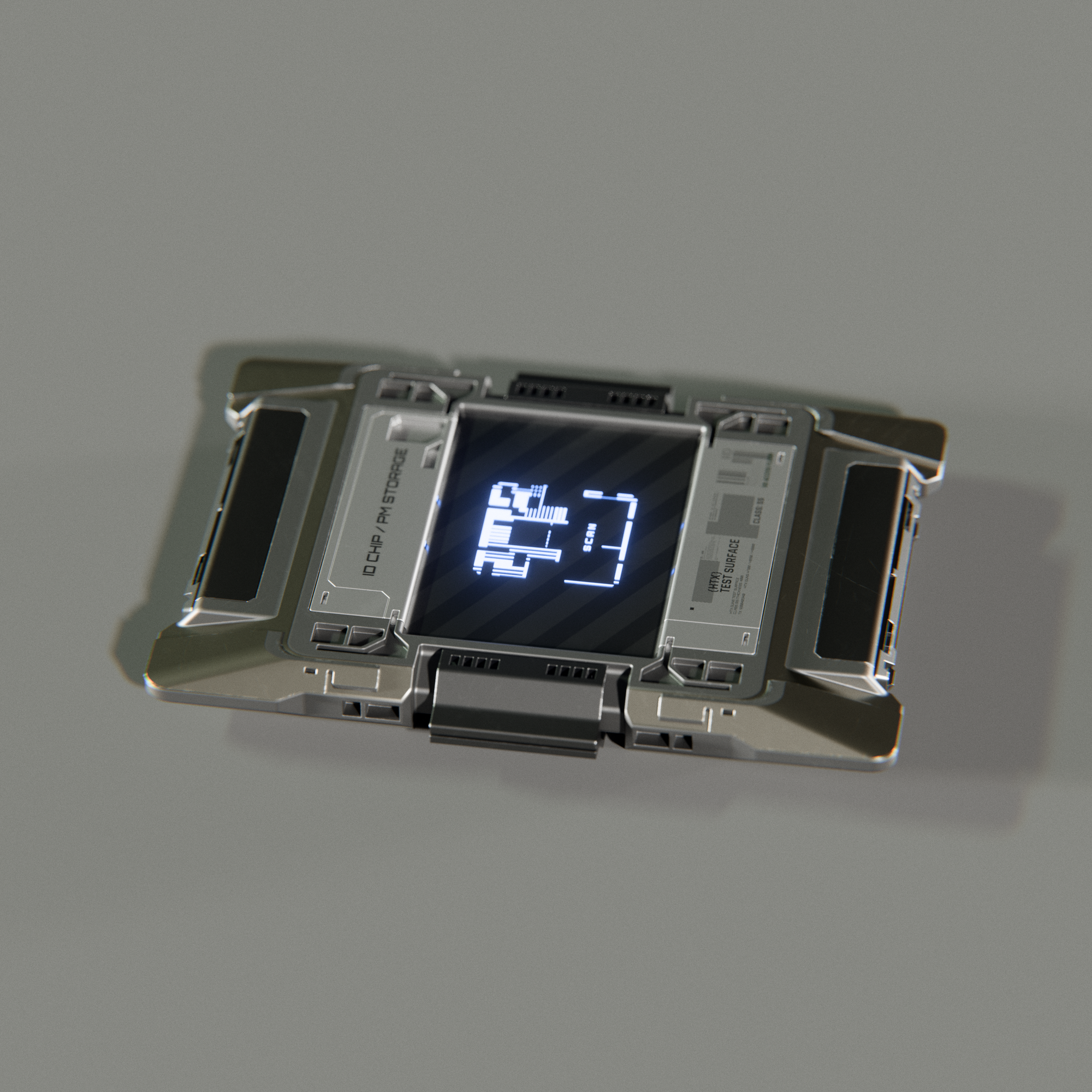
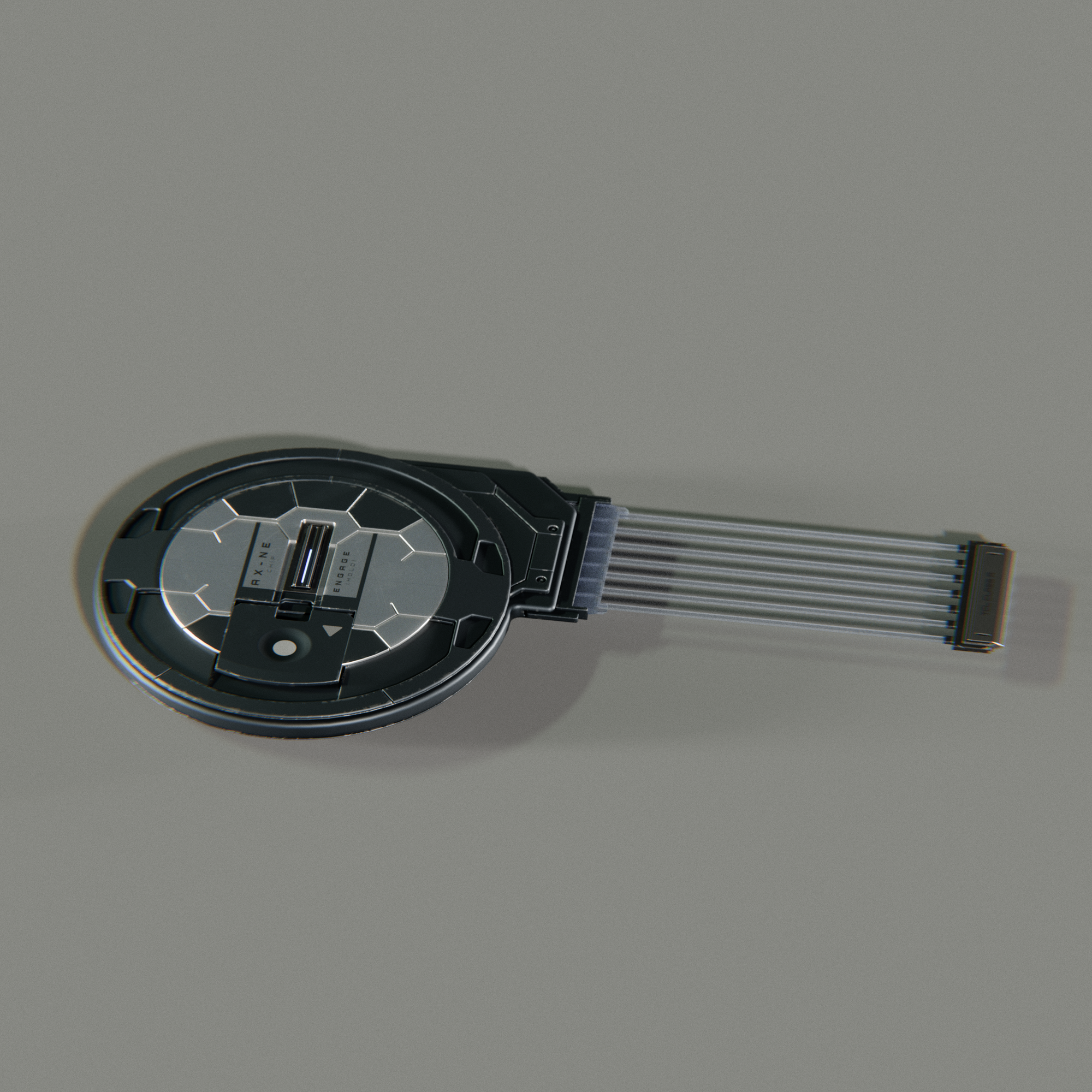
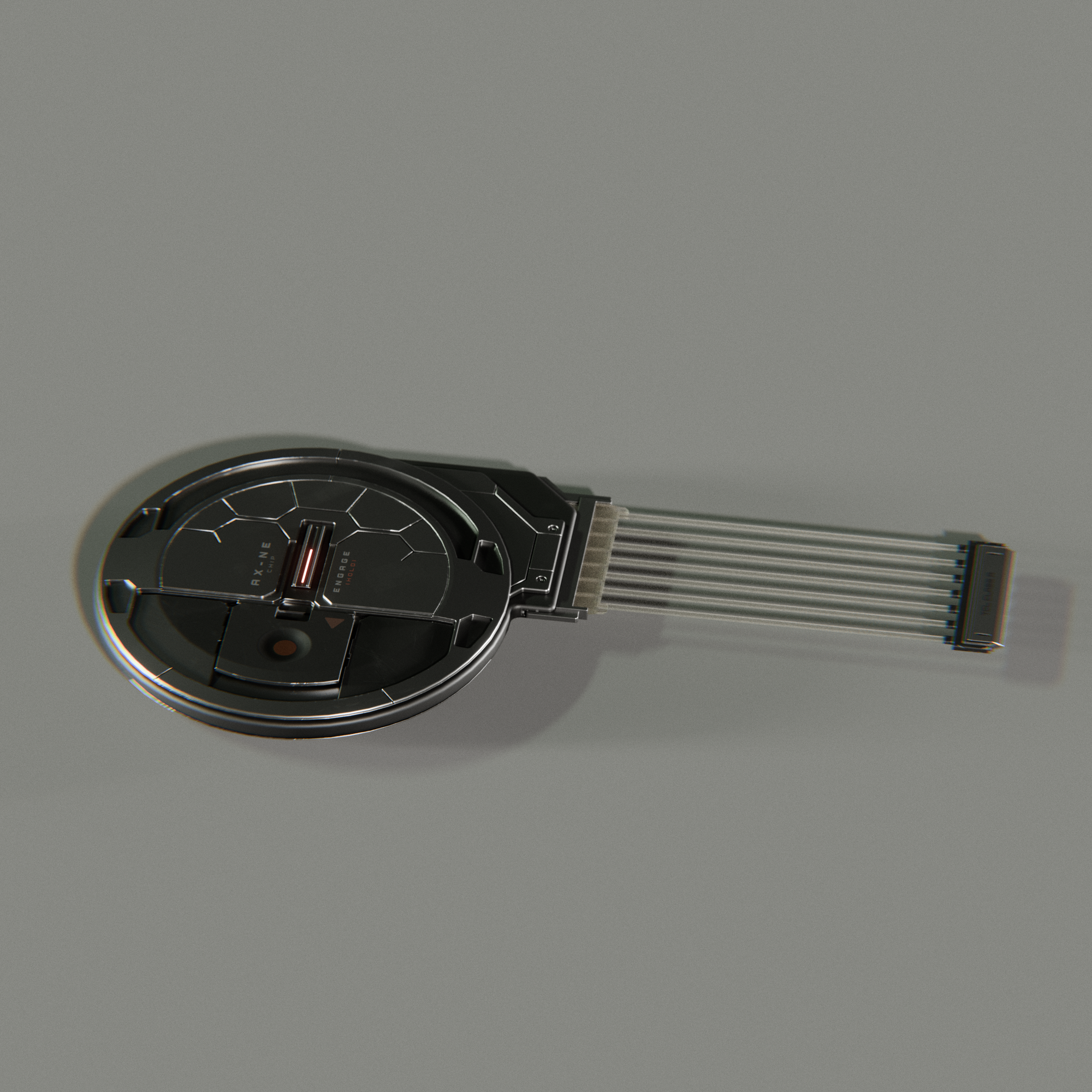
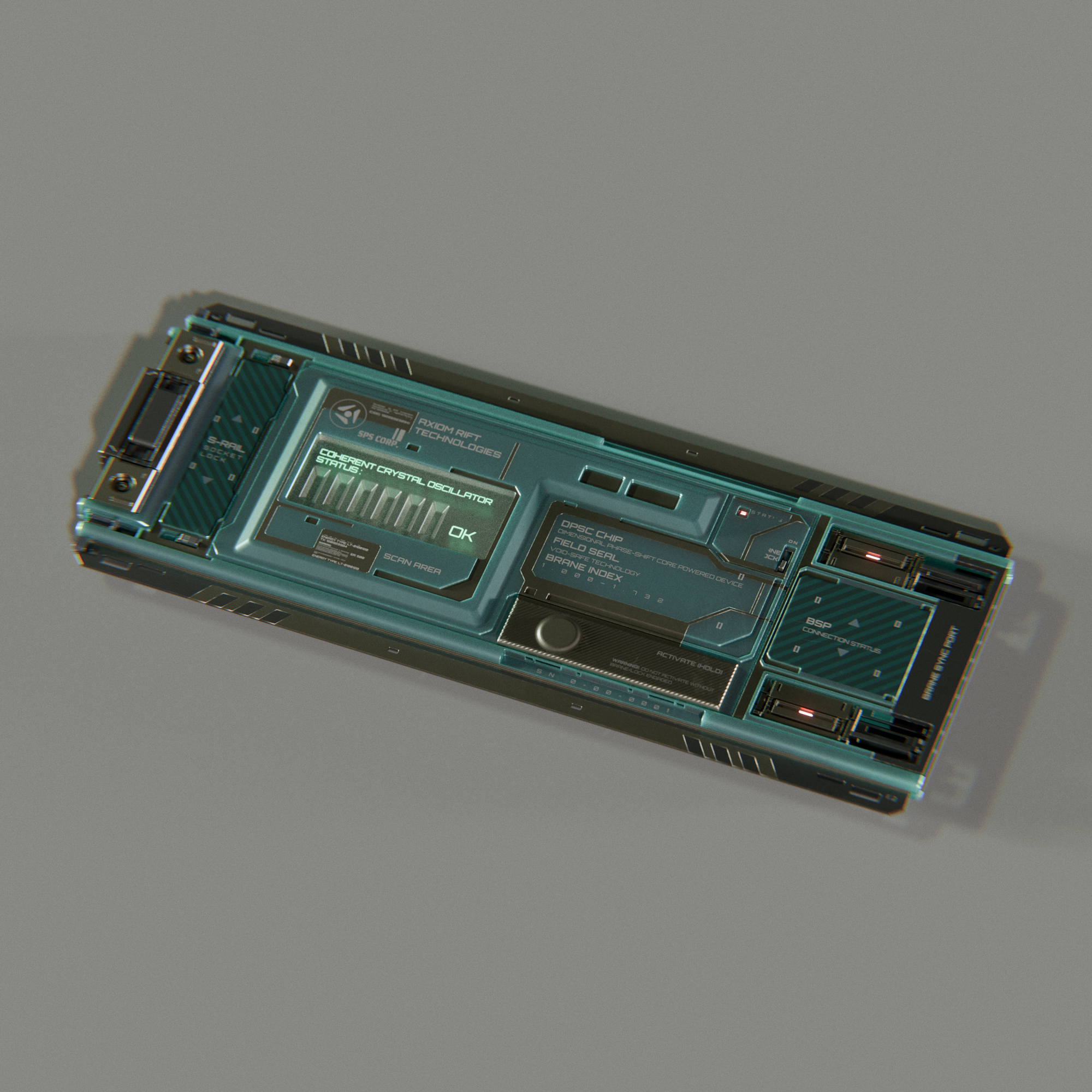
Early concepts explored new consumables and loot tied to missions and open-world combat. Initial designs include collectible chips and shards dropped by defeated enemies, such as Phase Shards linked to breach technology, ID chips recovered from fallen agents, and neural chips intended to unlock abilities or skills once enough are collected. While these mechanics are still being evaluated, they establish a foundation for progression-driven loot and reward logic.
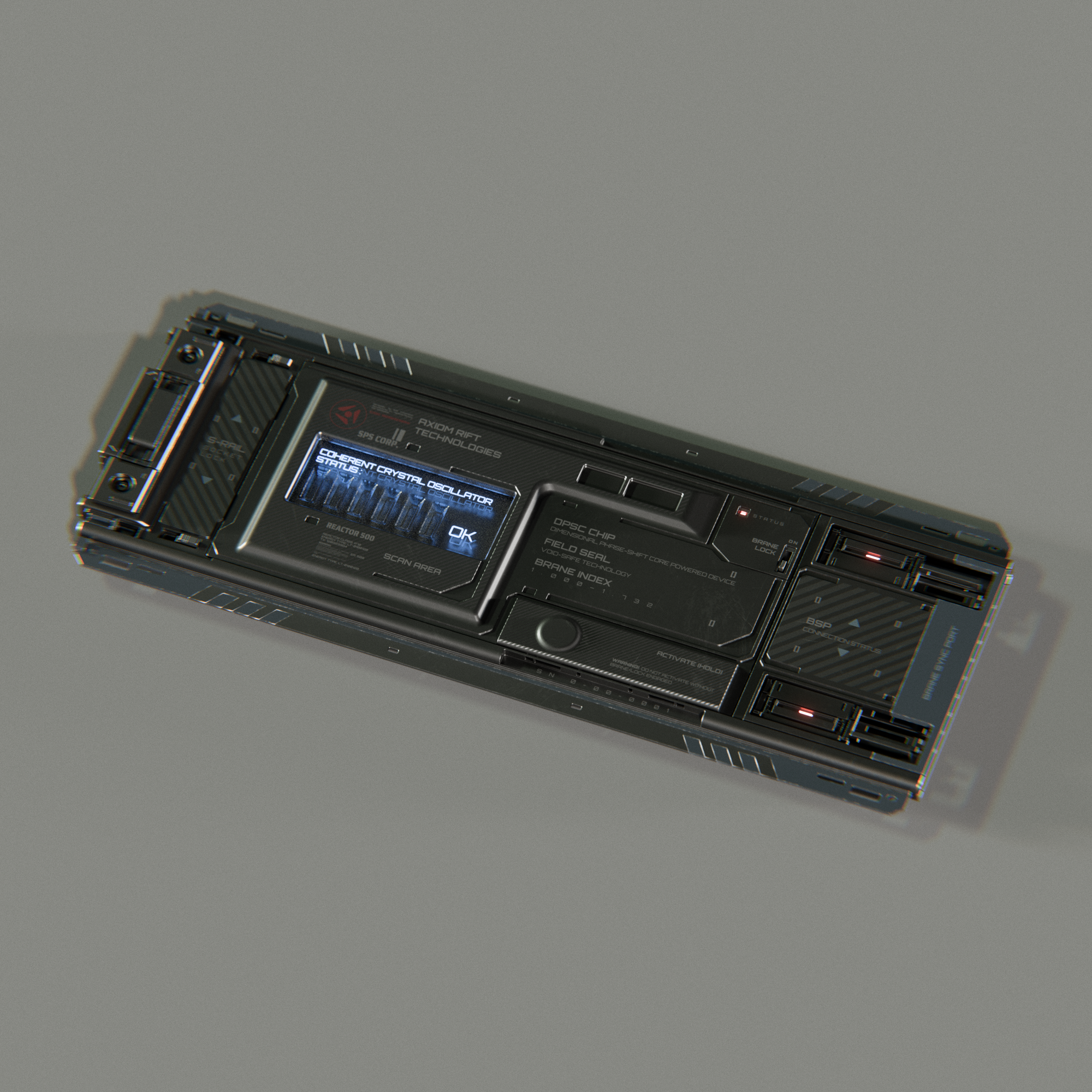
Data Assets
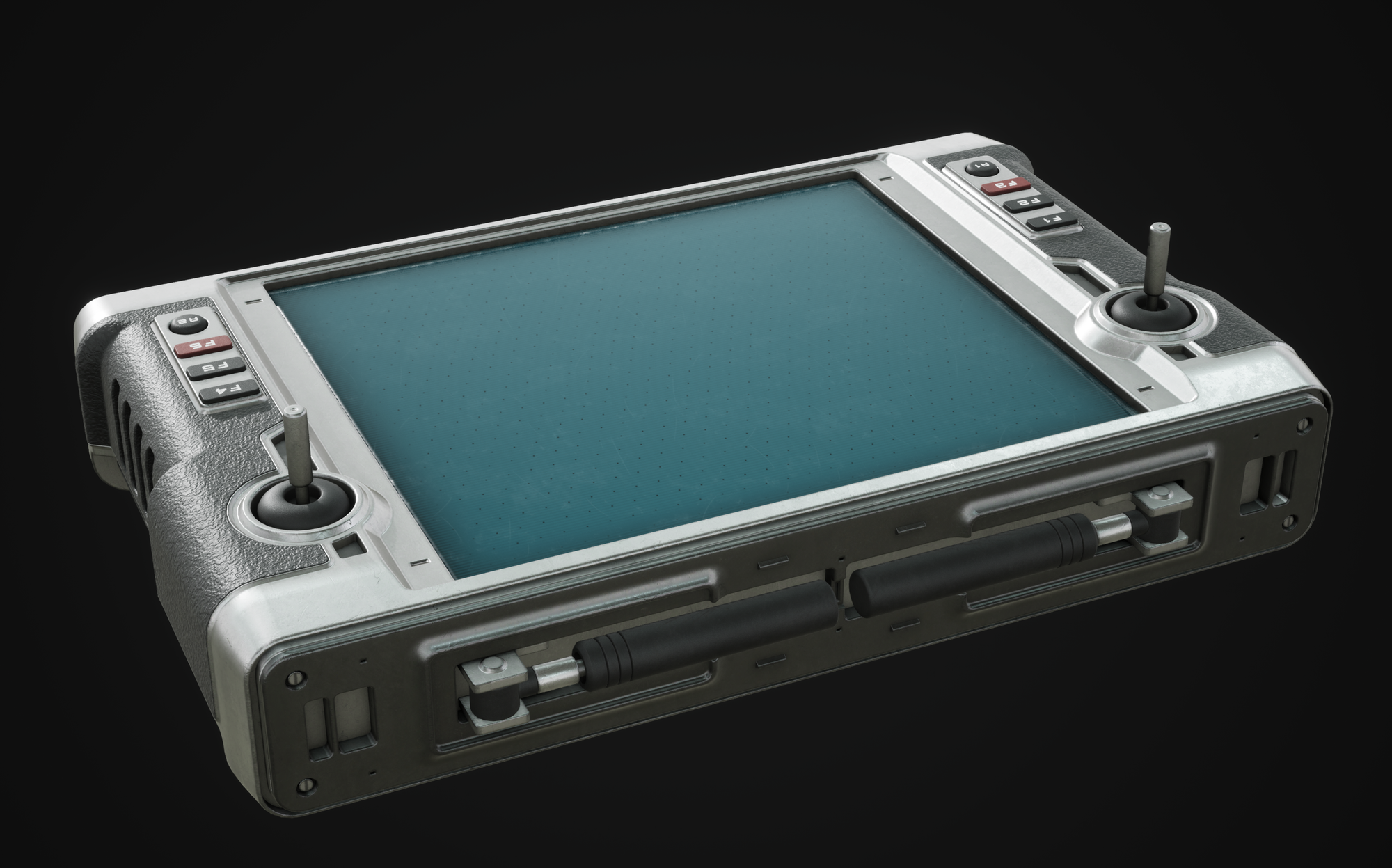
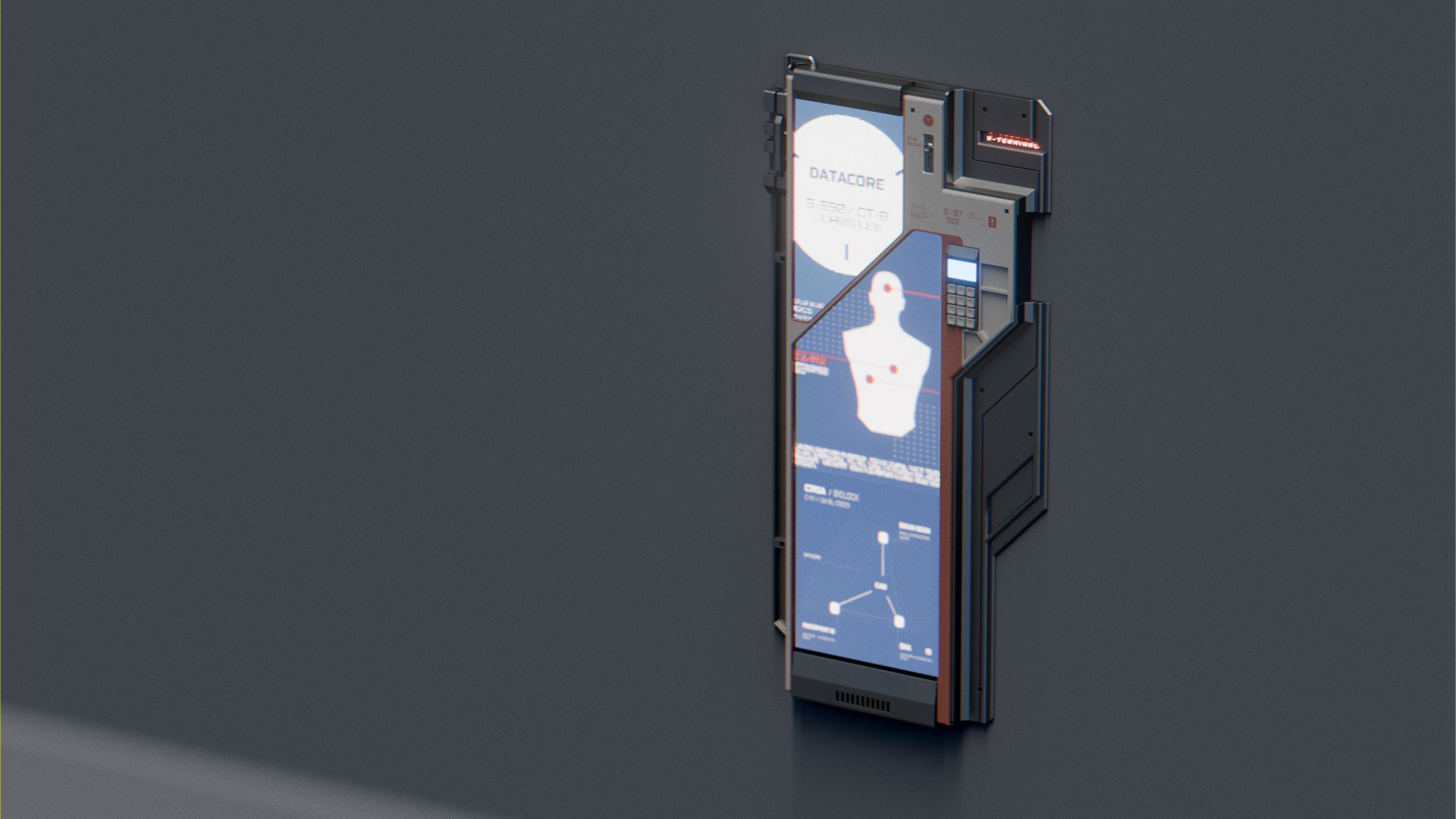
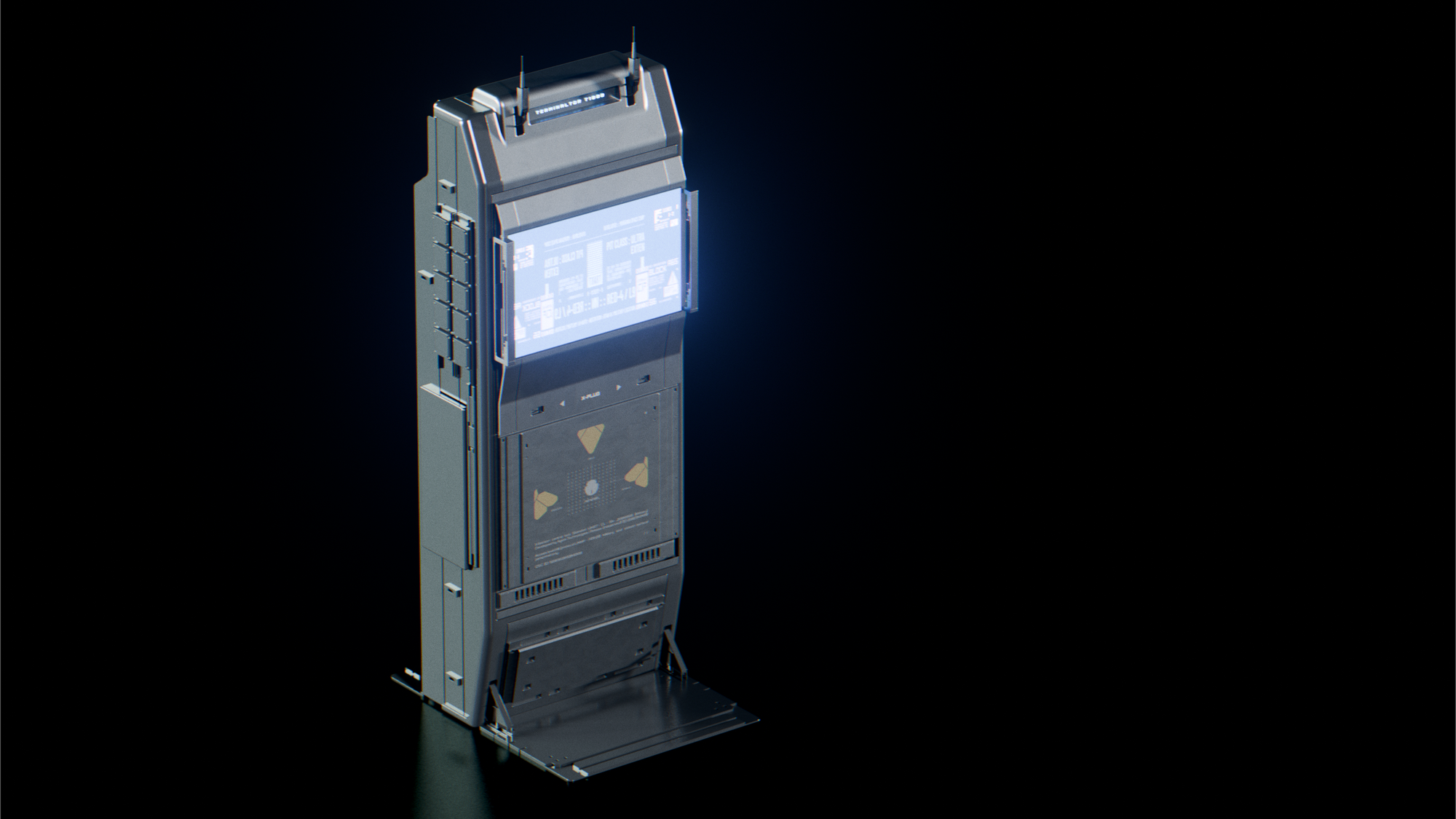
New data terminals and collectible information assets were designed to support mission flow and worldbuilding. Concepts include a portable data pad, a retro-inspired datapad variant with room for future upgrades, and fixed information terminals placed throughout the city. These assets are intended to surface nearby mission context, environmental storytelling, and broader lore.
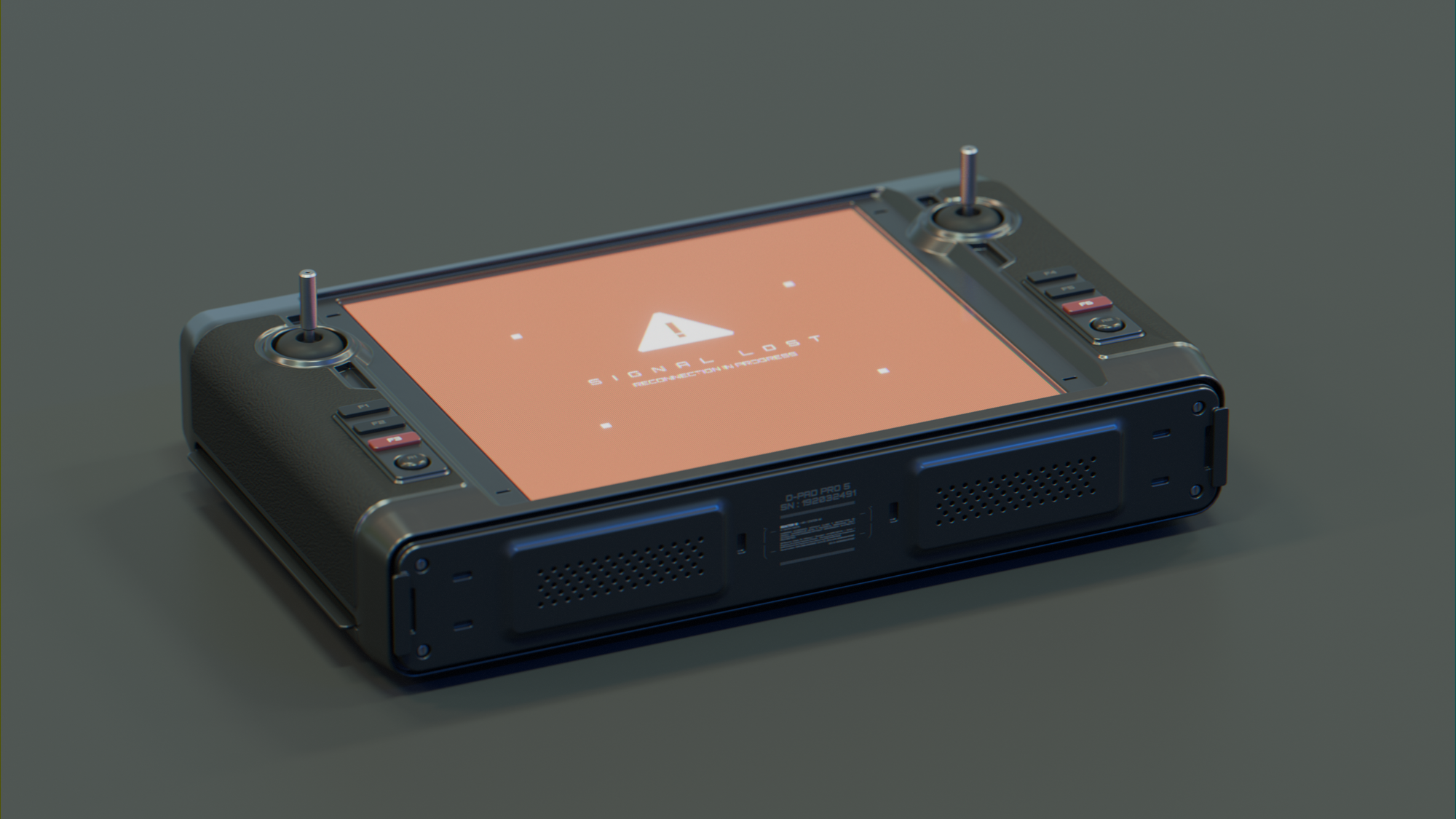
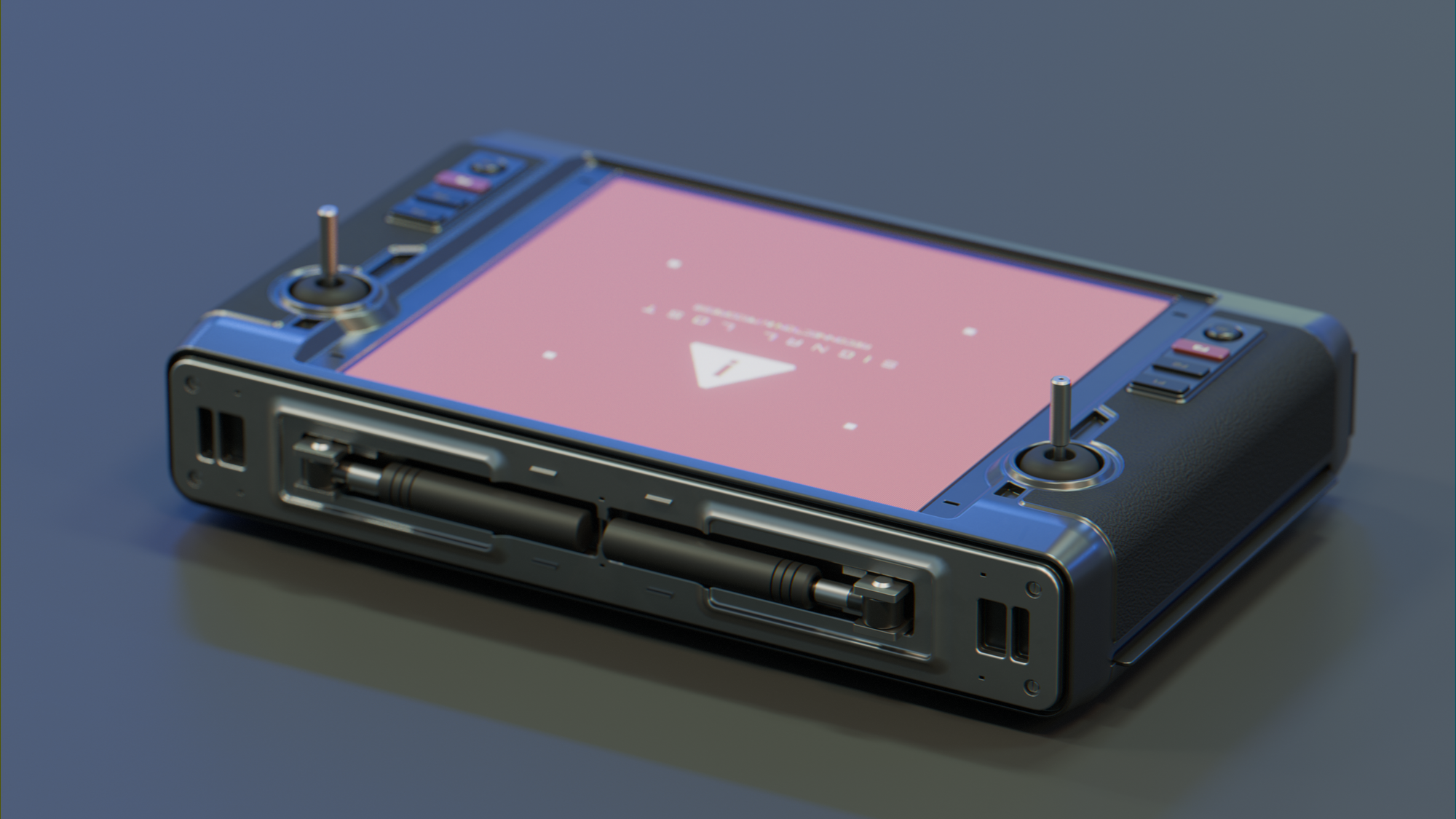
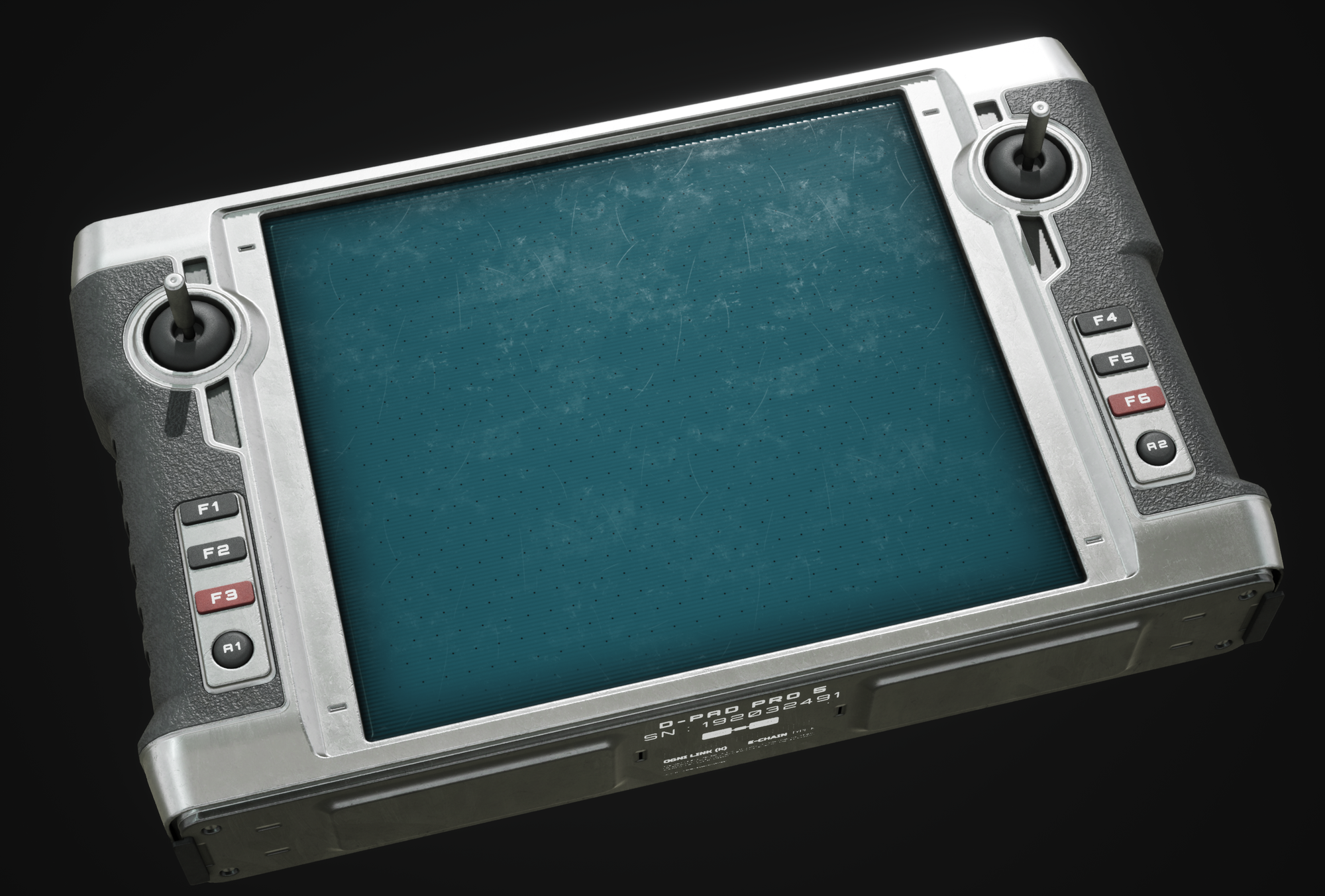
Environment Kits
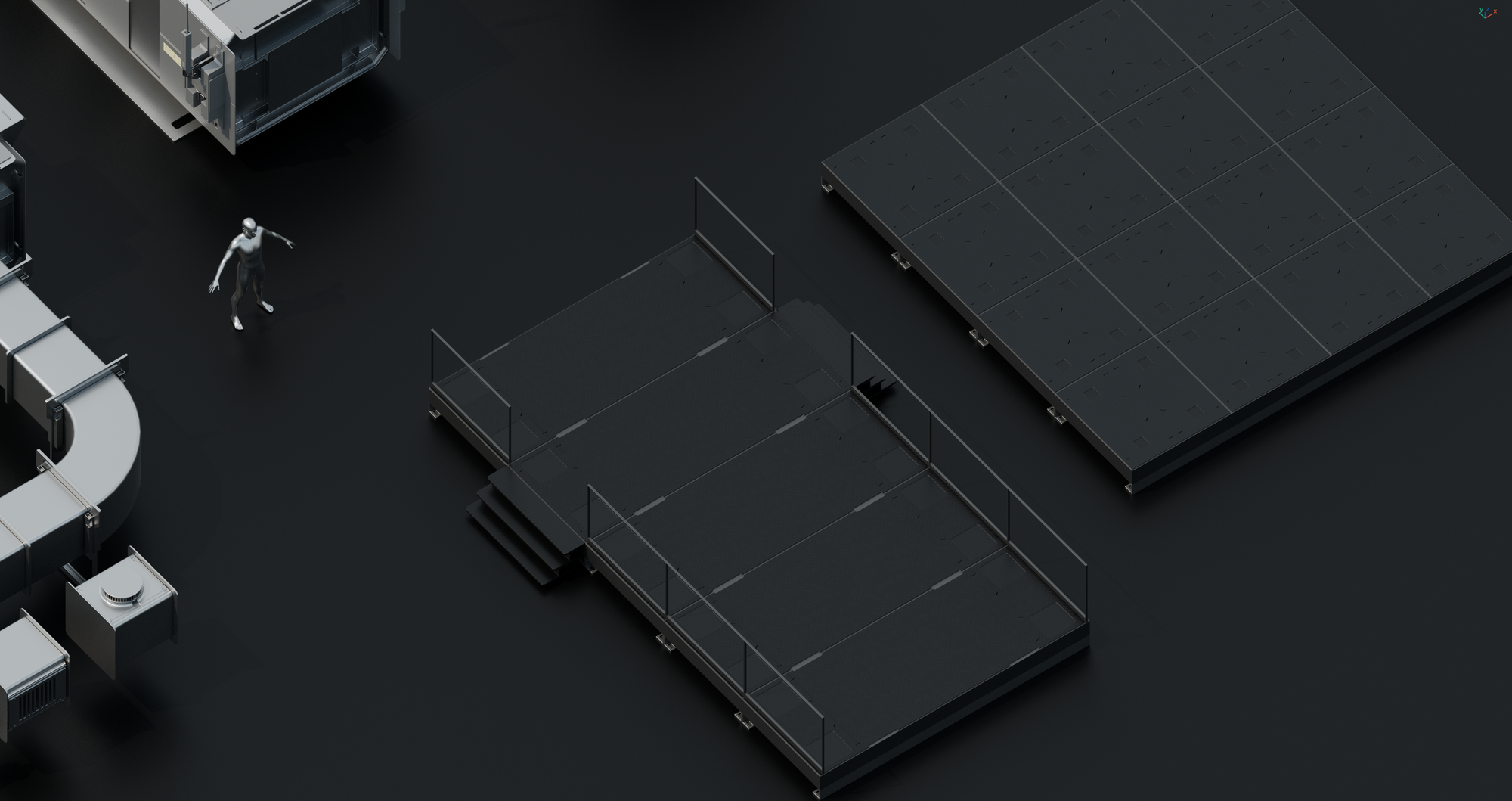
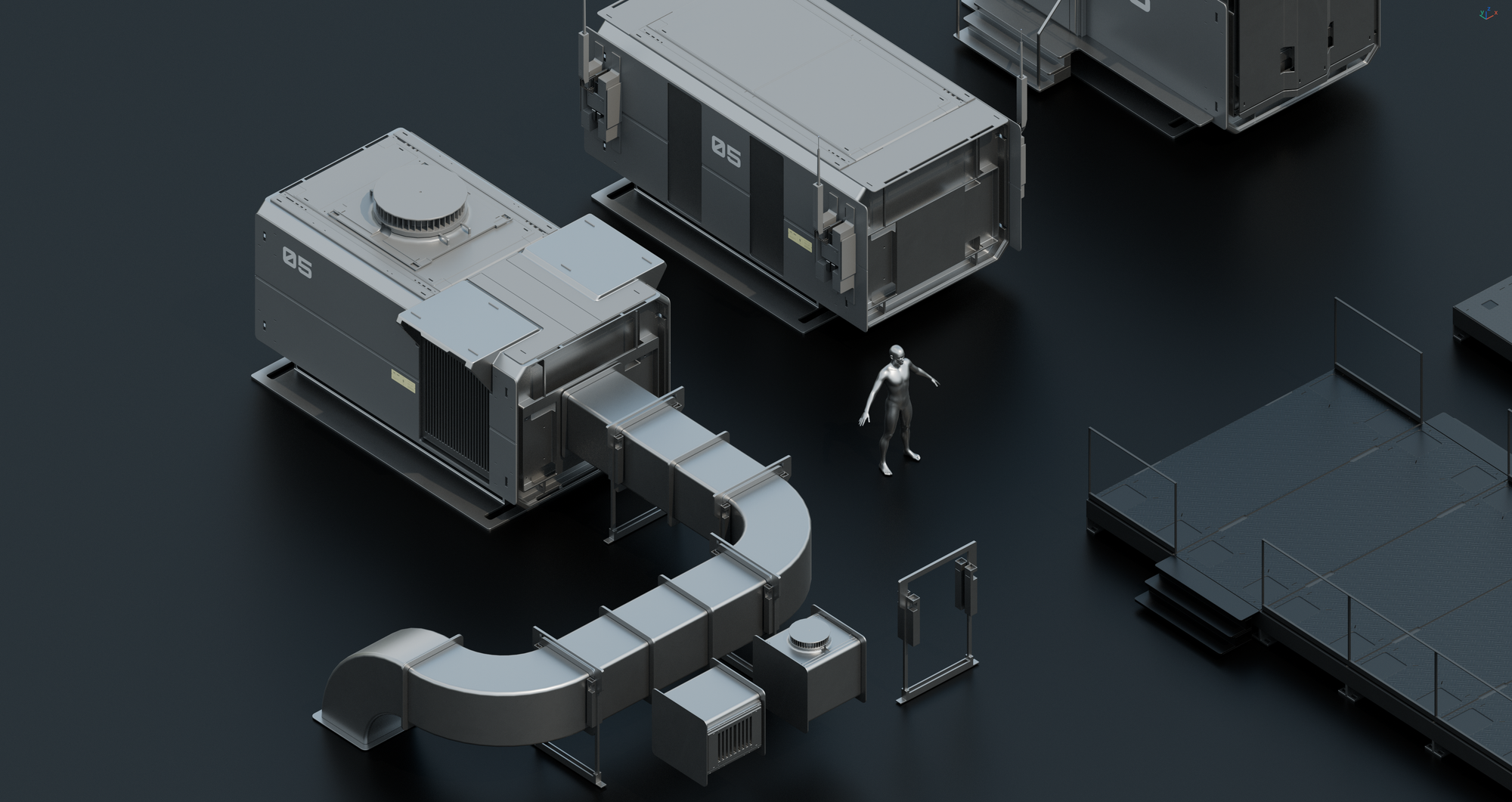
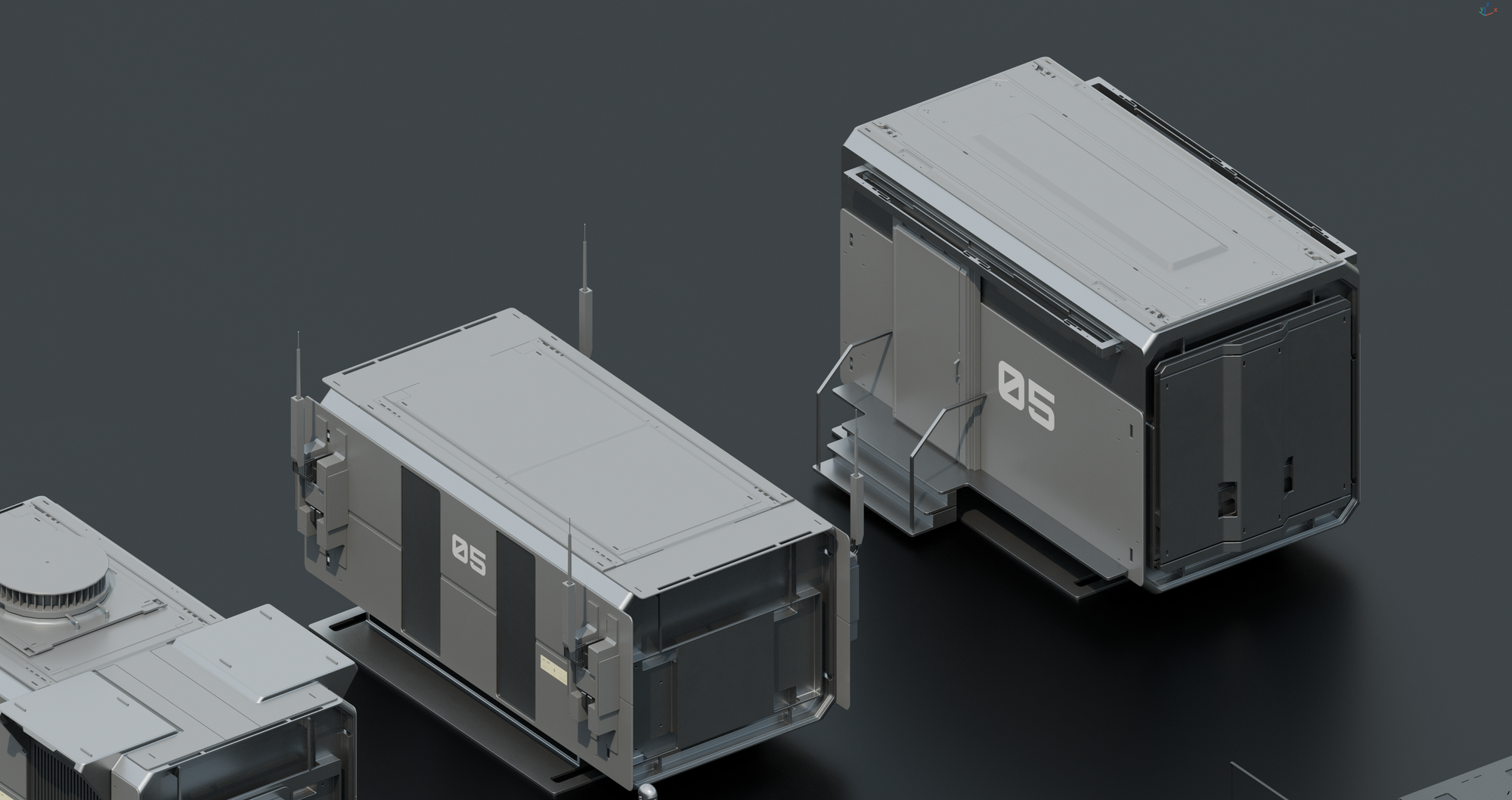
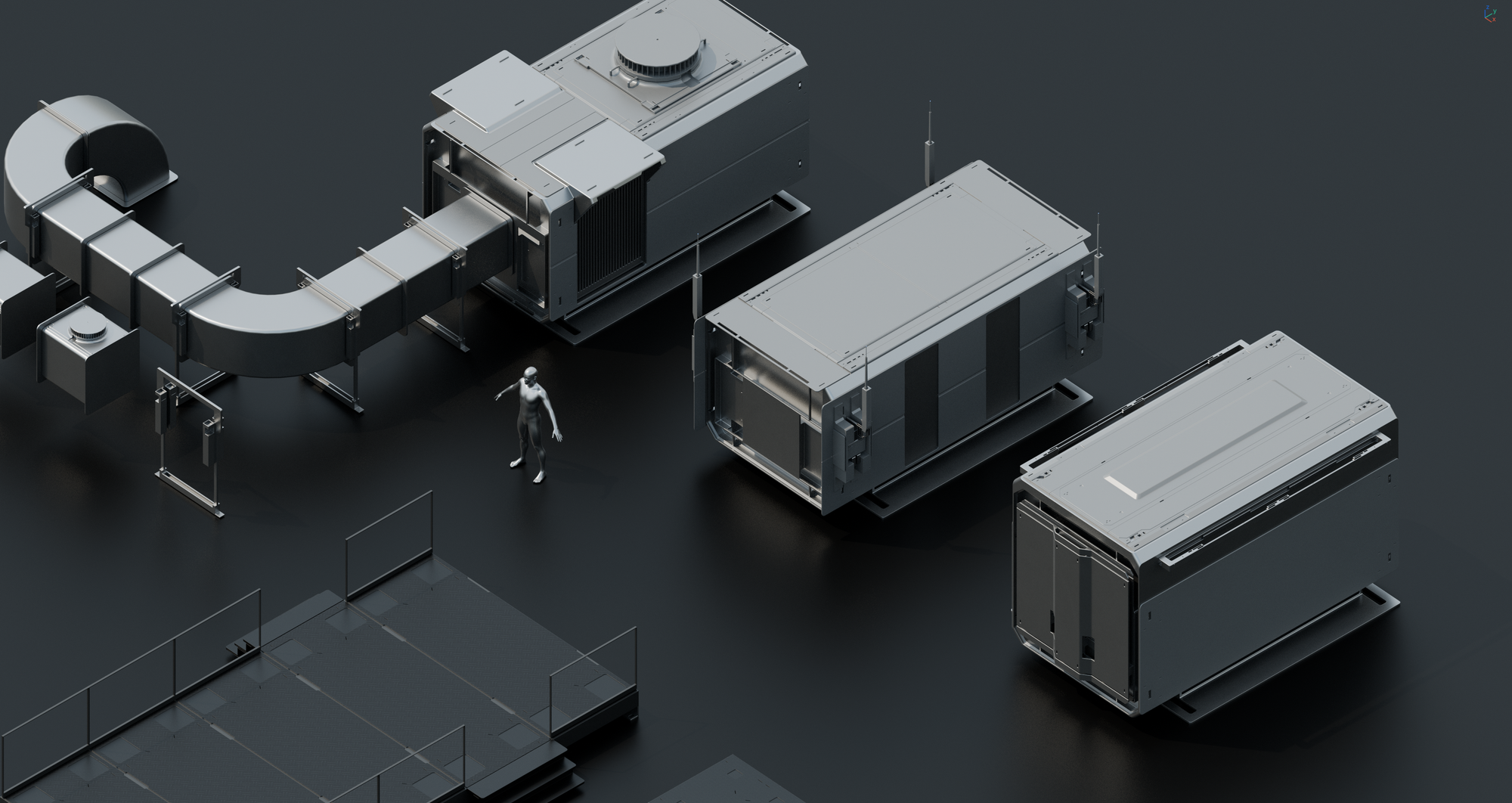
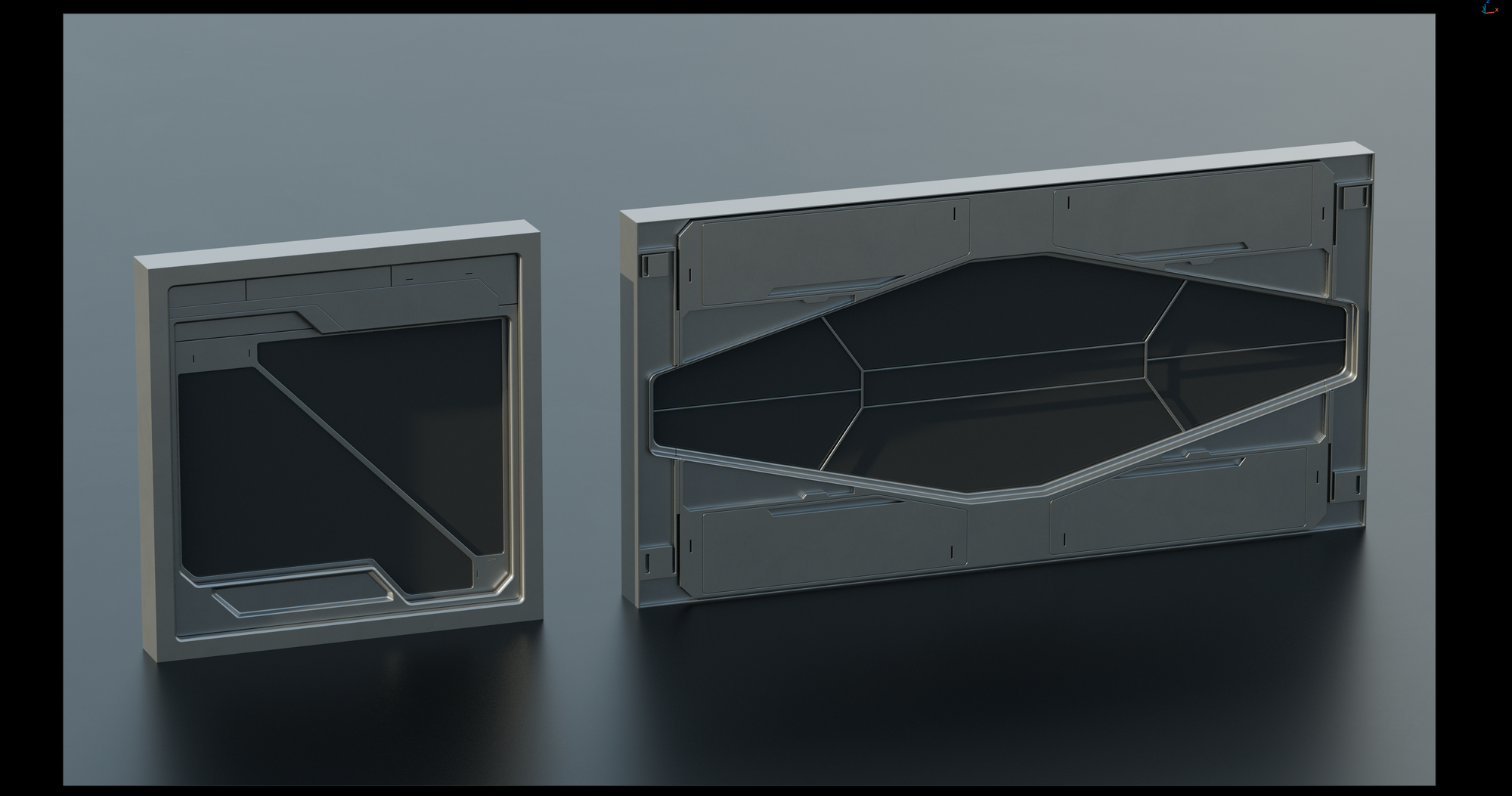
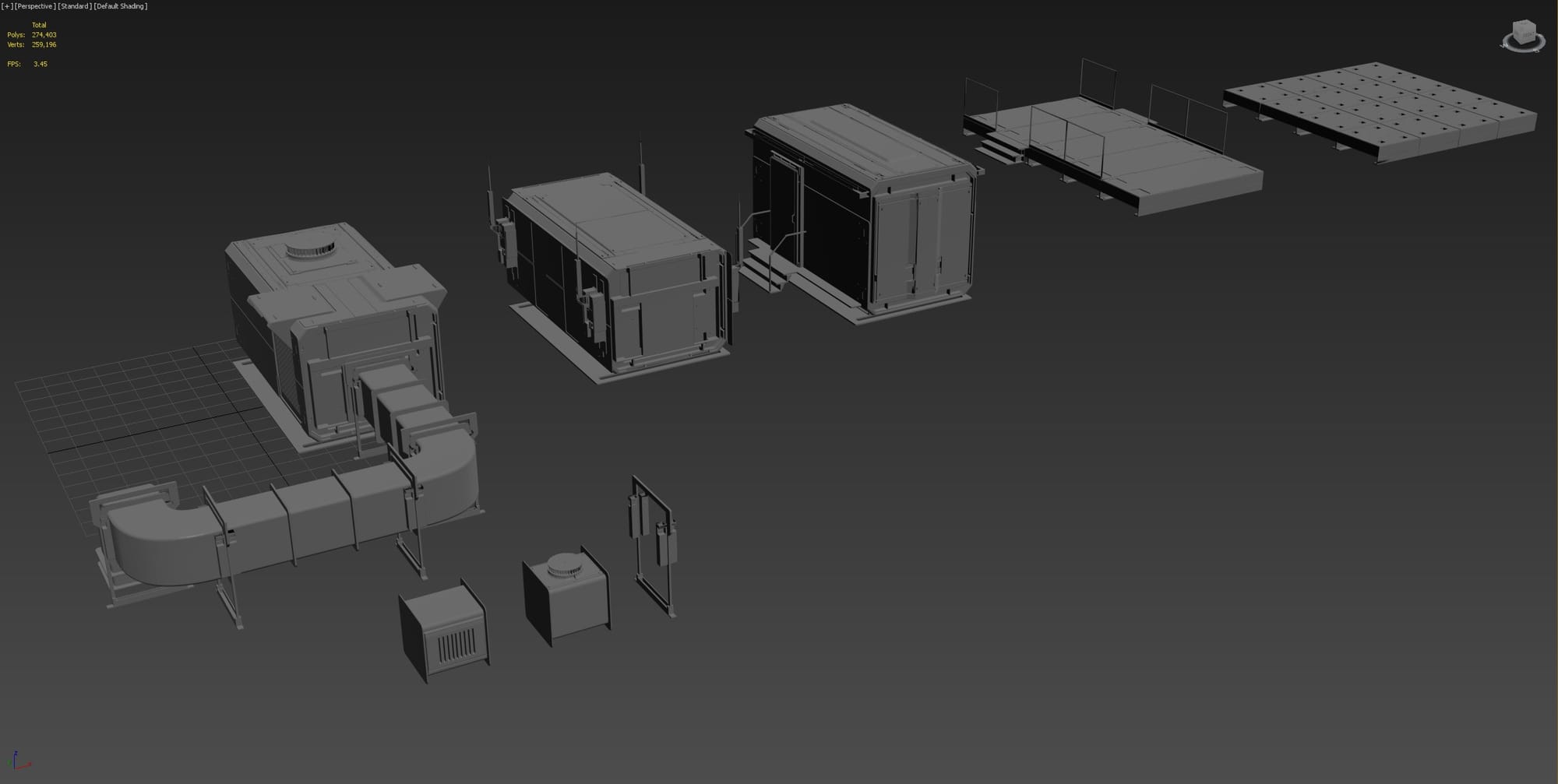
New environment prop kits are in development to replace older rooftop assets. These updated props are designed with gameplay in mind, supporting cover, vaulting, and vertical movement rather than serving purely as decorative detail. The refreshed aesthetic also aligns more closely with the surrounding environment, improving both readability and visual cohesion.
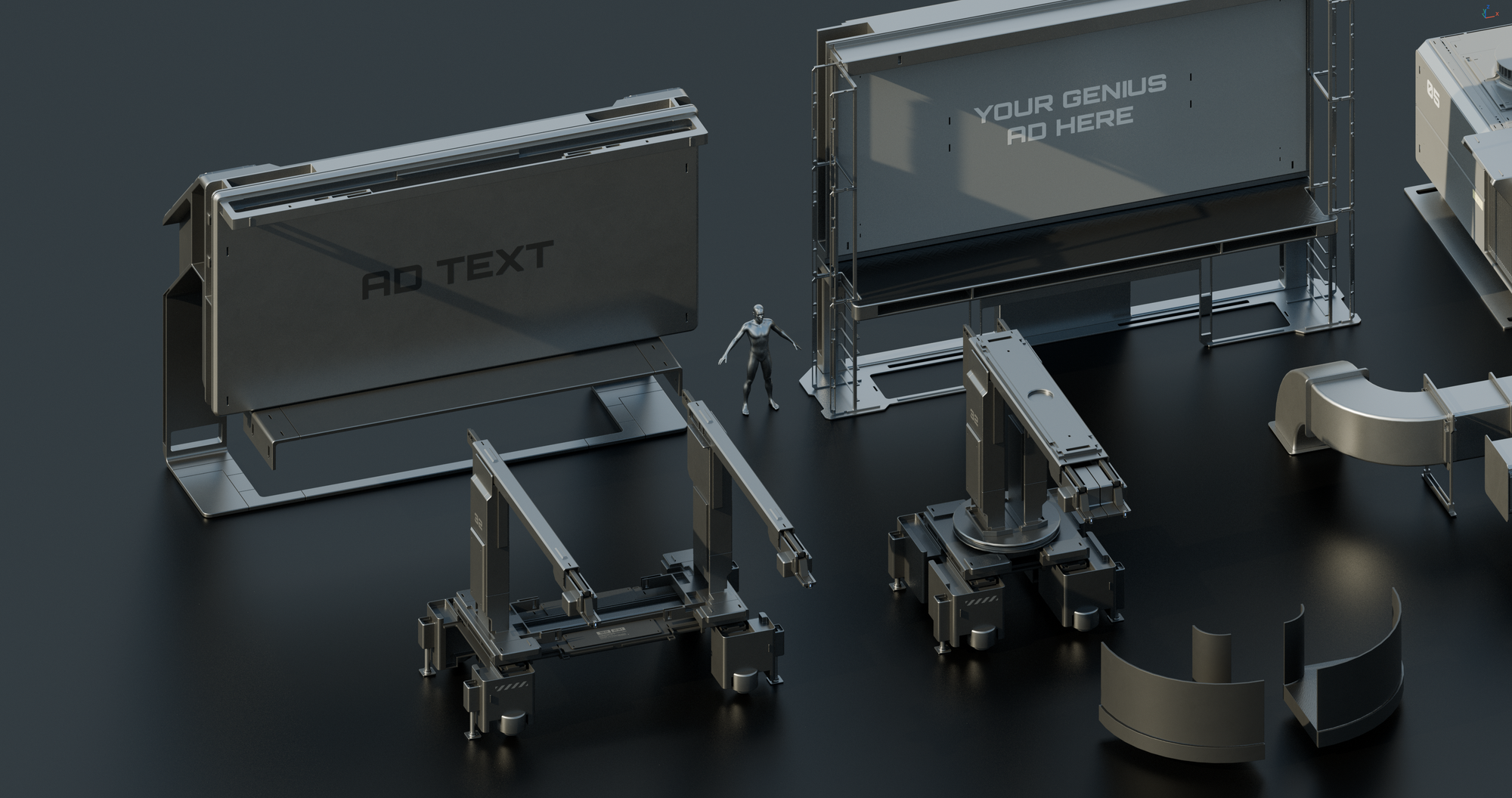
Traversal
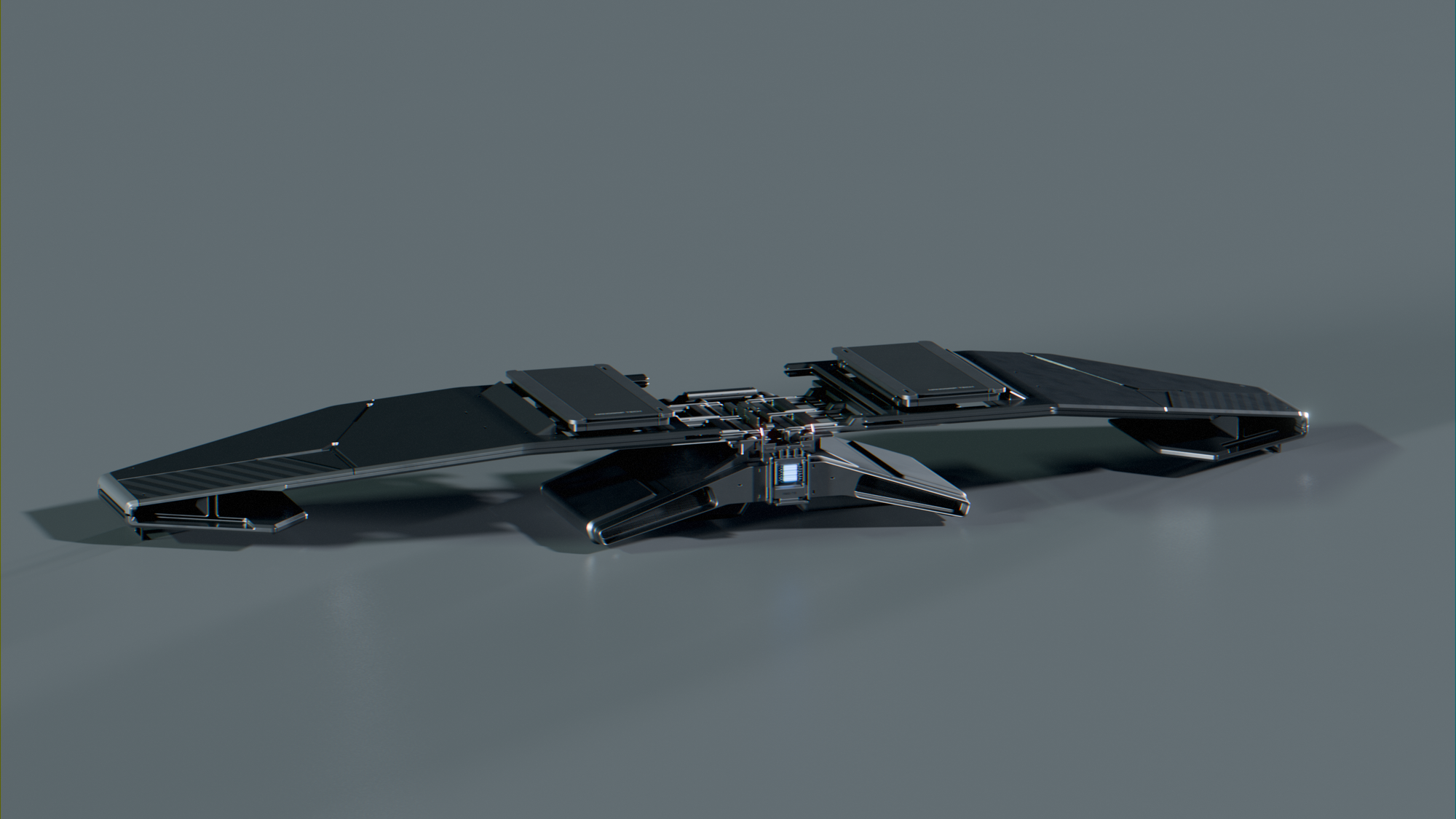
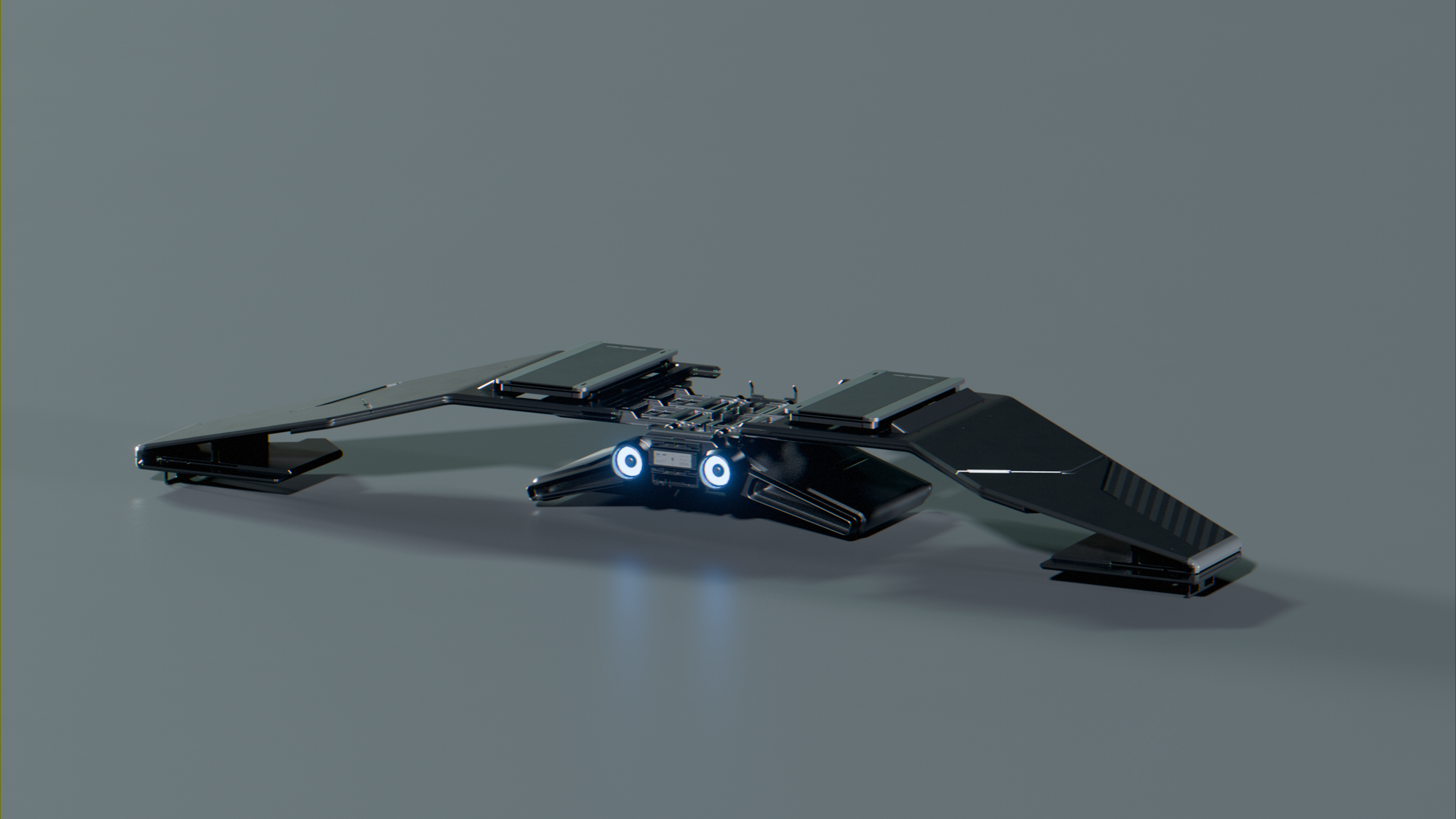
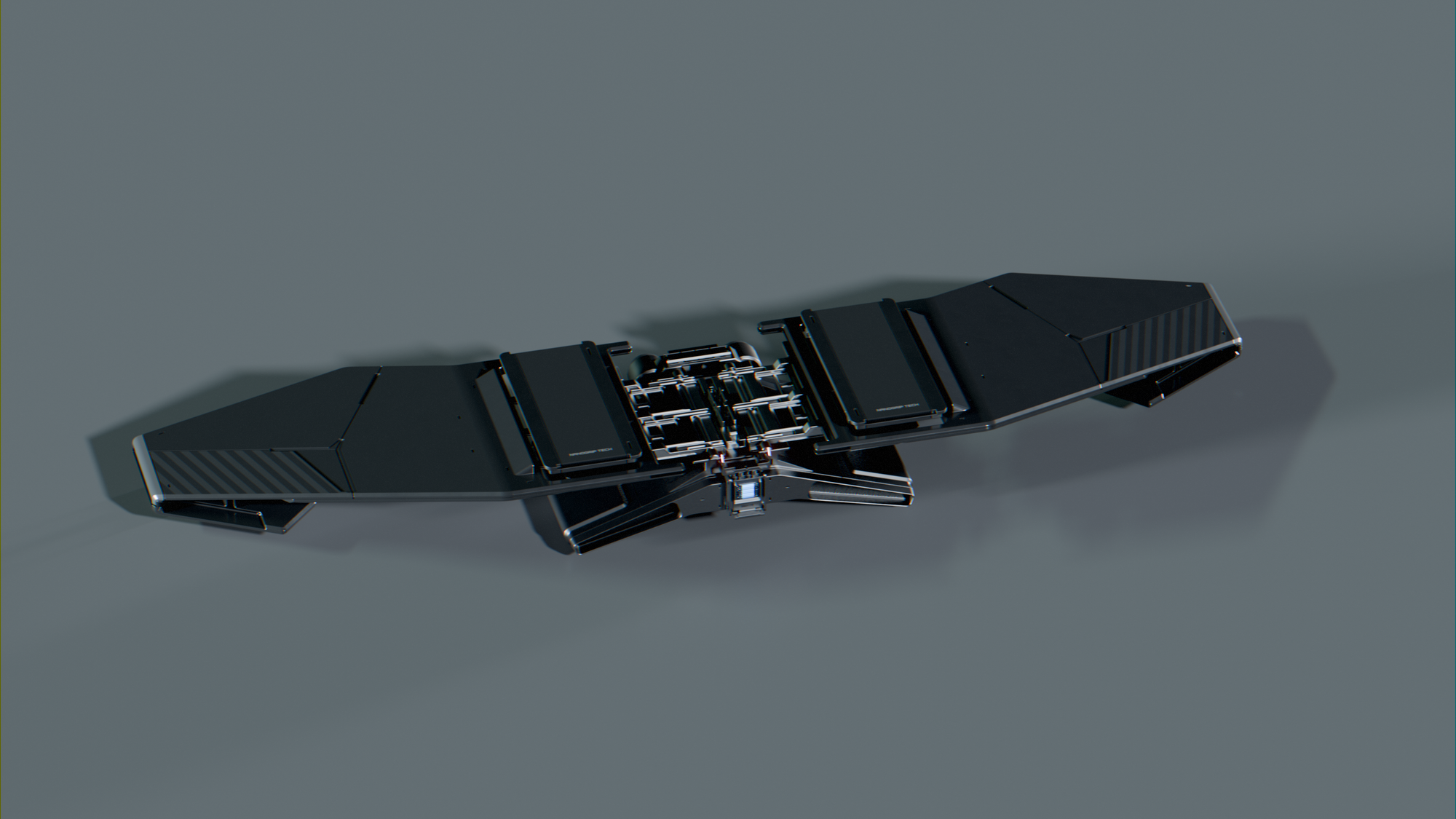
Exploratory work is underway on props that double as traversal tools. One concept under evaluation is a hoverboard, designed to offer fast movement across the city for players who do not yet own a vehicle. While not confirmed for near-term release, it represents one of several avenues being explored to expand mobility and interaction within the world.
Weapons
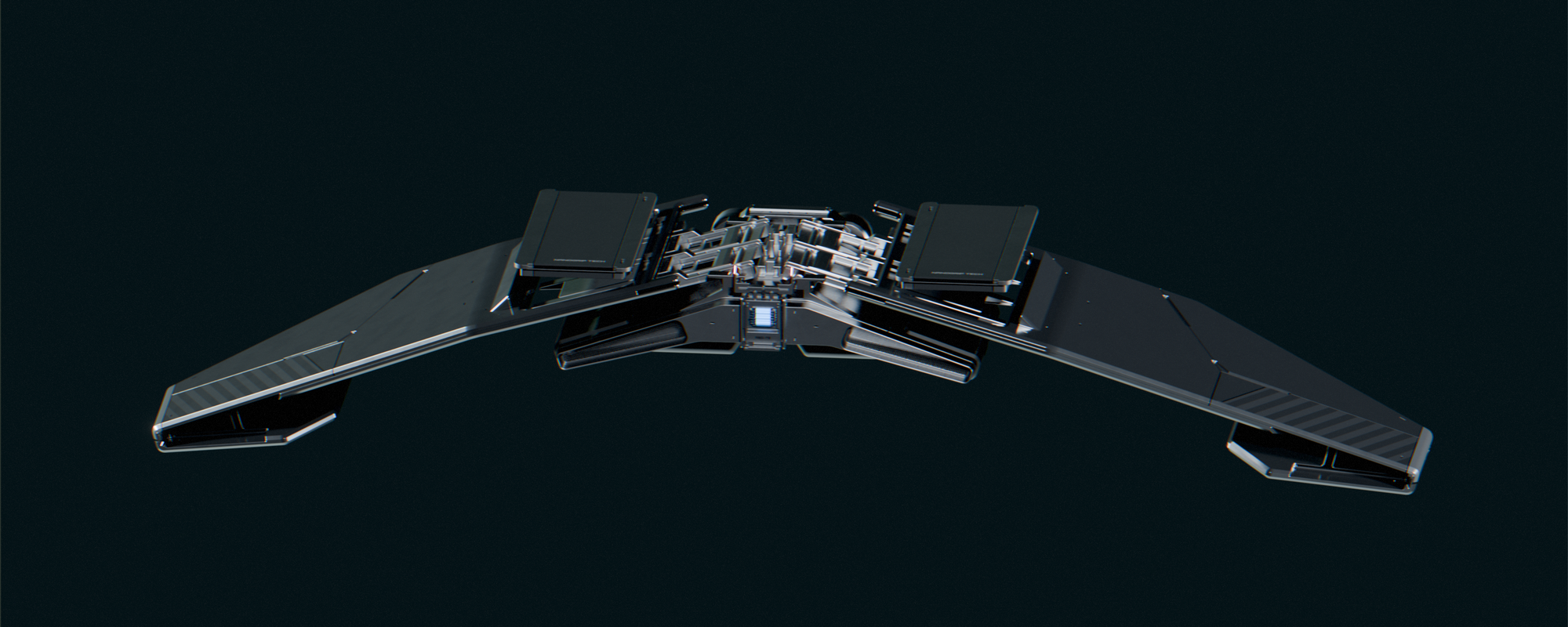
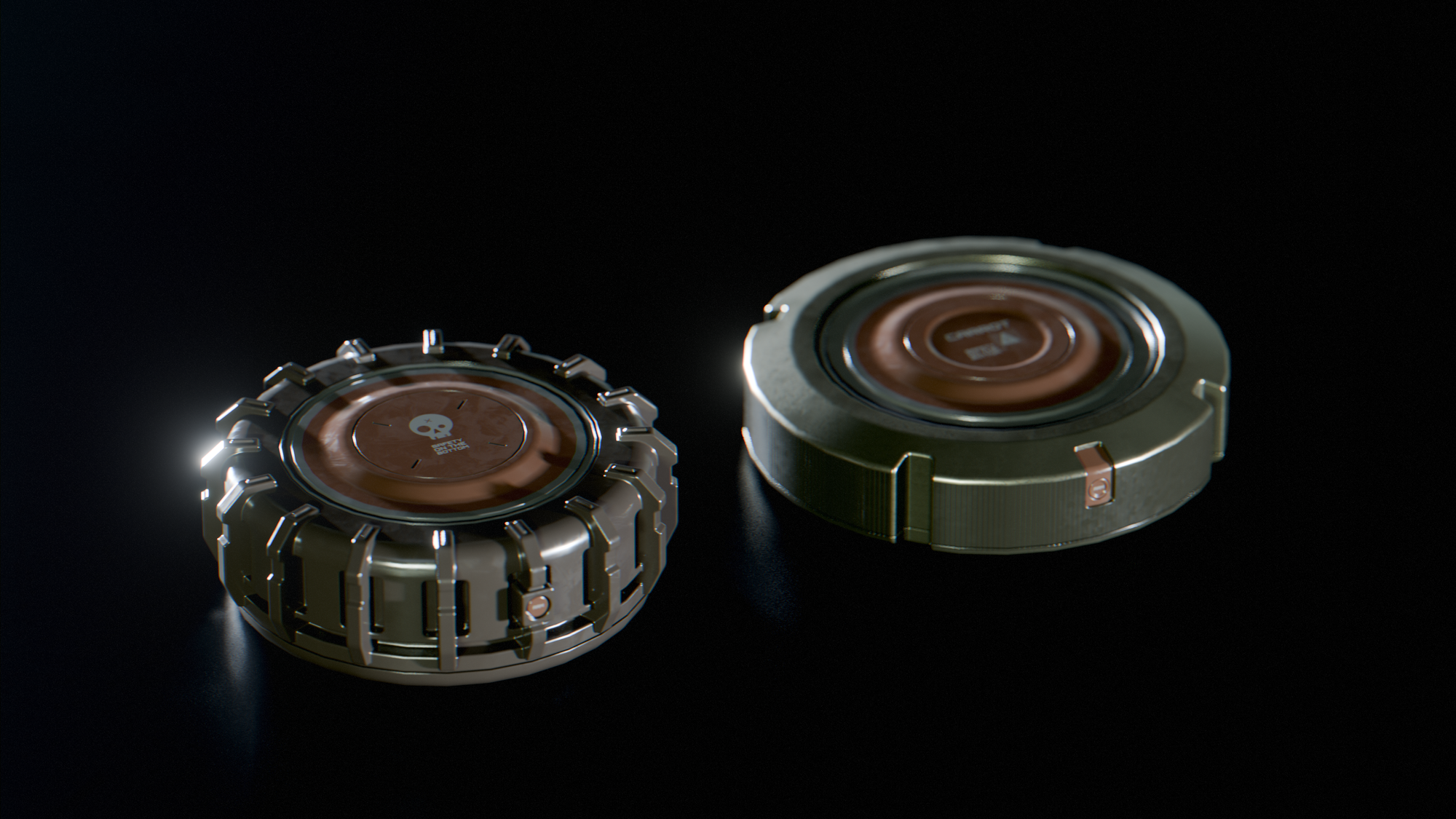
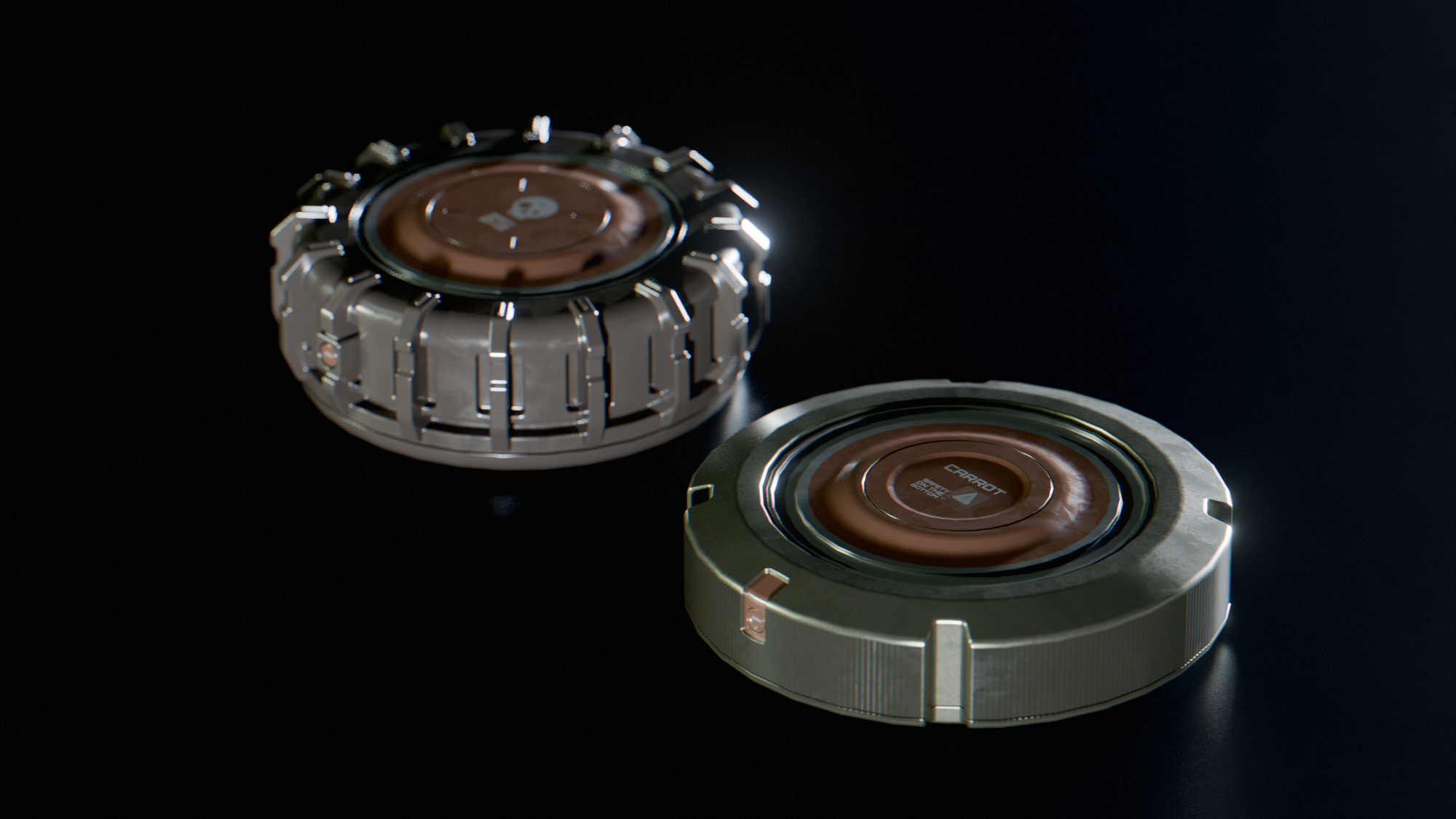
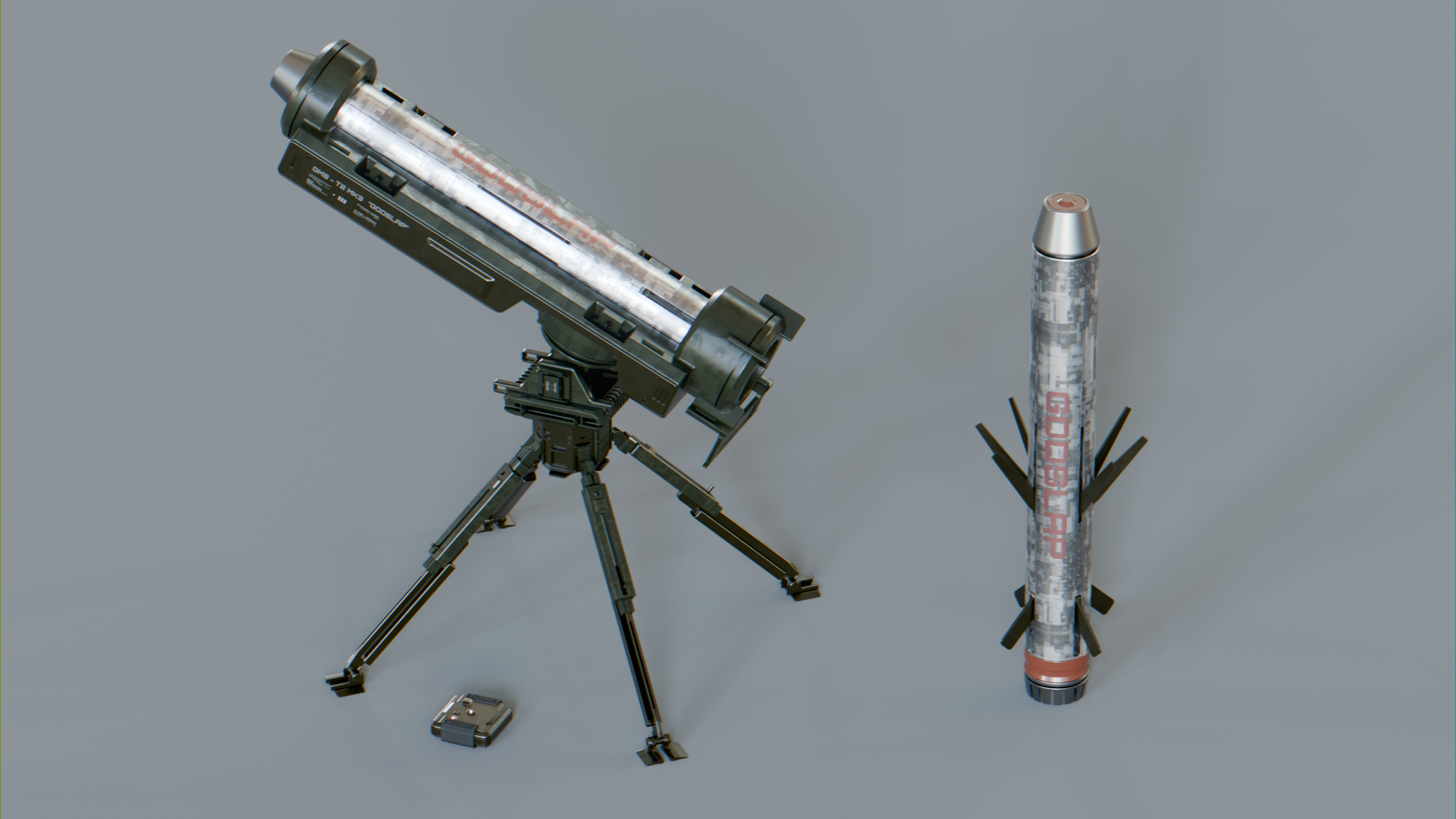
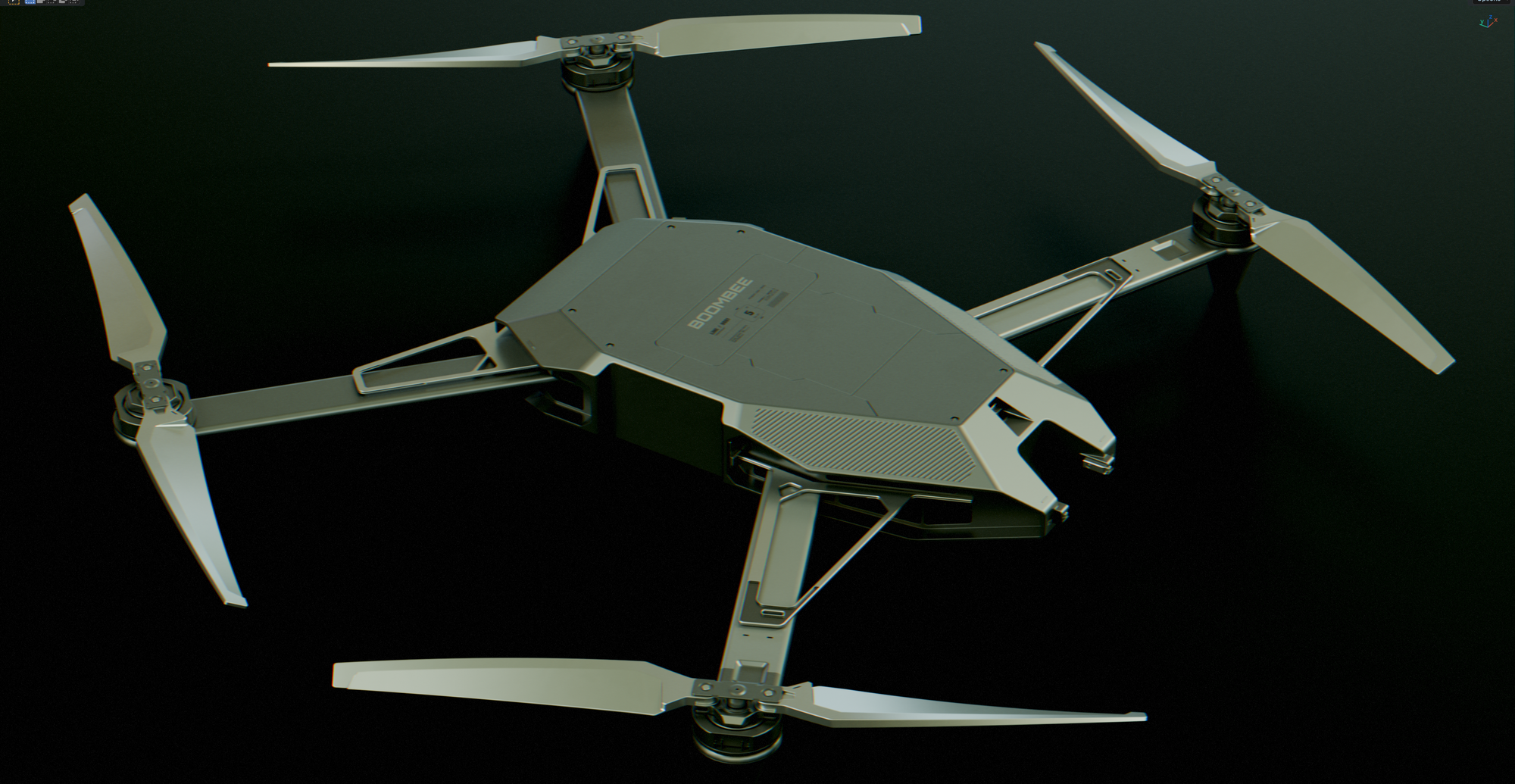
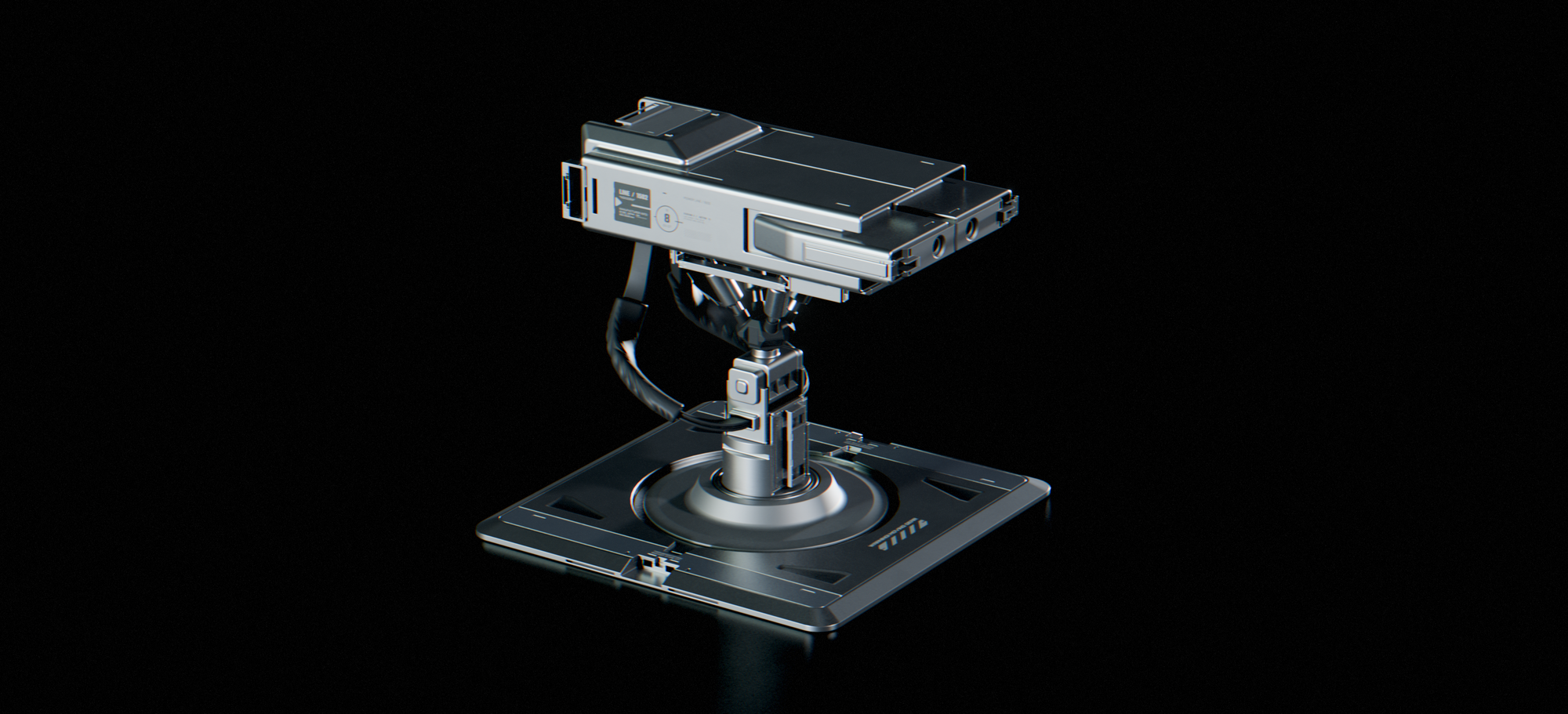
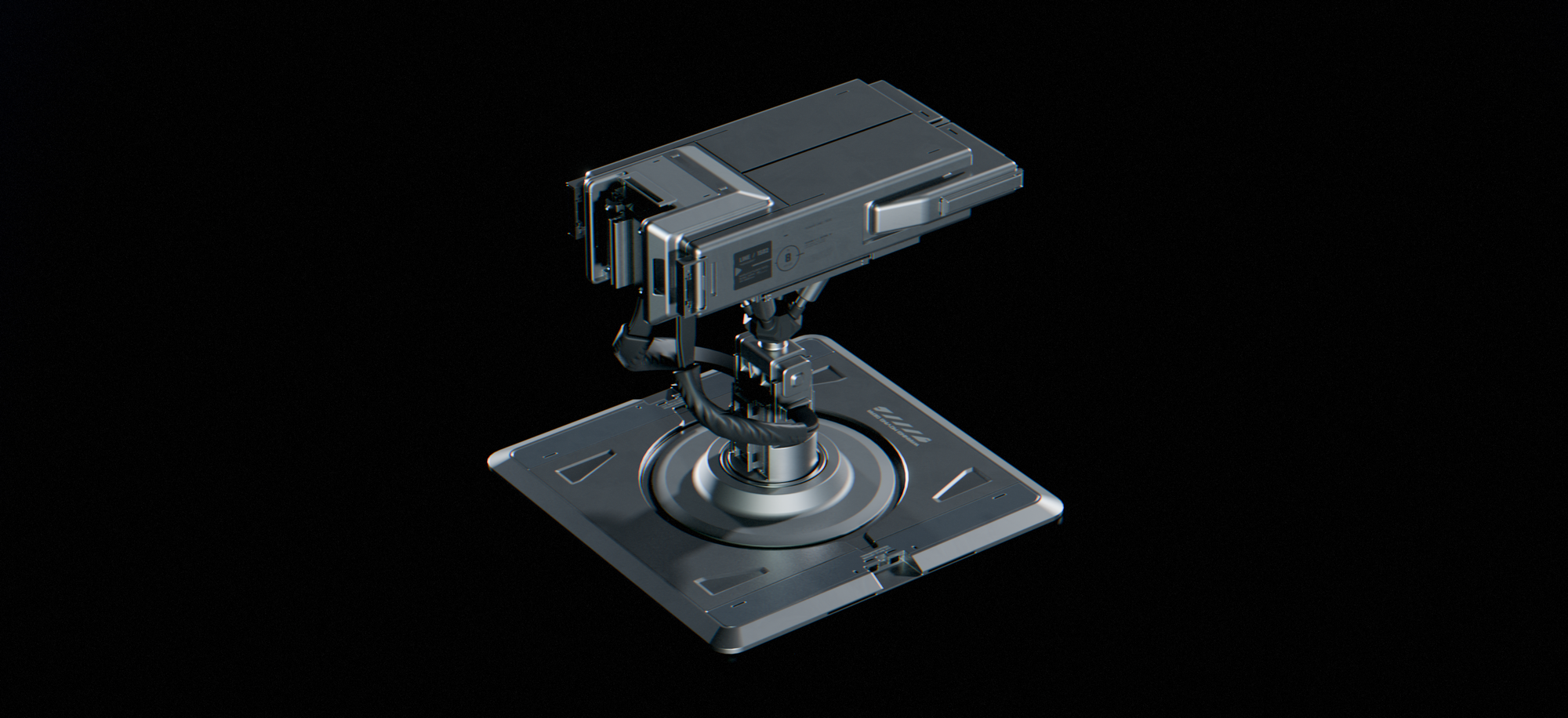
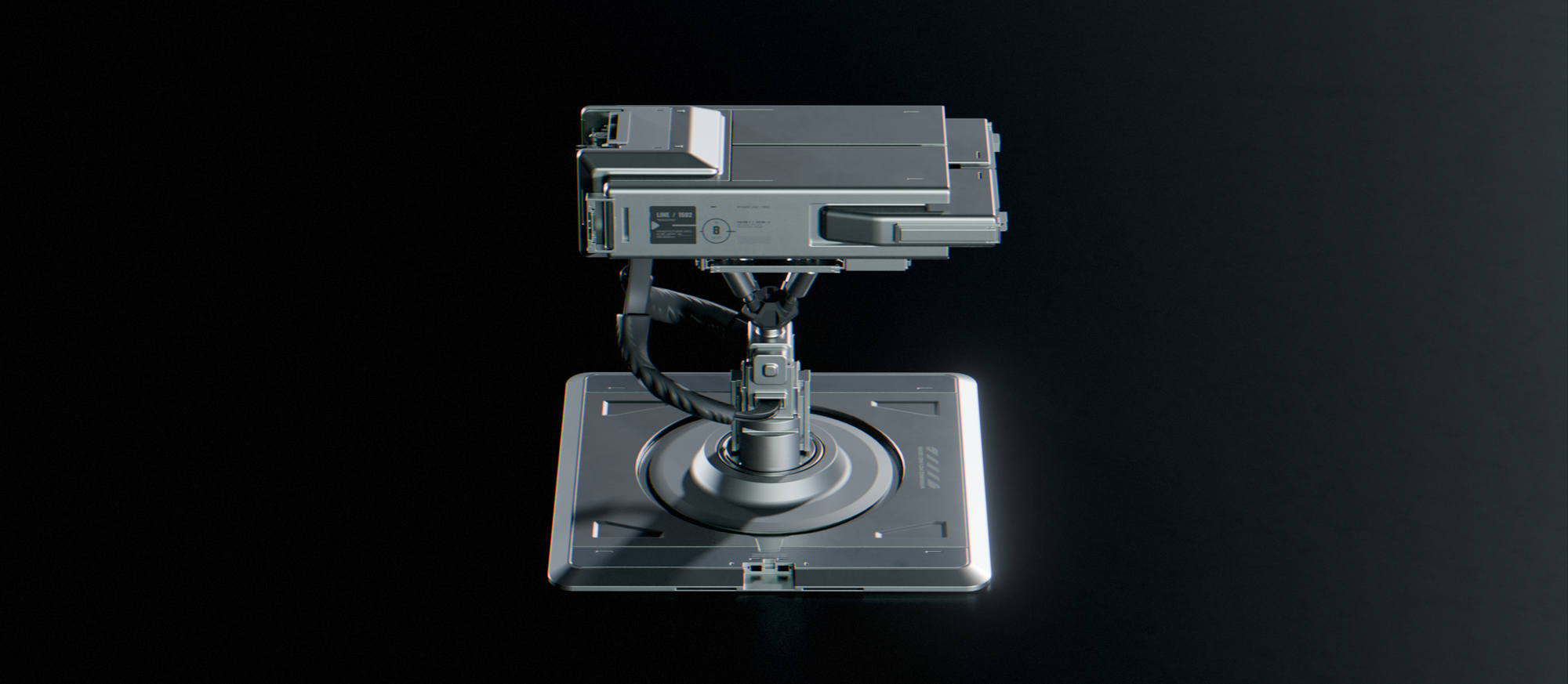
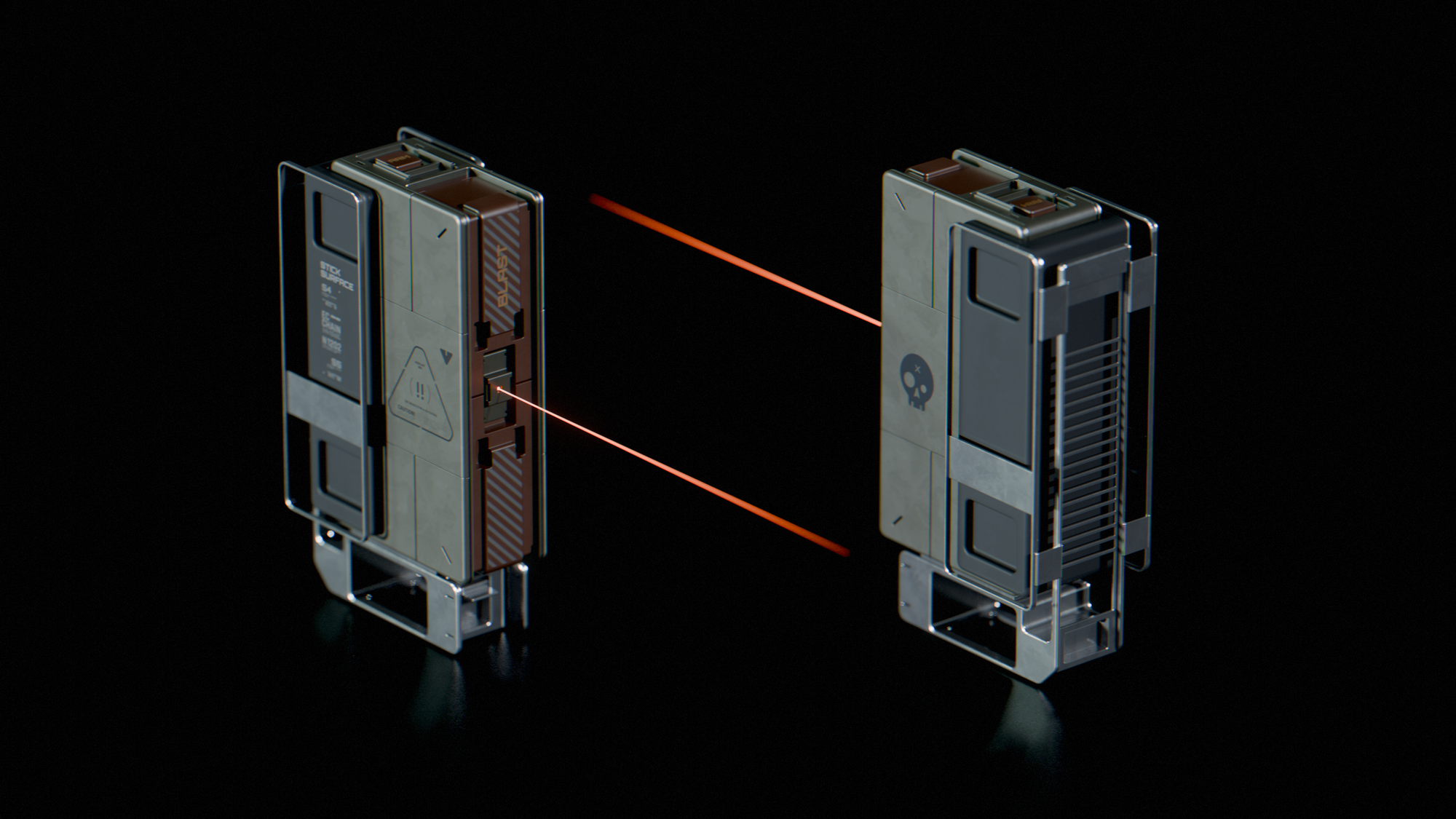
Early weapon concepts focused on autonomous and deployable systems suited to defensive, objective-based, and occupation-driven game modes. These include surface-mounted gun turrets, deployable mines and sticky mines for area denial, and more offensive tools such as player-controlled drones capable of delivering explosives. Additional concepts include a missile launcher that can be manually guided via camera relay or operate autonomously to acquire targets. All designs remain in early development but outline potential expansions to tactical gameplay and team-based scenarios.

ENVIRONMENT ART
Trenches
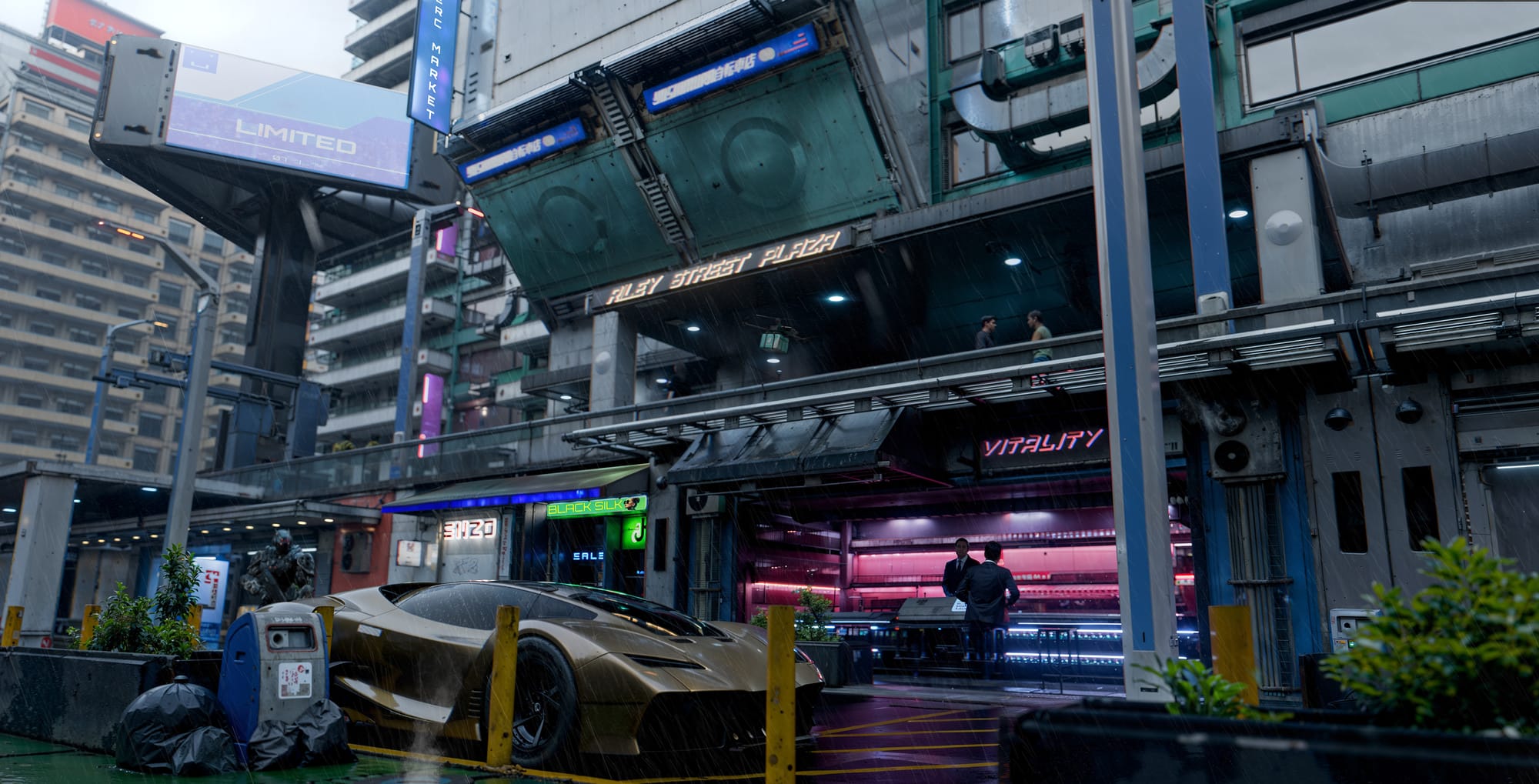
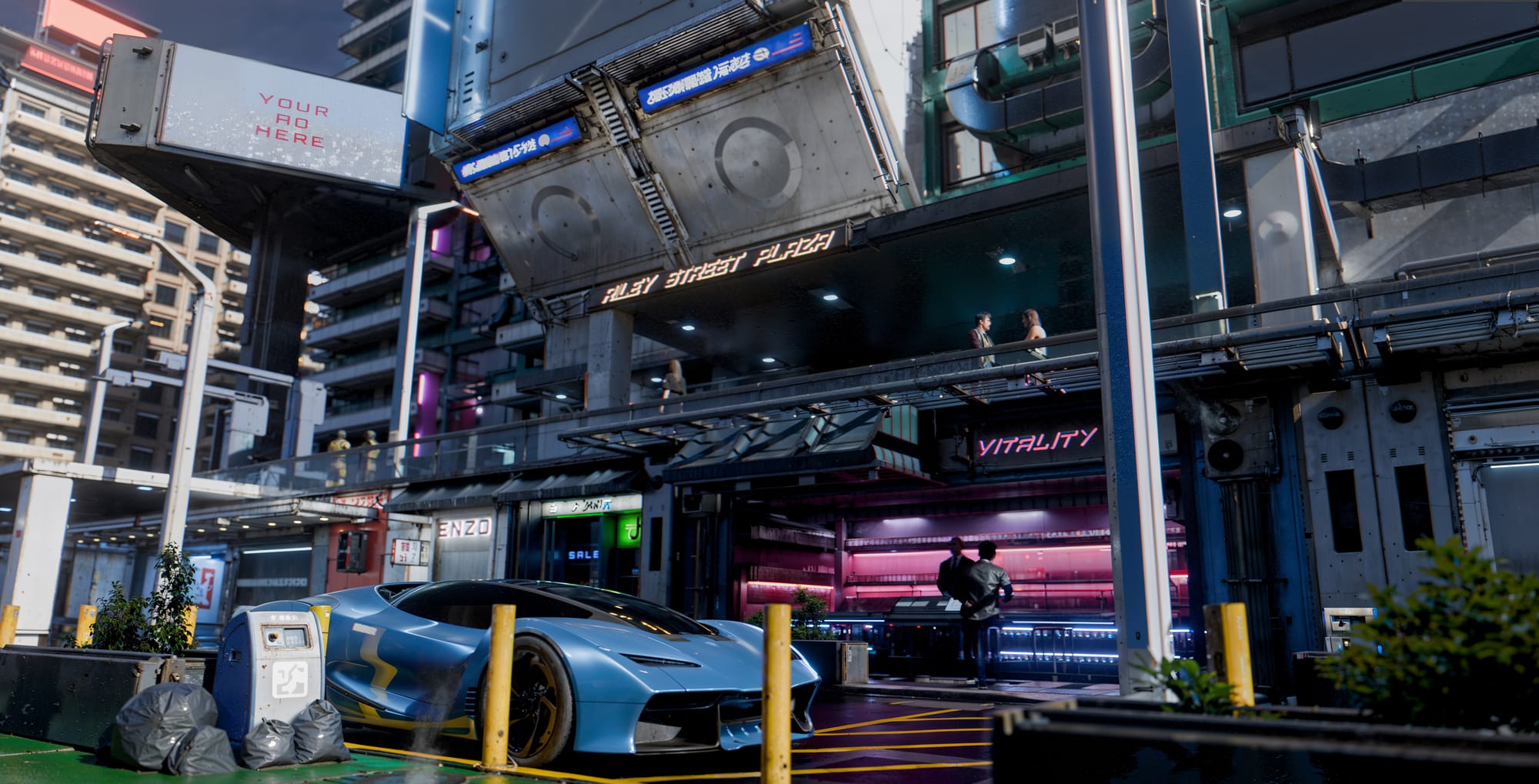
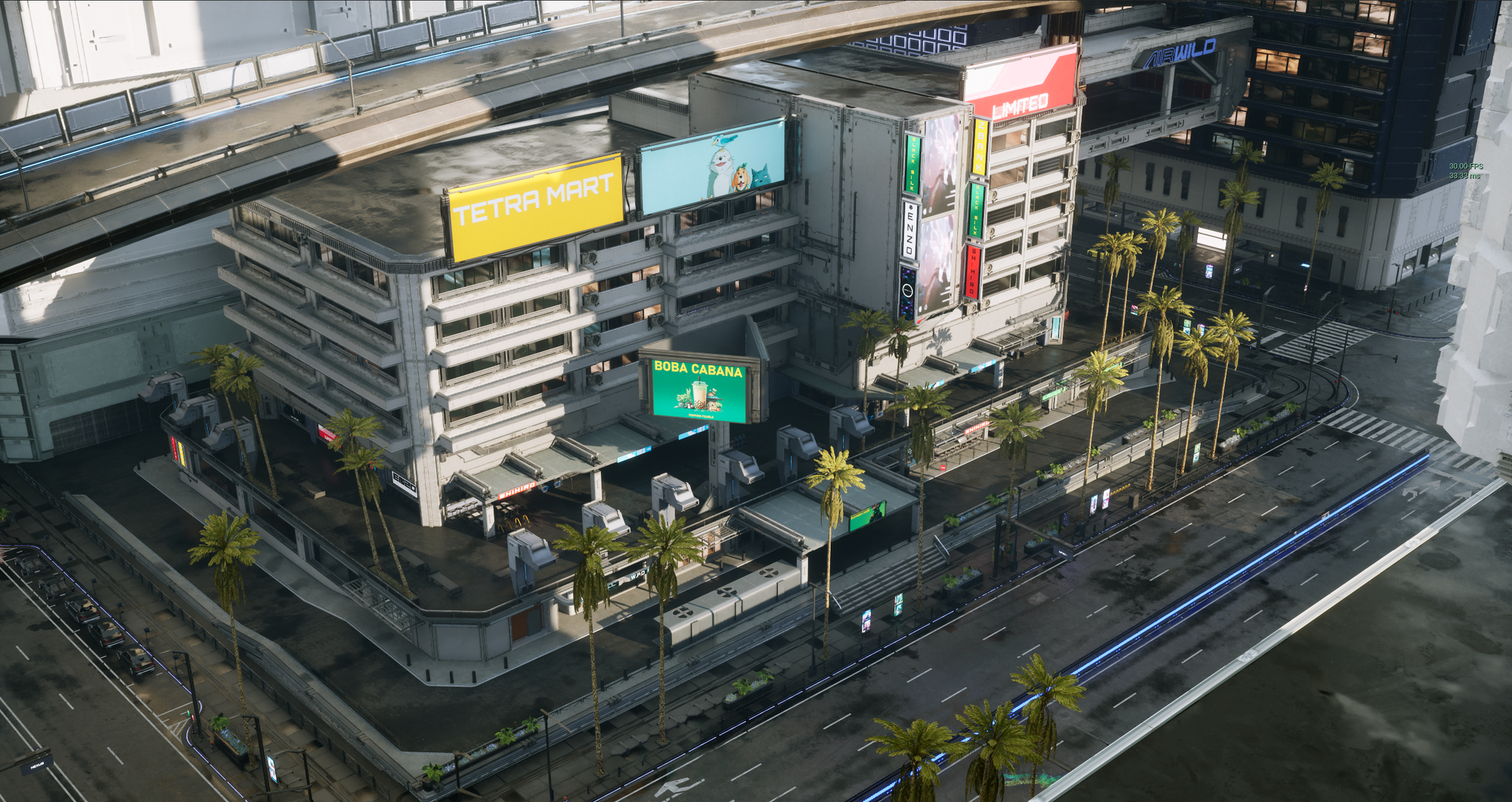
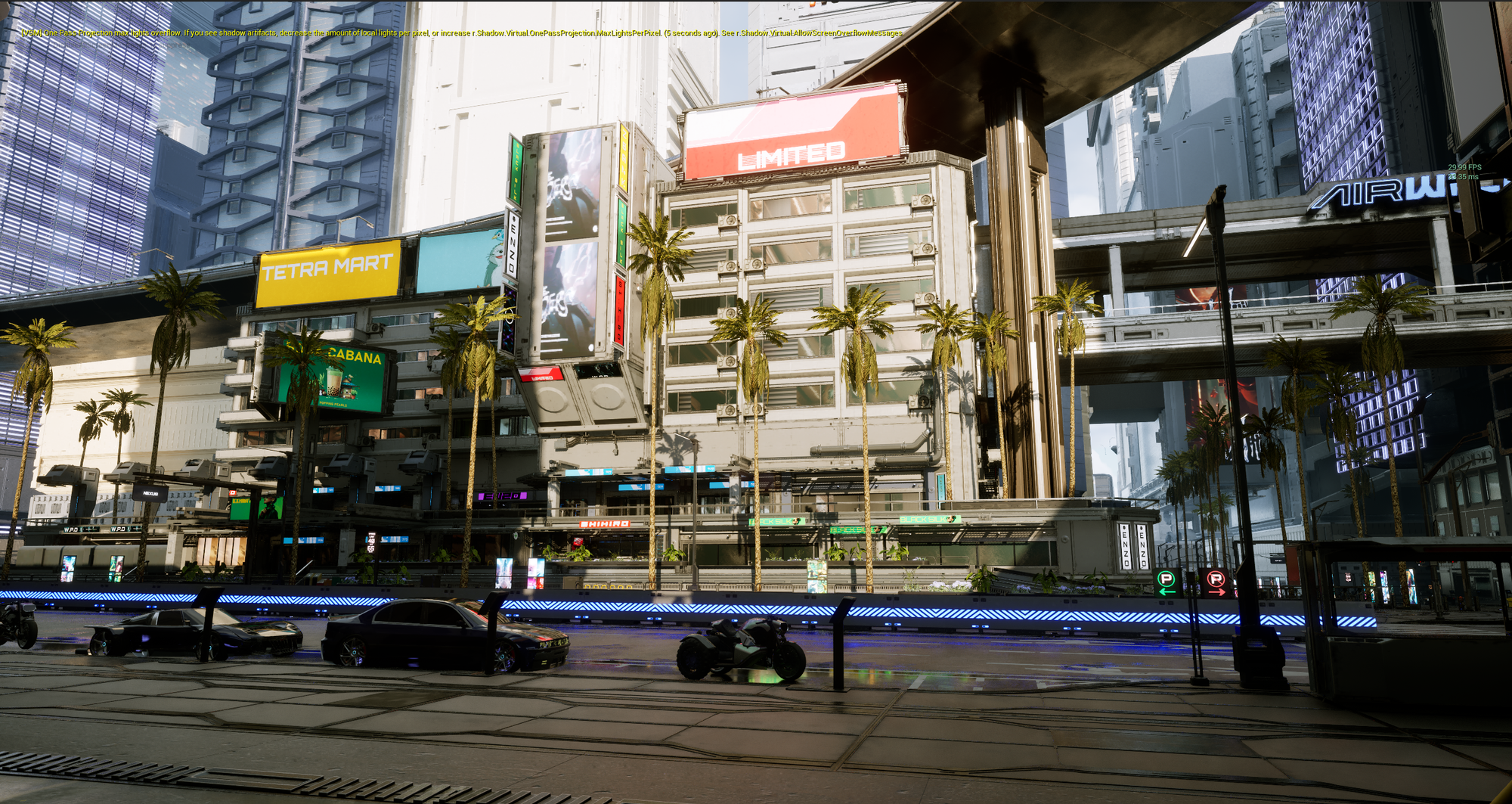
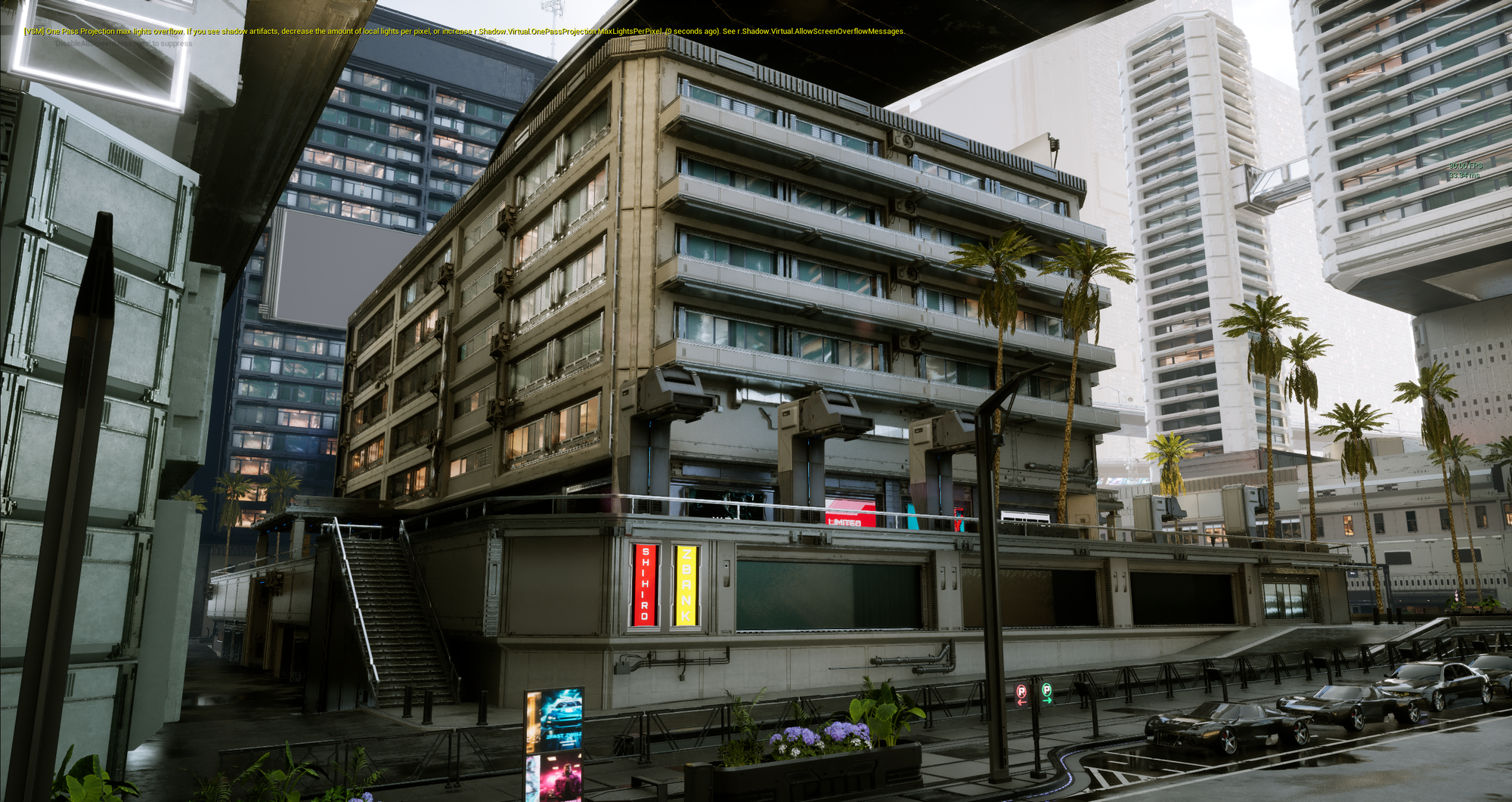
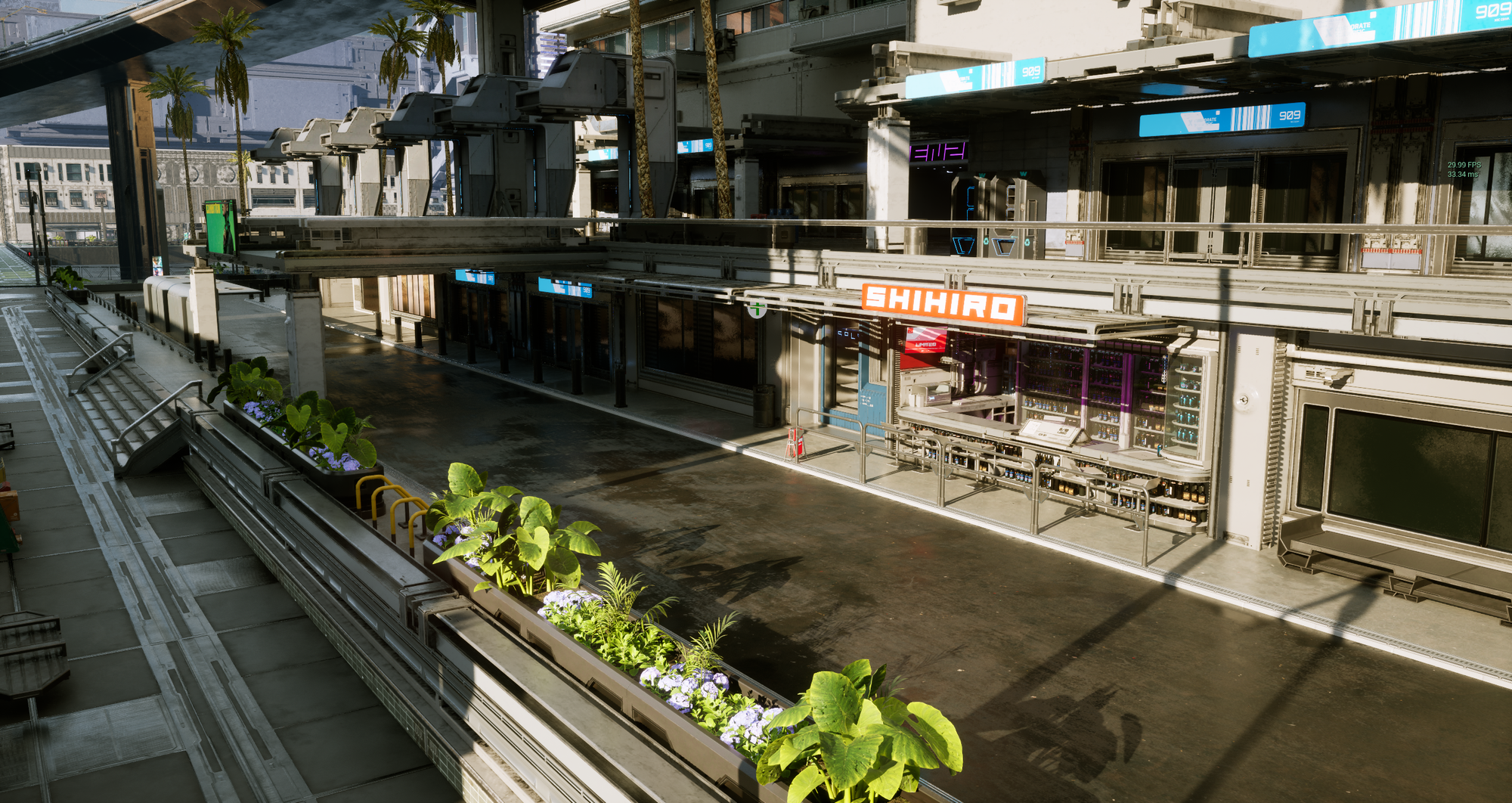
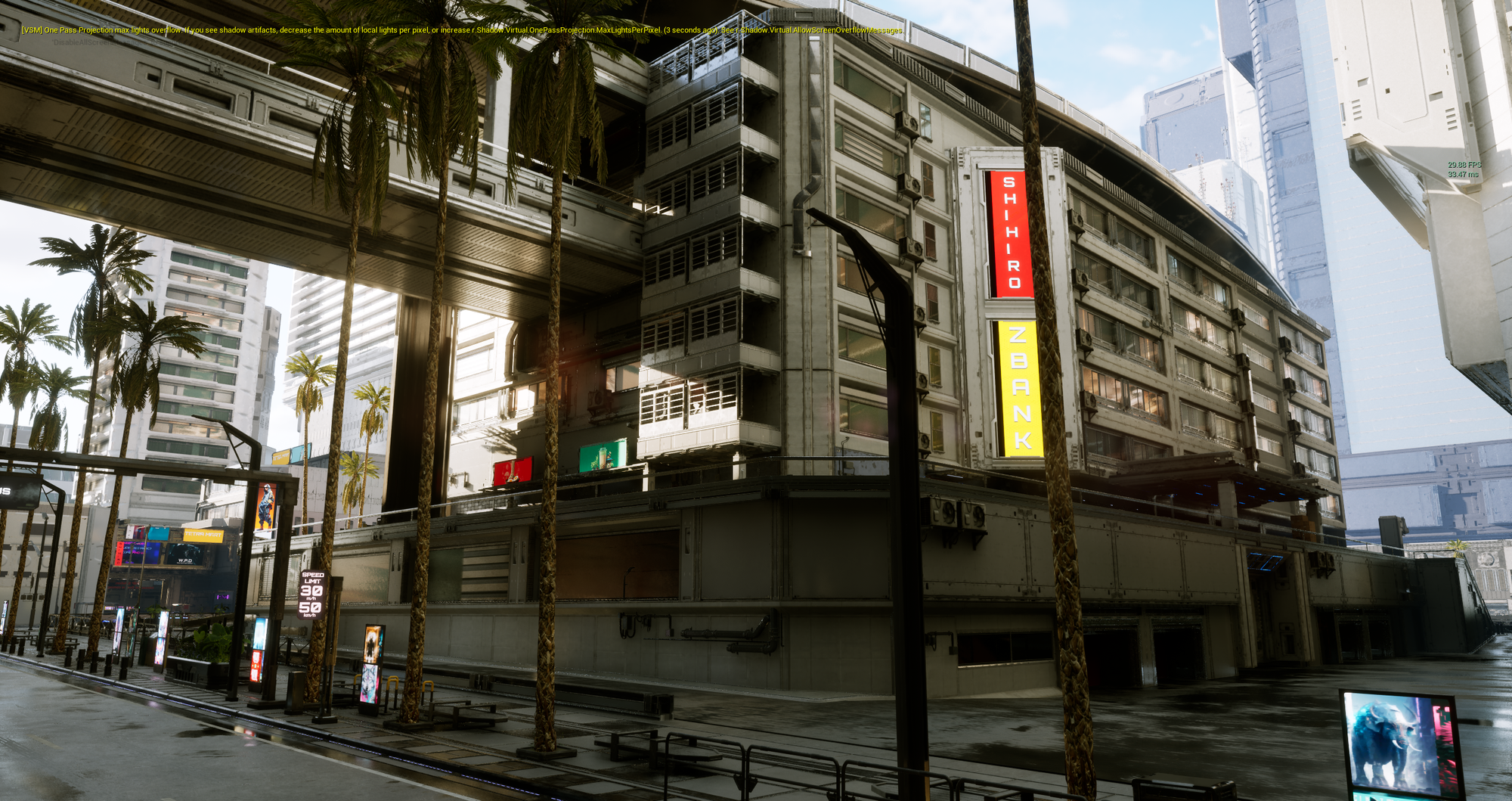
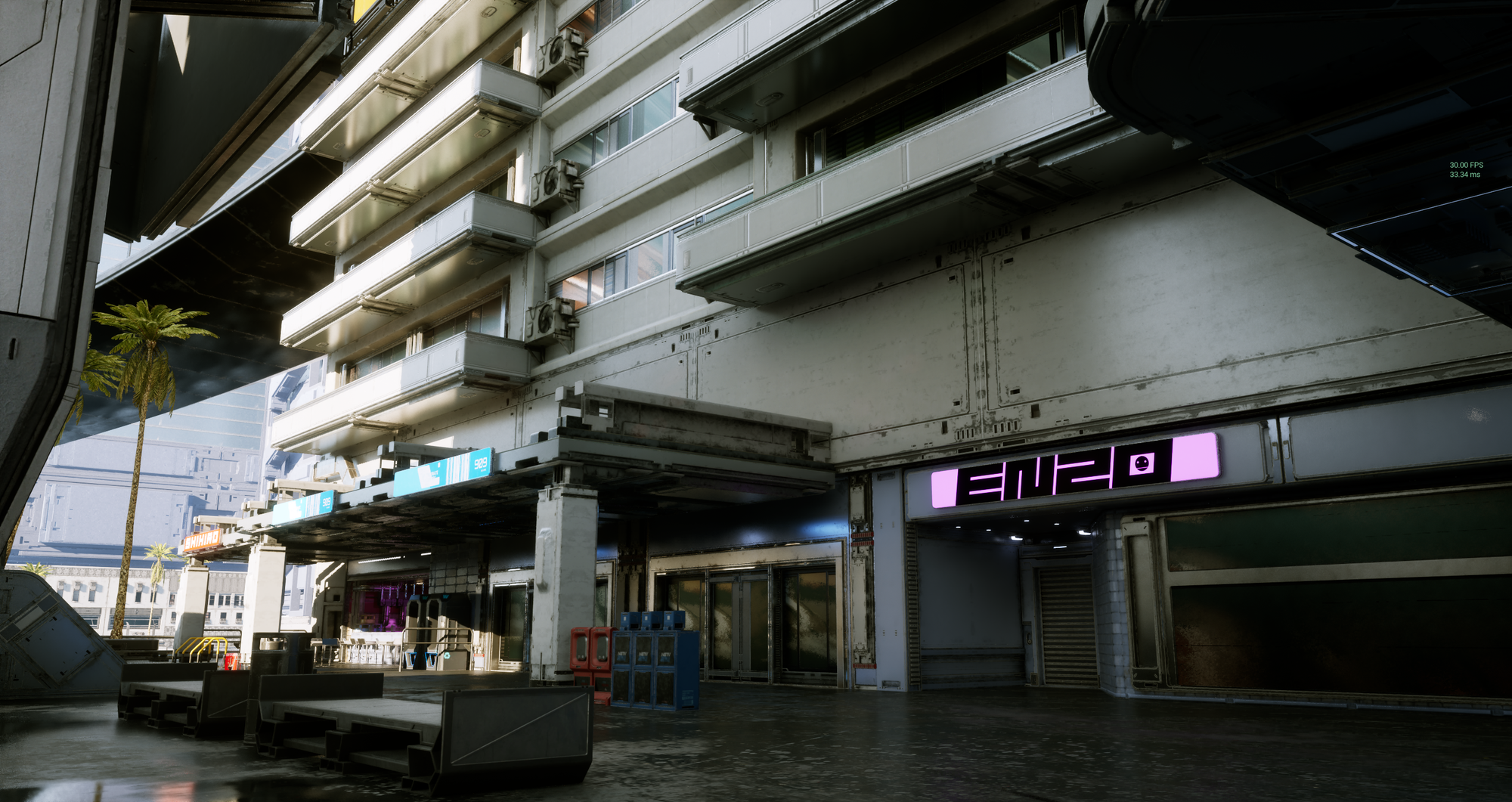
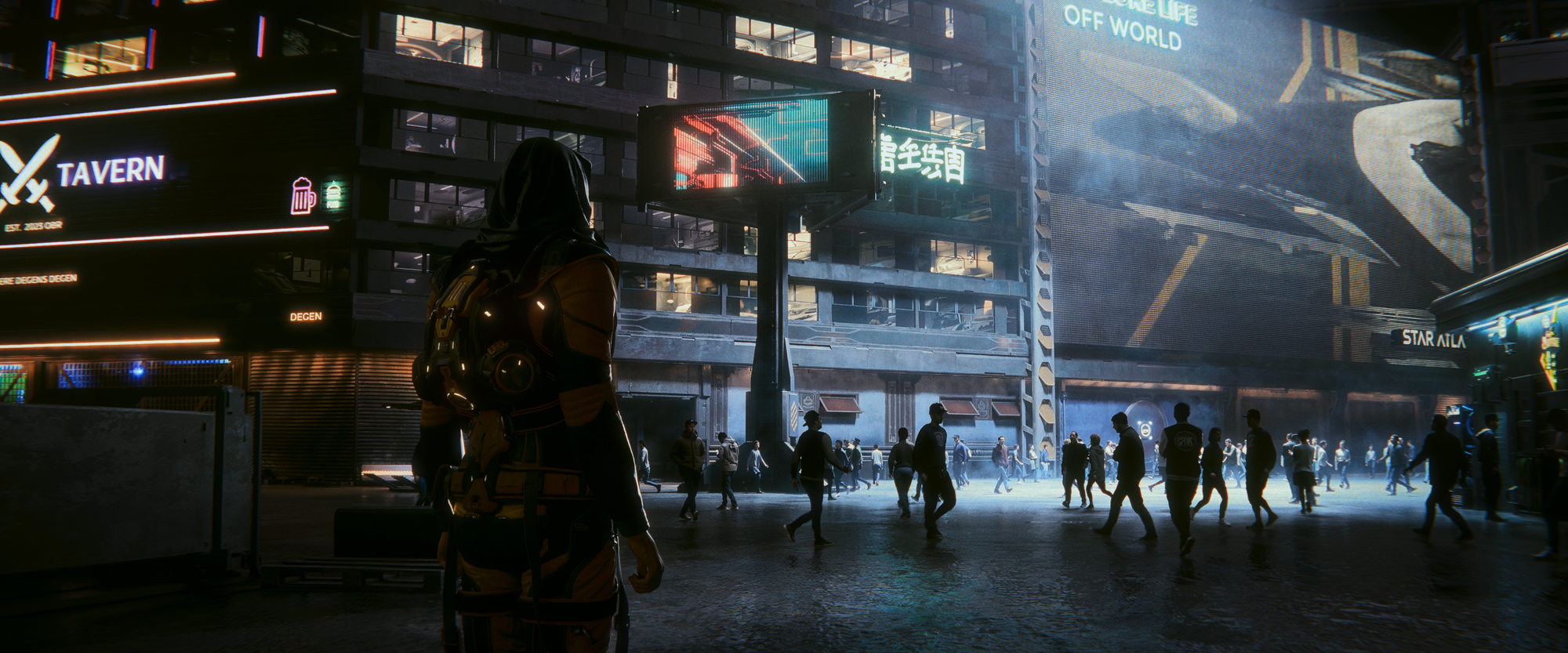
The Trenches environment is now largely complete, with recent work focused on contextual detail and gameplay refinement. Updates include new props designed for NPC spawning and interaction, store-specific signage, and additional bespoke storefronts such as Hotshots. Fine-grain set dressing was layered in using smoke and steam VFX, adding depth and atmosphere to the space.
Attention was also given to identifying exploits and collision issues throughout the area. While some edge cases typically surface during live play, these passes helped resolve the majority ahead of release, with remaining issues addressed through follow-up updates.
Work extended beyond the core map to the areas surrounding Trenches exit points. Previously underutilised spaces were rebuilt using overpaints and full concepts, transforming what had been dead zones into active, visually cohesive extensions of the environment.
Assets
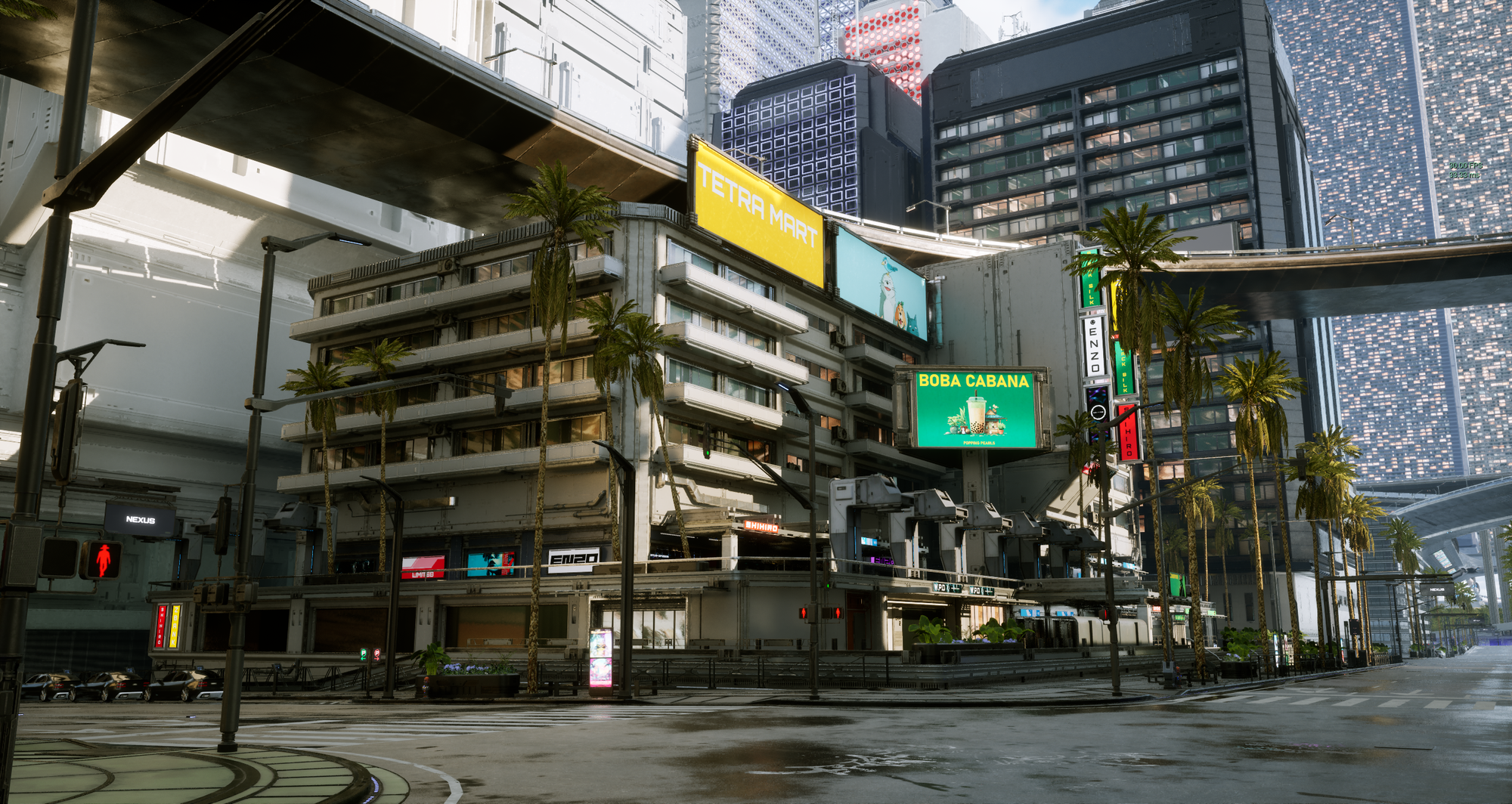
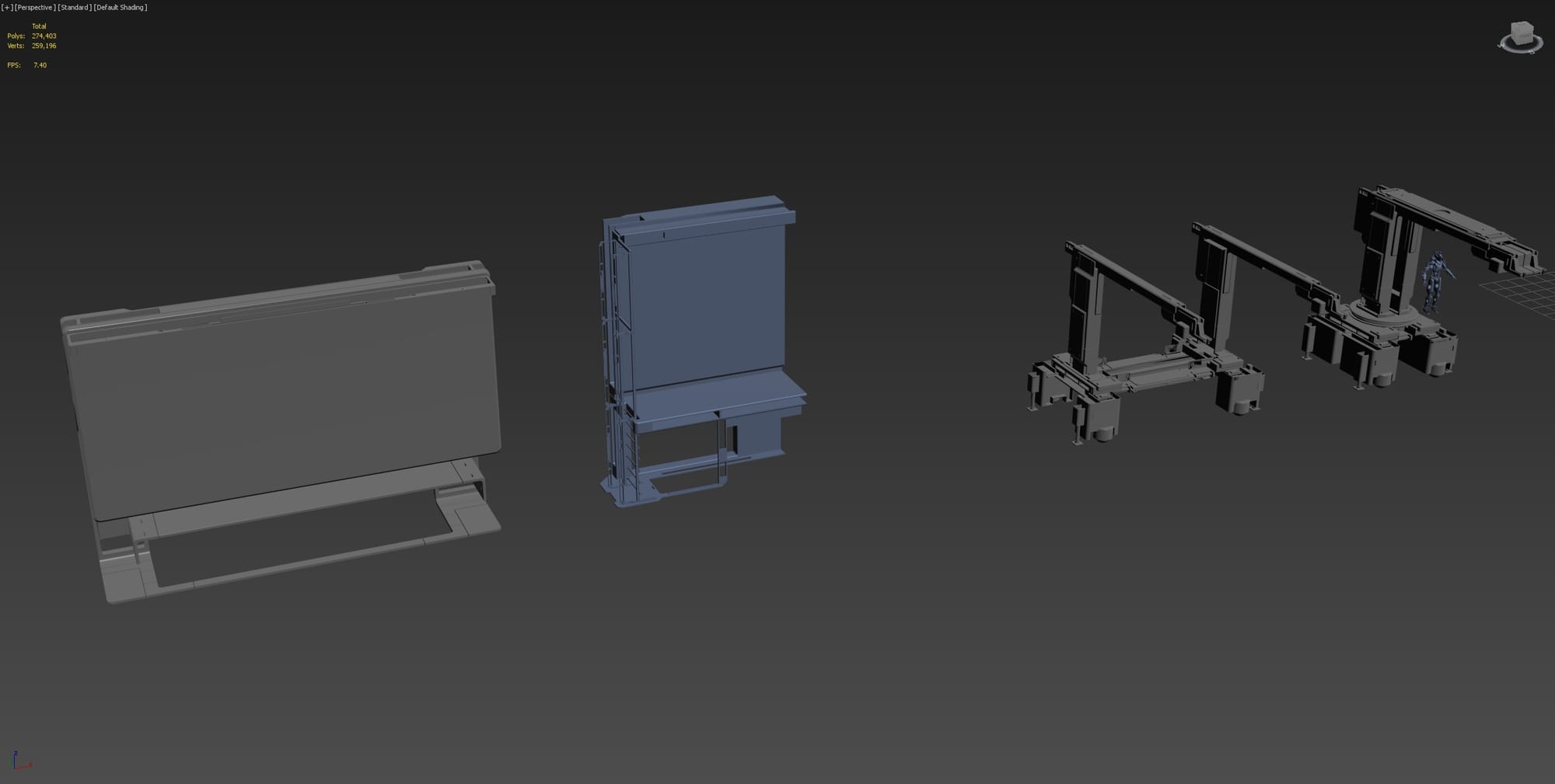
A new wave of environment assets has been integrated, including updated signage, storefront variations, rooftop dressing, and animation-ready doorways and entrances. These additions expand visual variety while supporting more interactive and readable spaces.
The Armory
The Armory has returned following its previous December release, with a series of visual and spatial updates. All assets received updated texturing, with a focus on finer surface detail and material finishes.
The playable area was expanded to include a dedicated weapons range, which will later support live weapon testing functionality. Set dressing was overhauled across the space, including updated display case meshes and textures, a wider variety of weapons on display, and multiple character armor sets showcased throughout the interior.
Lighting was rebuilt and optimized, alongside updated interior post-processing to ensure it integrates cleanly with global lighting without visual interference.
Metro
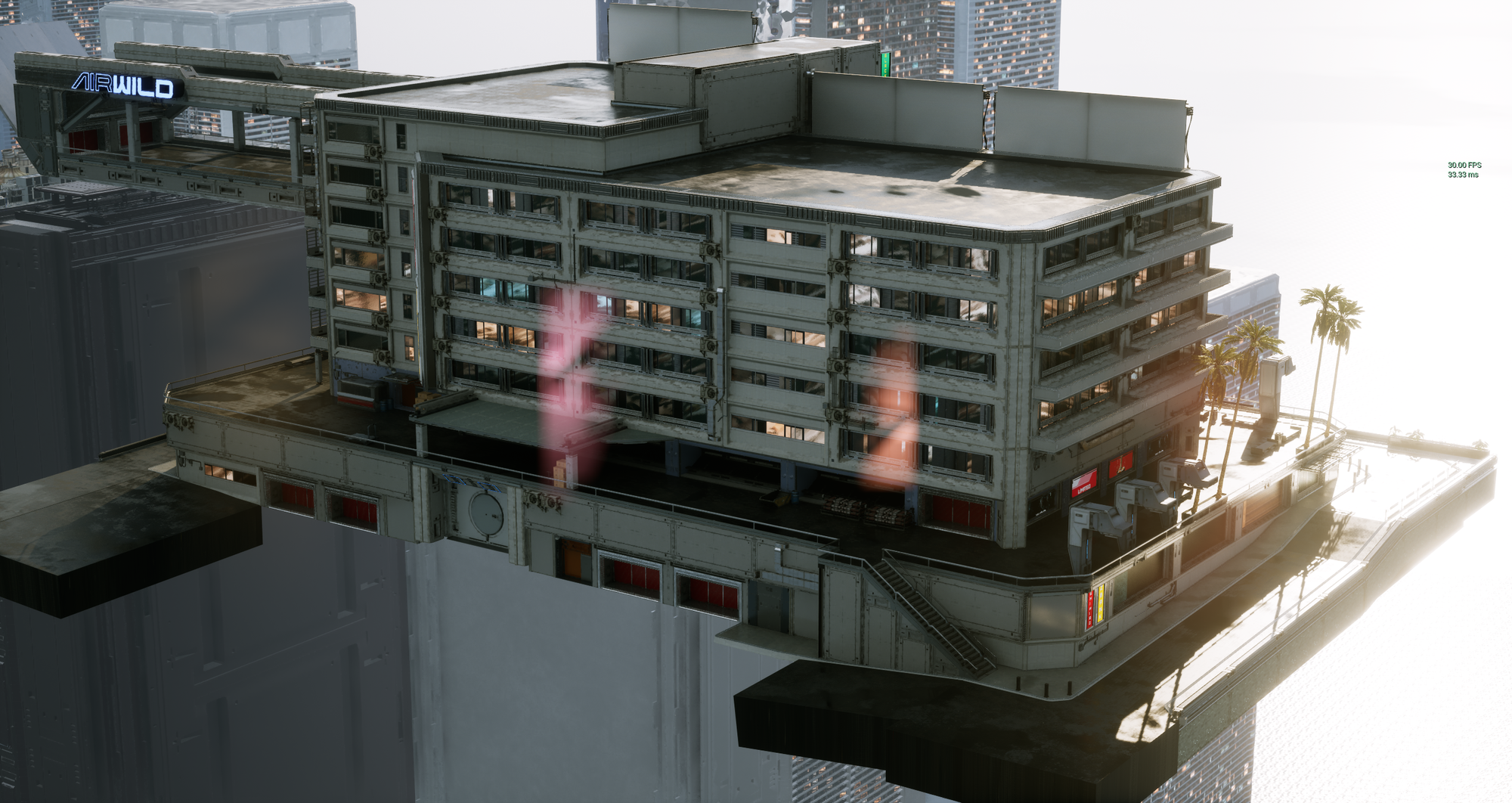
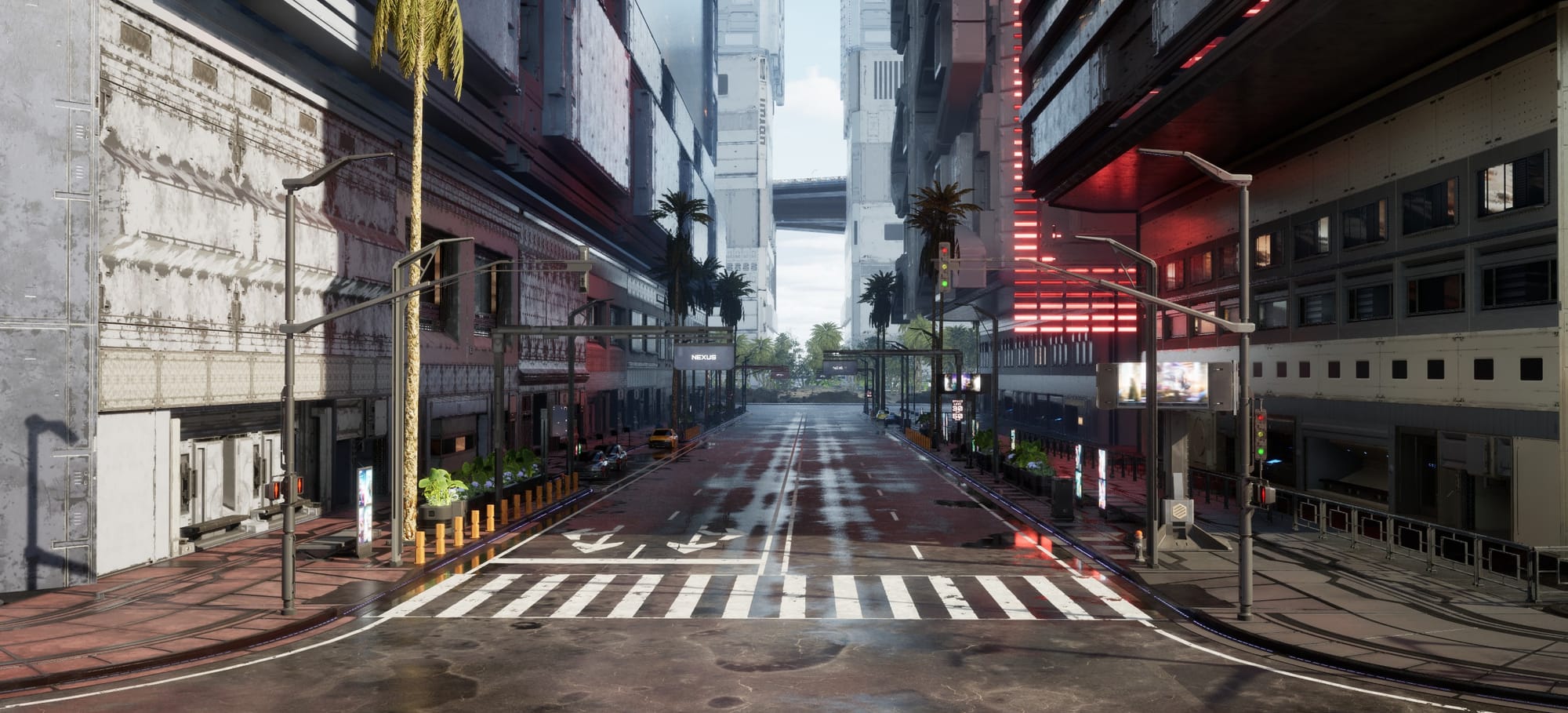
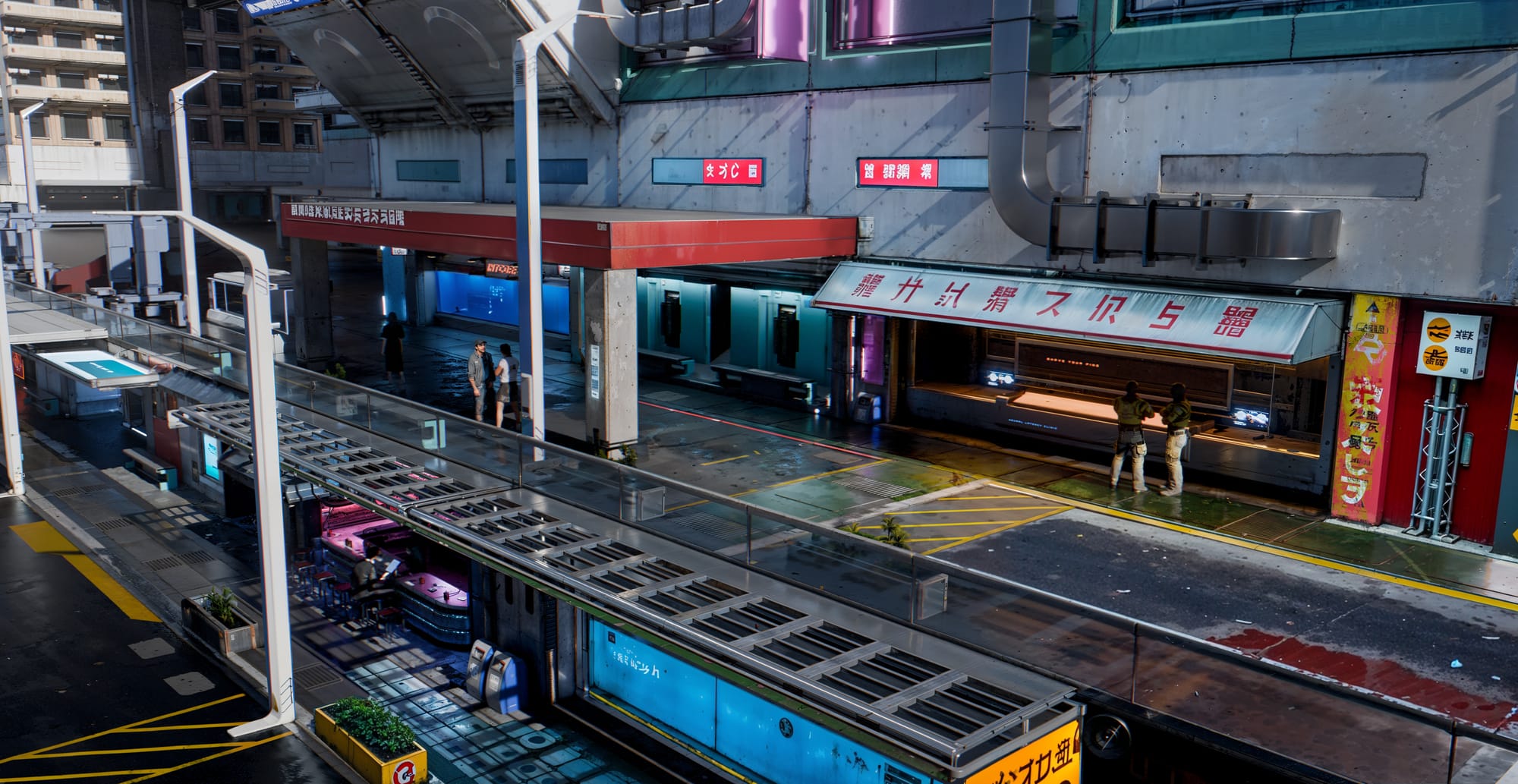
The Metro has returned following its appearance in last December’s trailer, with significant optimization and structural updates. Geometry, functionality, and detailing were refined, alongside the addition of updated signage, the Air Wild store, and an initial model for the train itself. These changes bring the Metro closer to its intended role as a functional and atmospheric transit space within the city.
Procedural
Building Cleanup
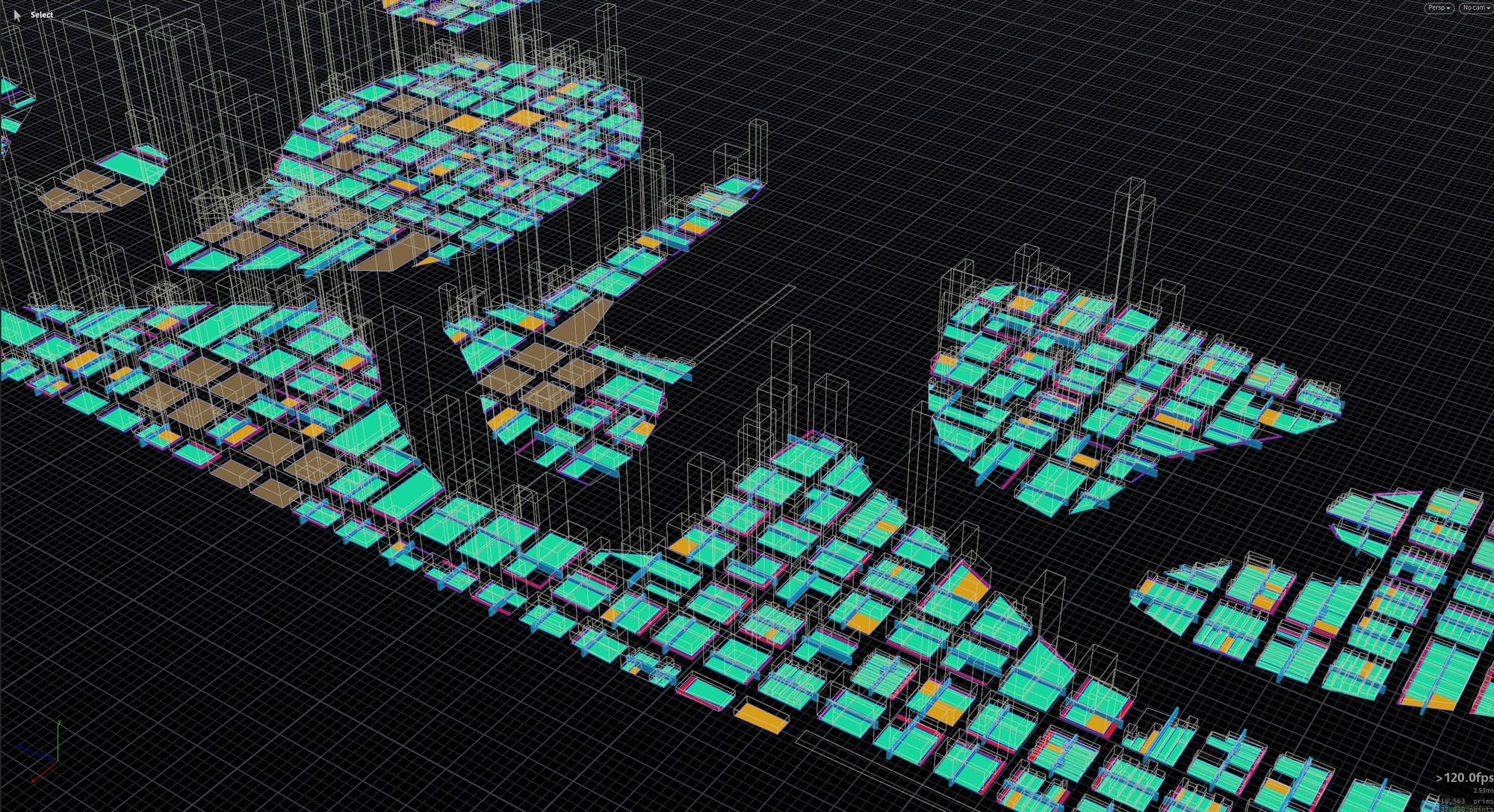
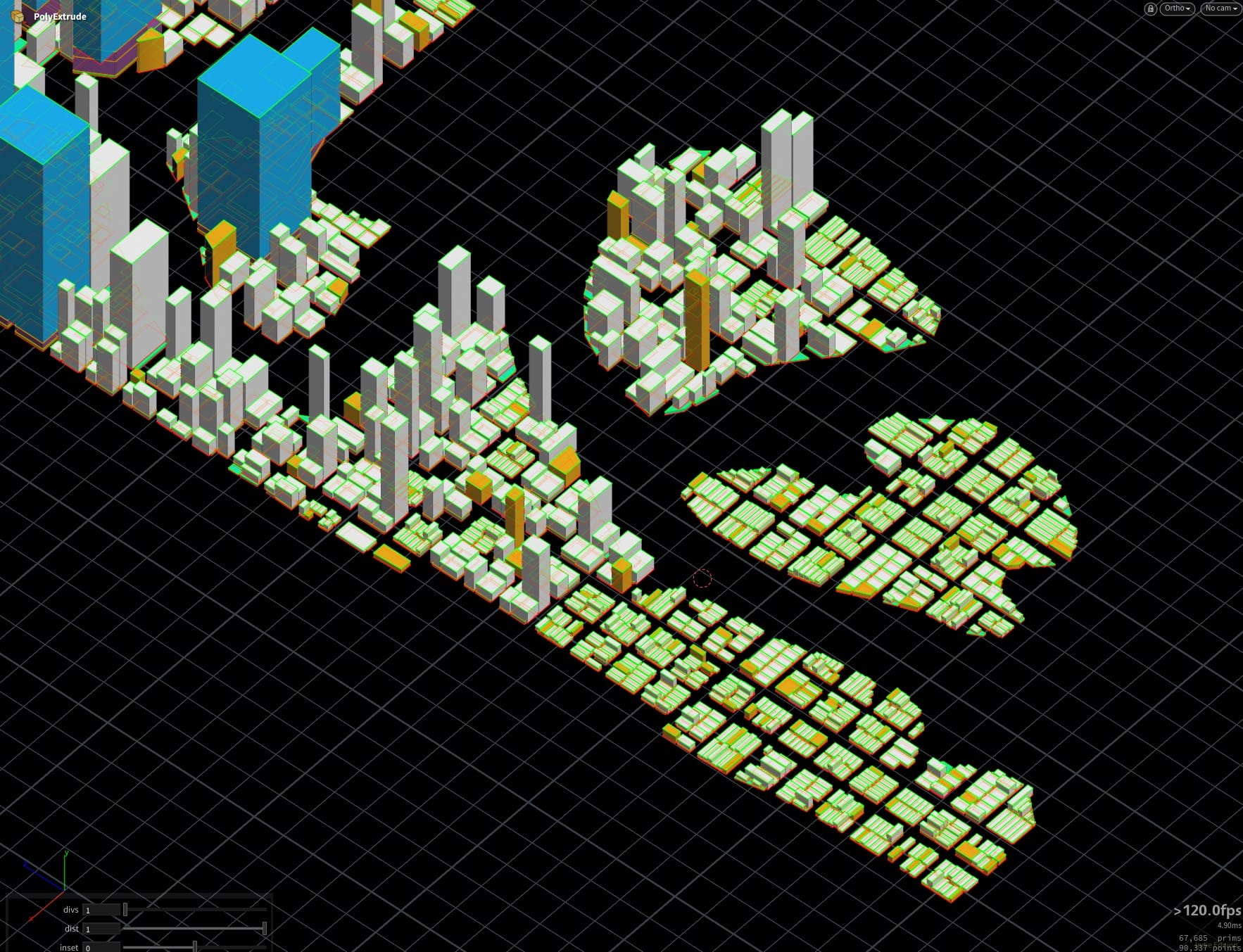
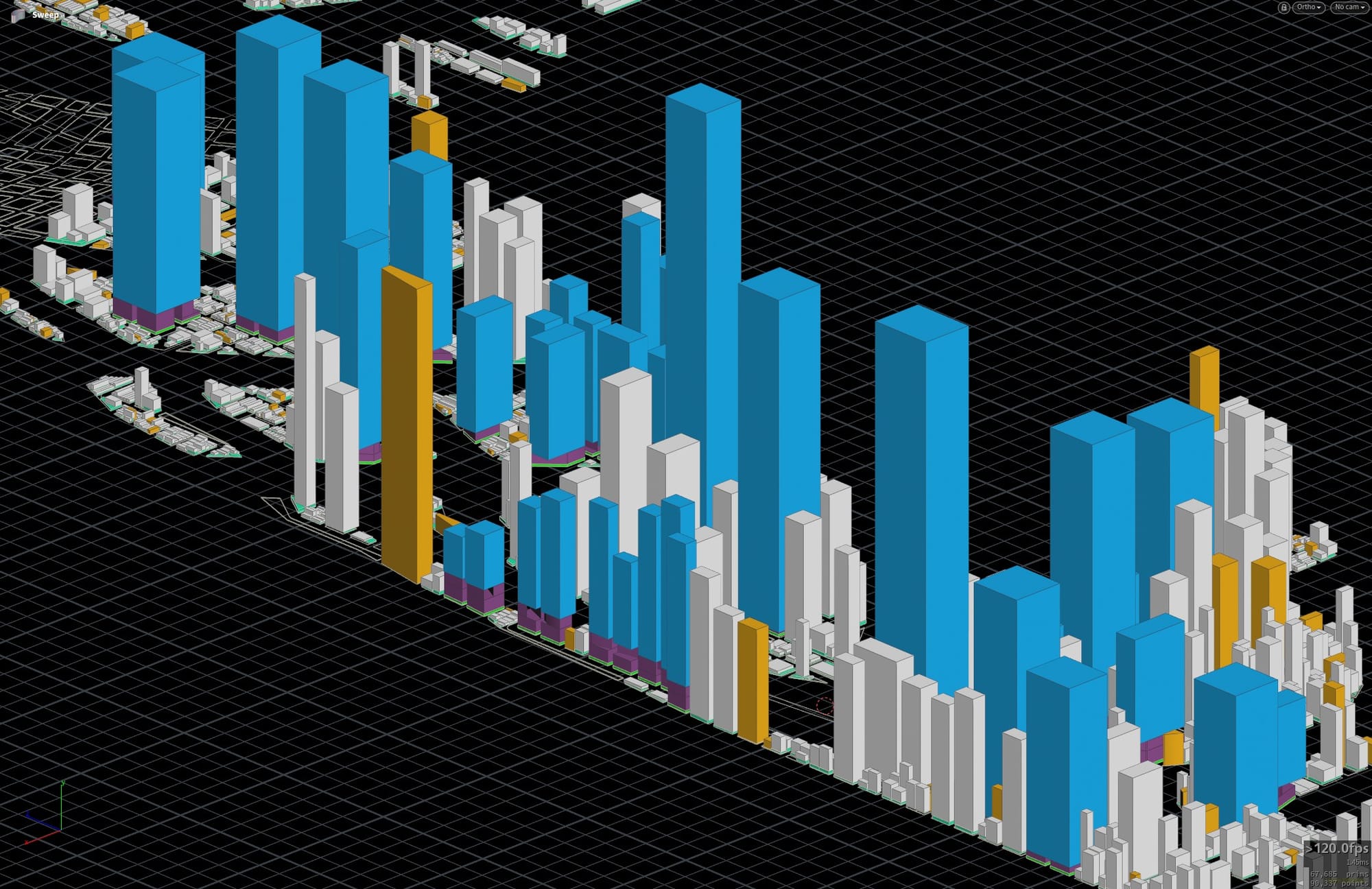
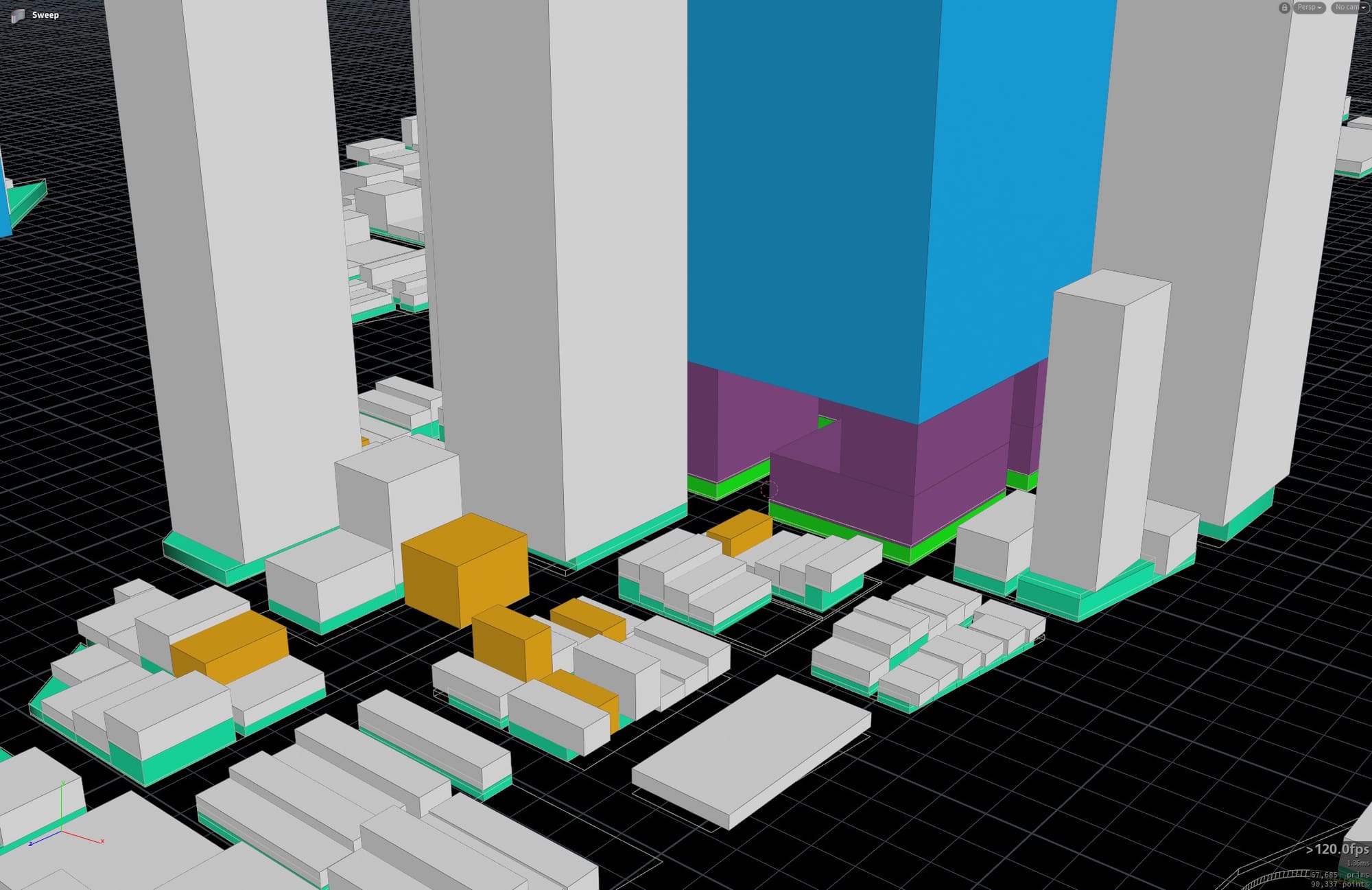
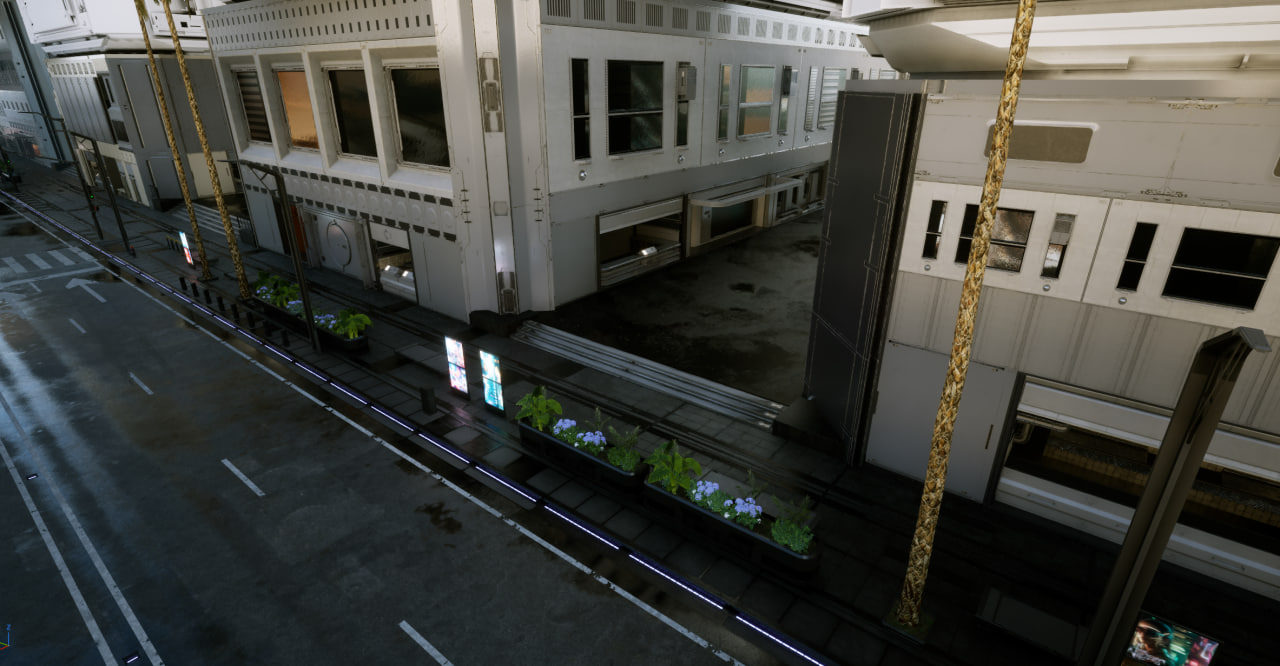
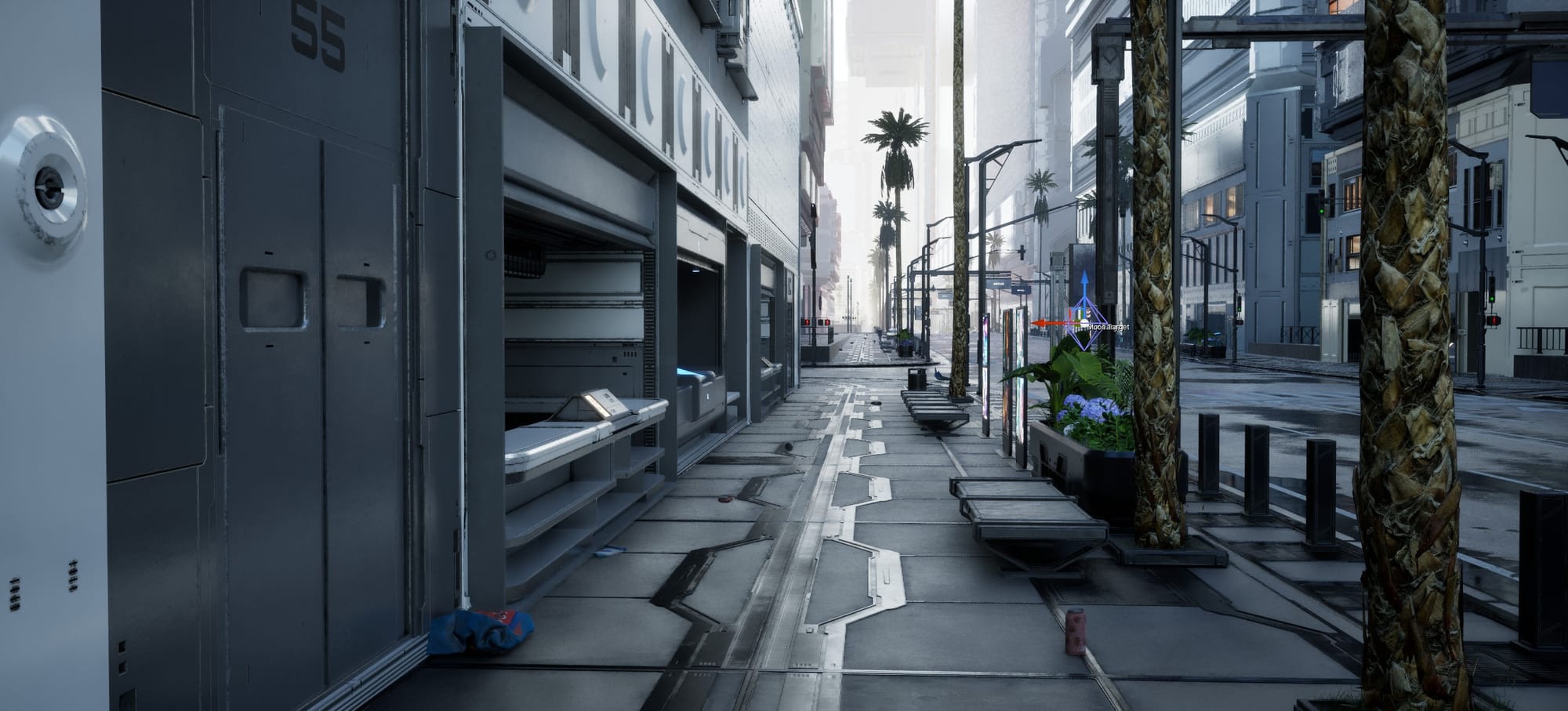
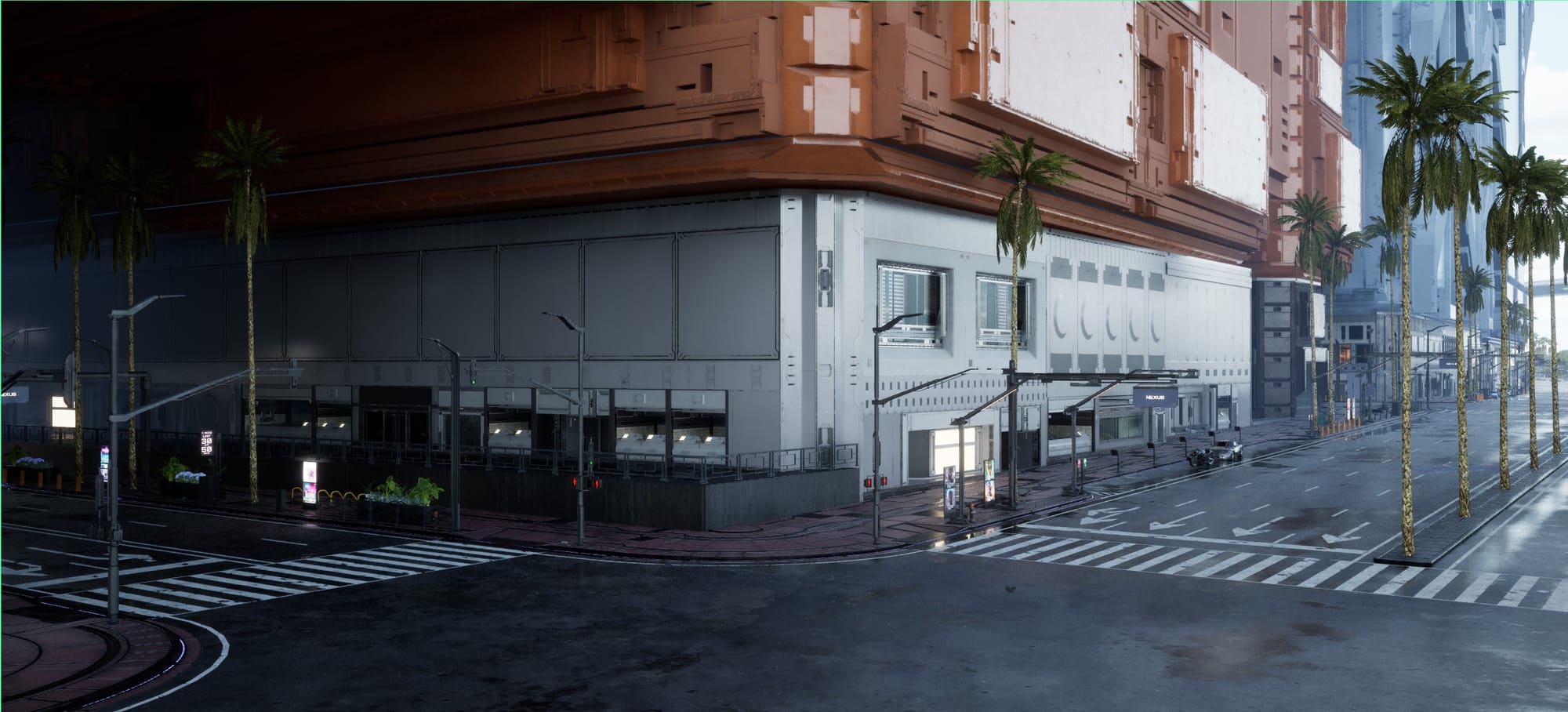
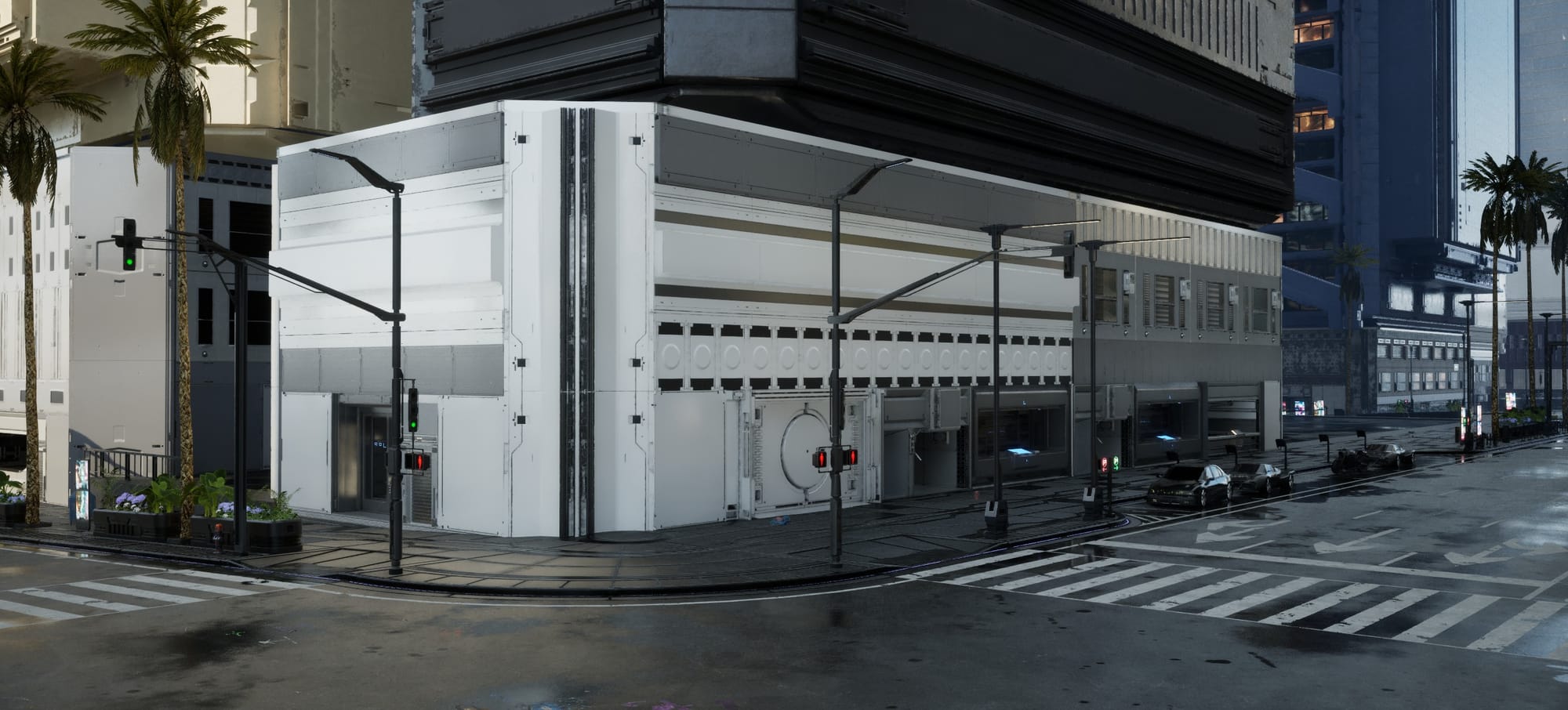
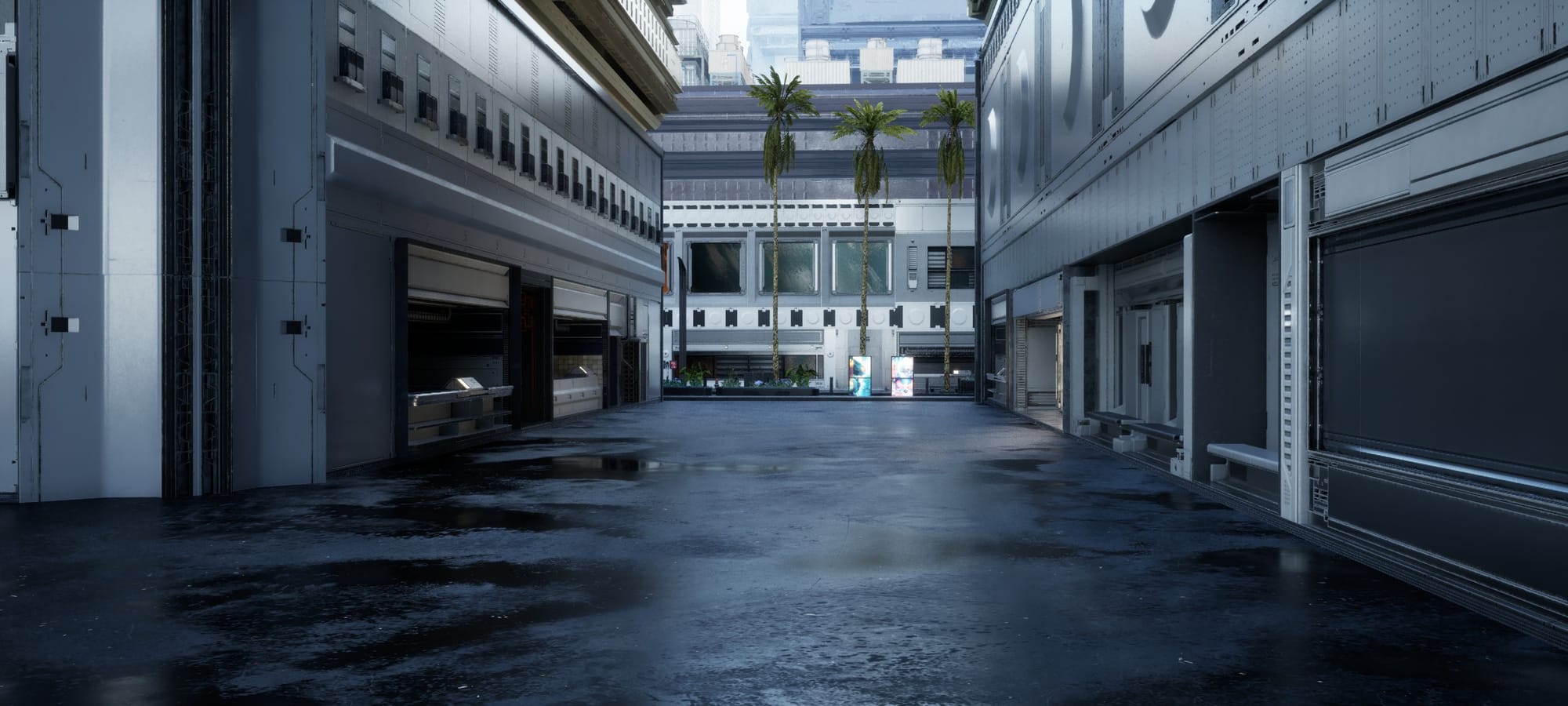
A structured cleanup process was introduced to simplify and optimize building geometry in preparation for new storefronts and plazas that support the city’s sloped road system. This work focused on enforcing clean setbacks, consistent corner angles, and repeatable alleyways.
The building system was also separated into two primary layers, bases and towers, with additional bespoke handling for mega towers where complex geometry is intersected by highway infrastructure.
Building Collisions
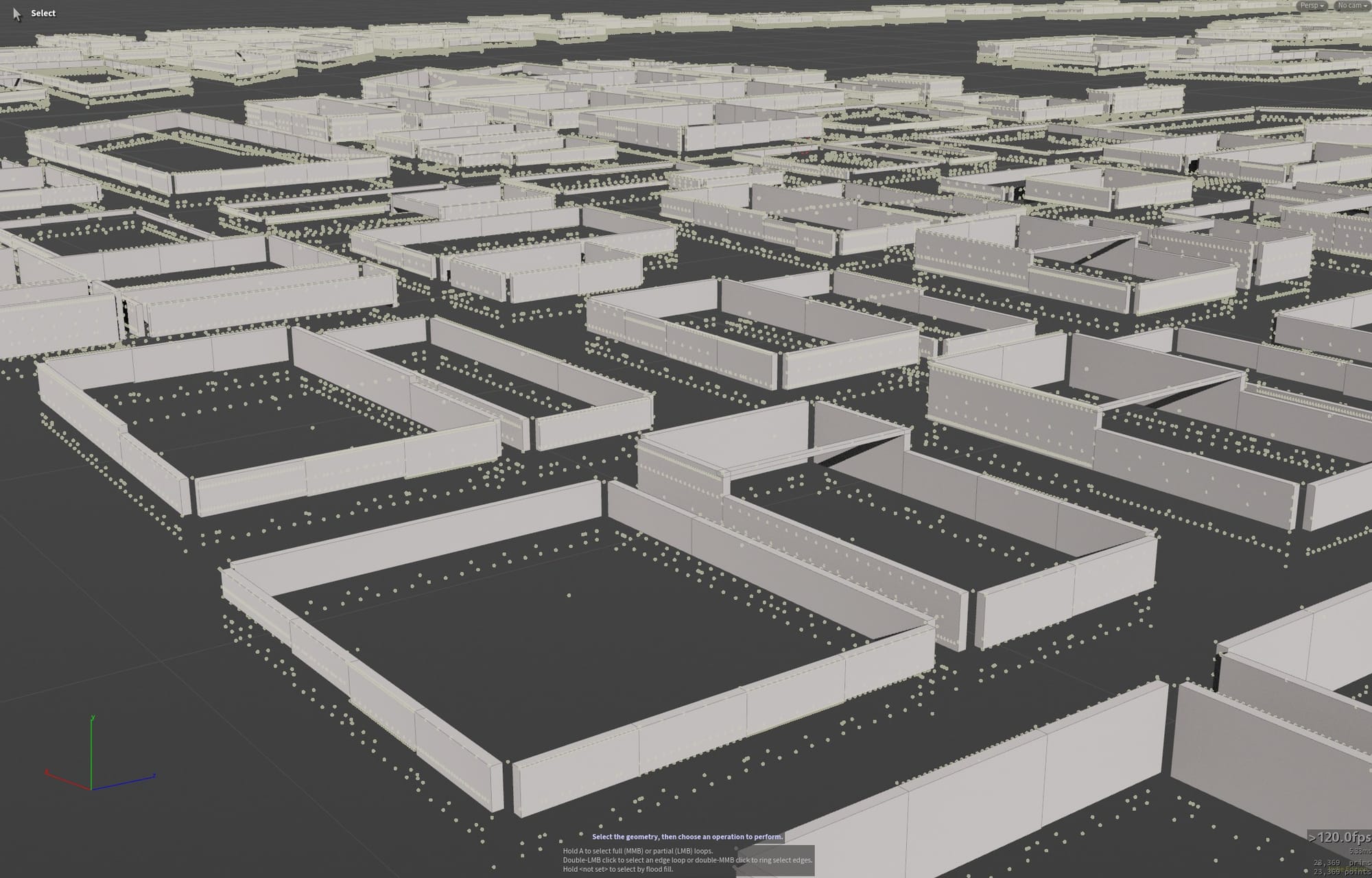
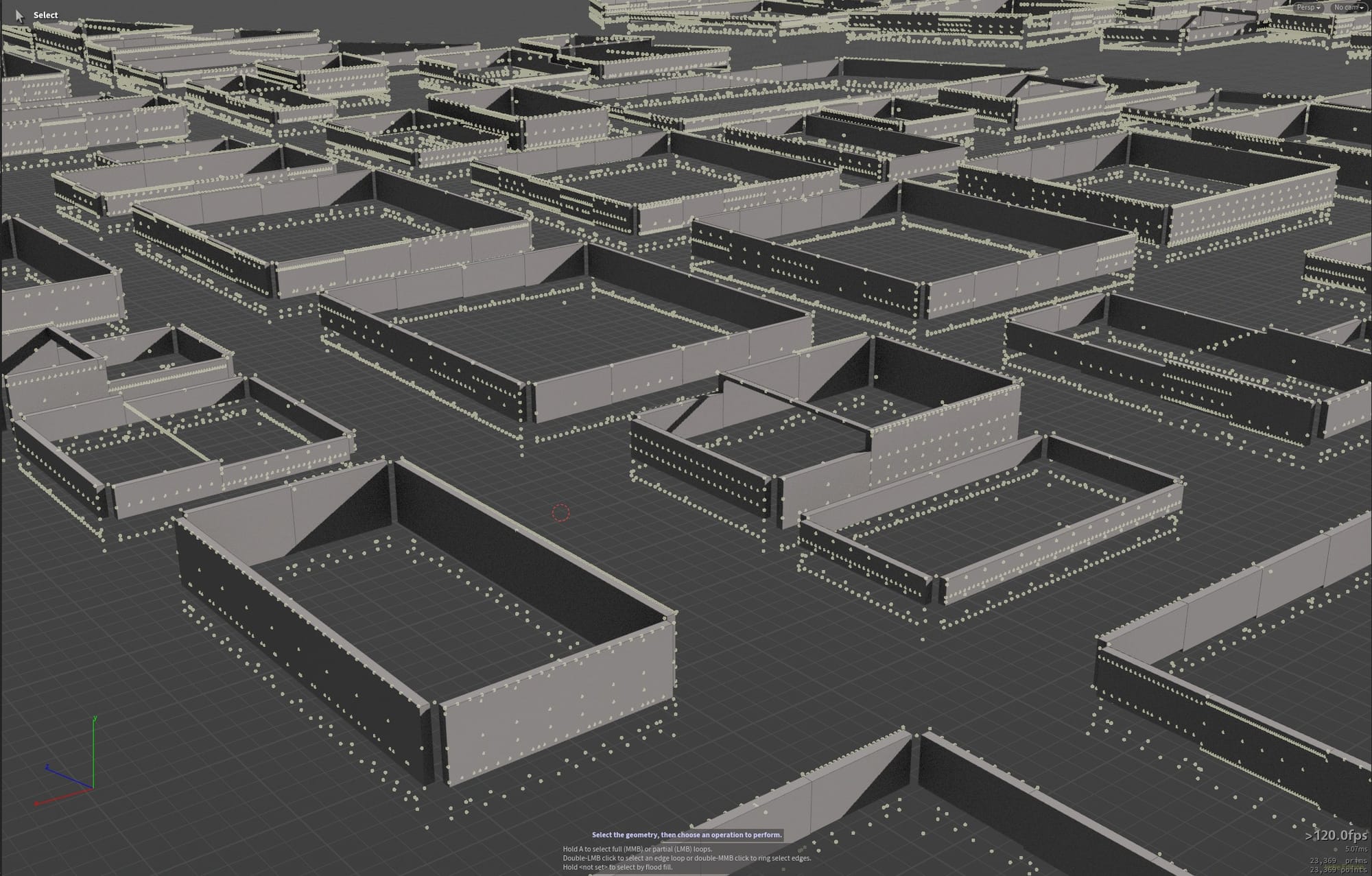
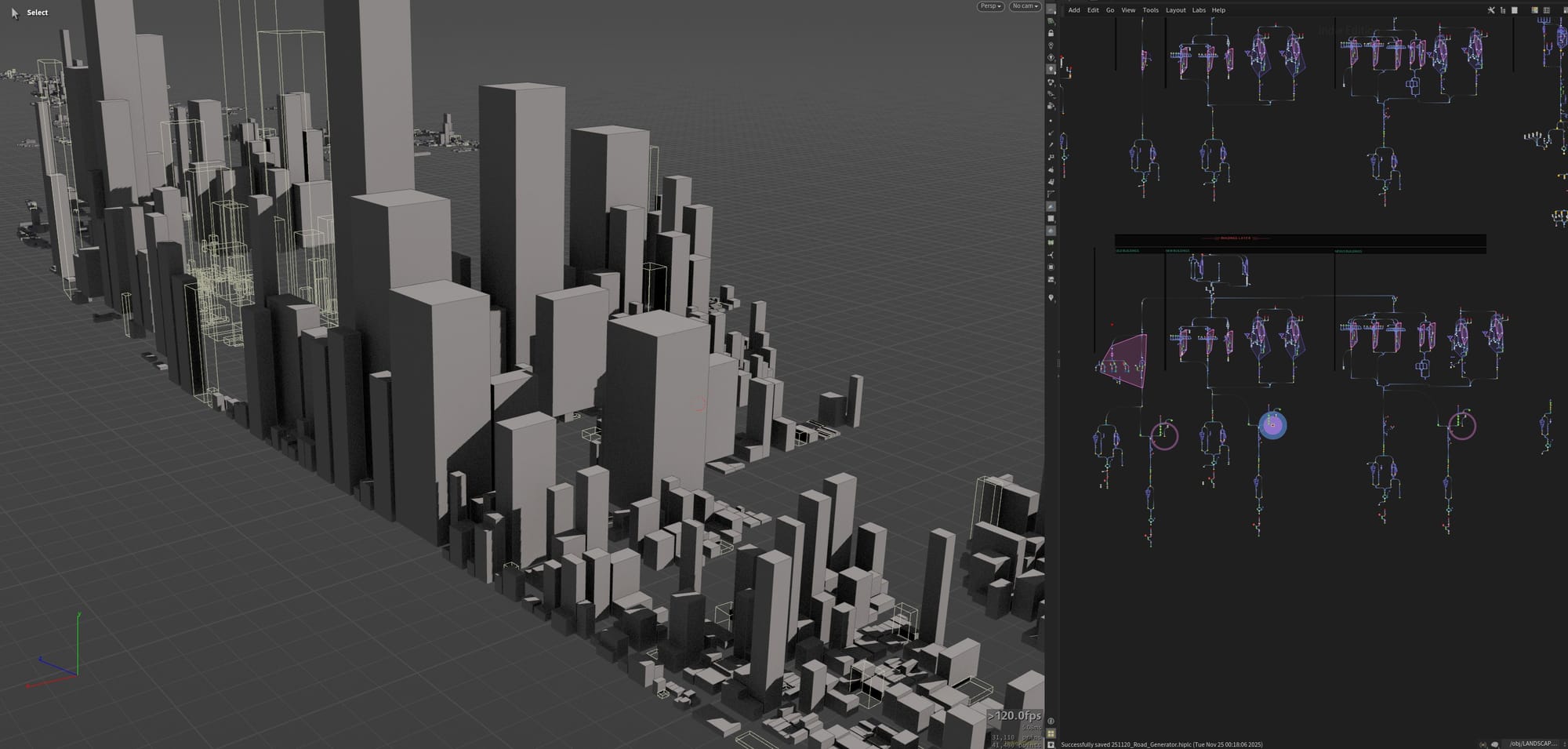
A new simplified building collision system was developed to maintain performance at the scale of Wiami’s density. The system is divided into three collision layers: high-detail collisions at ground level where player interaction is most frequent, mid-detail collisions on top of building bases, and simplified bounding-box collisions for towers.
Building Scaffolding
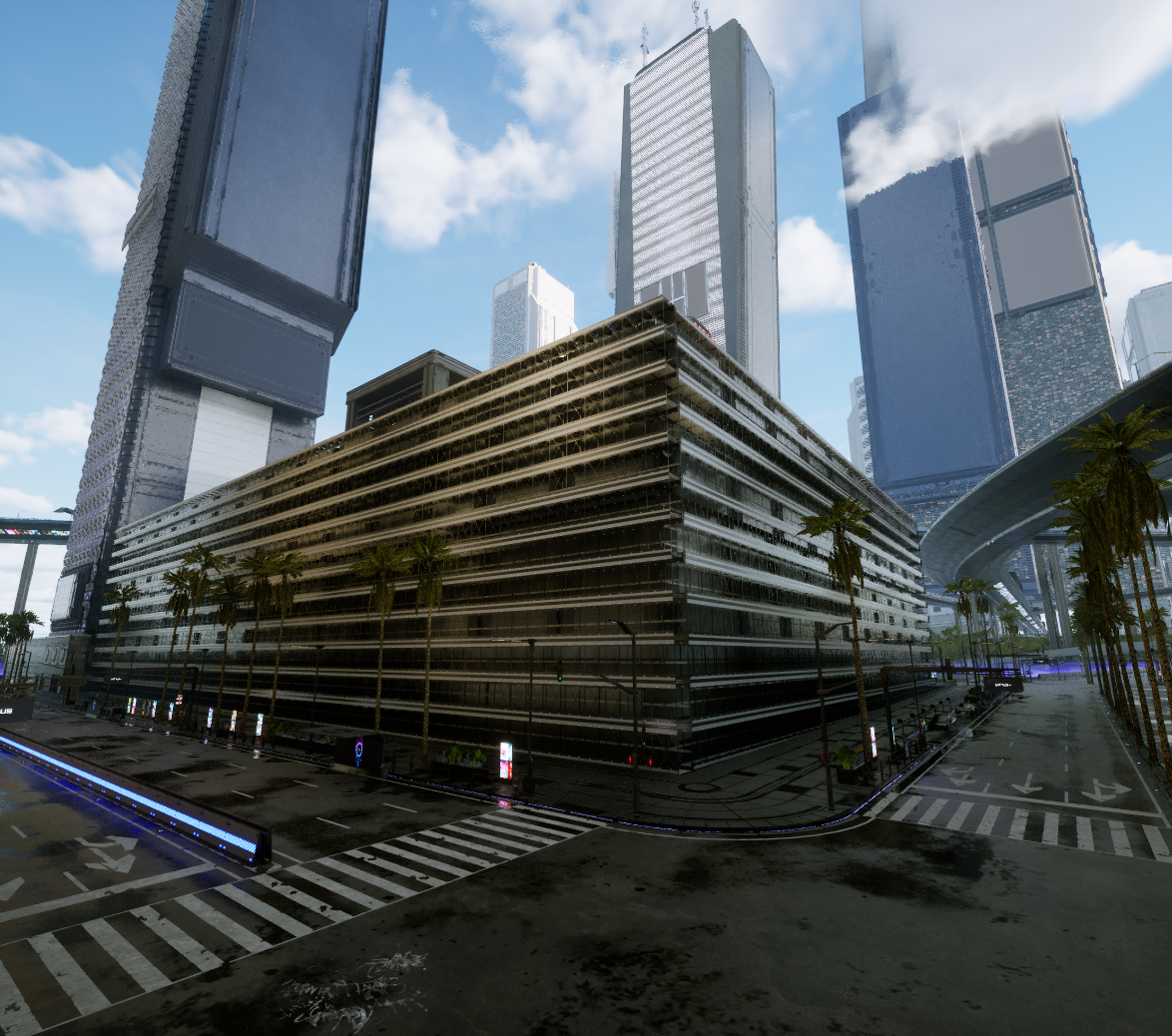
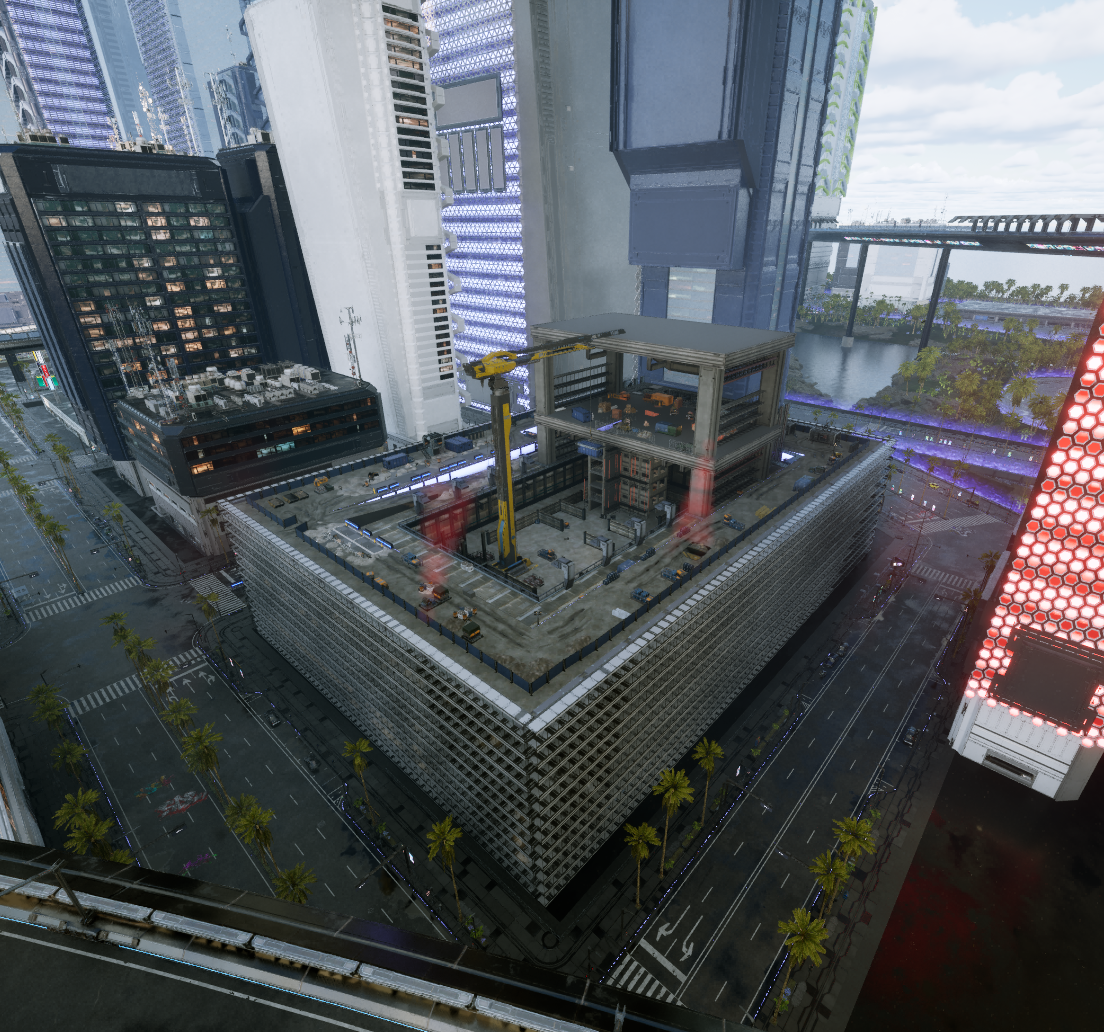
The updated scaffolding system was applied to key structures, including the base building of The Beginning rebellion shooter level, ensuring consistency between standalone levels and the open world.
Island Barrier
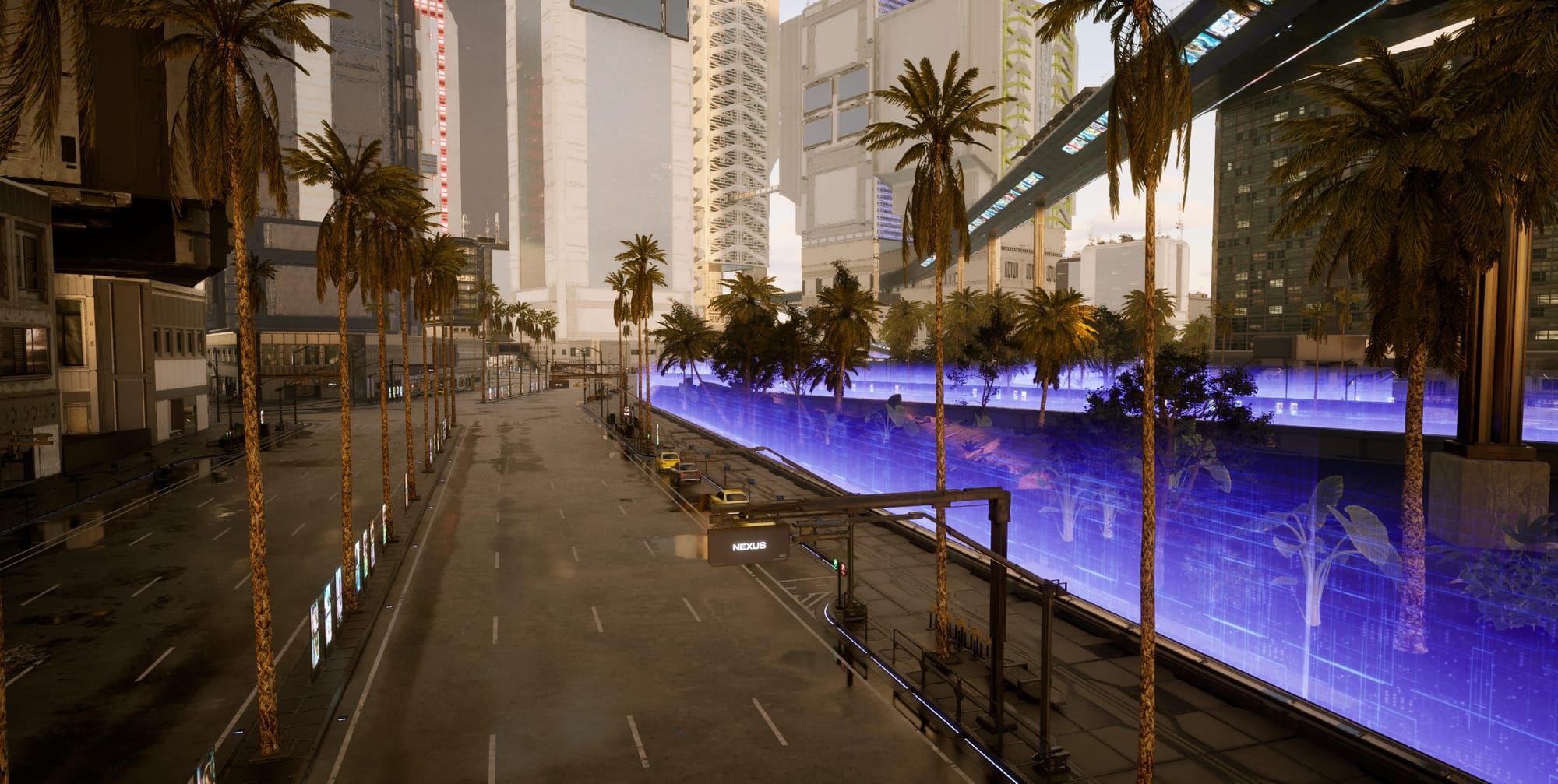
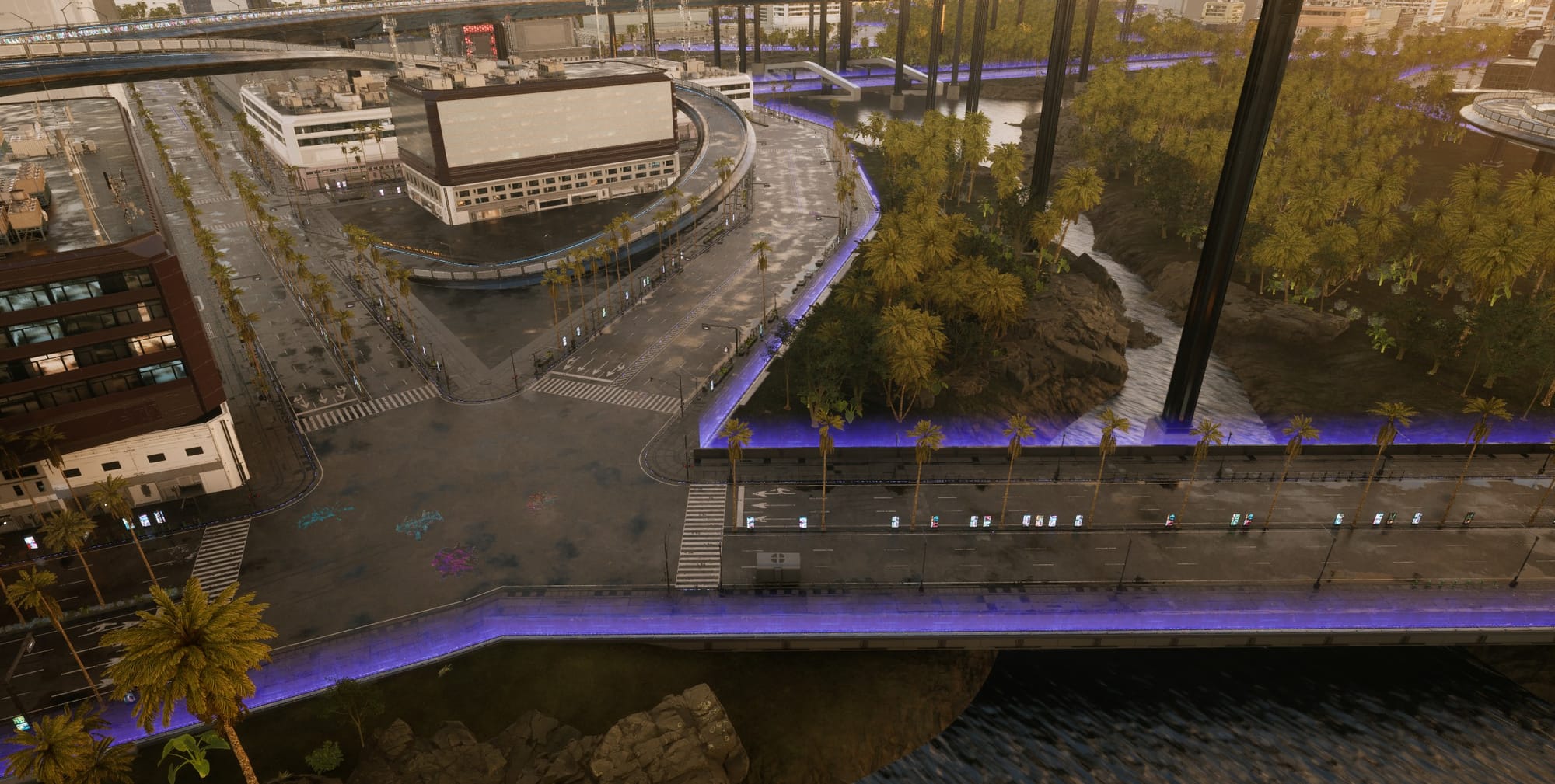
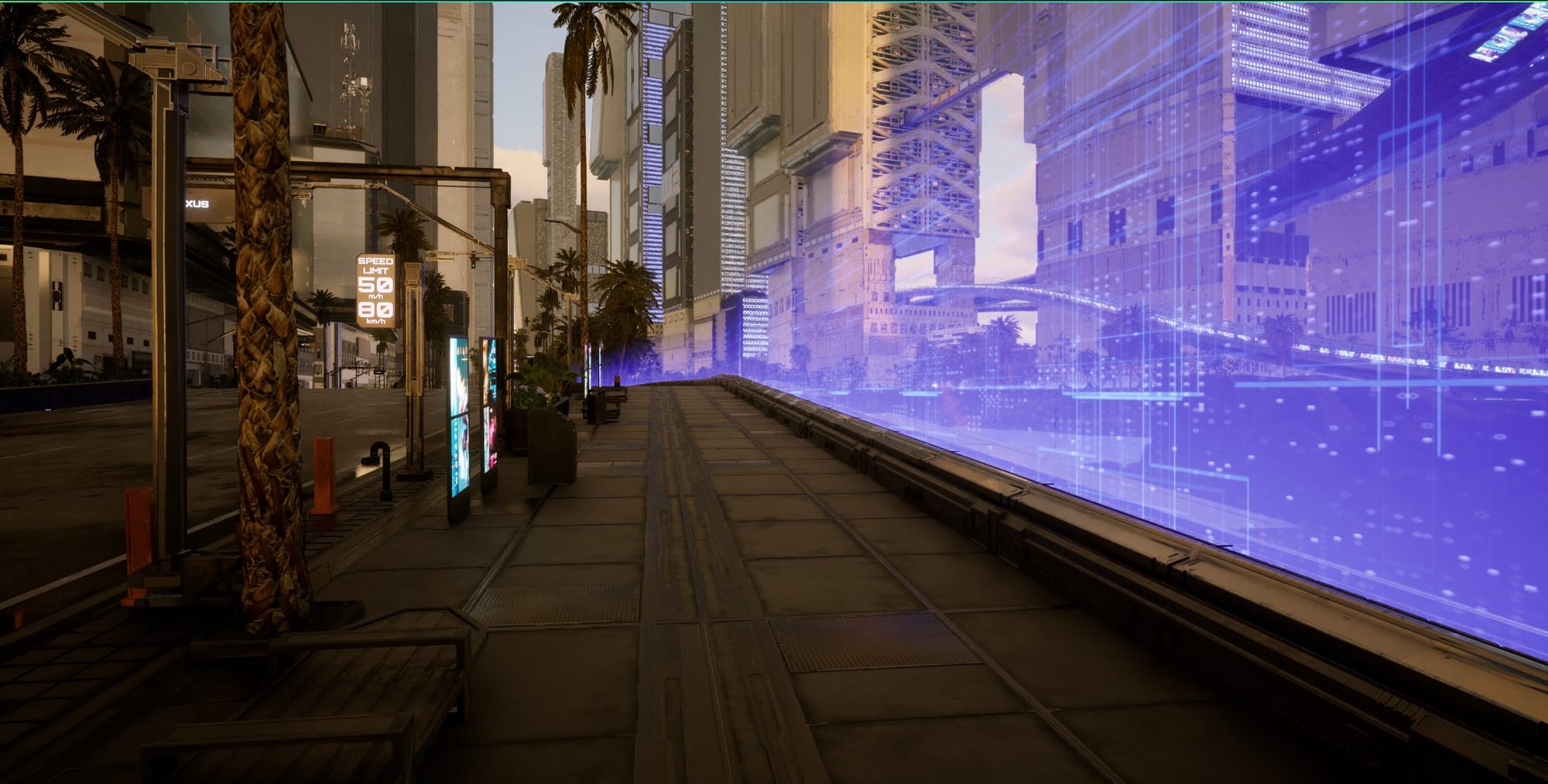
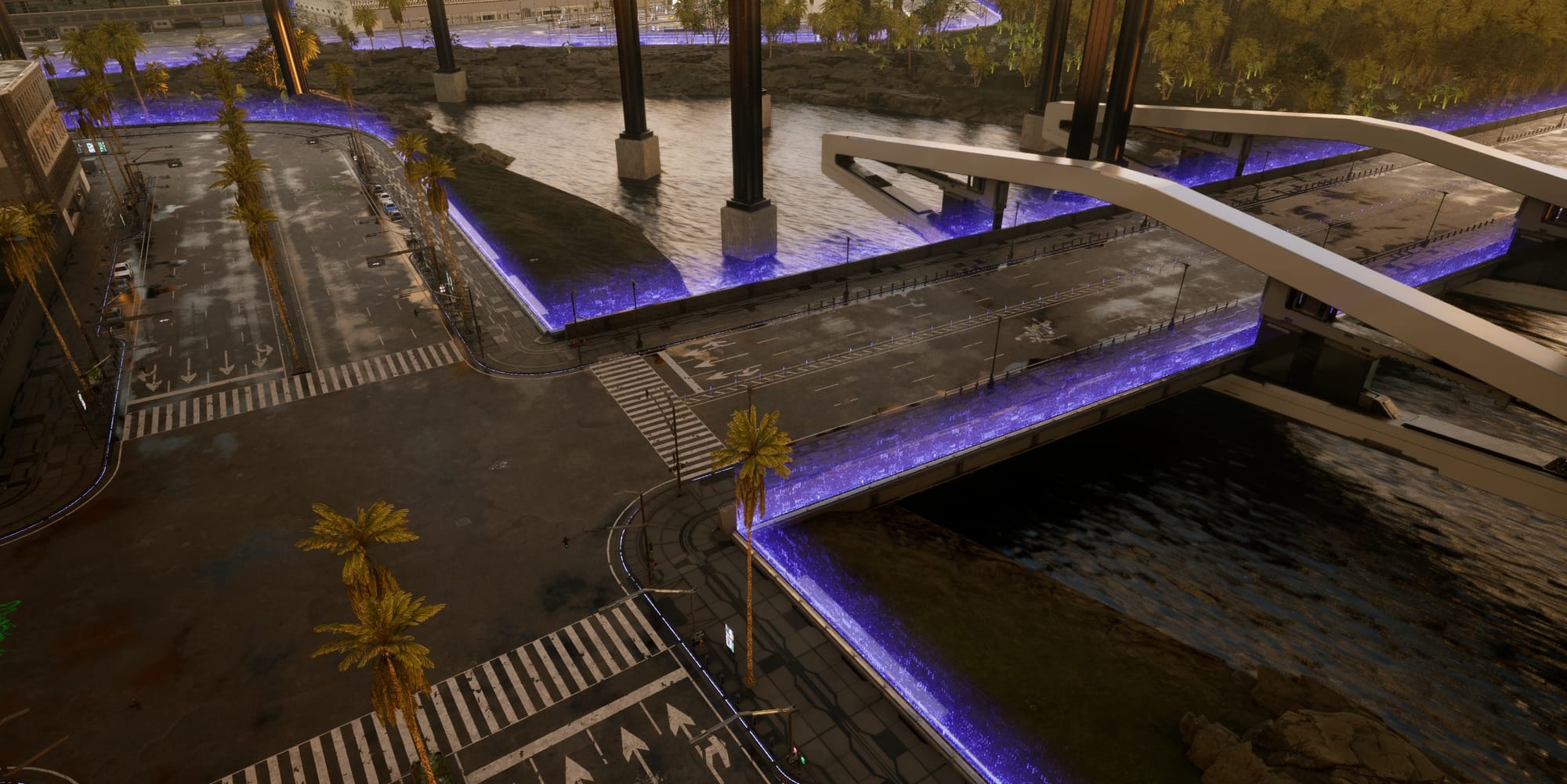
To prevent access to restricted areas, a procedural energy wall system was implemented, first introduced in The Beginning shooter level. The barrier outlines playable boundaries while remaining visually integrated into the city’s design, preserving immersion rather than relying on invisible walls.
Map Layers
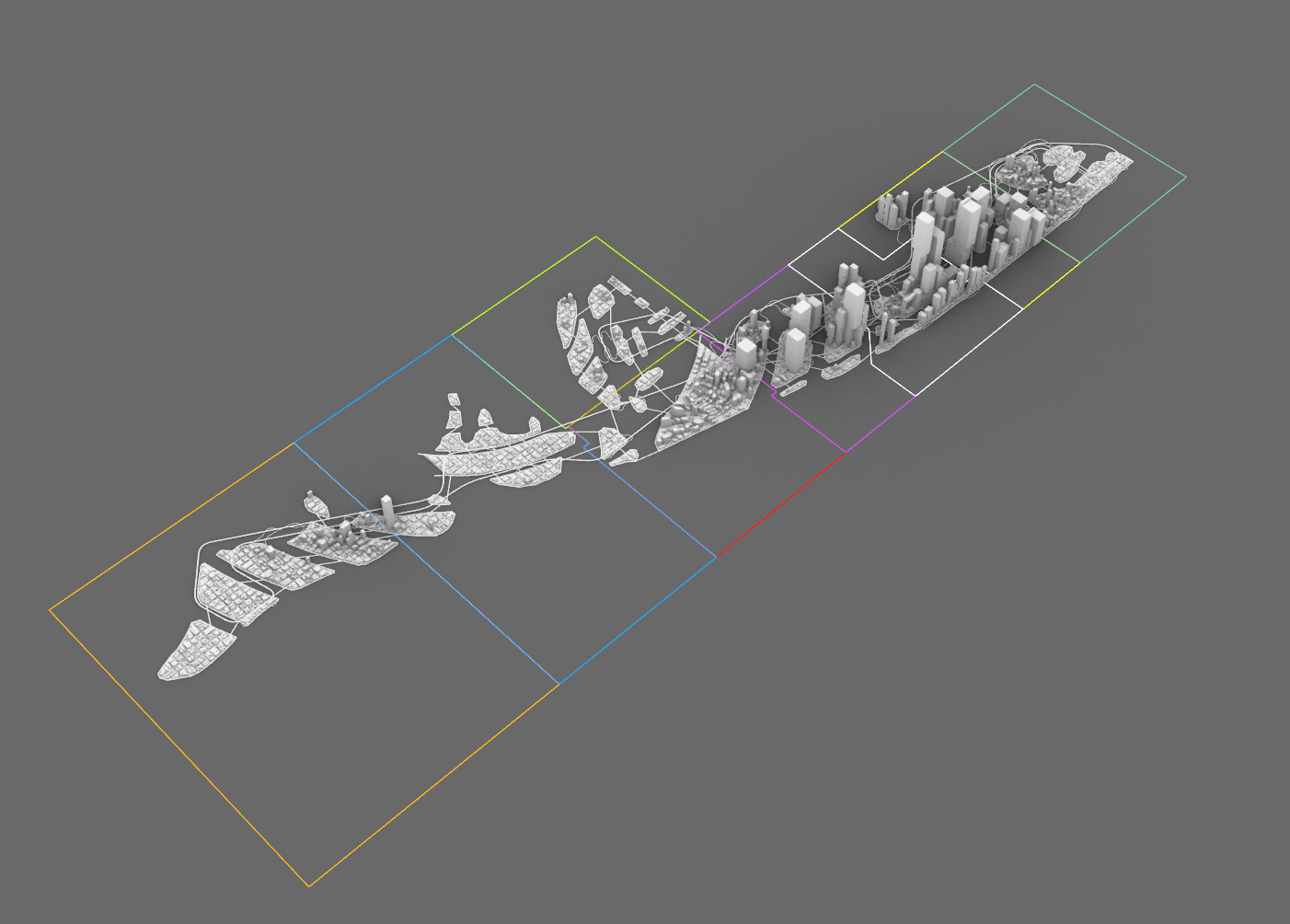
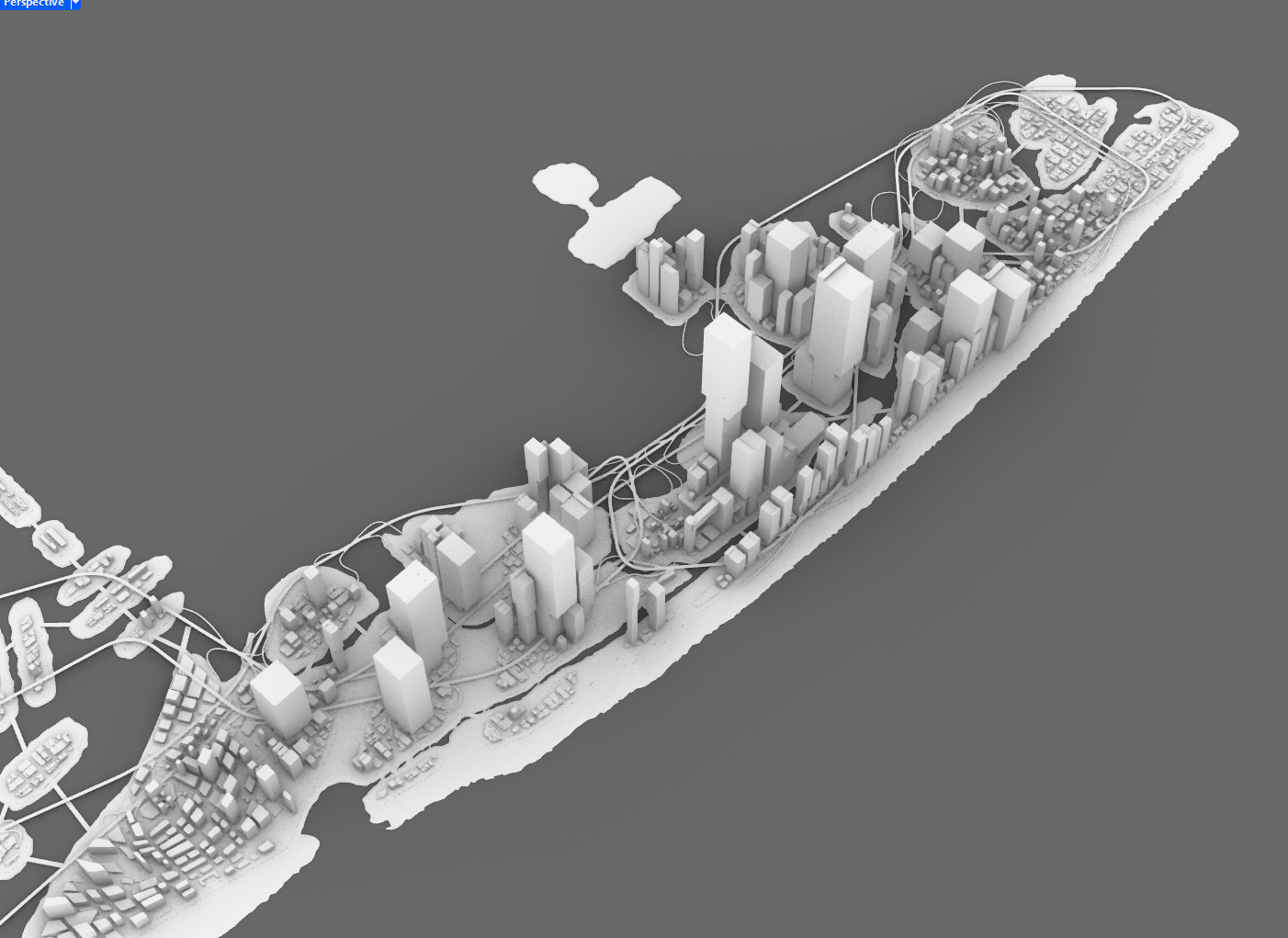
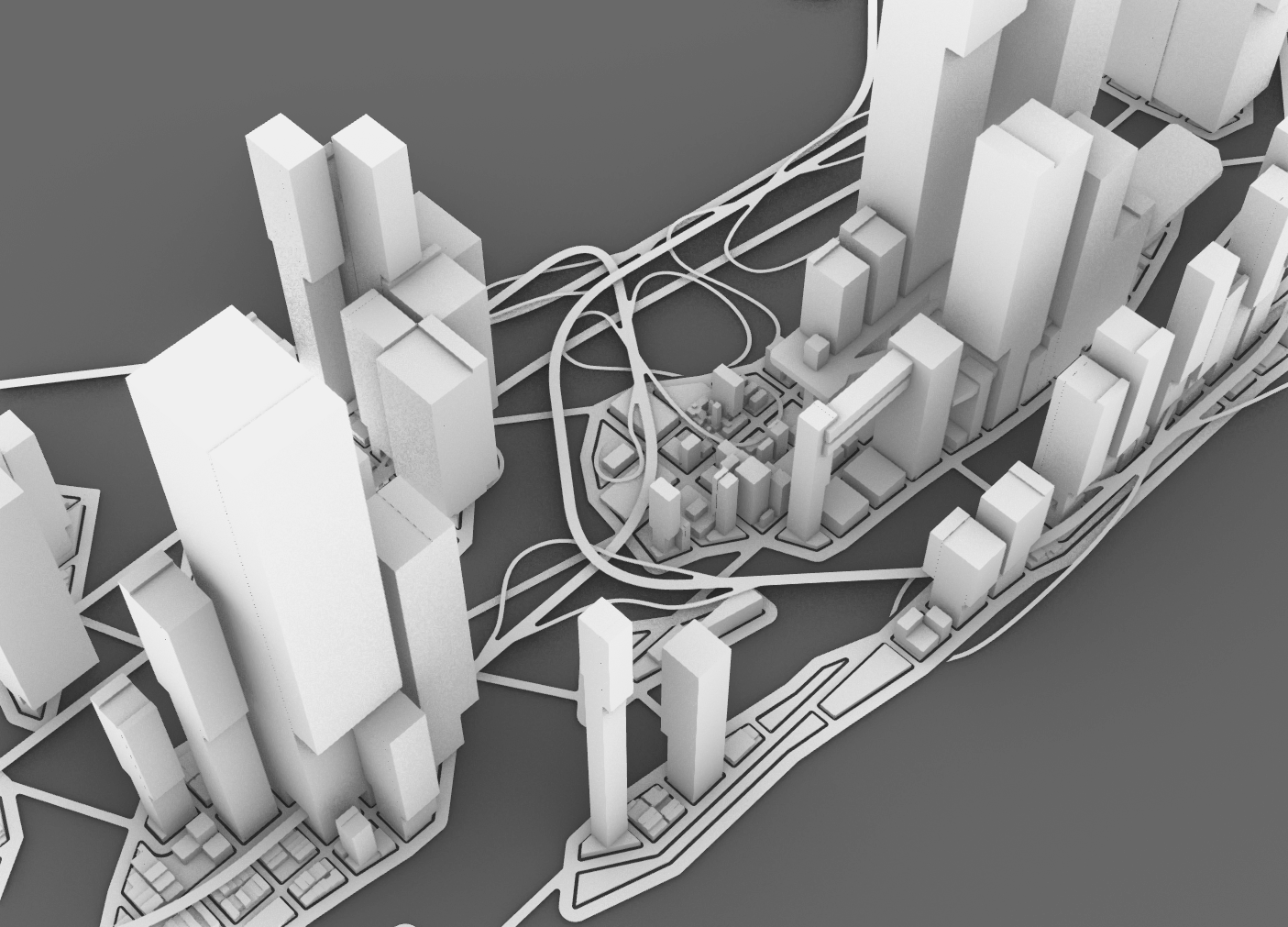
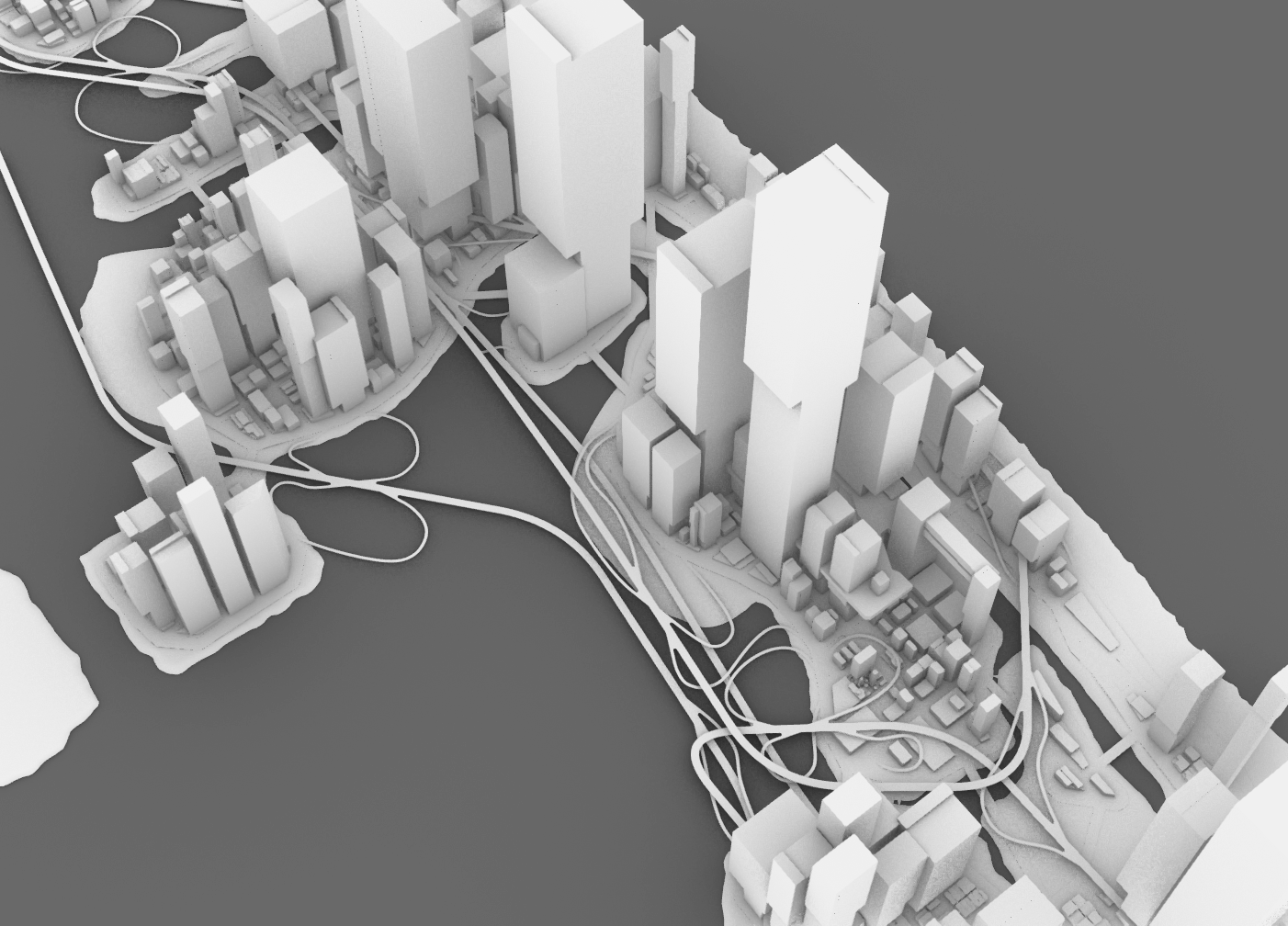
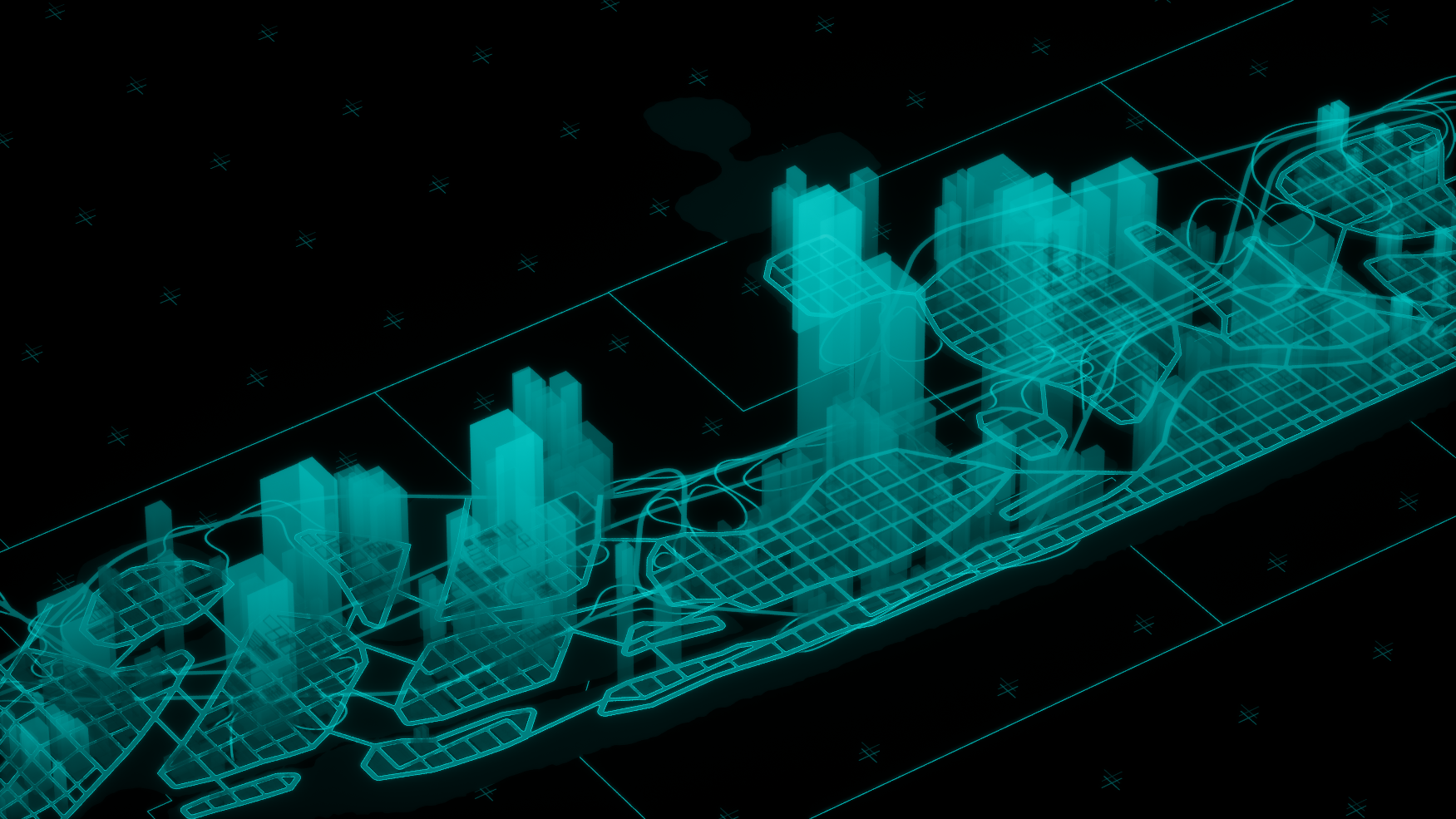
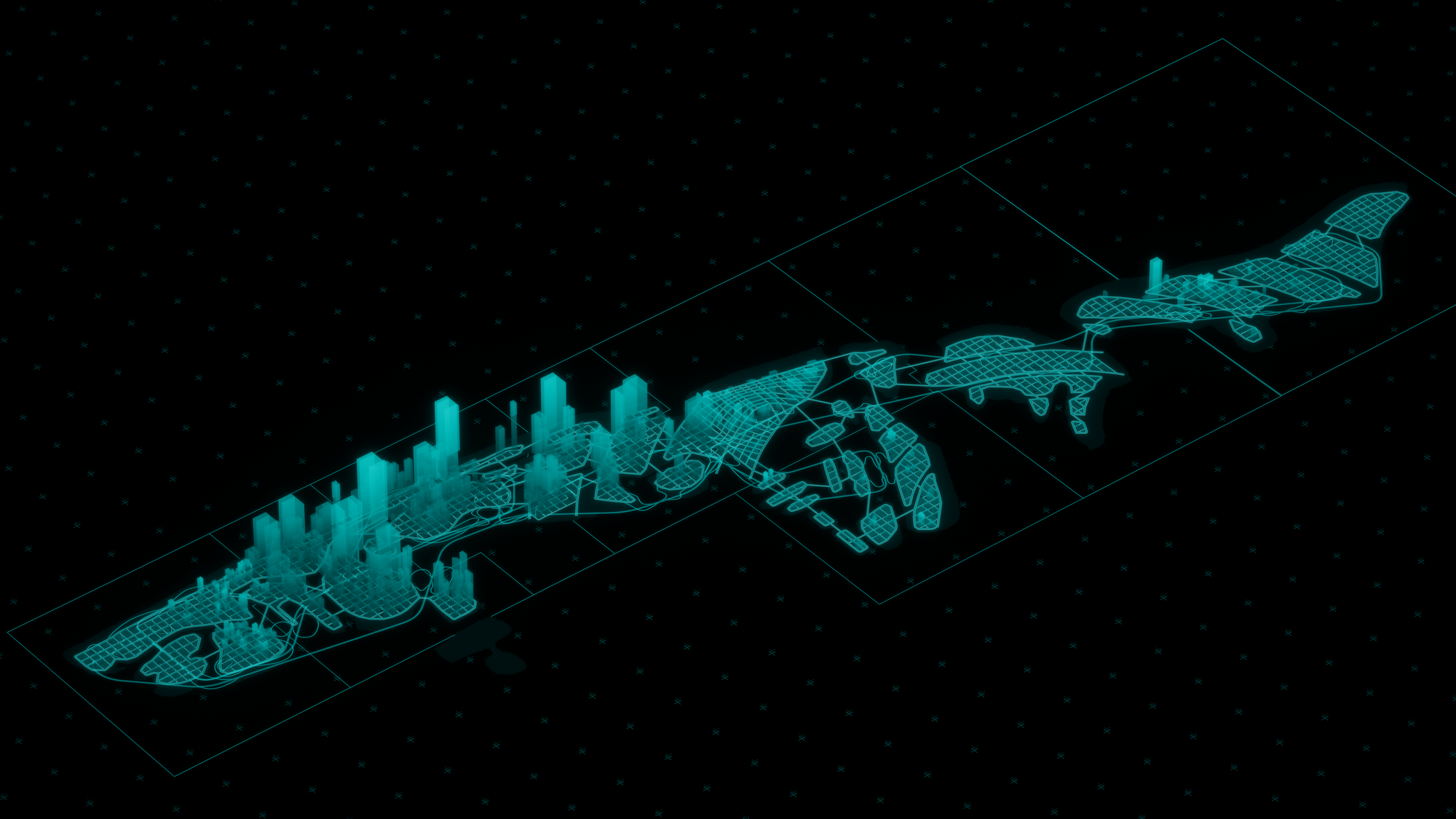
To support the mini-map and pause menu map, the city was reinterpreted into a simplified representation. Each layer was reduced to low-poly mesh forms and exported as separate layers for graphic stylization. These layers are then assembled in-game and synchronized with player movement and key world locations.
New Ads
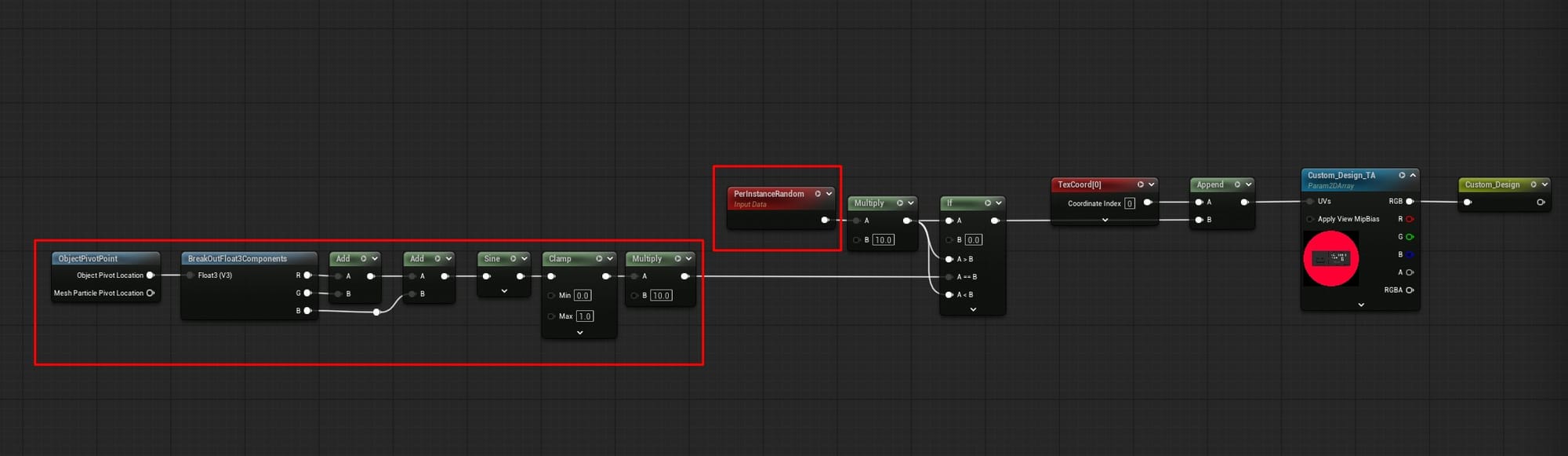
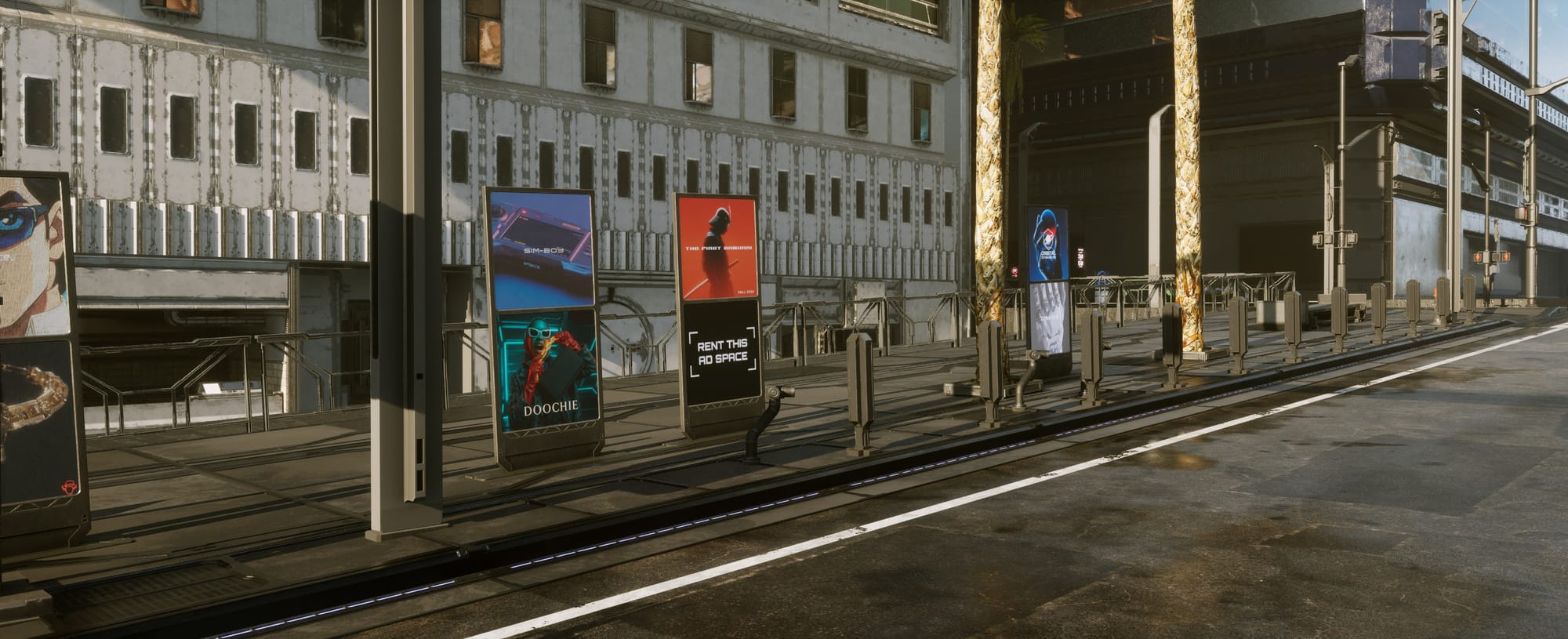
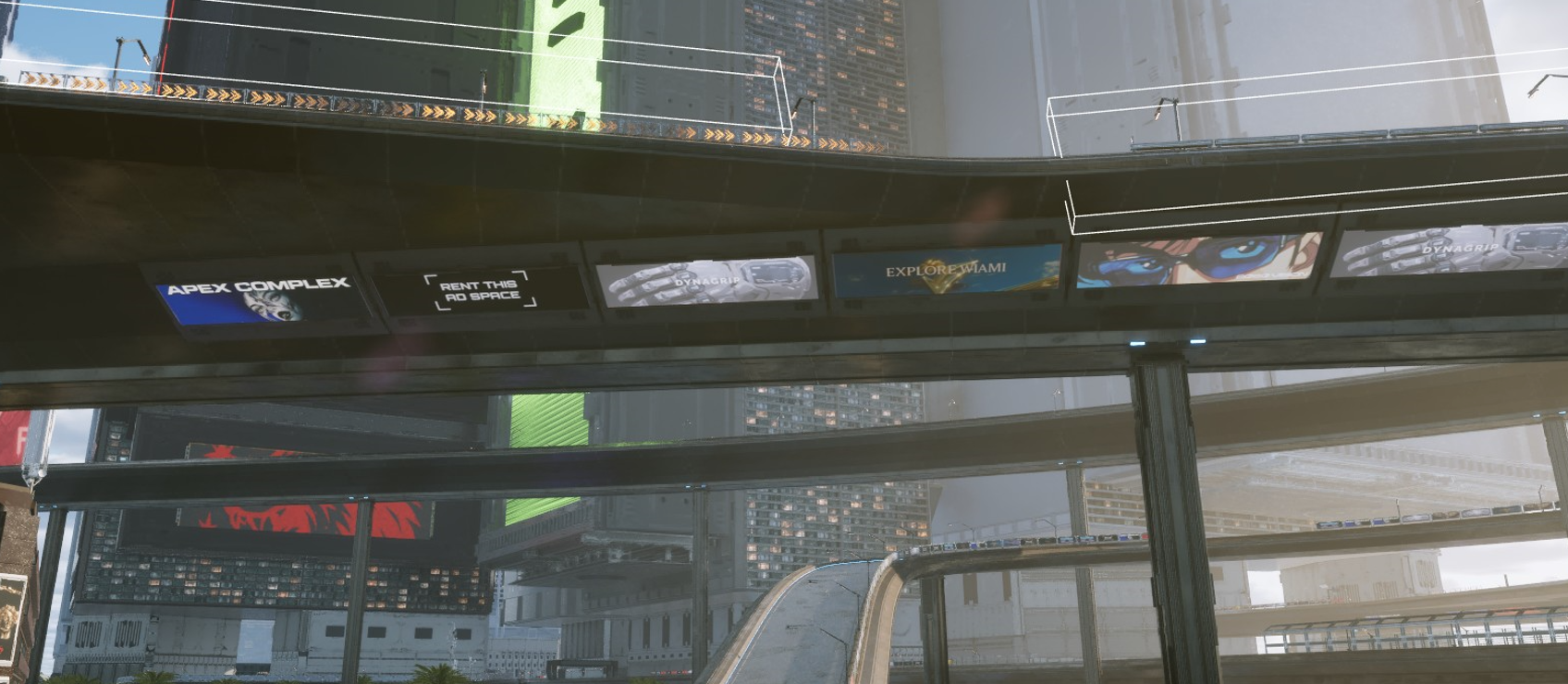
The city-wide advertising system was overhauled with a new library of ads and standardized aspect ratios tied to specific frame types distributed throughout the city, including rentable ad spaces. Wear and fade layers are procedurally applied, ensuring visual variation even when the same ad image is reused.
Plaza Stairs
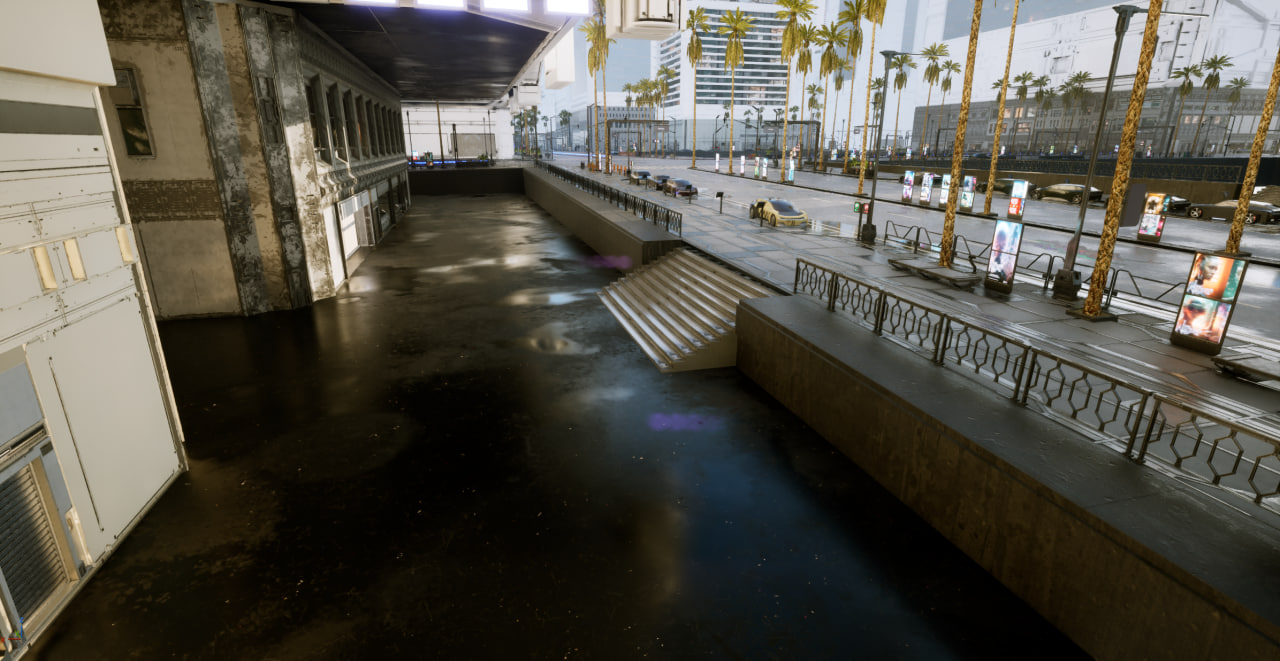
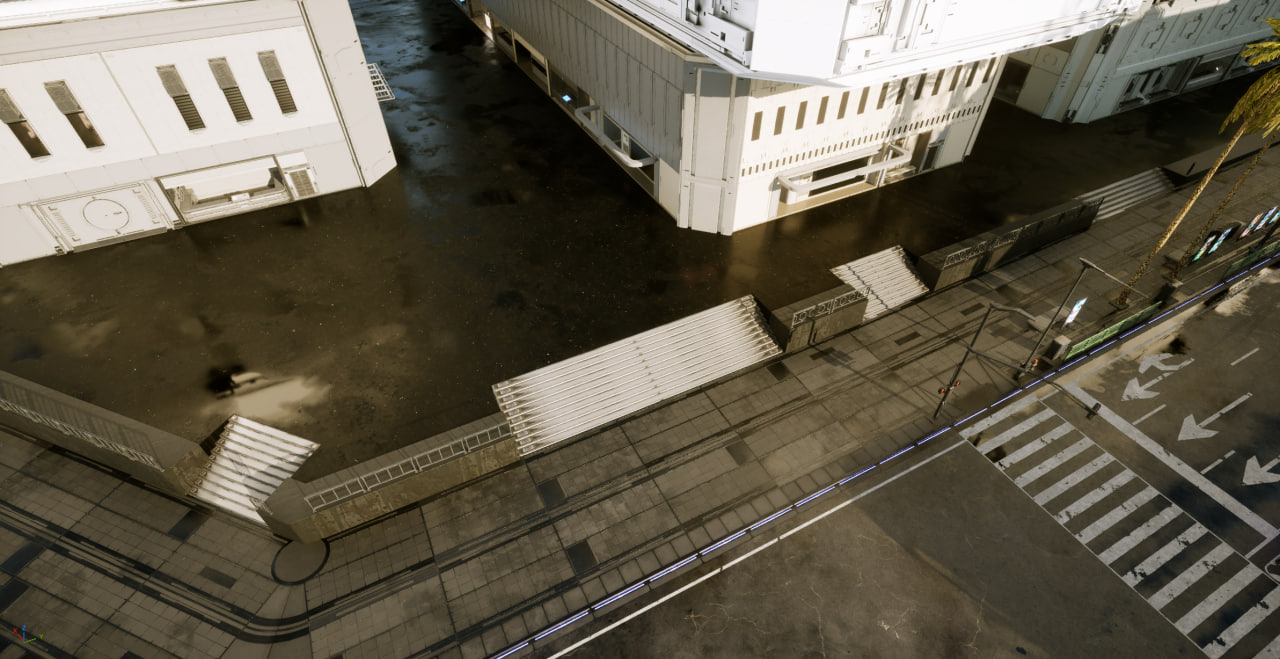
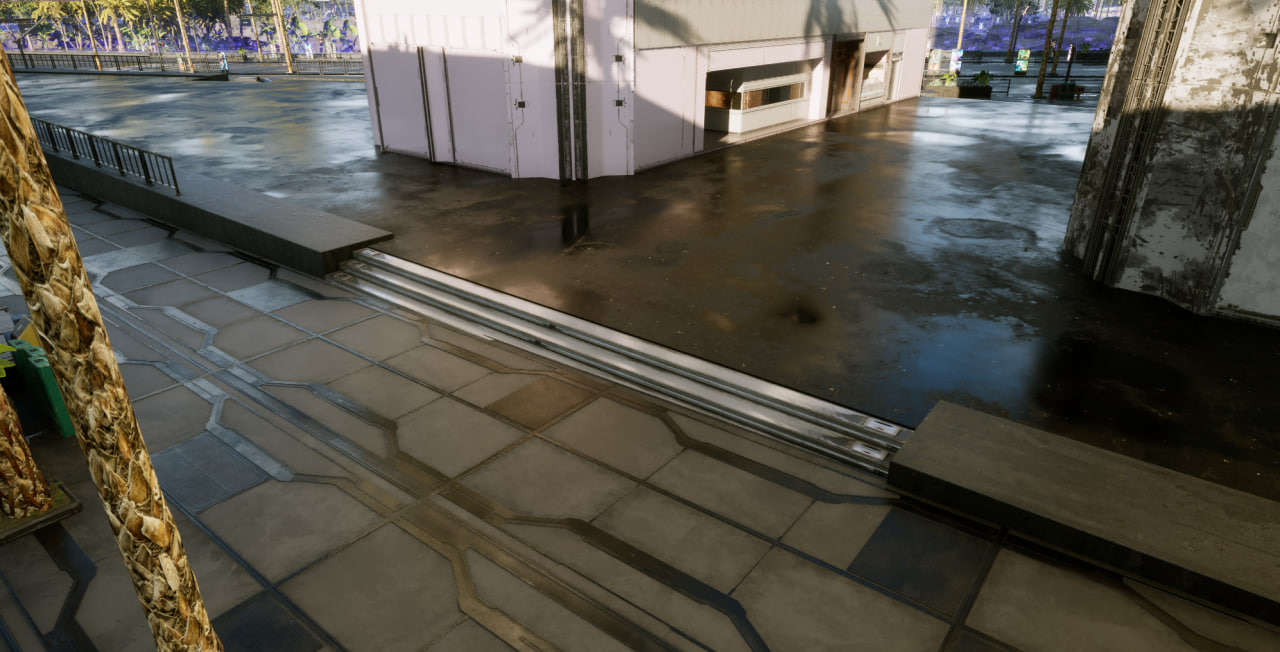
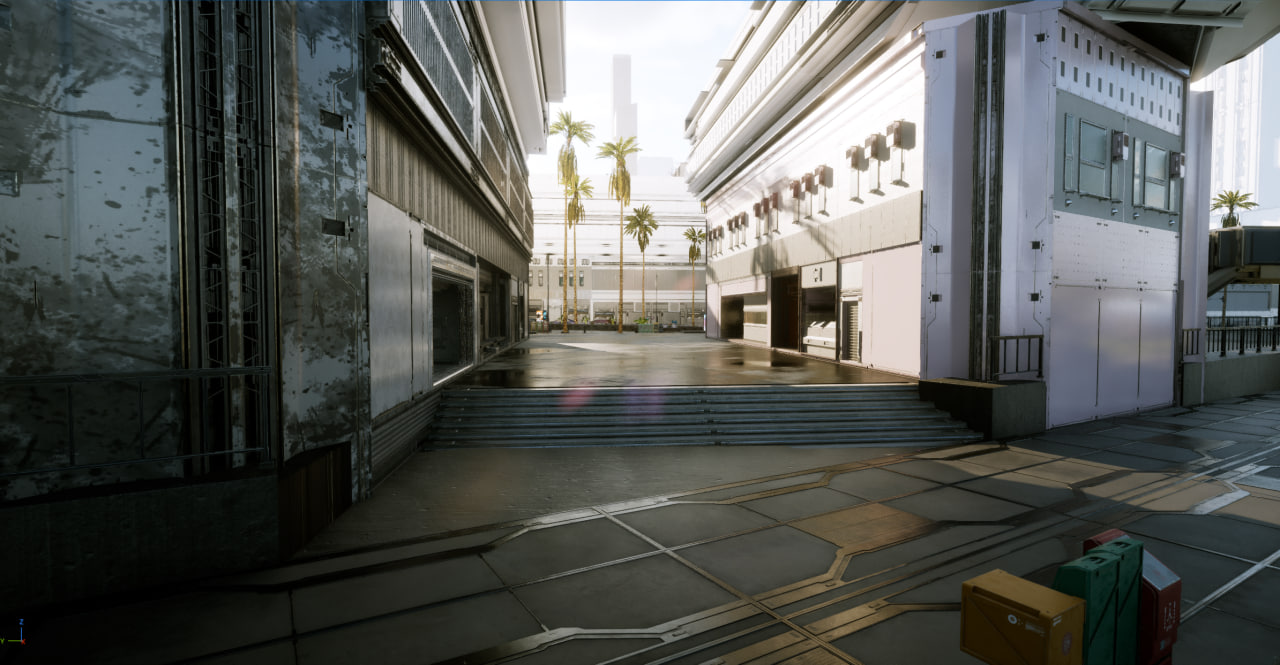
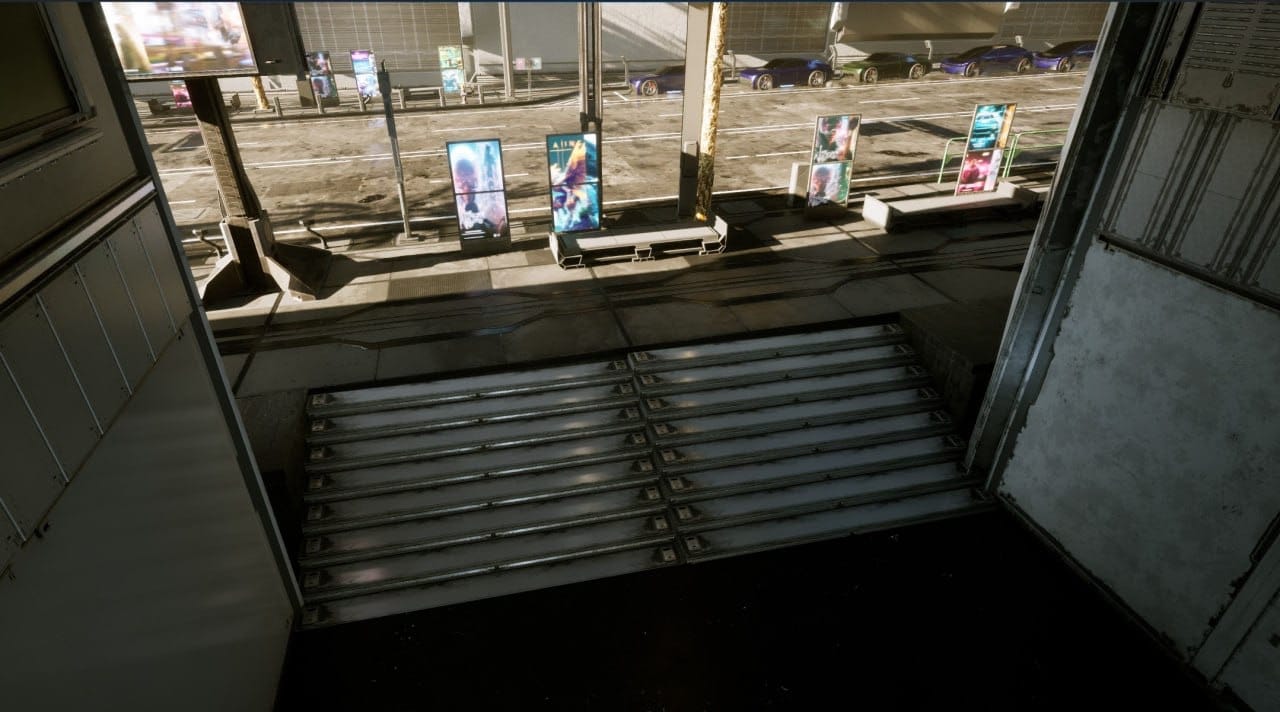
With the introduction of sloped roads and elevated plazas, a procedural stair placement system was developed to ensure smooth access. Stairs are automatically positioned at optimal entry points, cutting into plaza walls and adjusting floor geometry as needed. Guardrails are aligned to stair edges to preserve accessibility without obstructing movement.
Prop Collisions
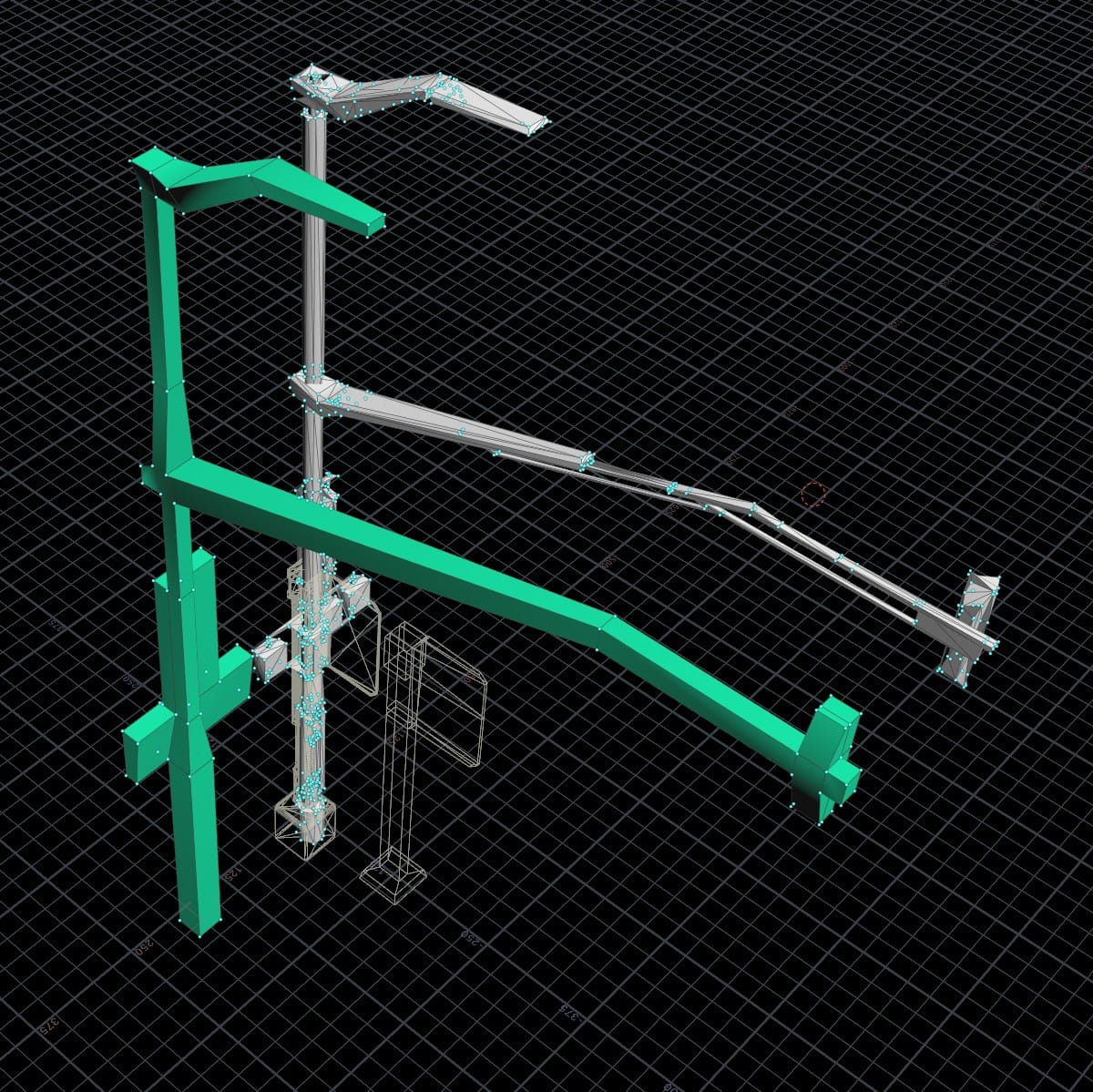
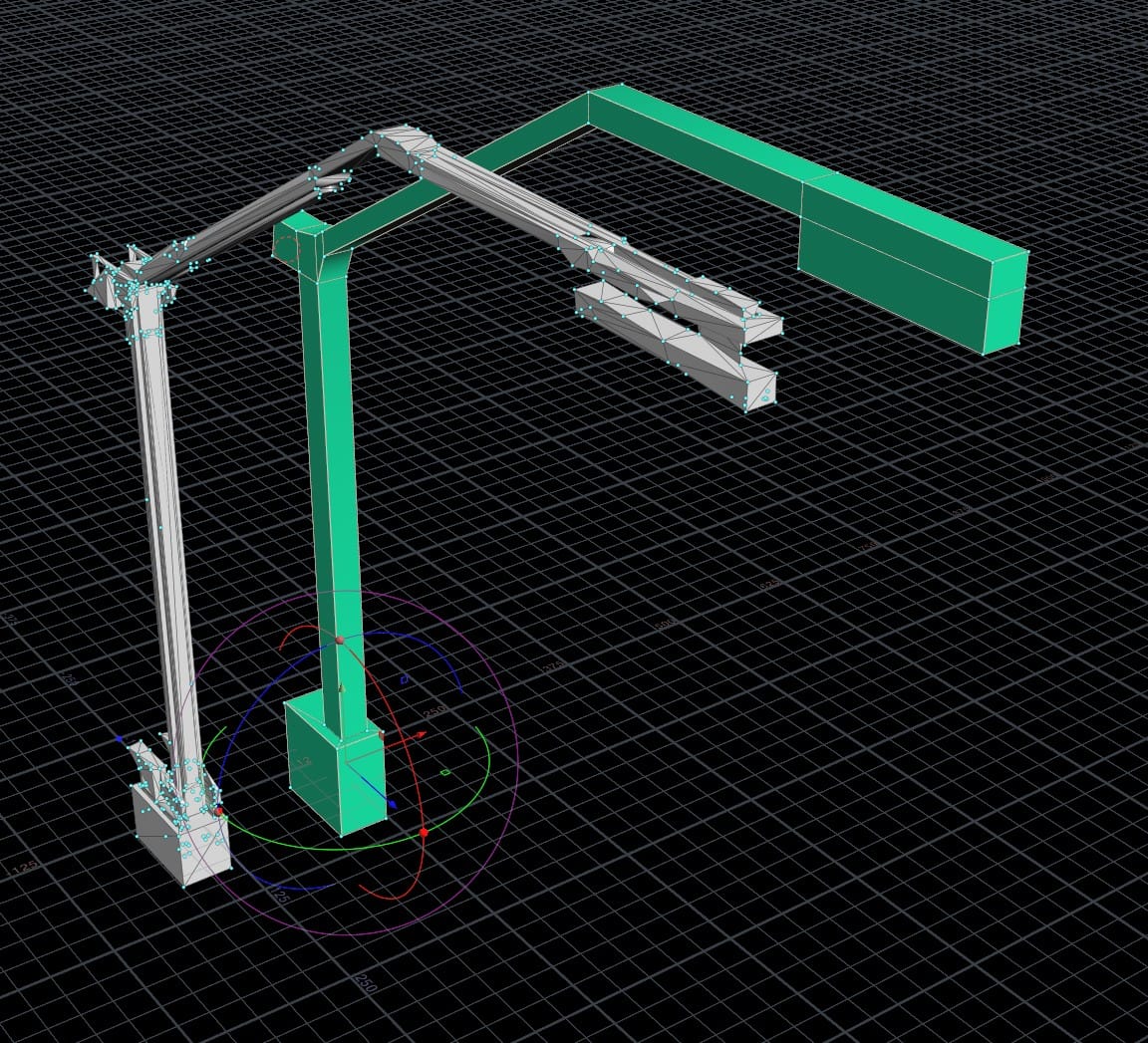
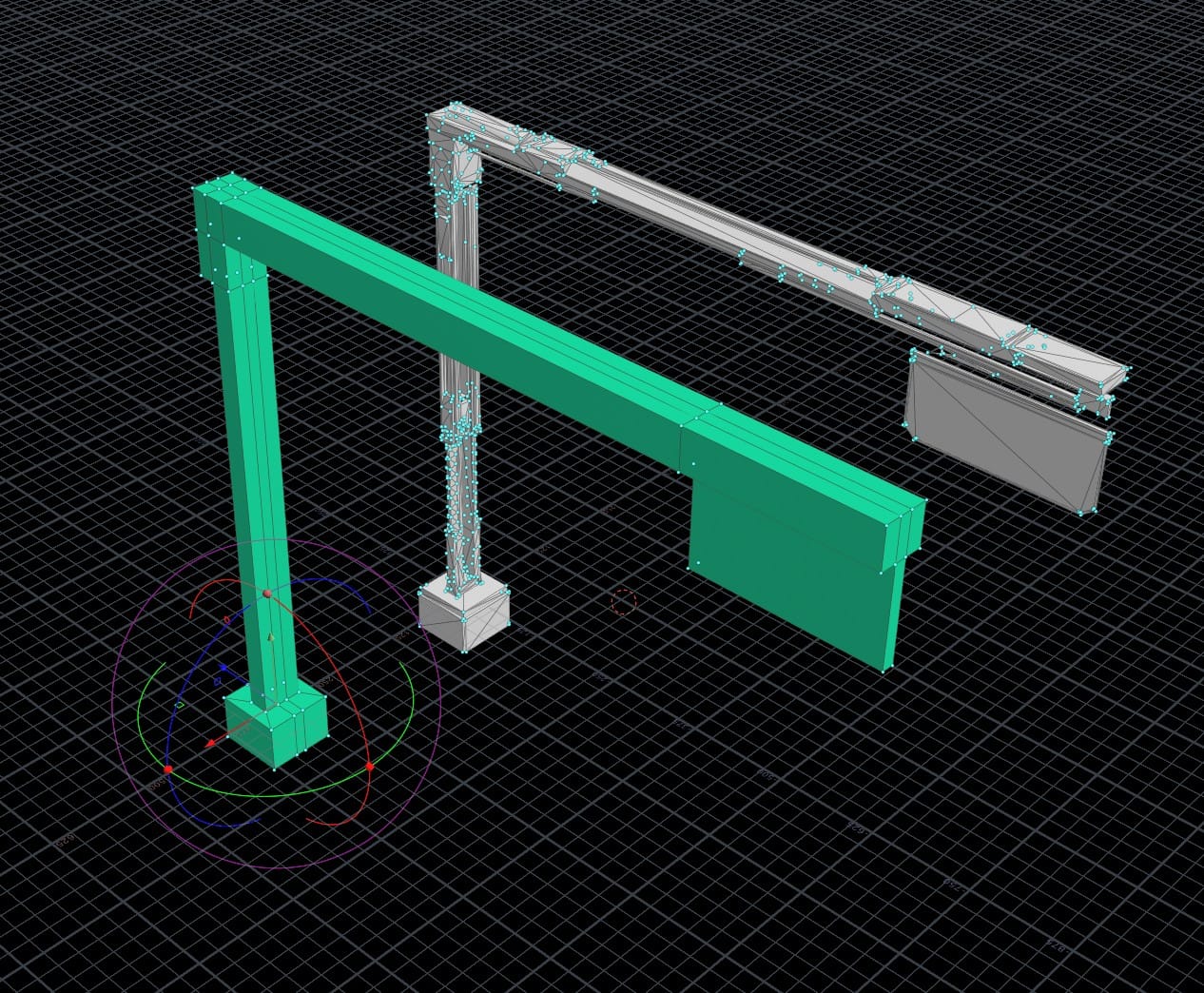
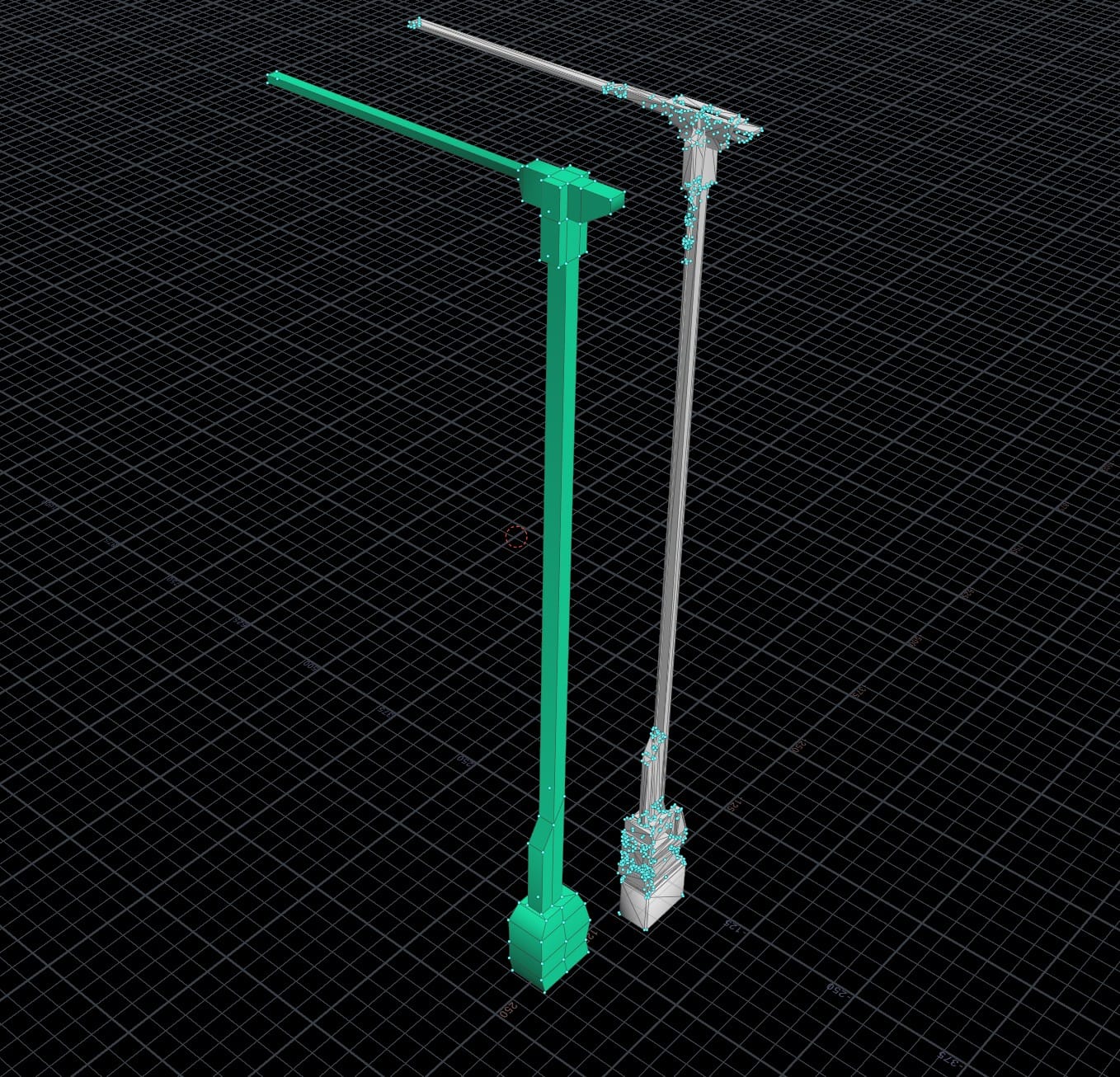
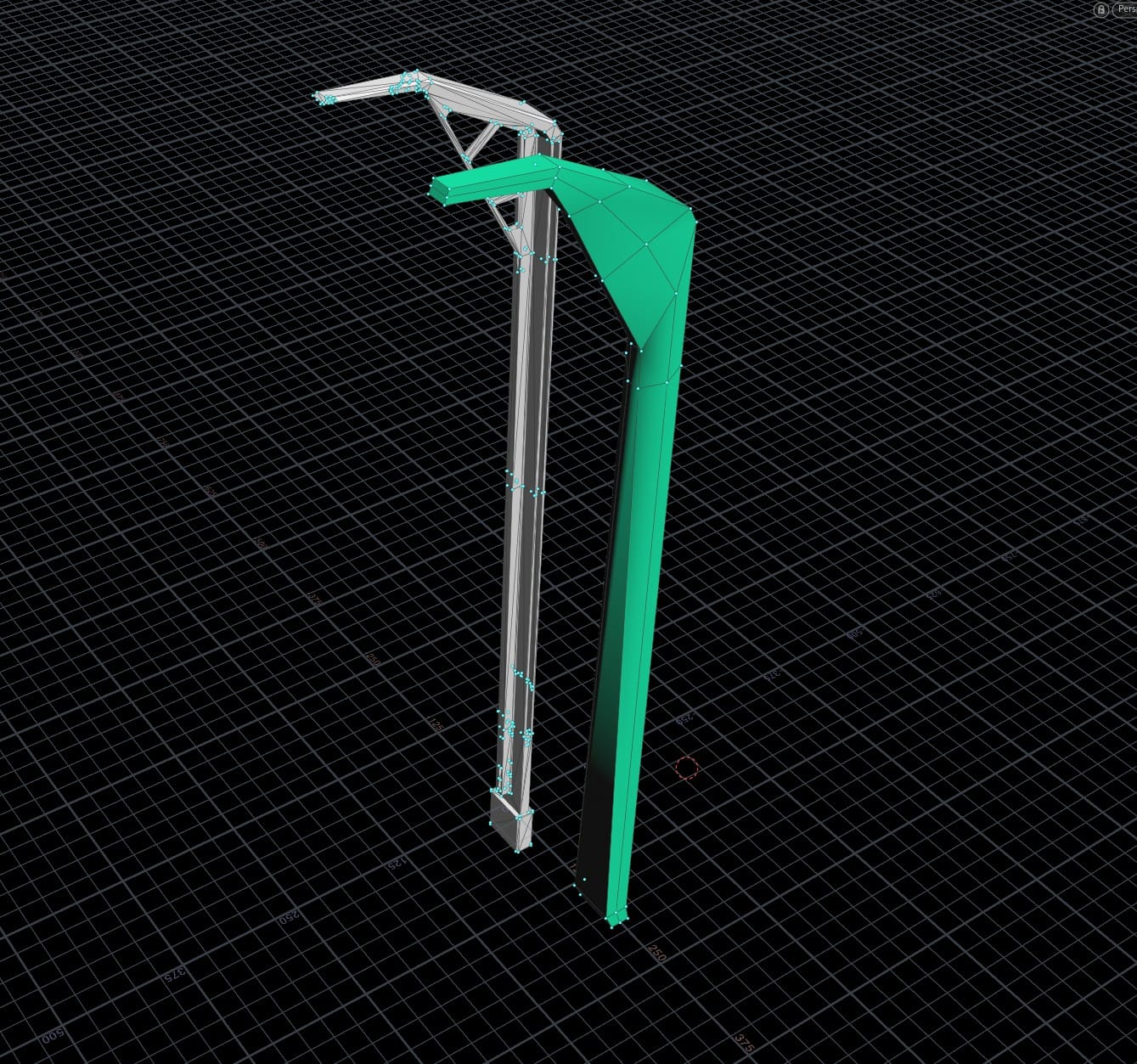
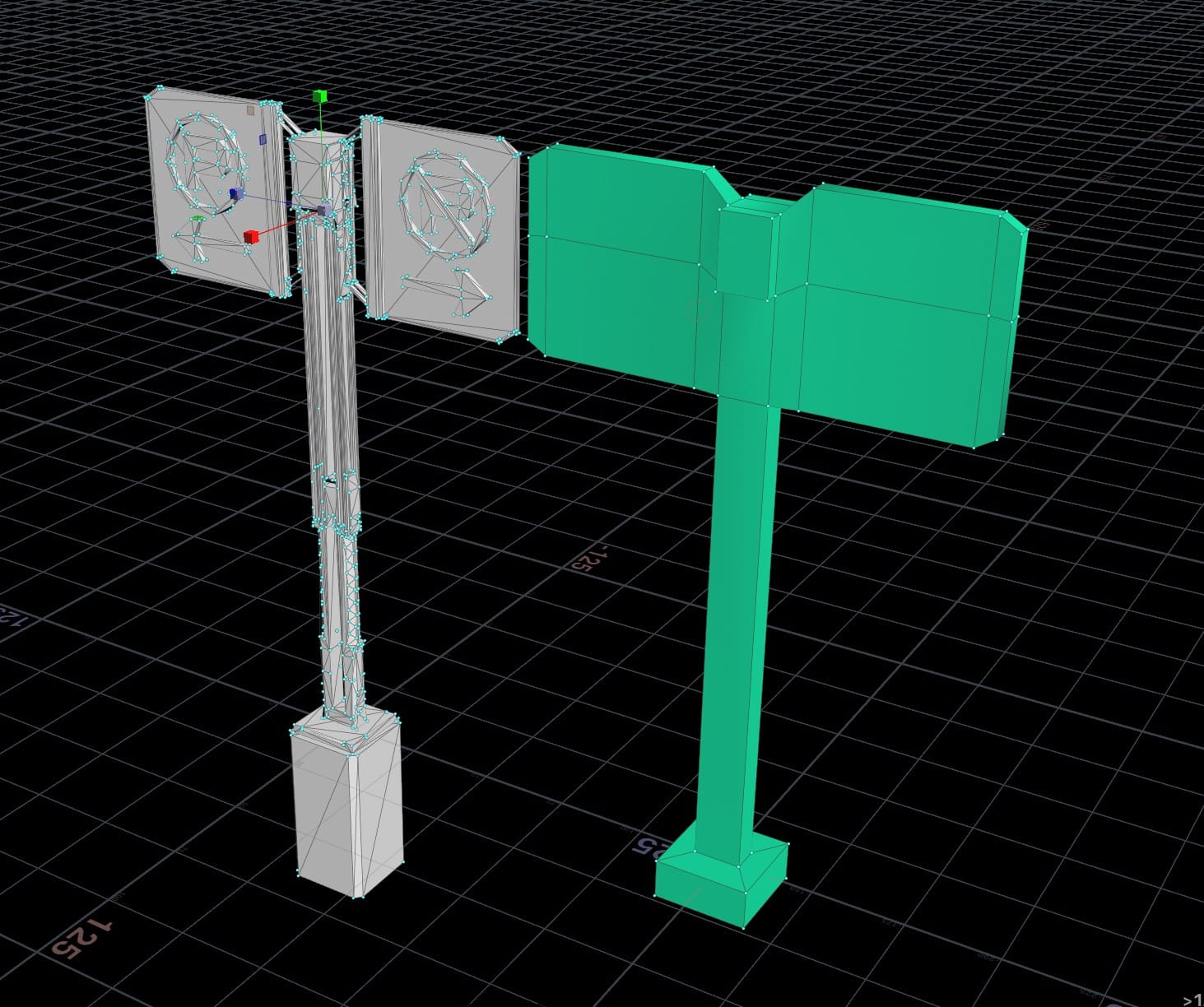
Custom collision meshes were created for sidewalk props to improve gameplay performance and ensure accurate and efficient collision responses, particularly during vehicle impacts.
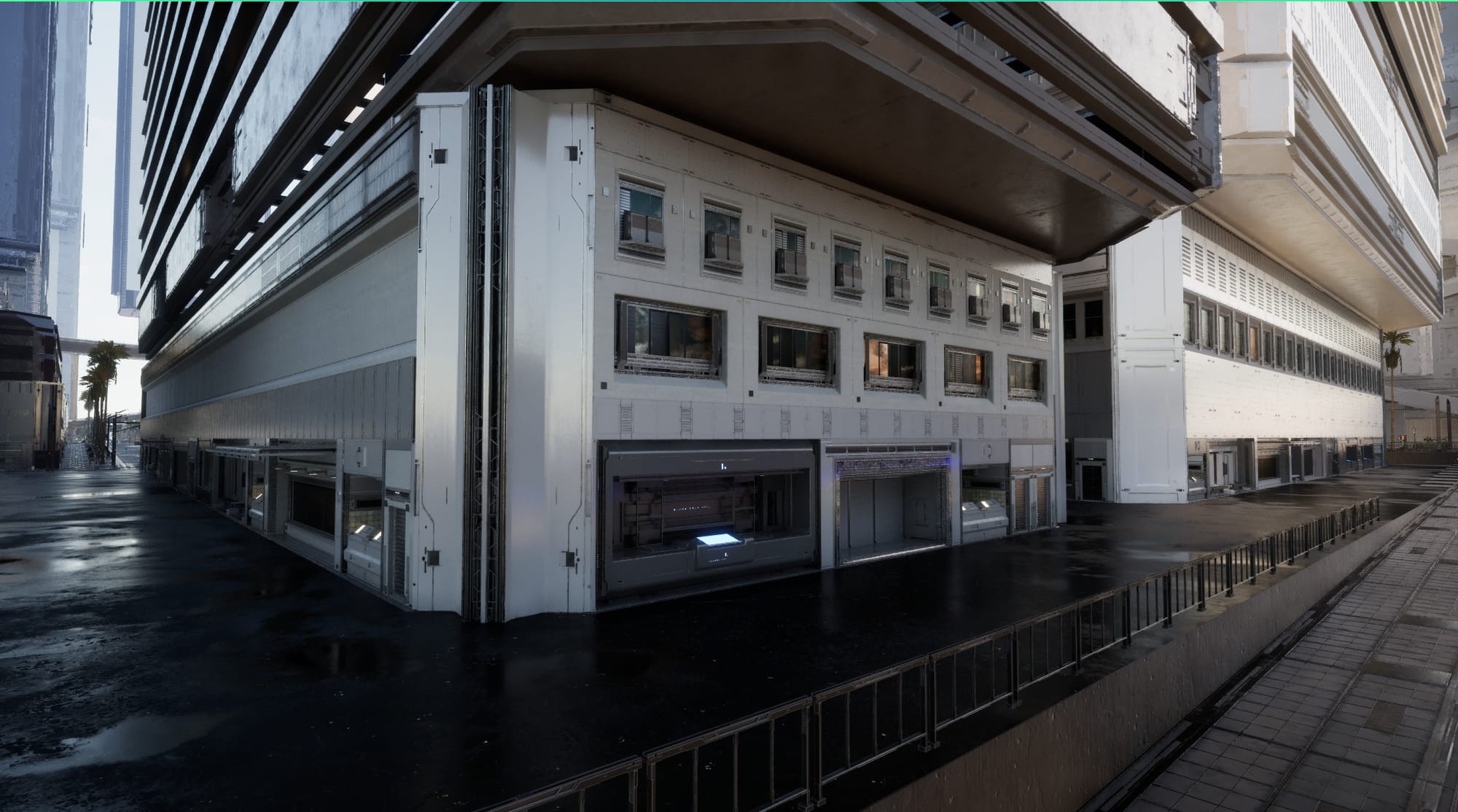
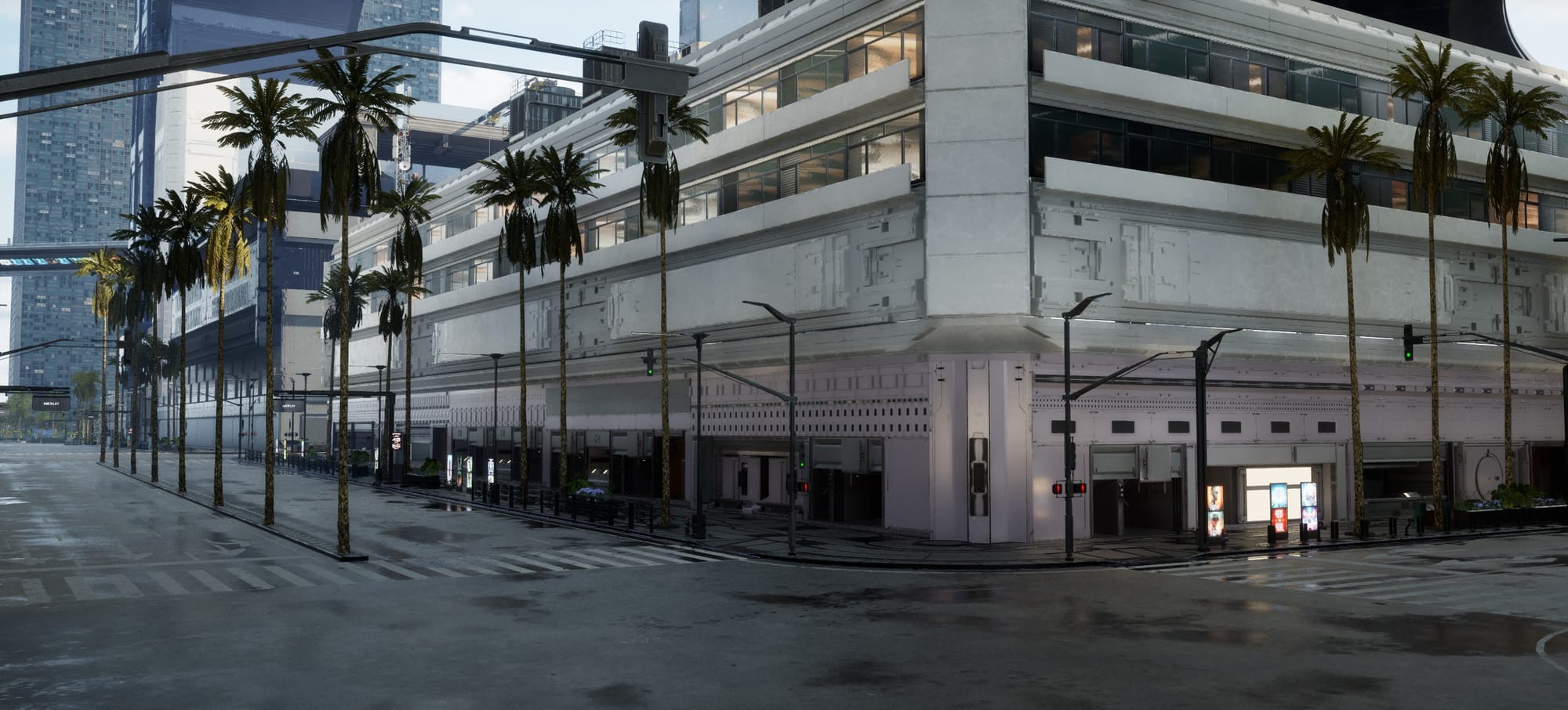
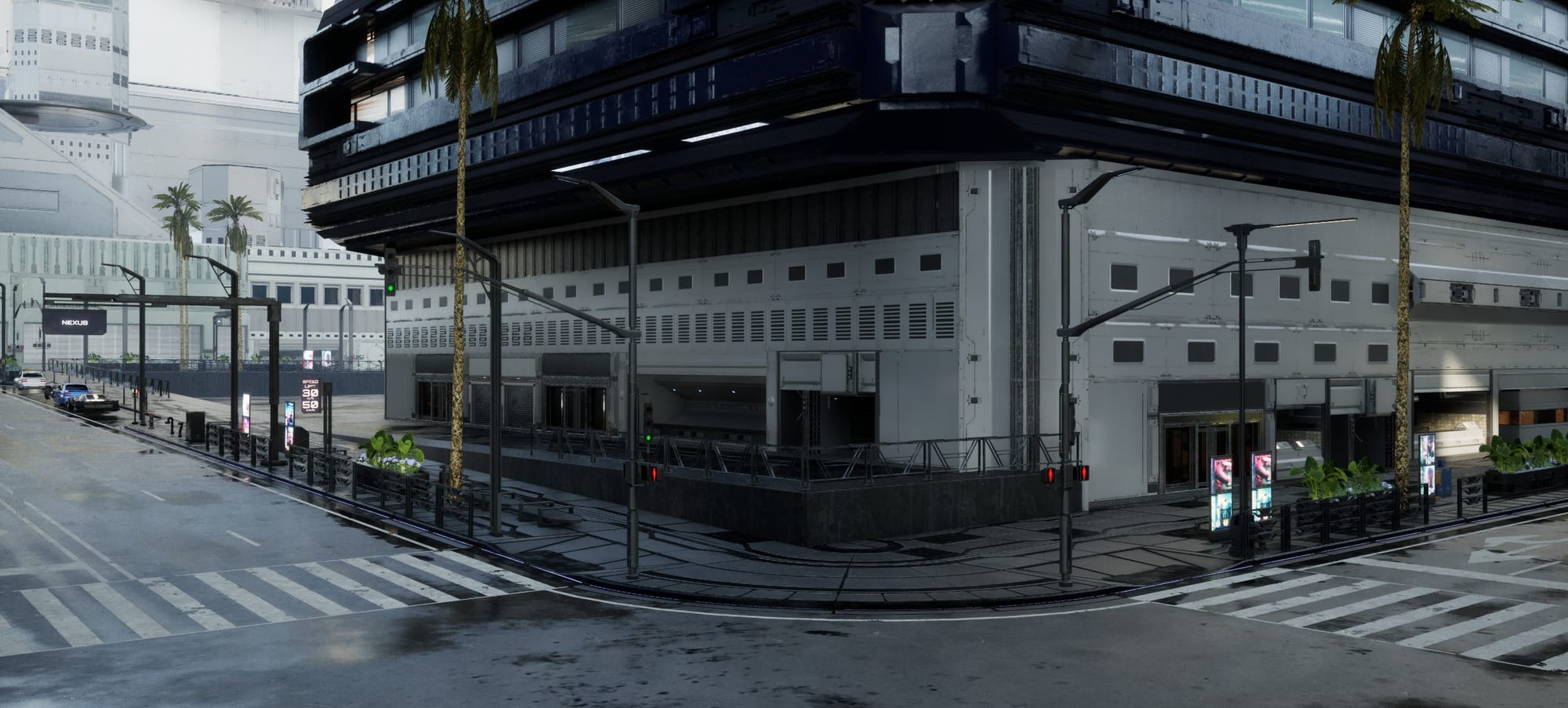
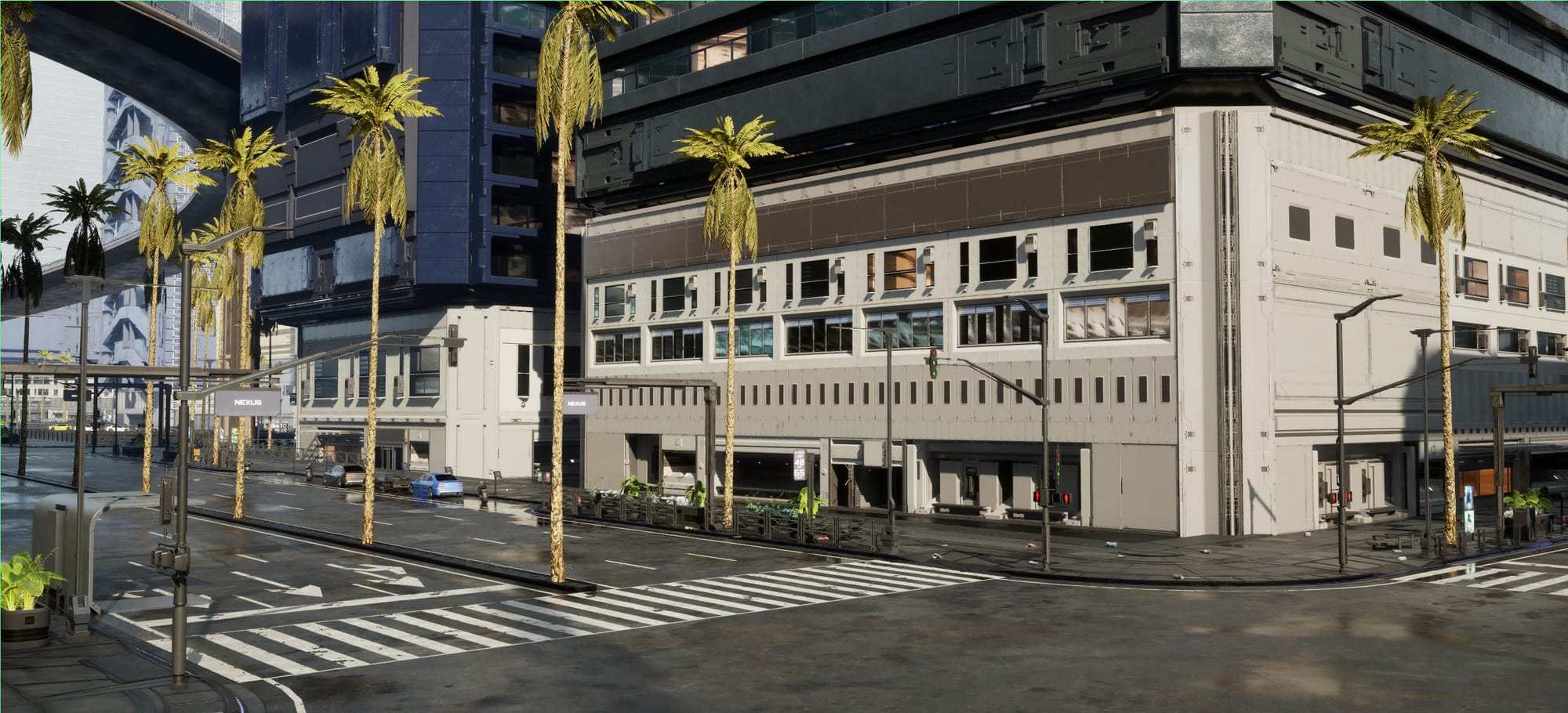
Stepped Storefronts
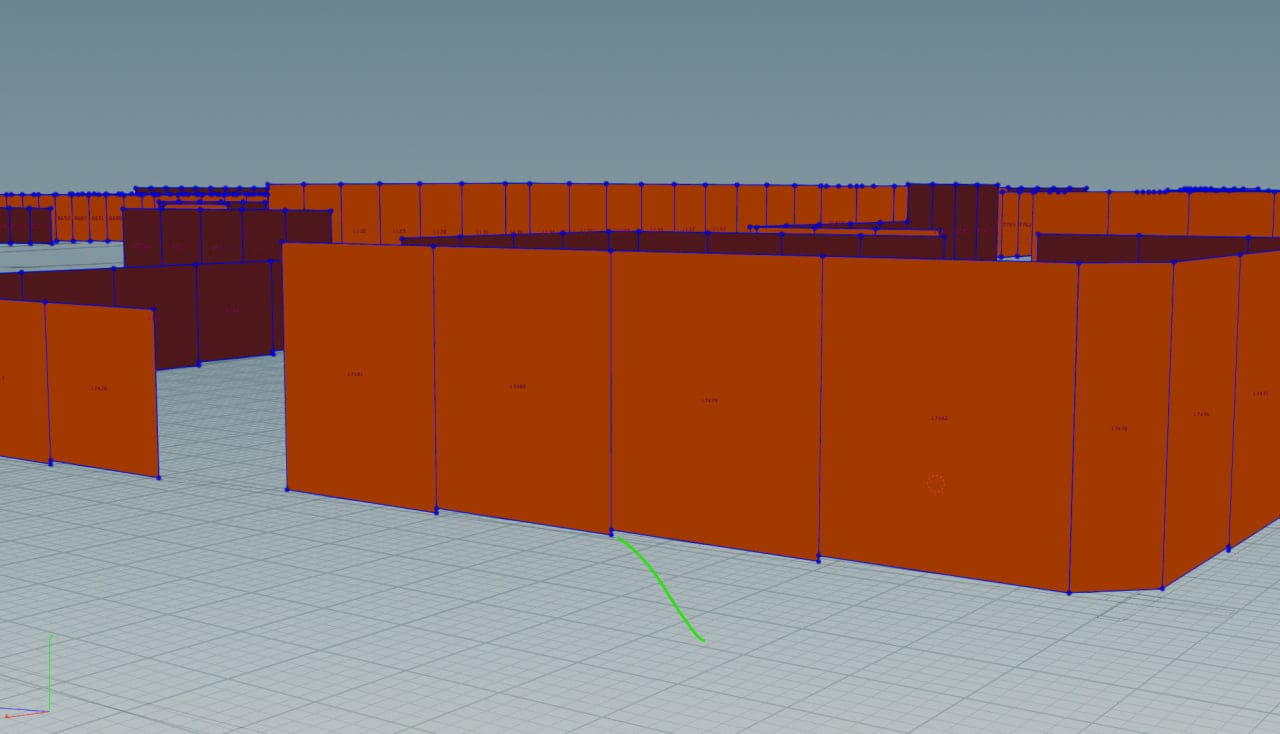
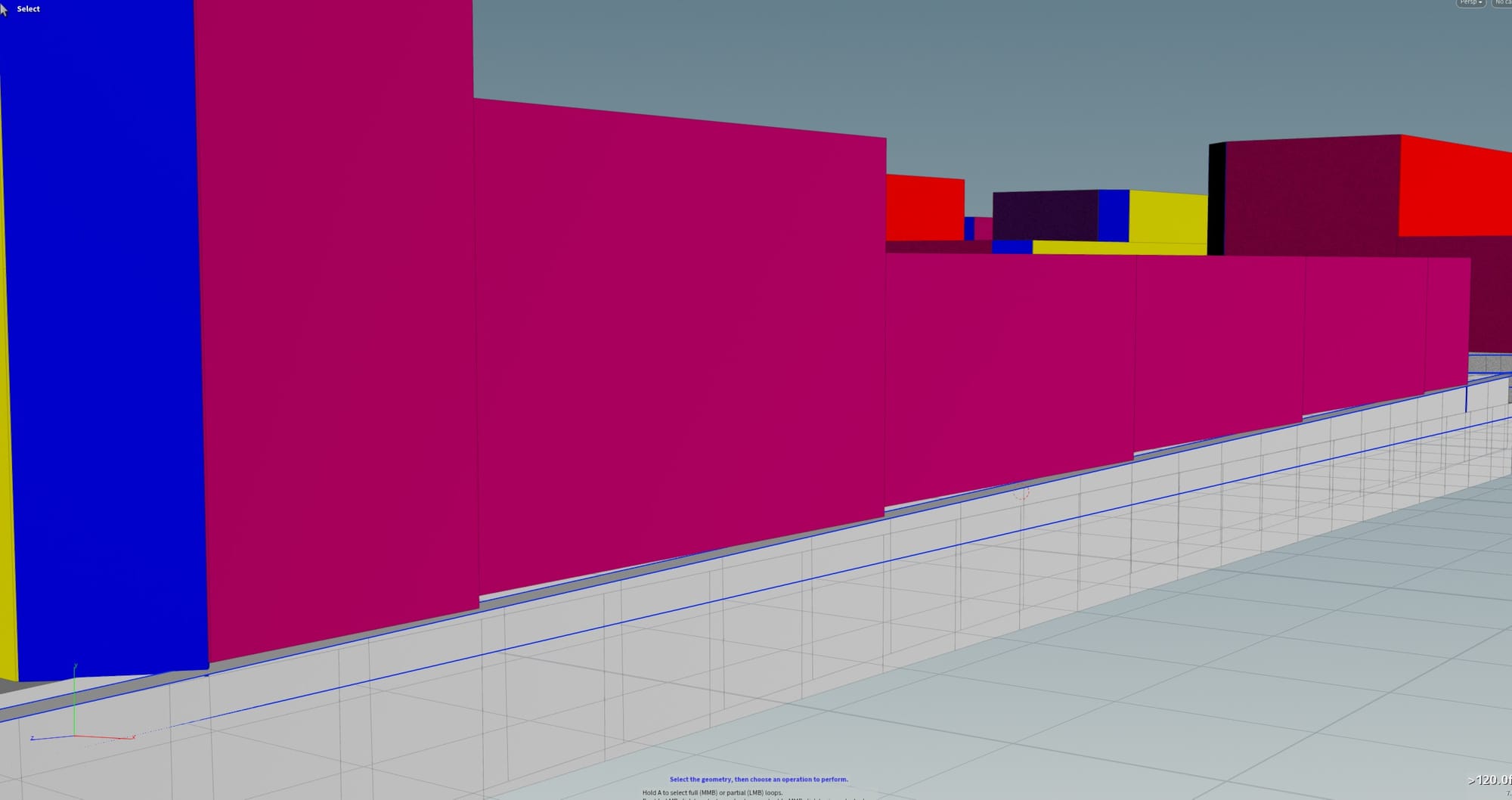
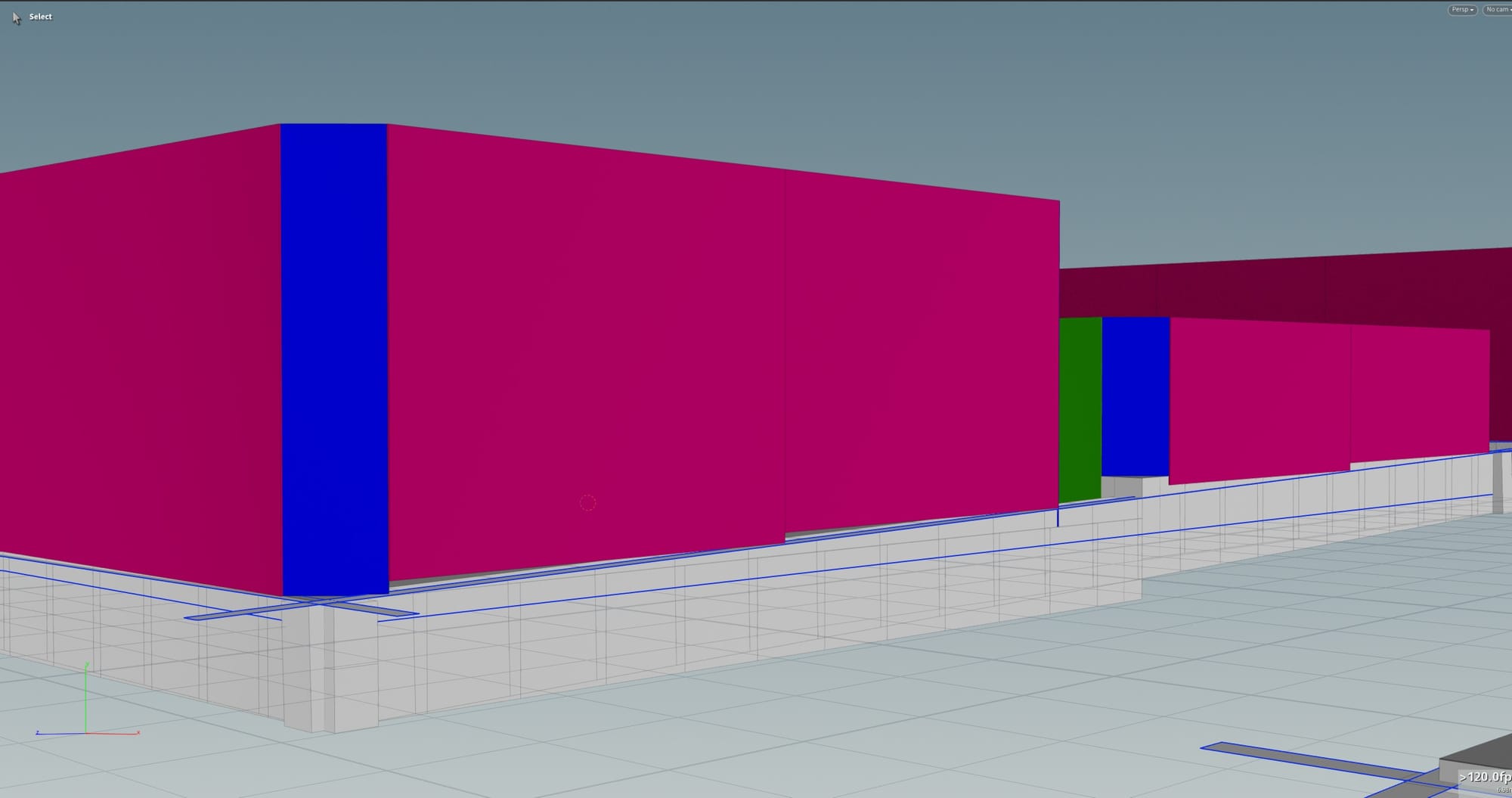
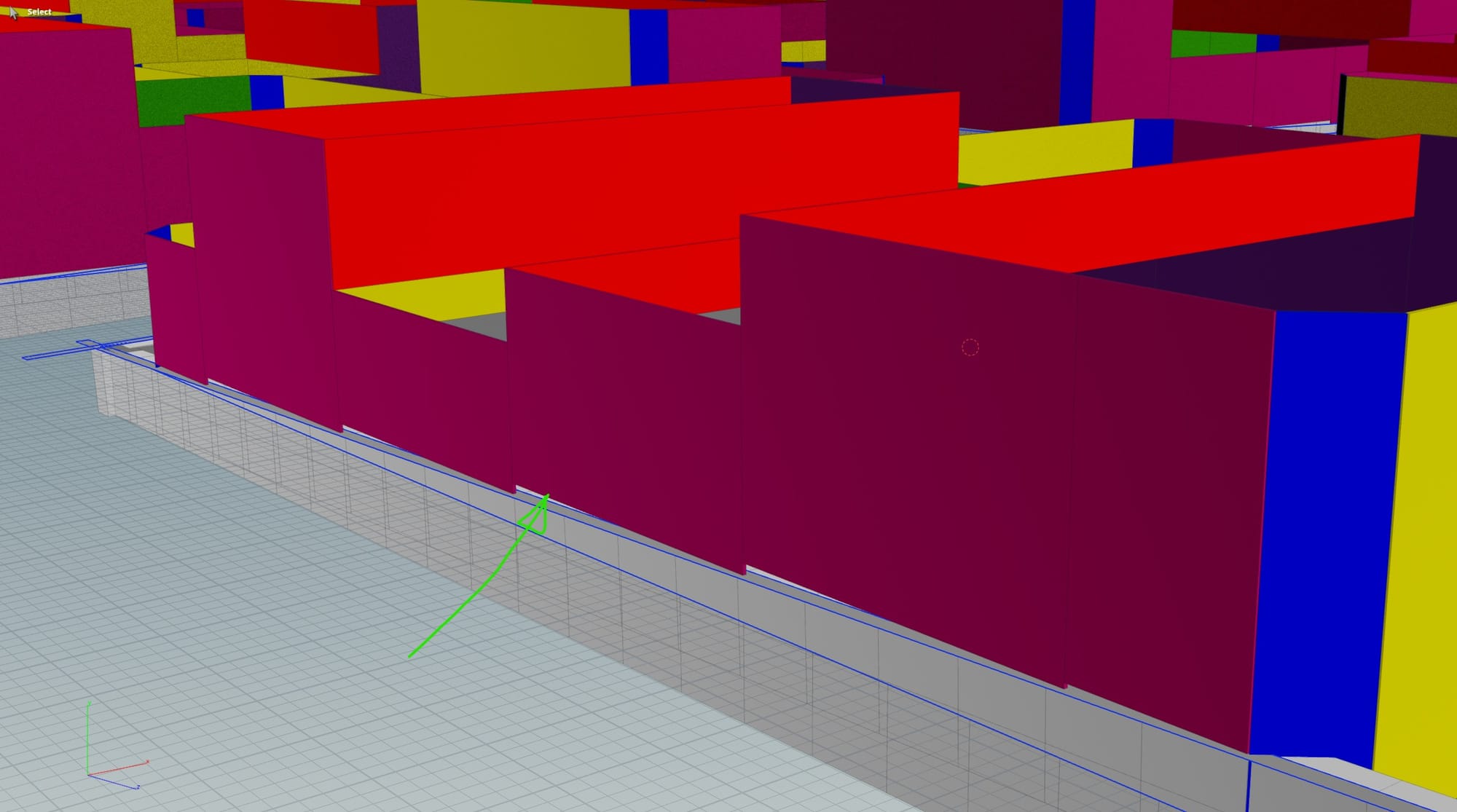
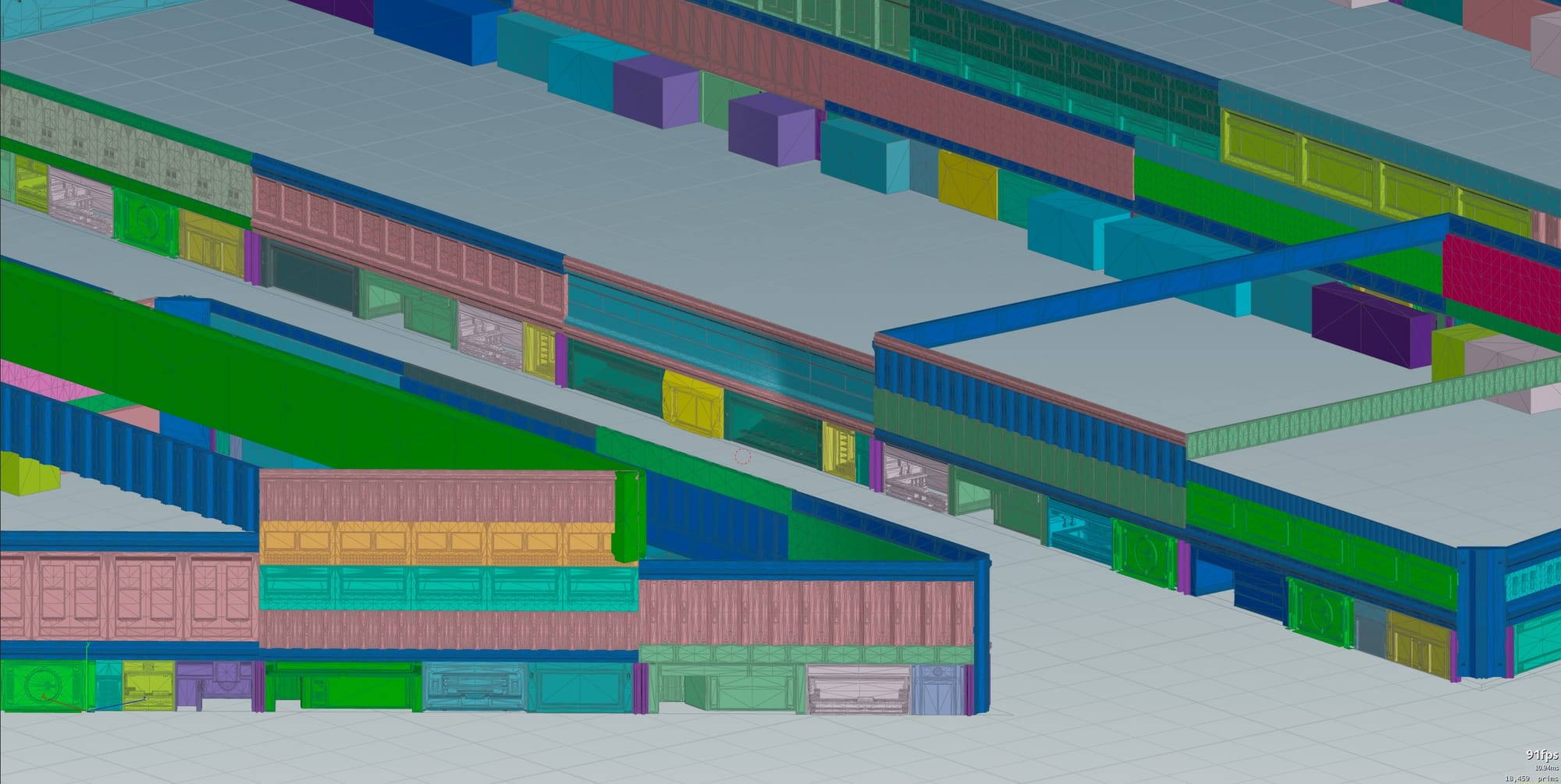
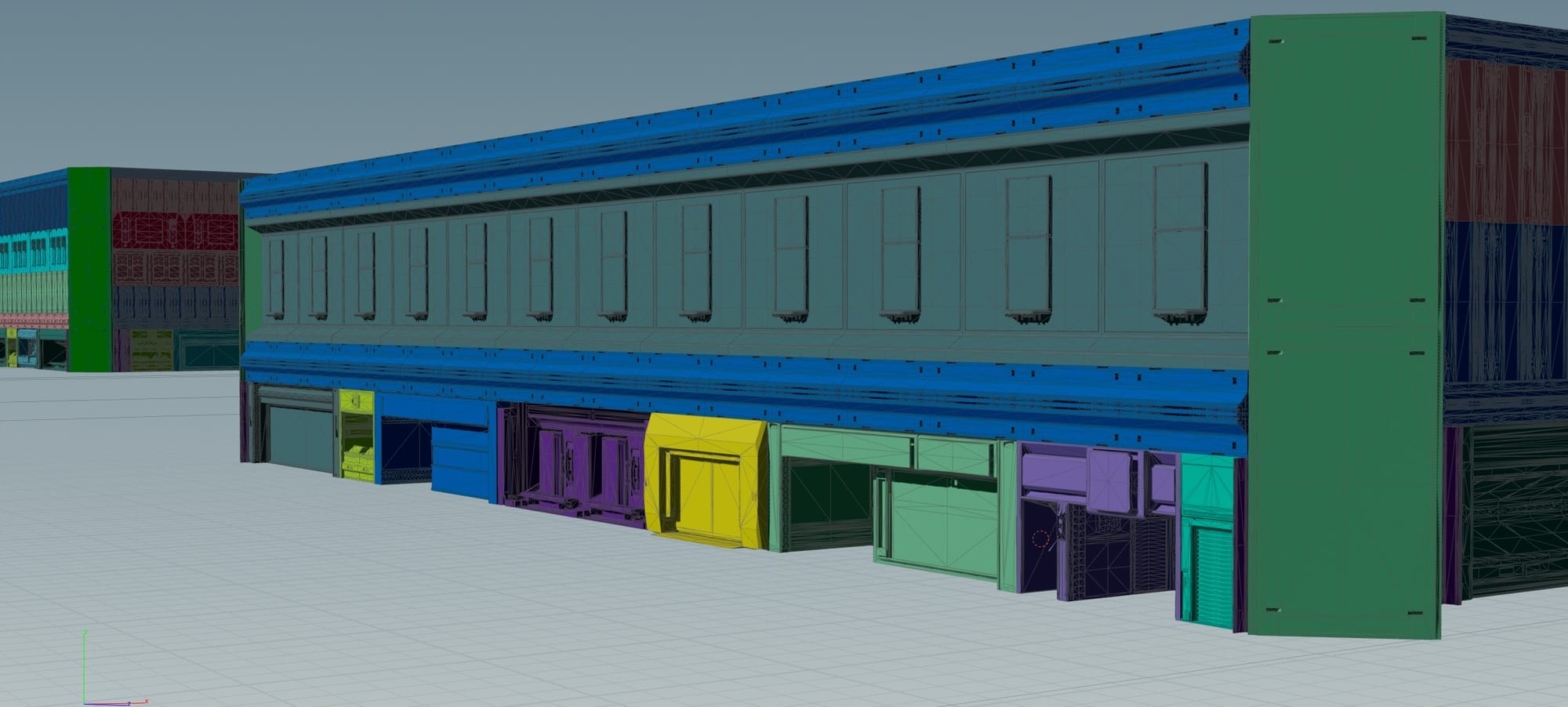
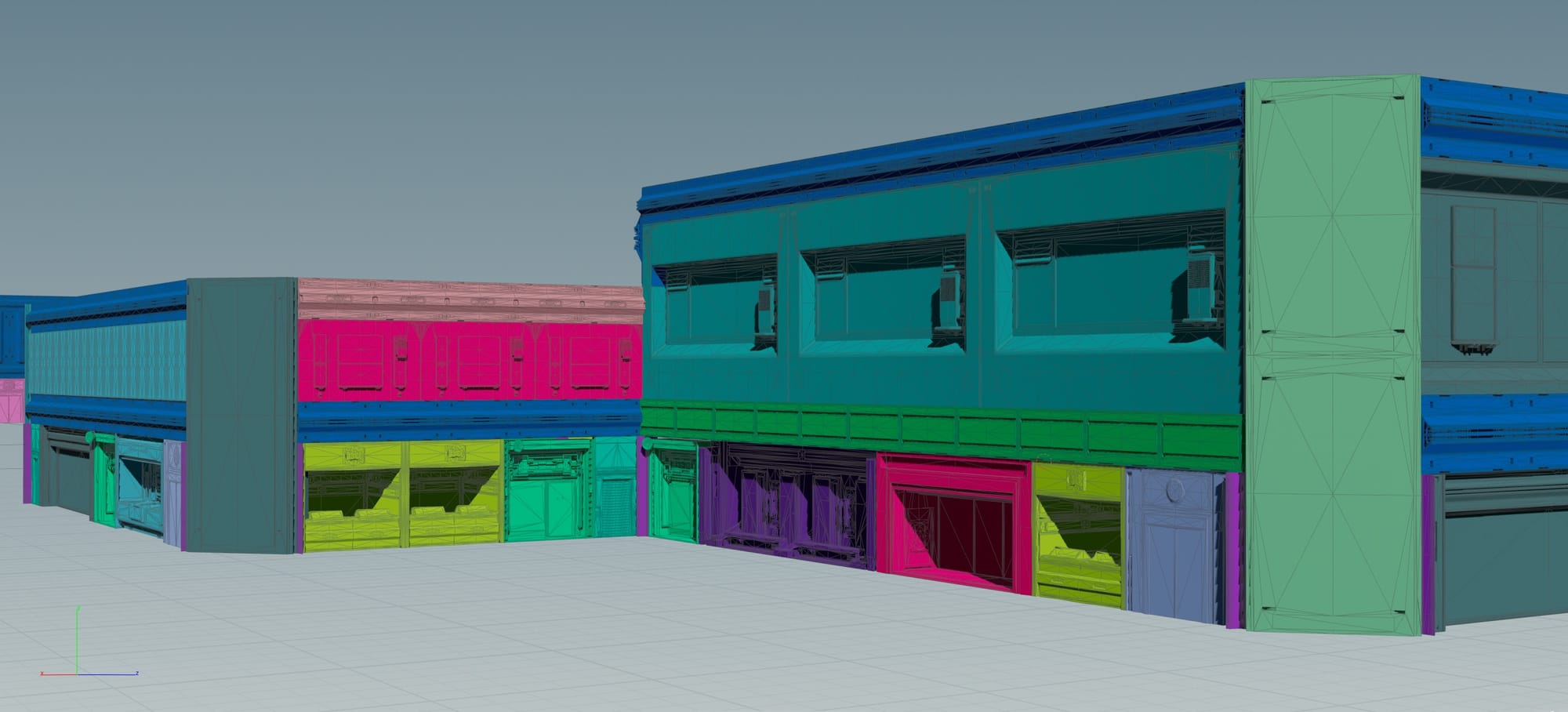
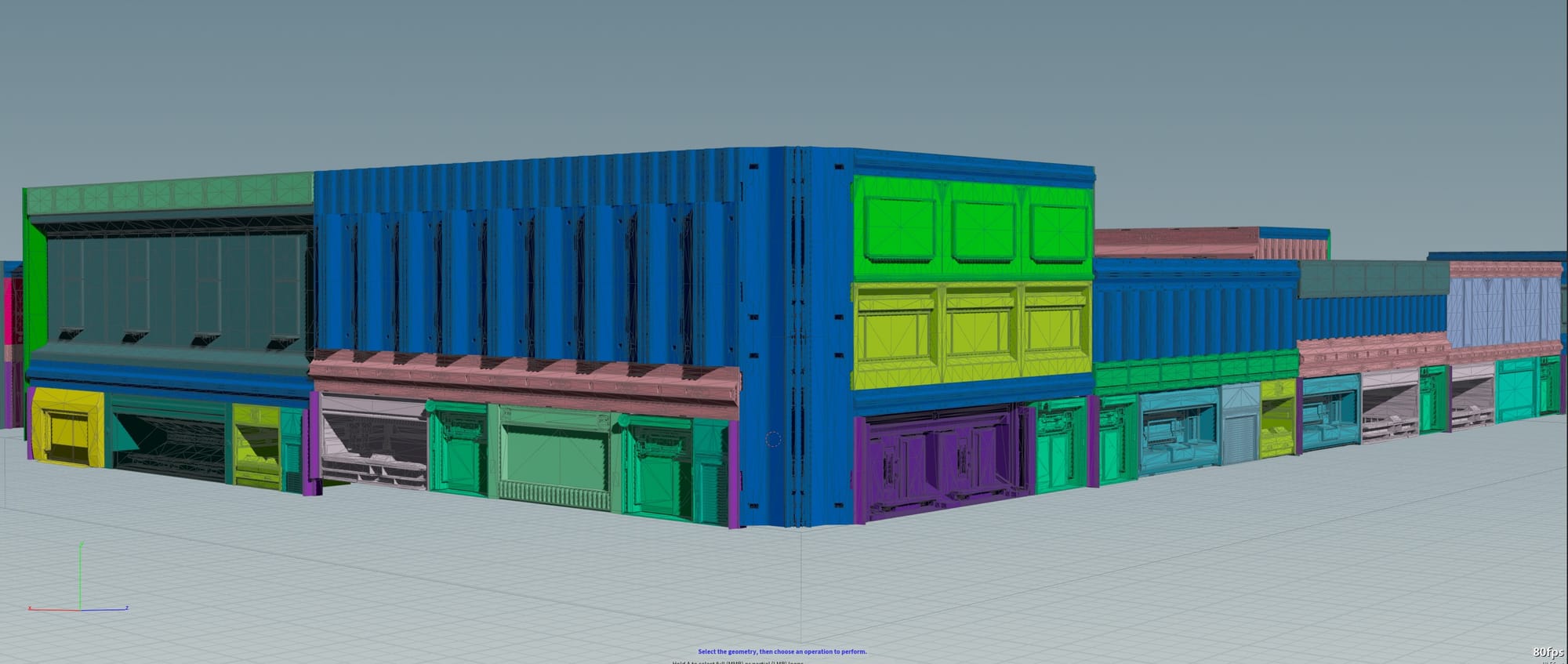
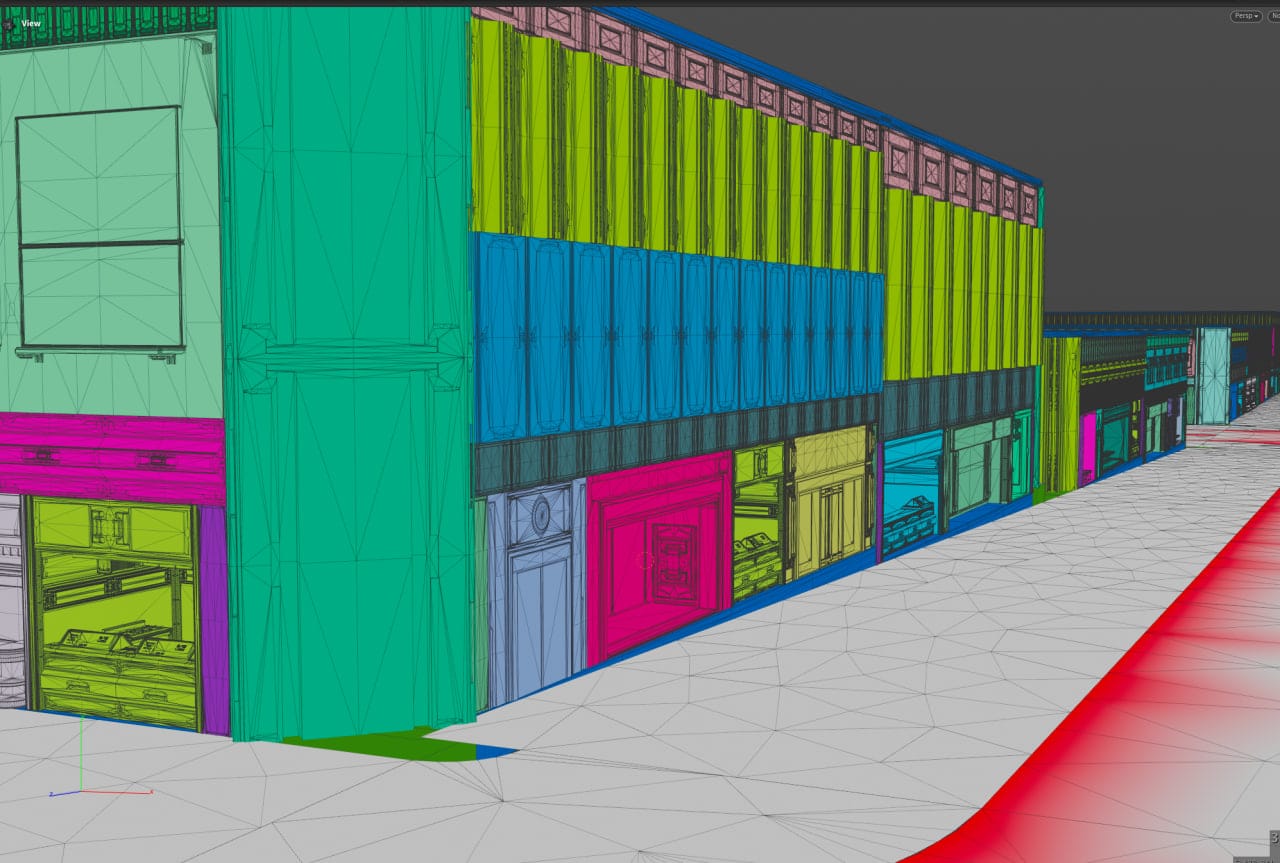
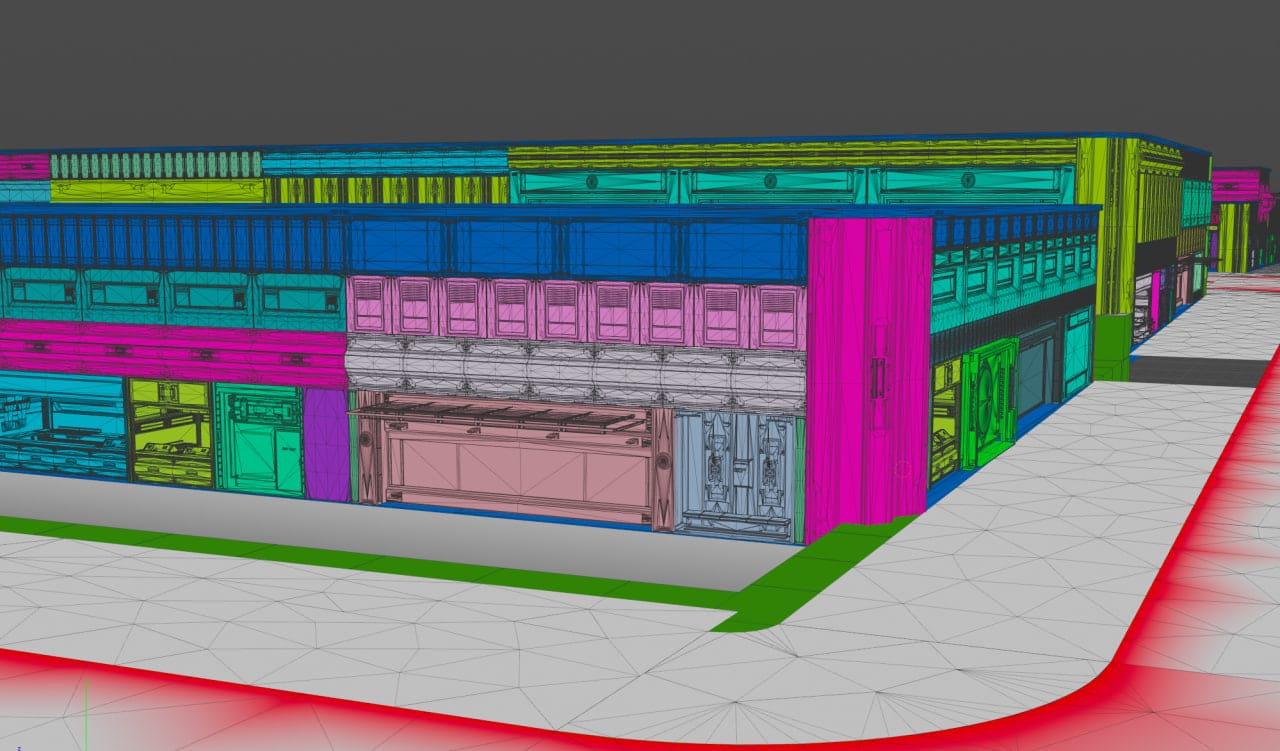
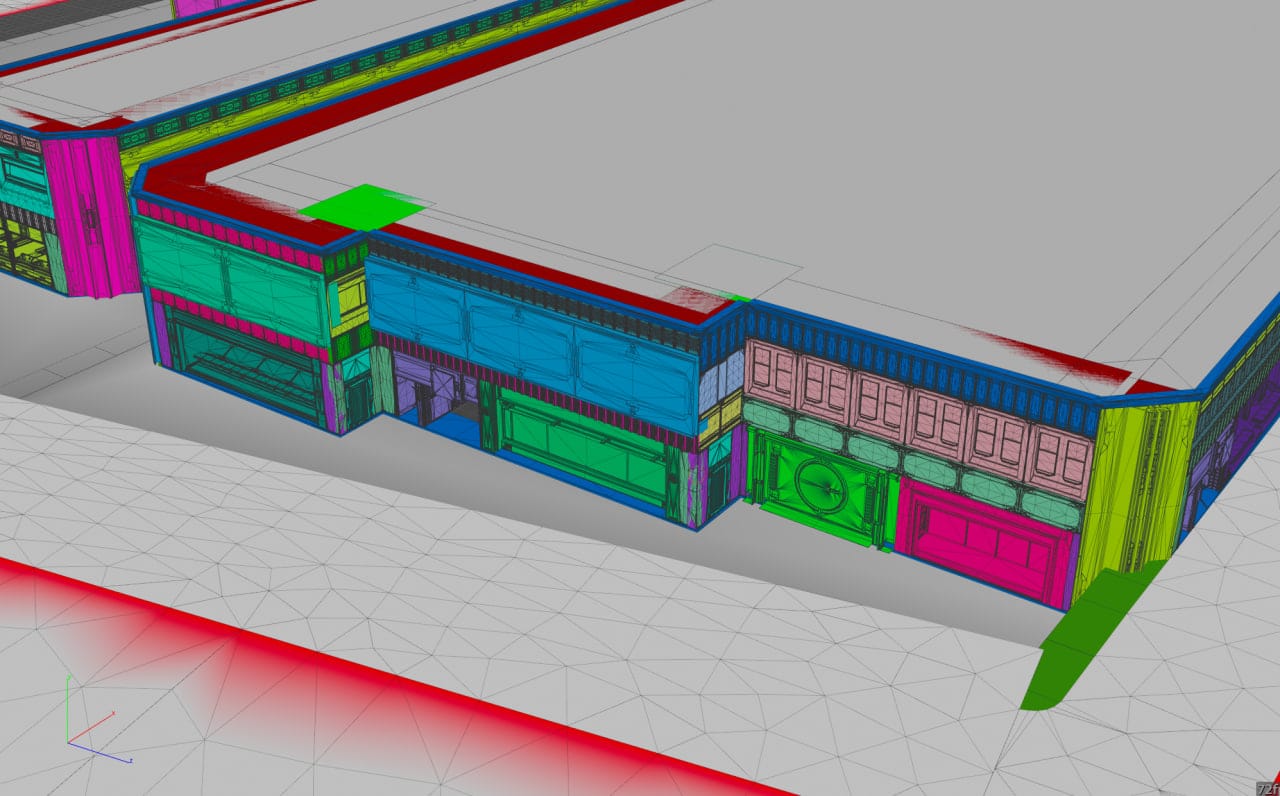
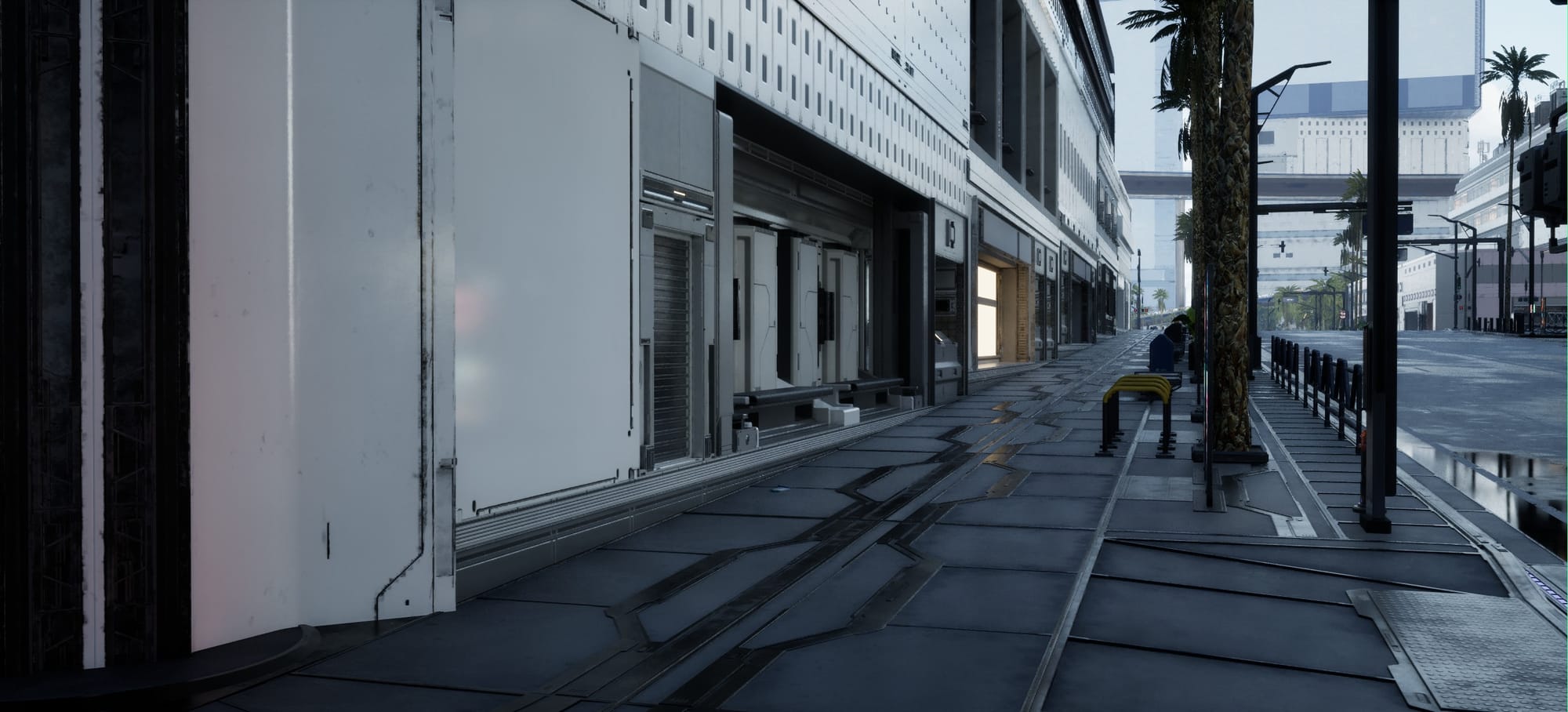
Sloped roads introduced complex challenges for storefront alignment. A new stepped storefront system was developed for buildings that connect directly to sidewalks without plazas. The system measures road slope and incrementally adjusts storefront heights, ensuring entrances remain accessible without excessive elevation changes.
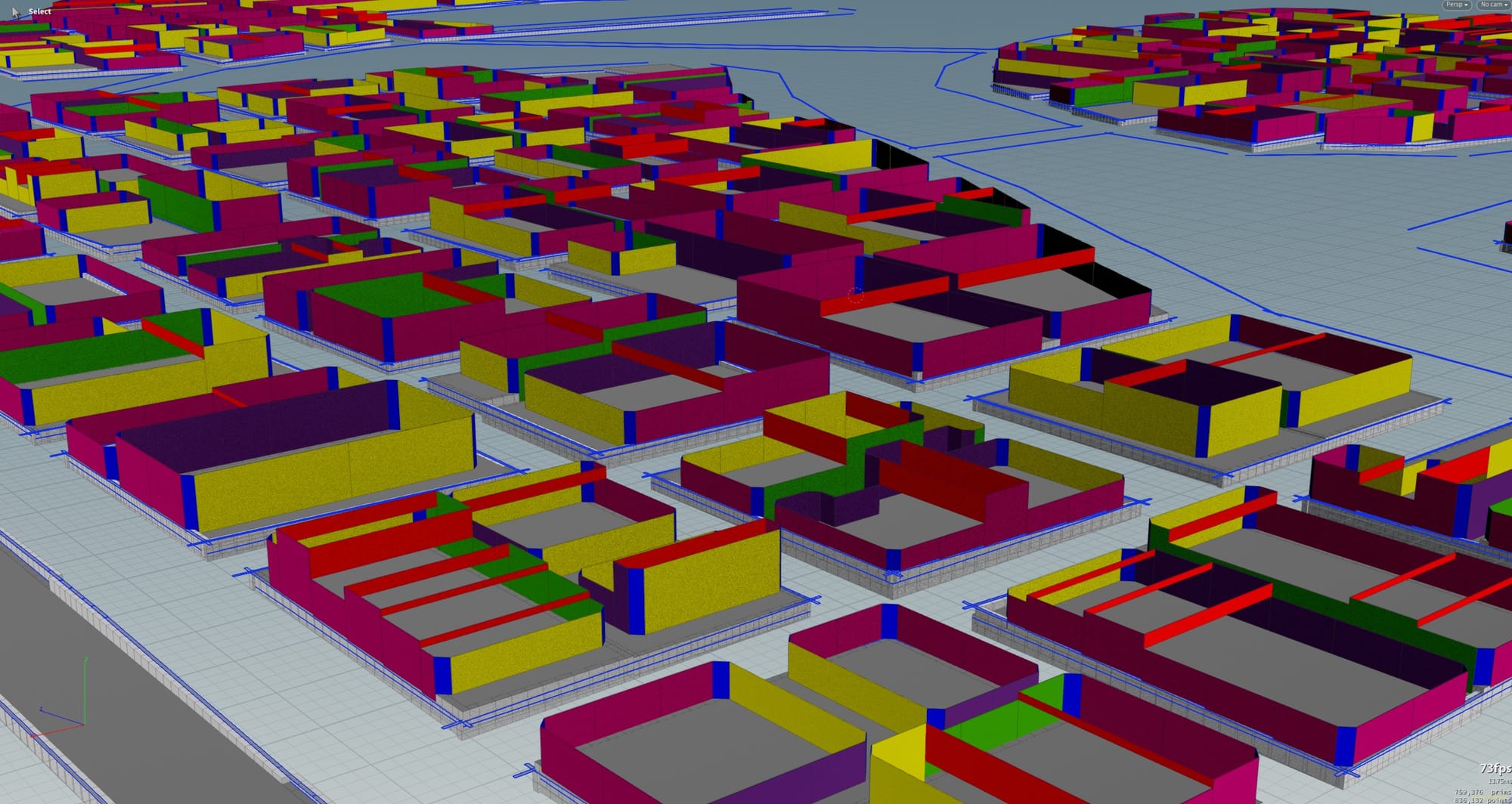
Storefront Distribution
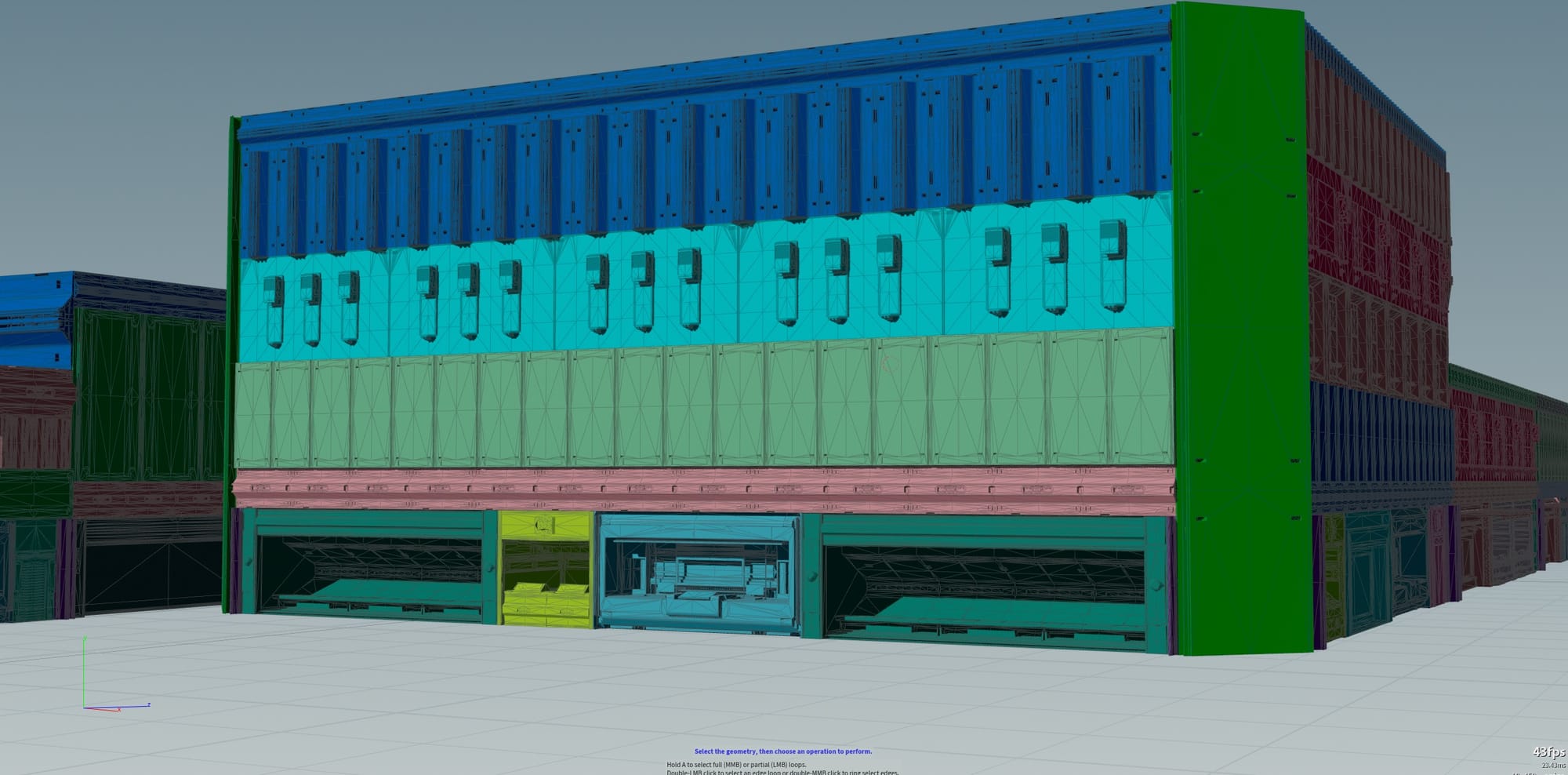
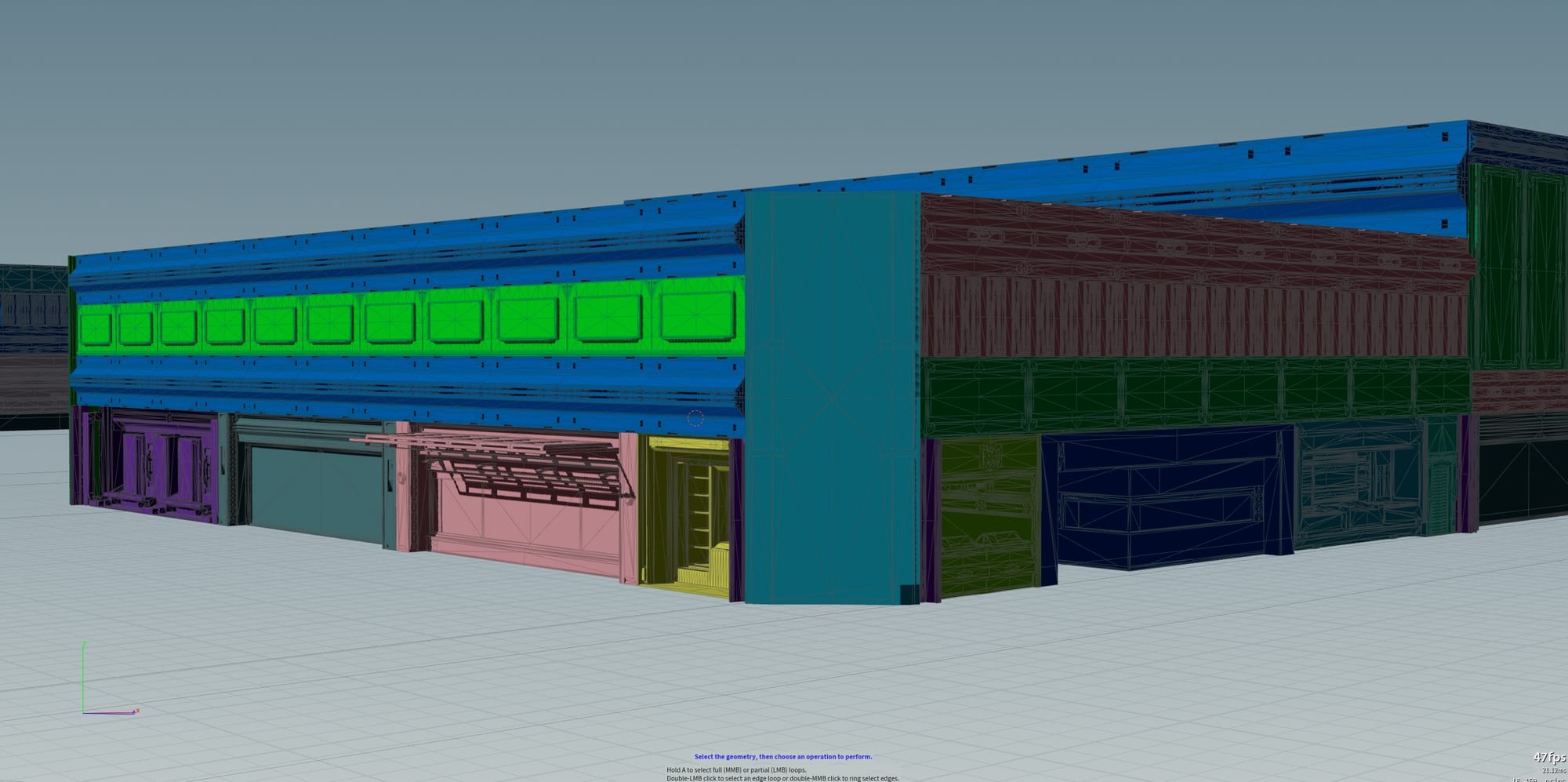
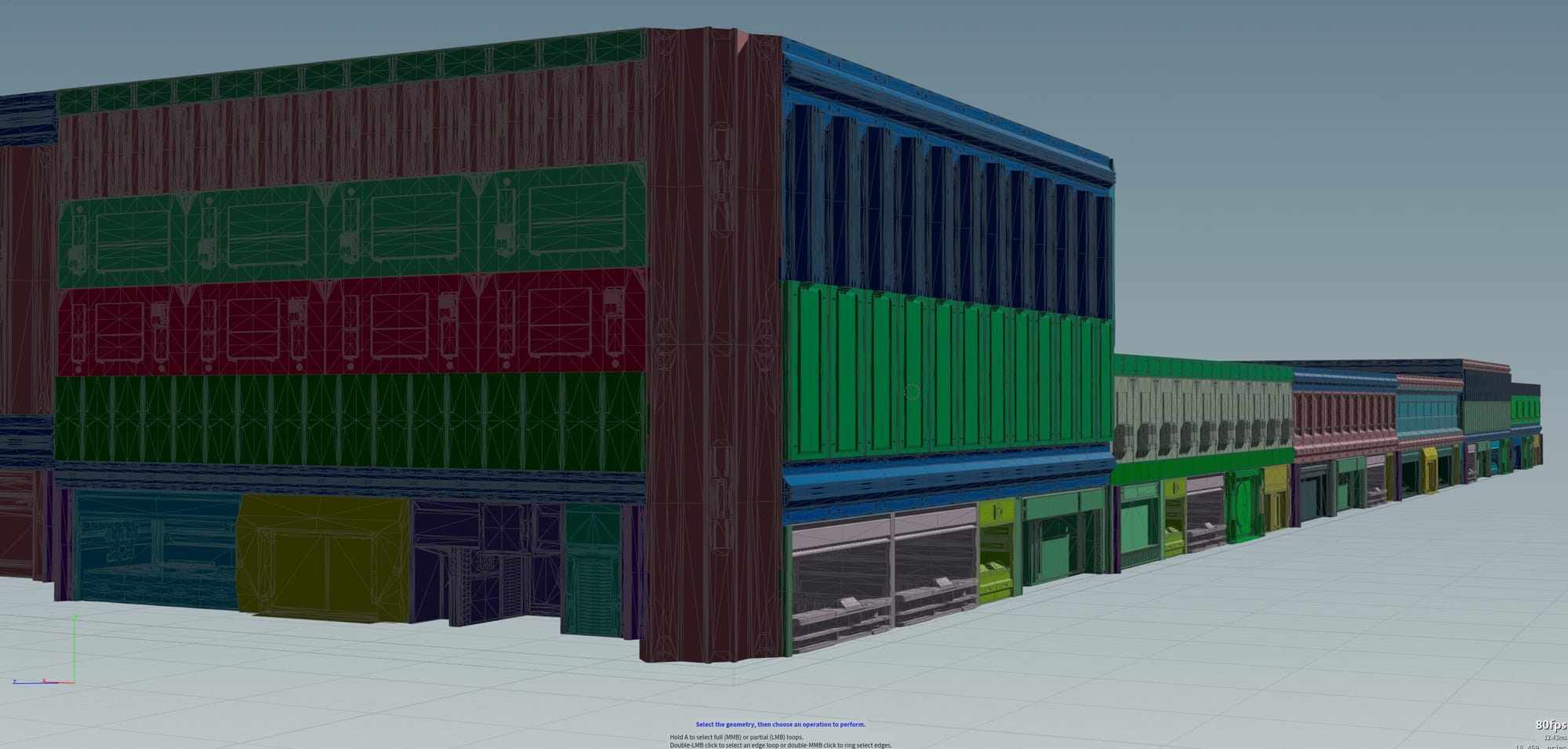
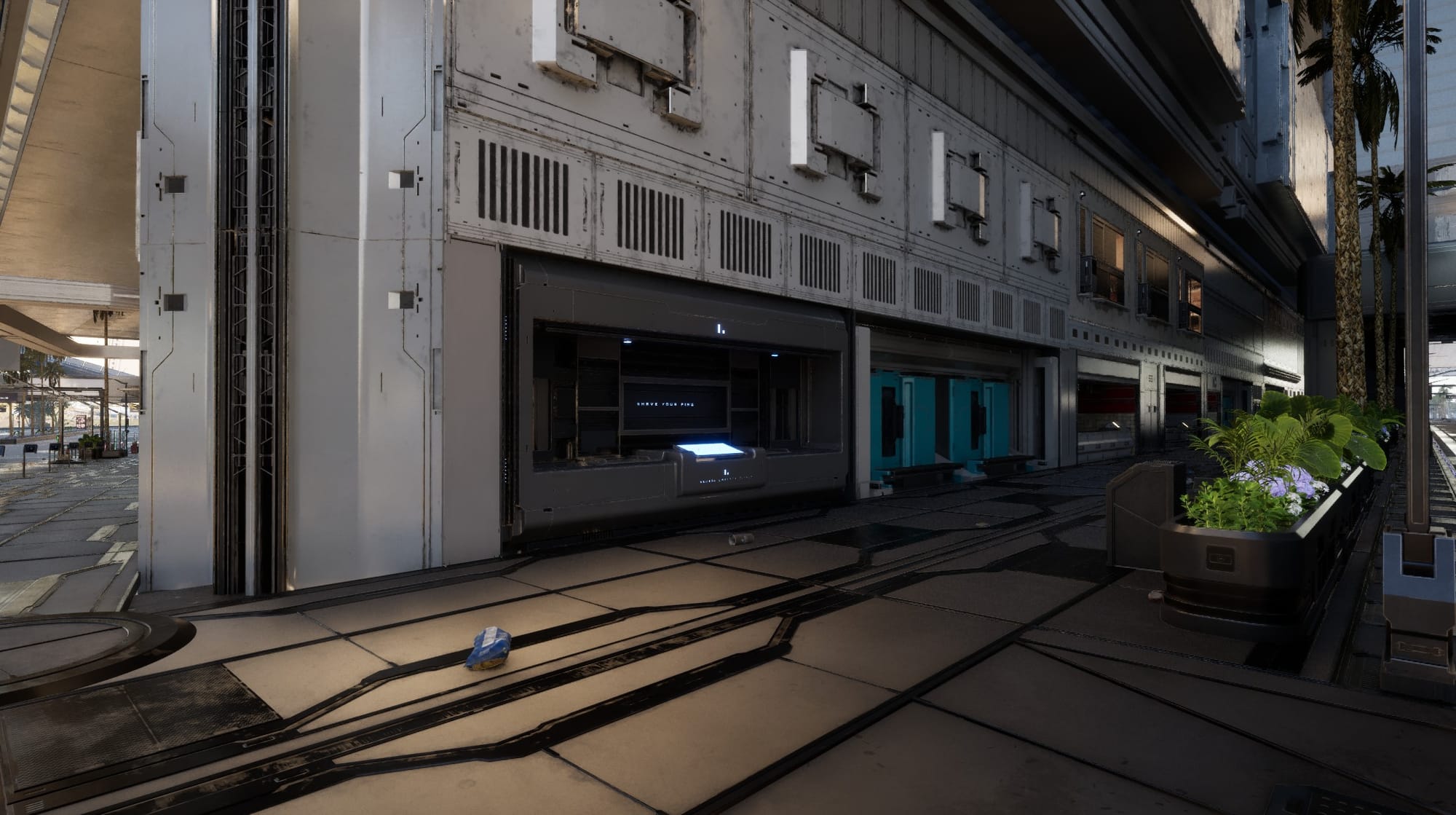
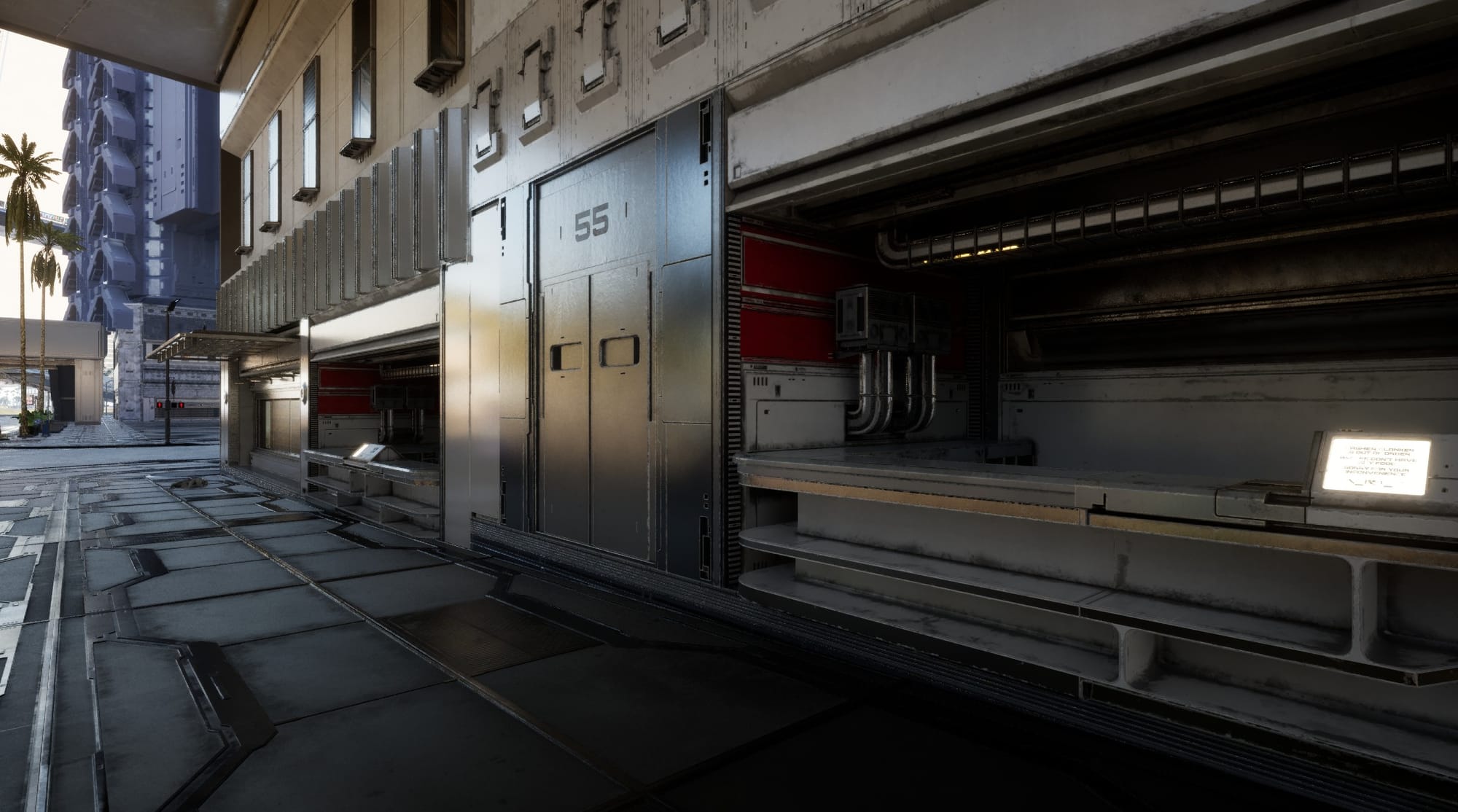
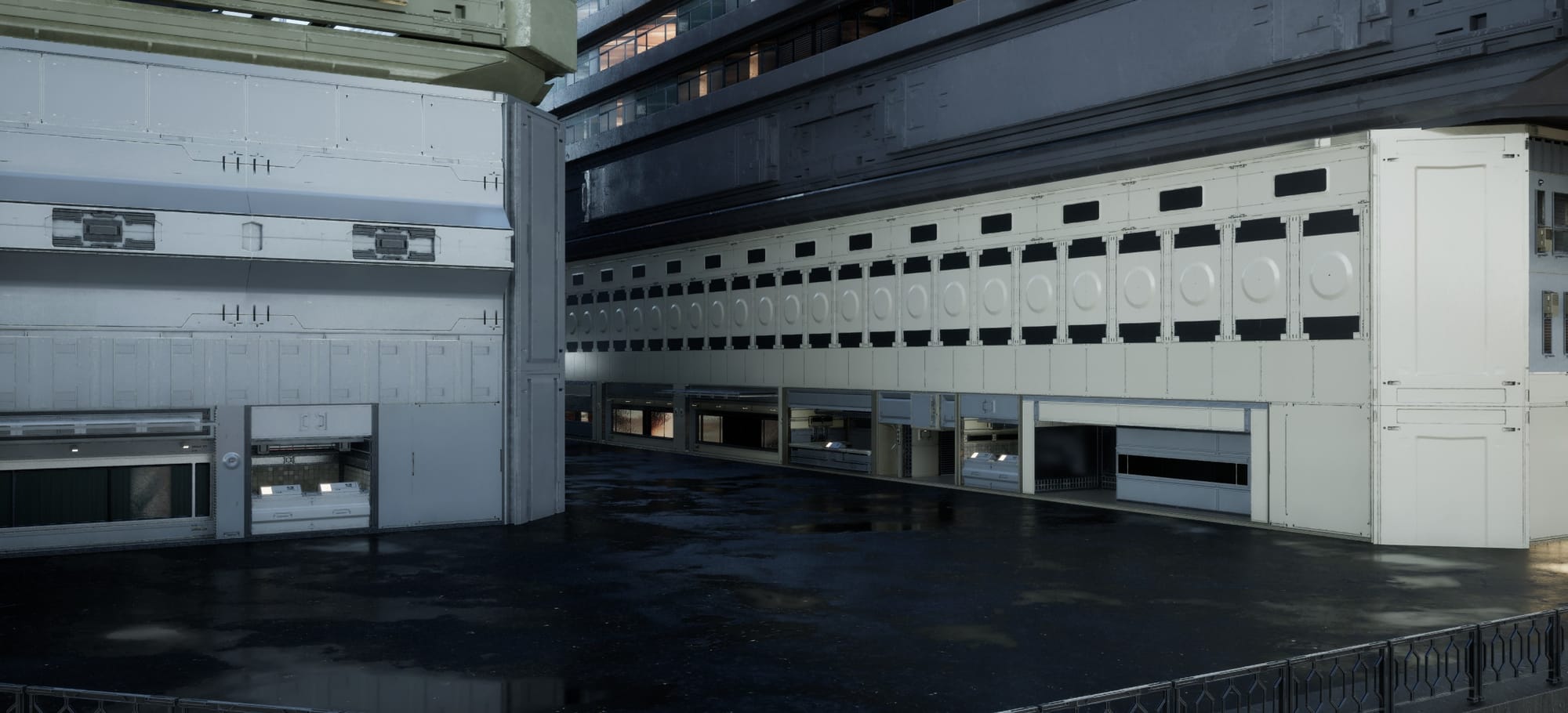
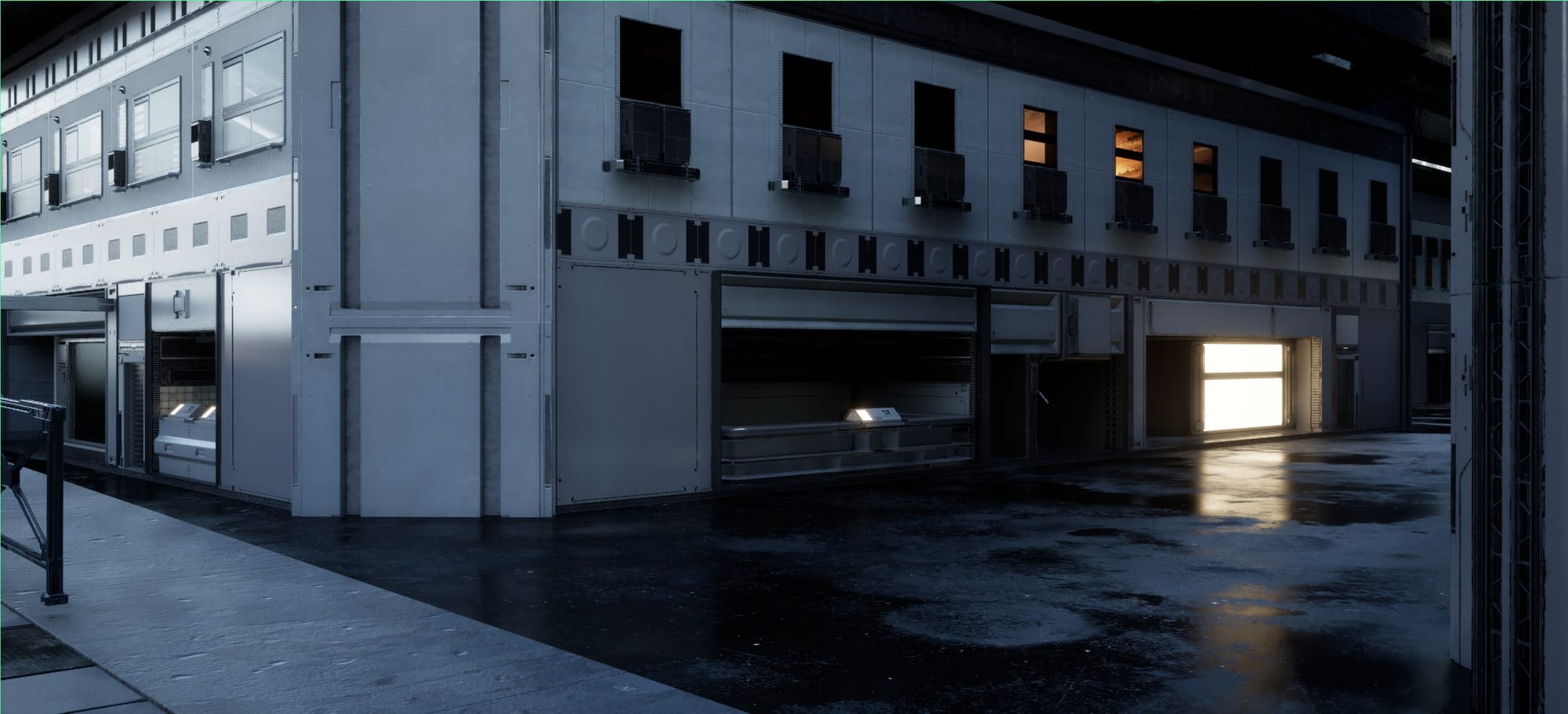
To support the stepped storefront system, host walls were panelized into three primary layers: ground-level storefronts, a mid-section of varied window configurations, and an upper cap composed primarily of solid panels. Each layer uses dedicated panel kits distributed procedurally under defined rules to ensure correct placement.
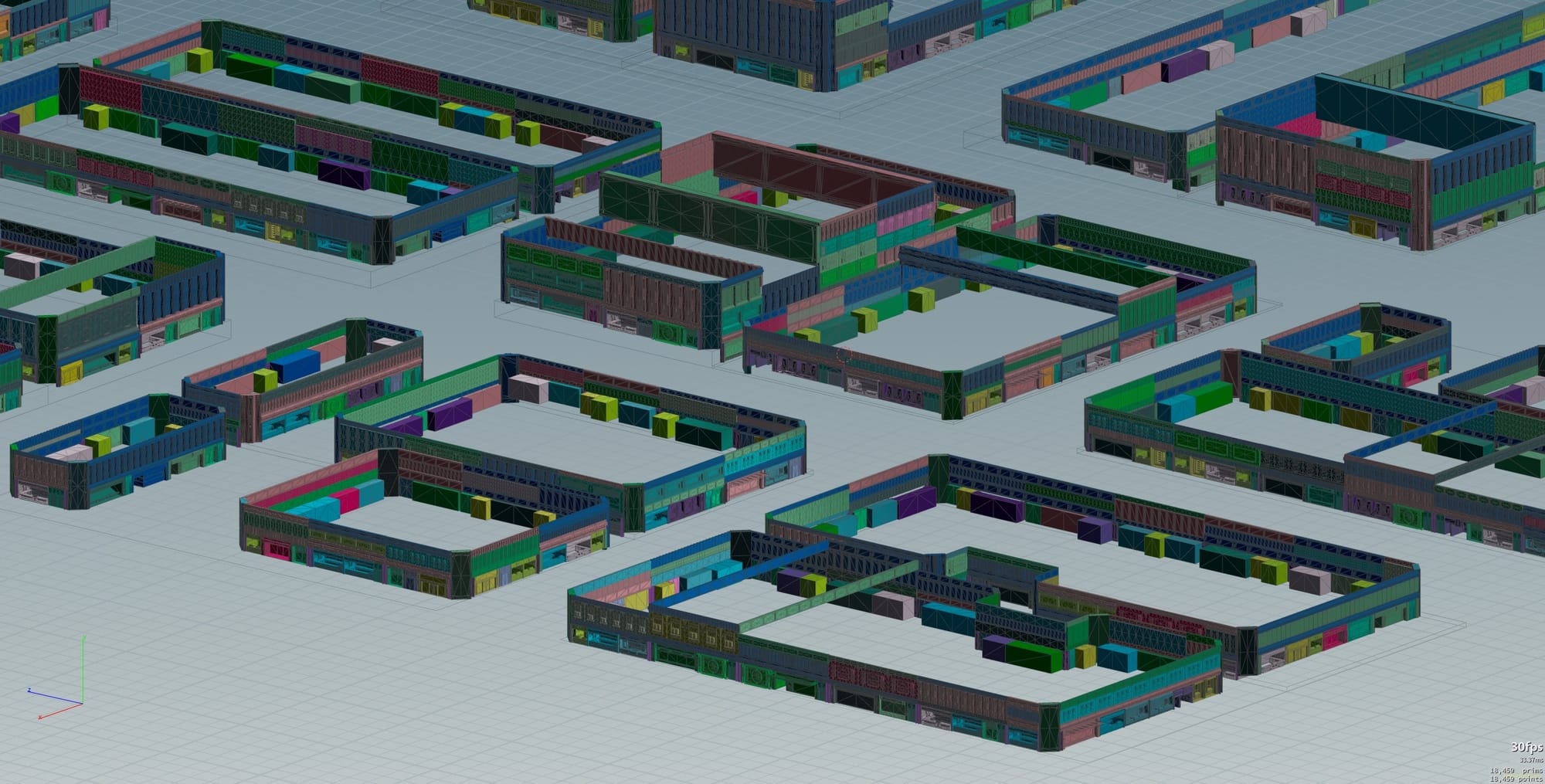
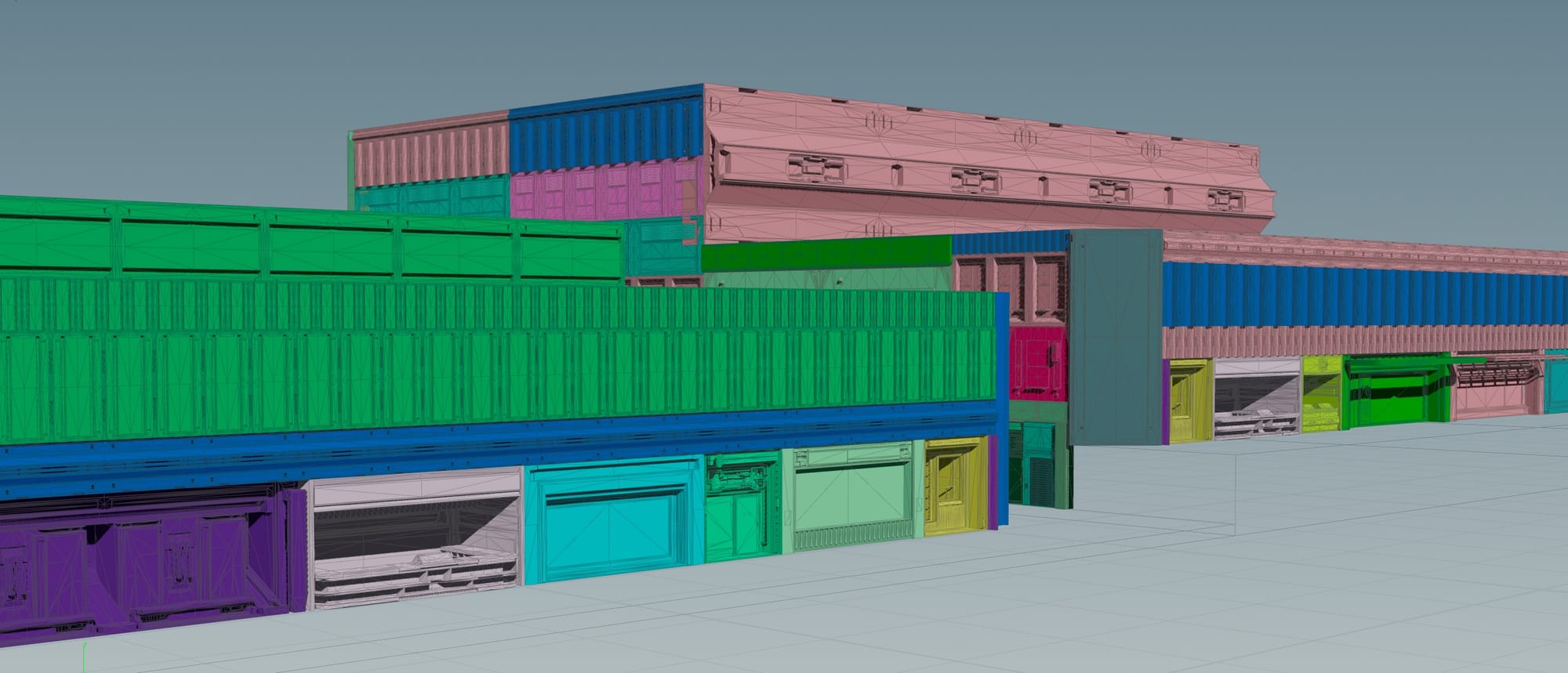
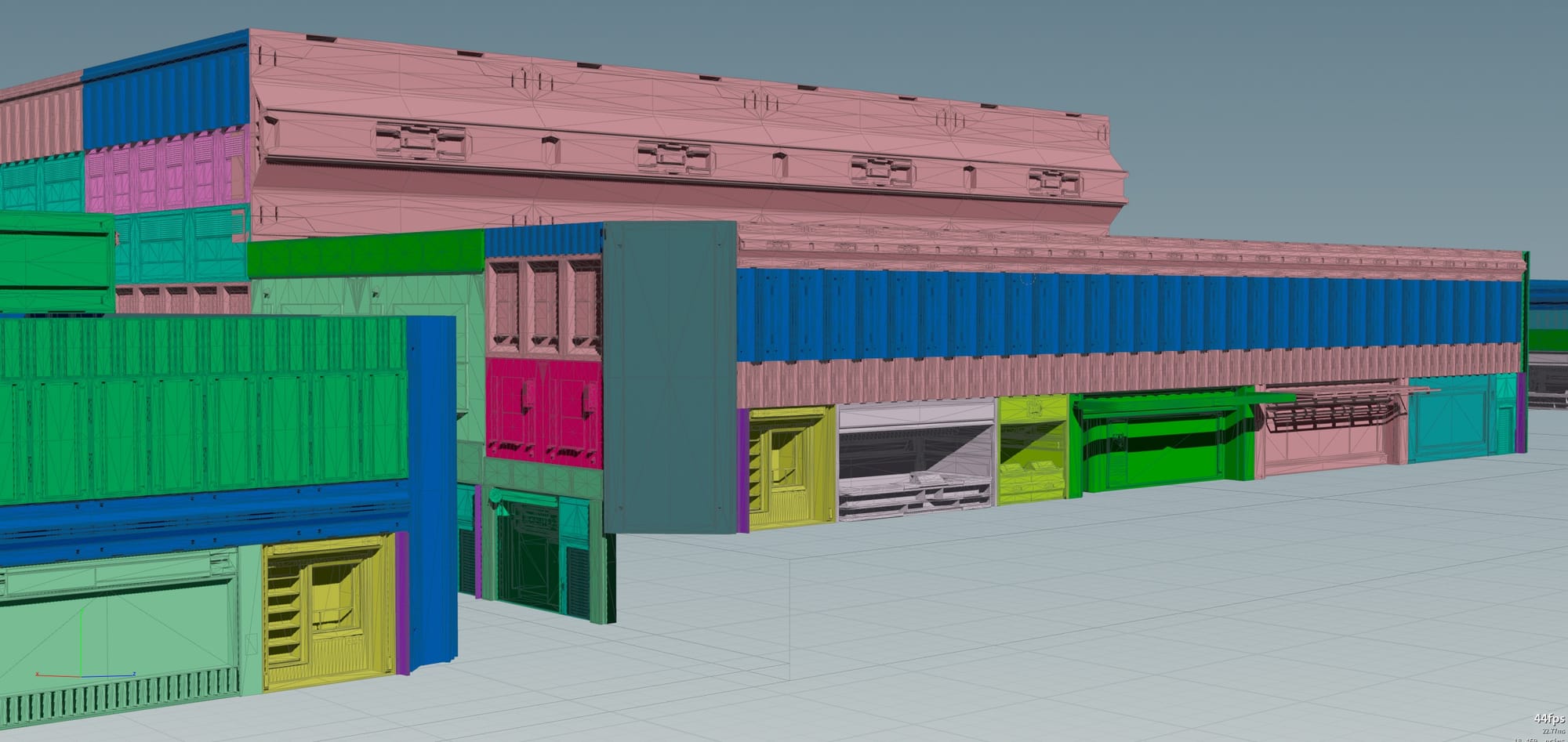
Storefront Implementation
Storefront panels are implemented in Unreal Engine using point cloud metadata assigned to each building block. This data is interpreted by panel libraries to automate placement, material assignment, and collision setup. Procedural dirt and wear layers are applied to introduce variation, ensuring repeated panels retain a natural, lived-in appearance.
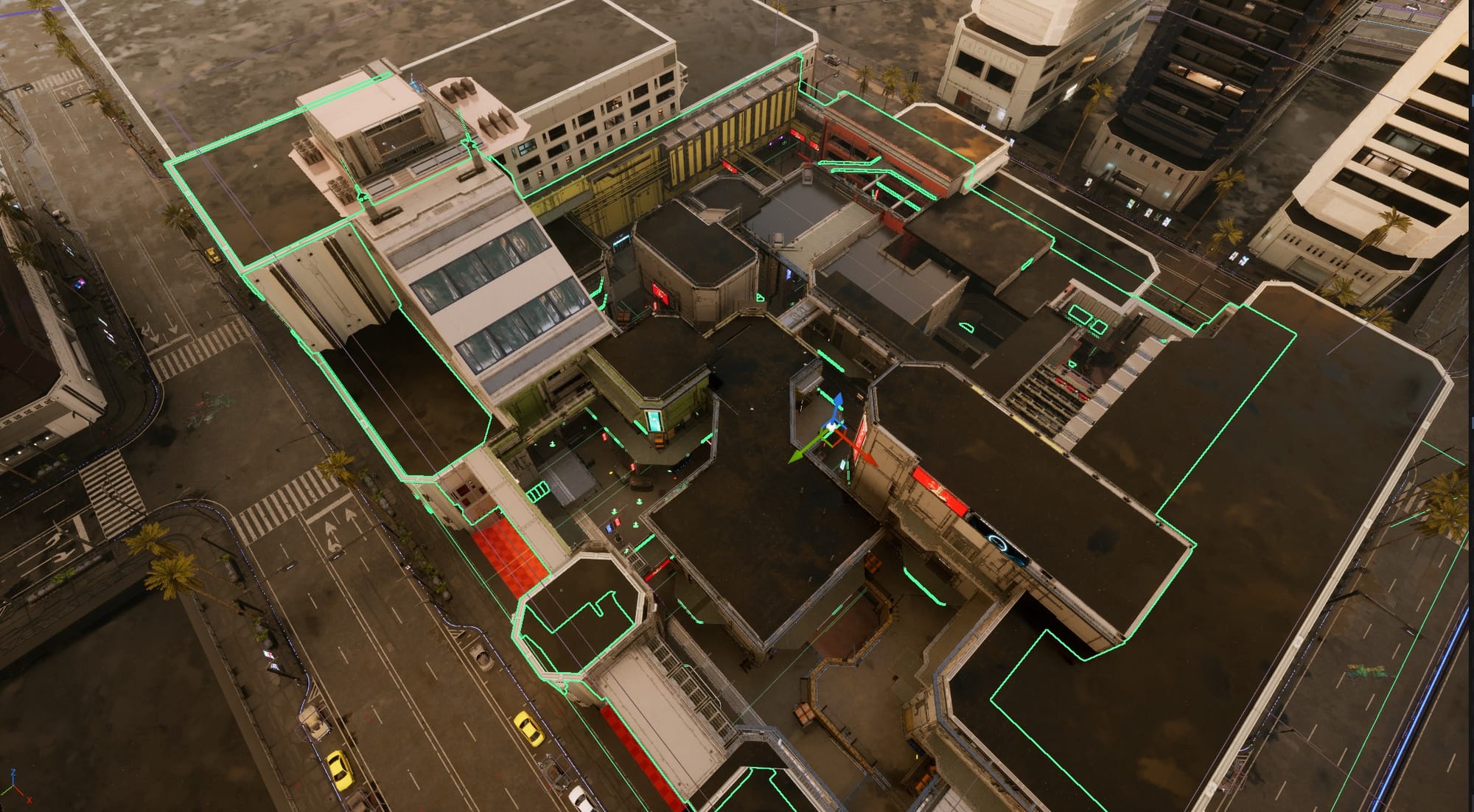
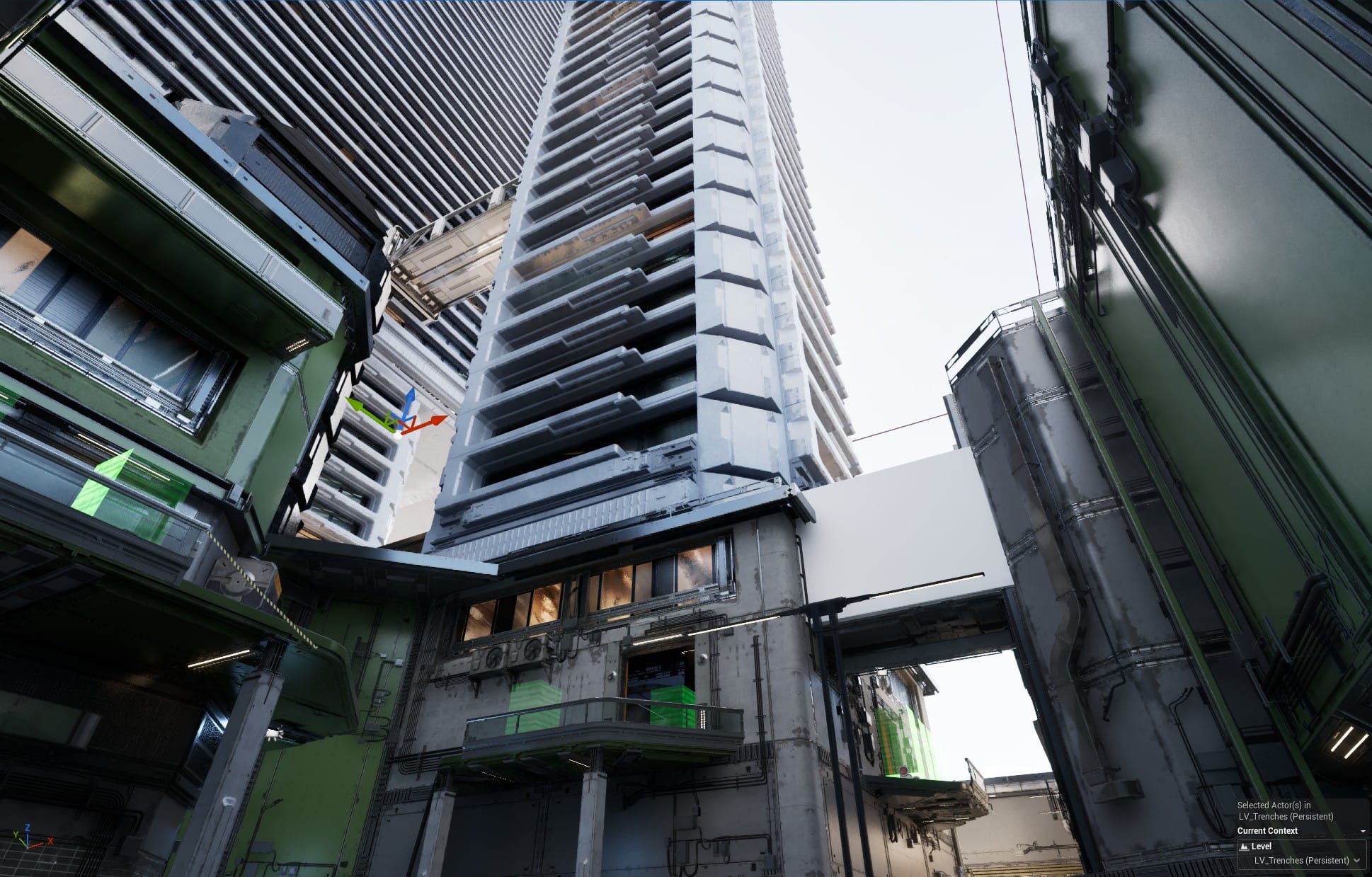
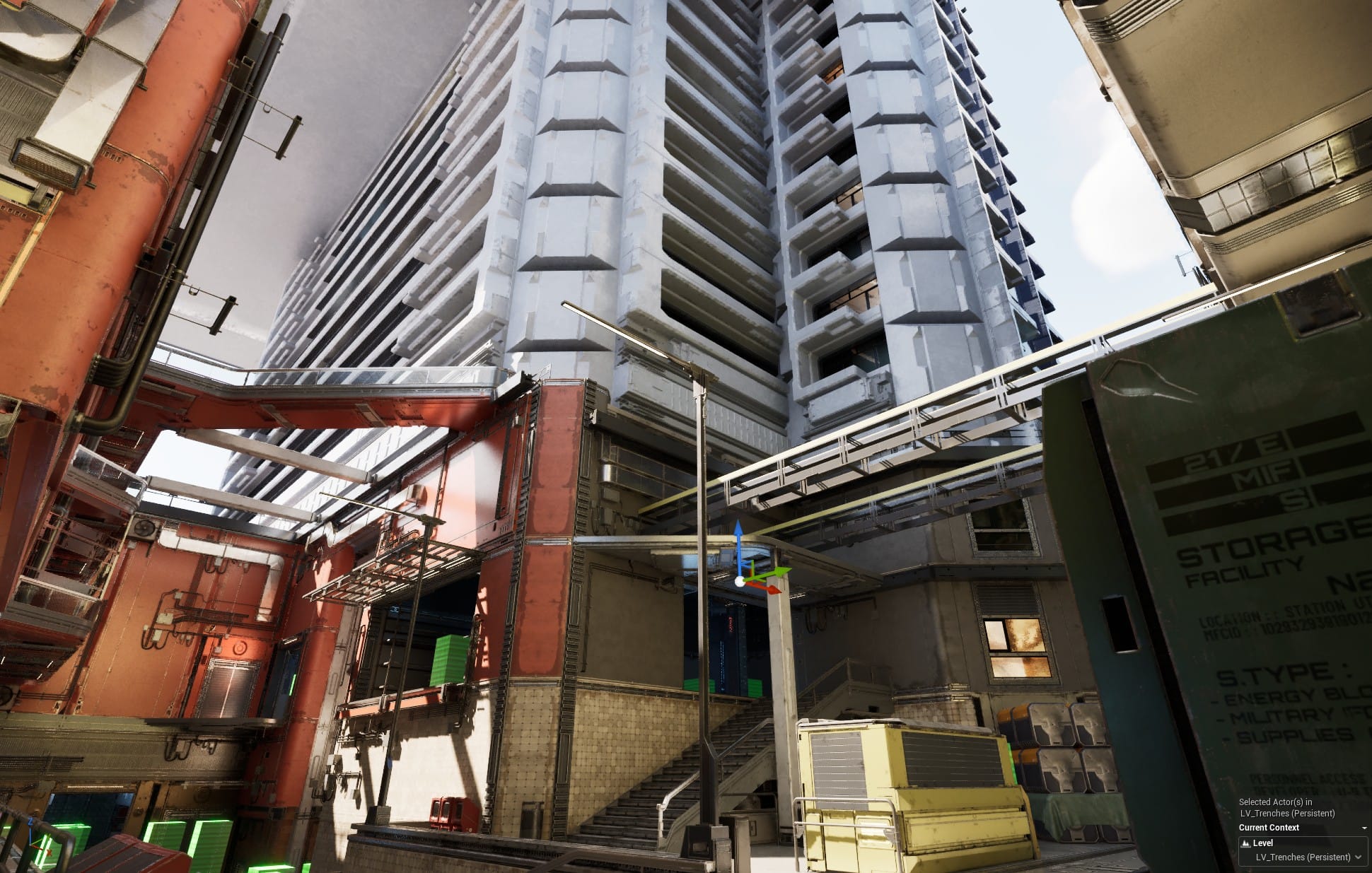
Trenches Buildings
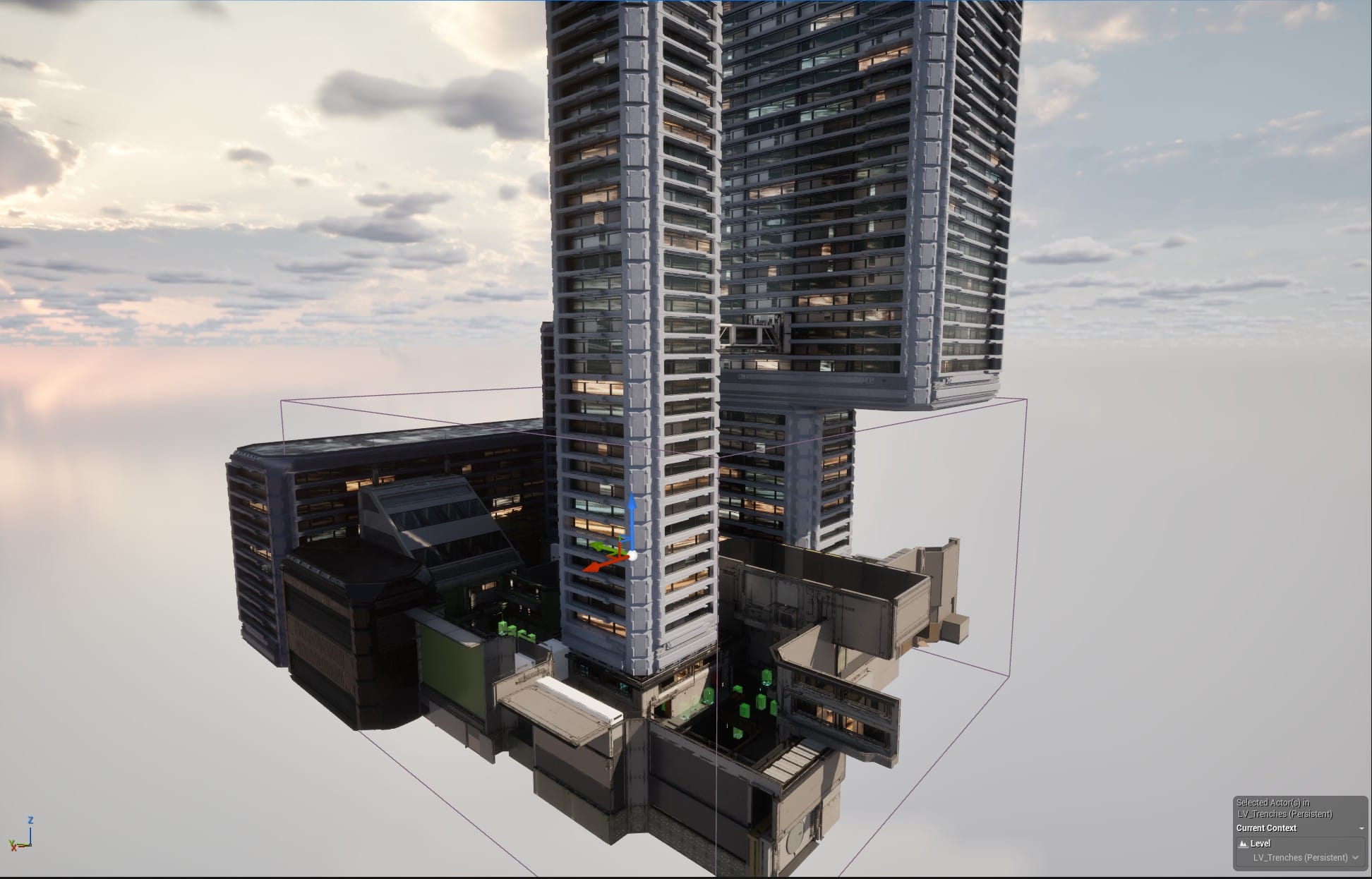
Buildings surrounding the Trenches shooter level, including the towers above it, are fully procedural and integrated into the larger building system. This required enclosing a level originally designed for interior-only visibility and generating outward-facing geometry and finishes so it could function seamlessly within the open world.
Avatars
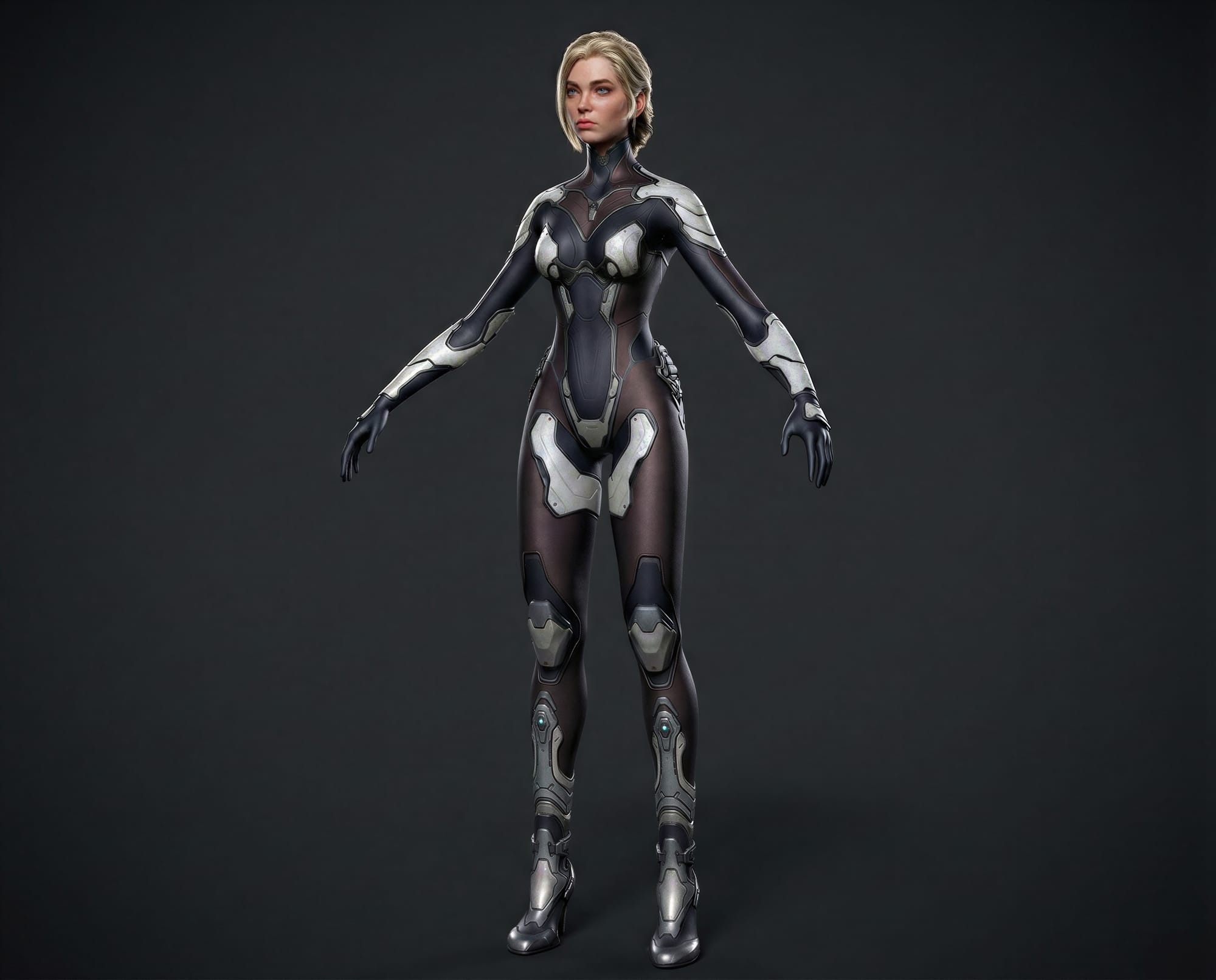
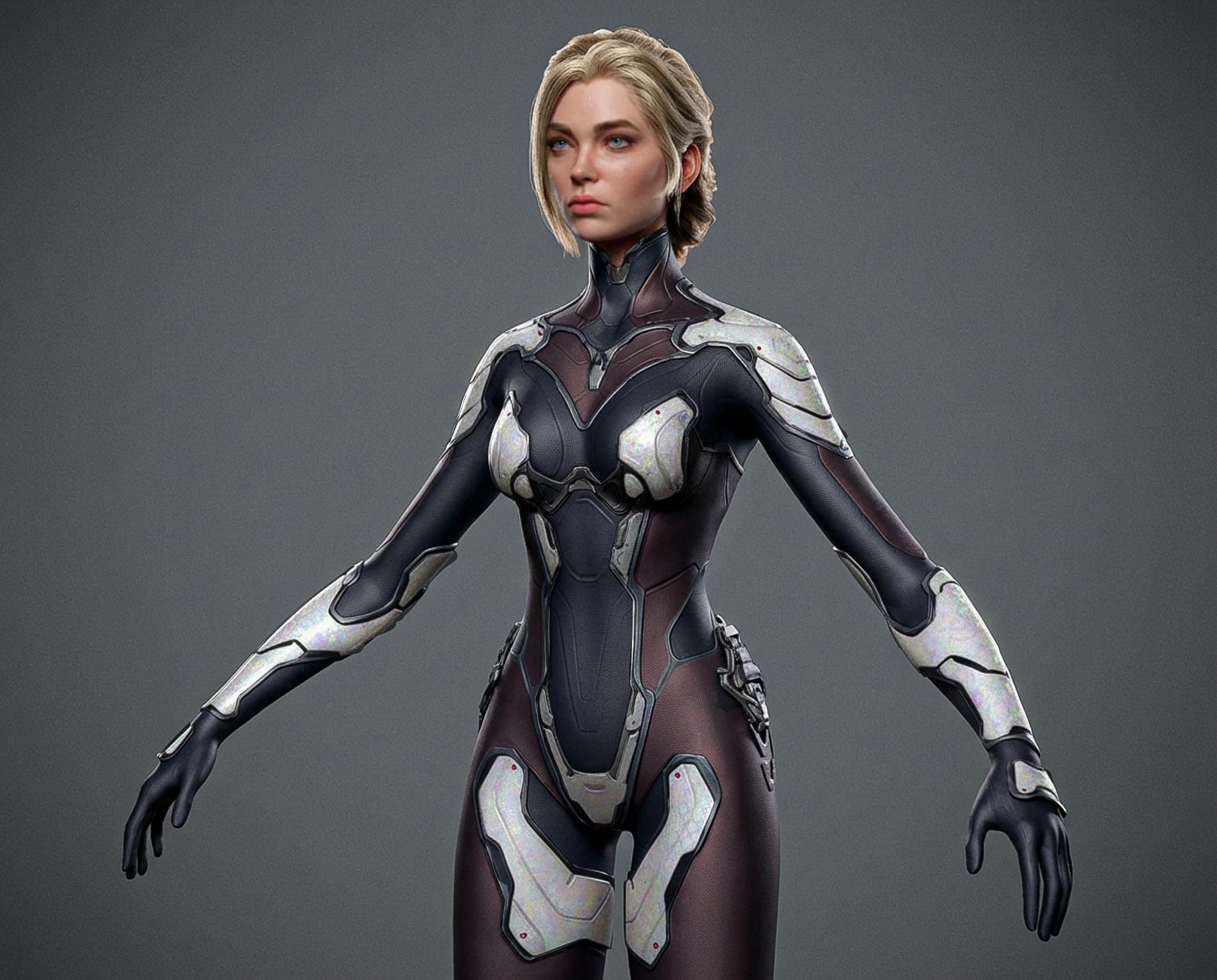
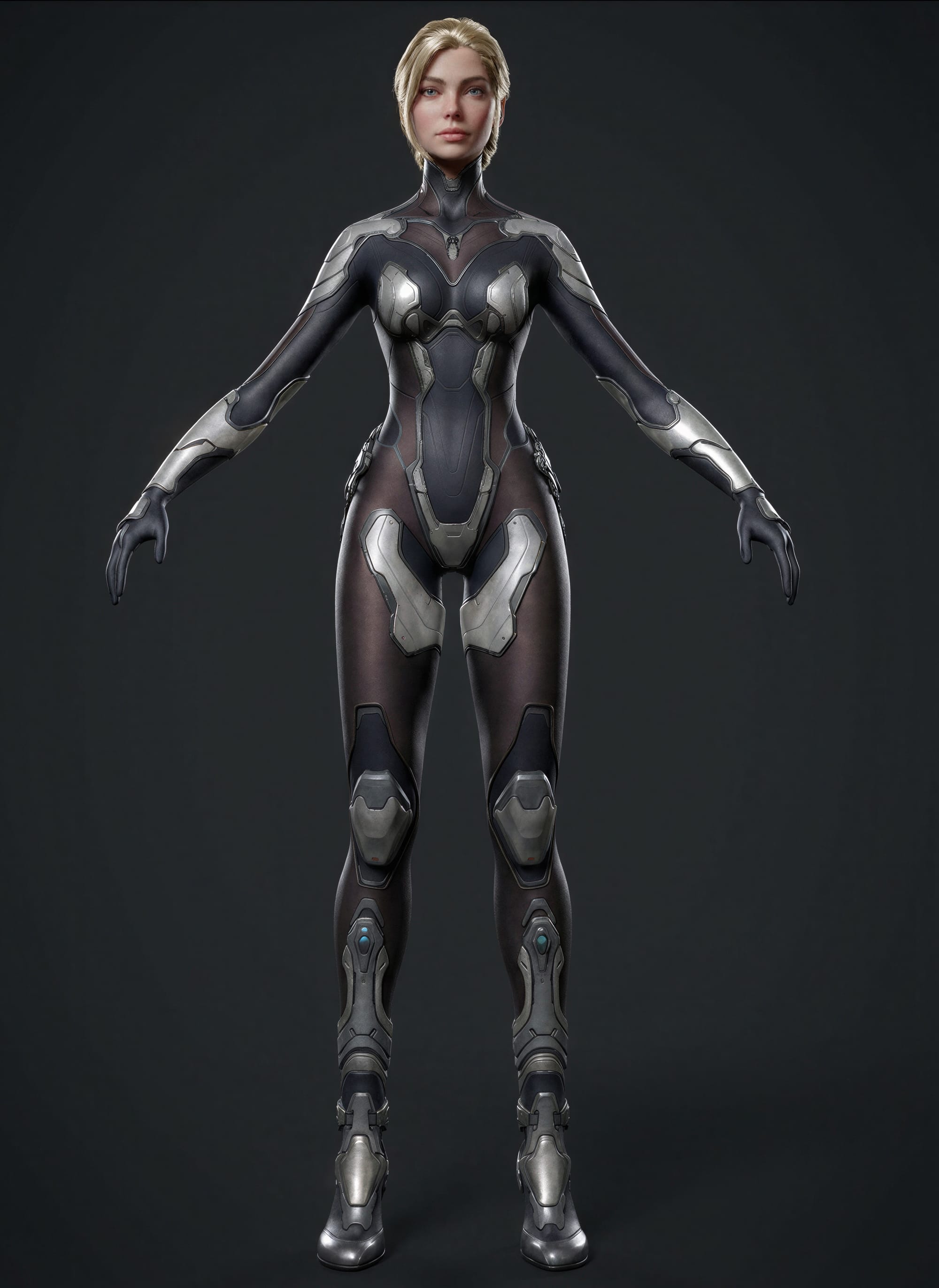
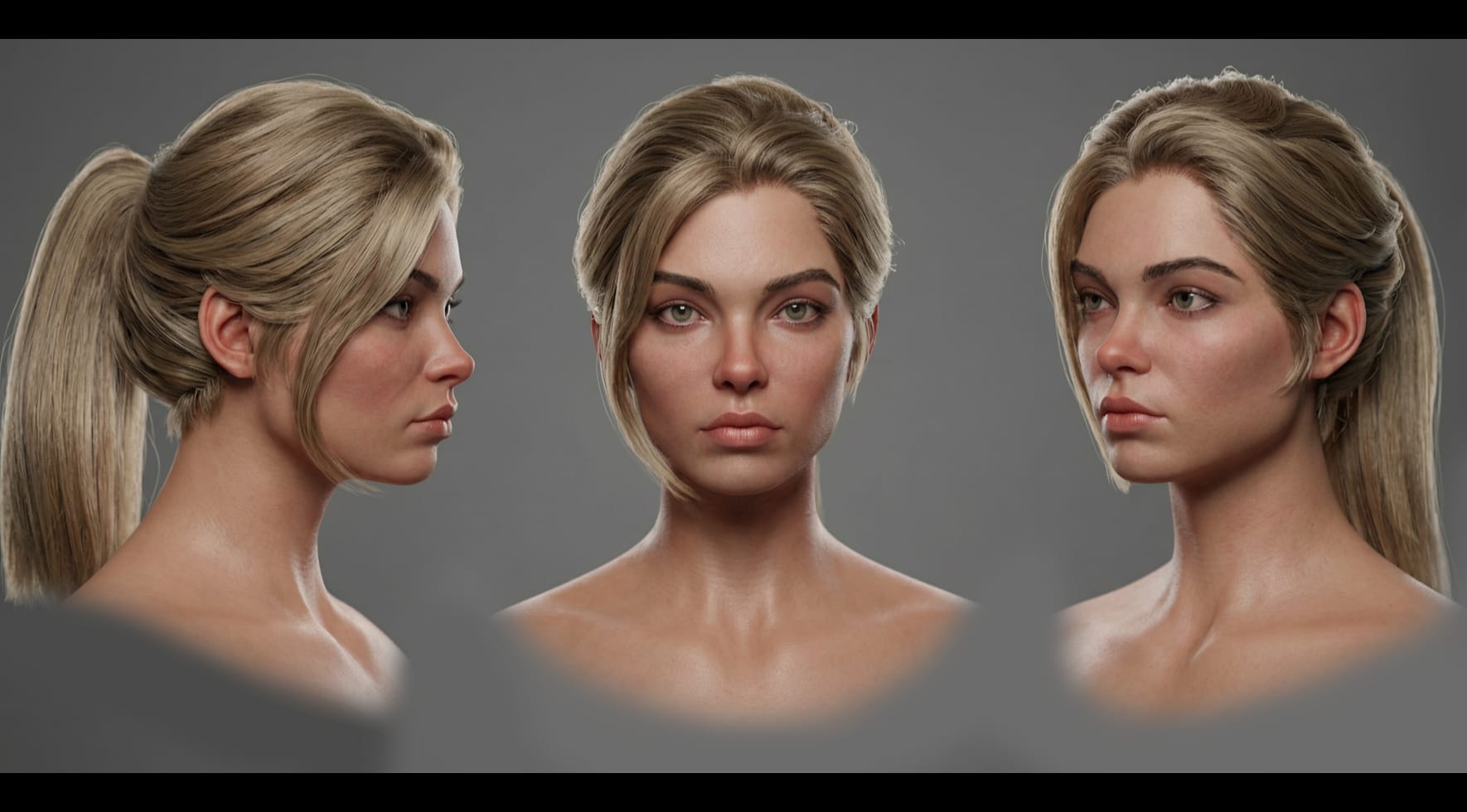
RIO: Trinity V3 Armour
RIO is a character currently in development as part of the Trinity V3 project. The design represents an evolution of the Trinity line, incorporating updated cybernetic systems and revised character proportions.
The character was developed as a standalone design rather than a direct female variant of an existing Trinity suit. Work focused on refining body structure, facial features, and the integration of technological elements into the armour. The result is a revised visual language for female Trinity characters, with adjustments to form, surface detail, and how technology is embedded into the overall silhouette.

AVA-TEK Service Droids
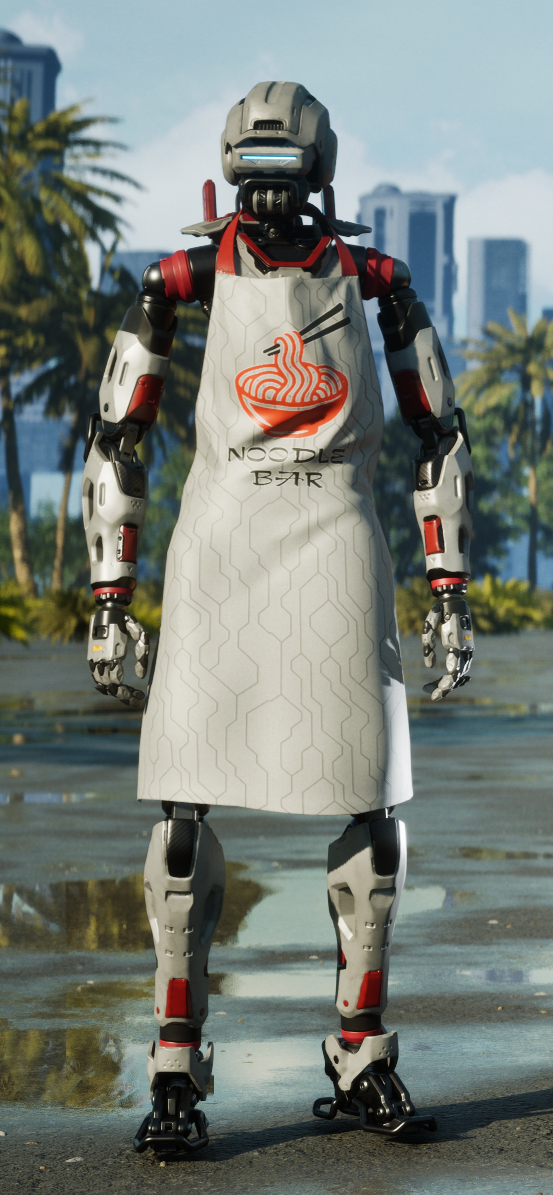
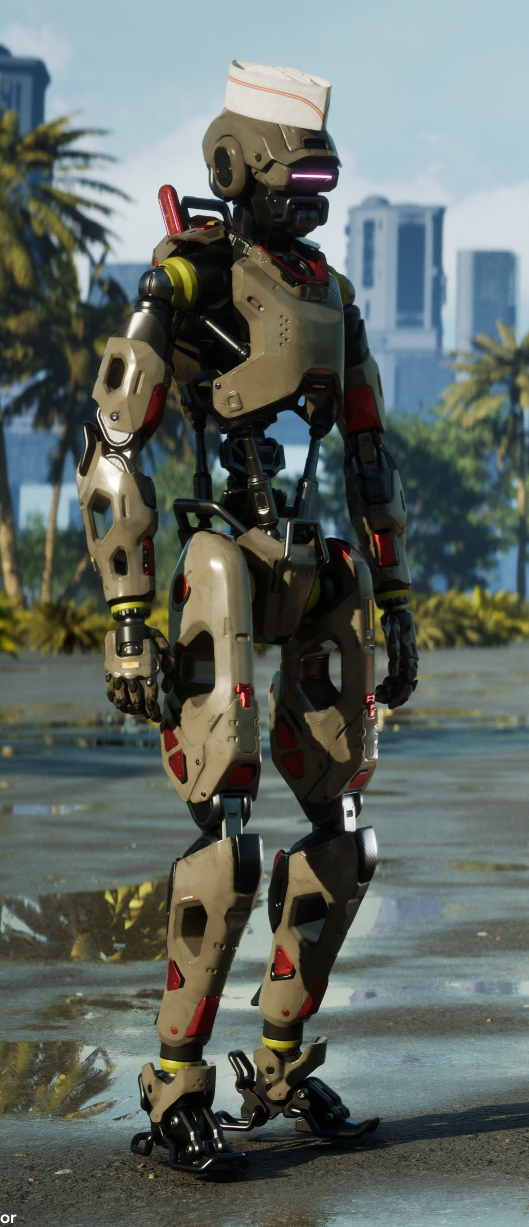
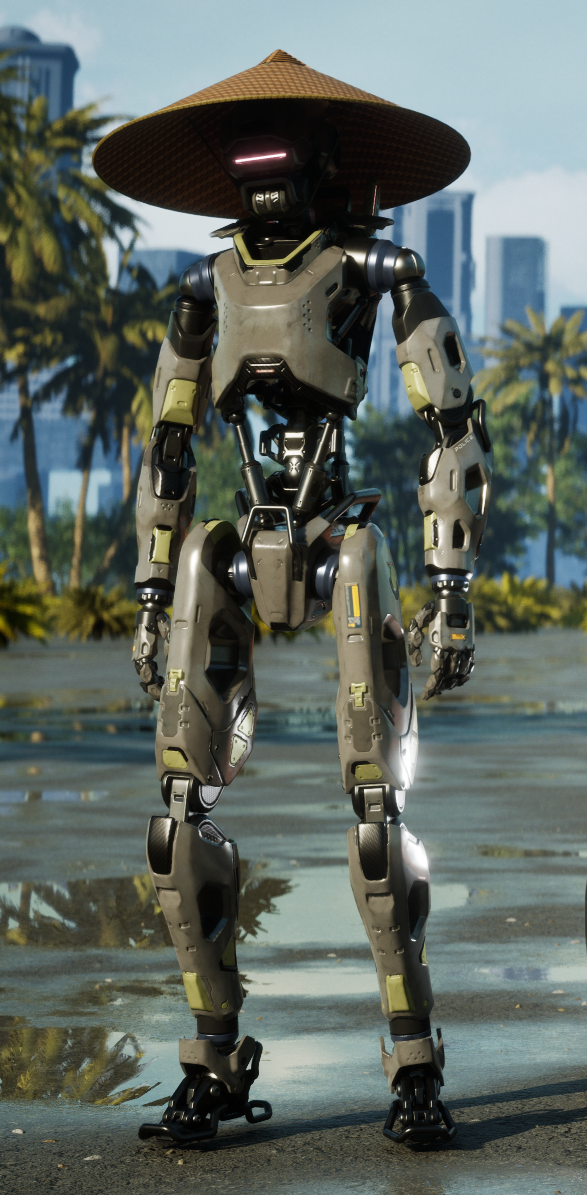
The AVA-TEK Droids have undergone an evolution focused on clearer role definition within the city. These units are now designed to operate across a range of everyday and operational functions, including hospitality services, food delivery, and law enforcement presence.
Each role is expressed through distinct behaviors and visual cues, allowing AVA-TEK Droids to appear naturally across different environments and situations throughout Wilder. This update establishes a broader functional scope for the droids, positioning them as active participants in both civilian life and city security rather than purely ambient elements.
AVA-TEK Tactical Rover
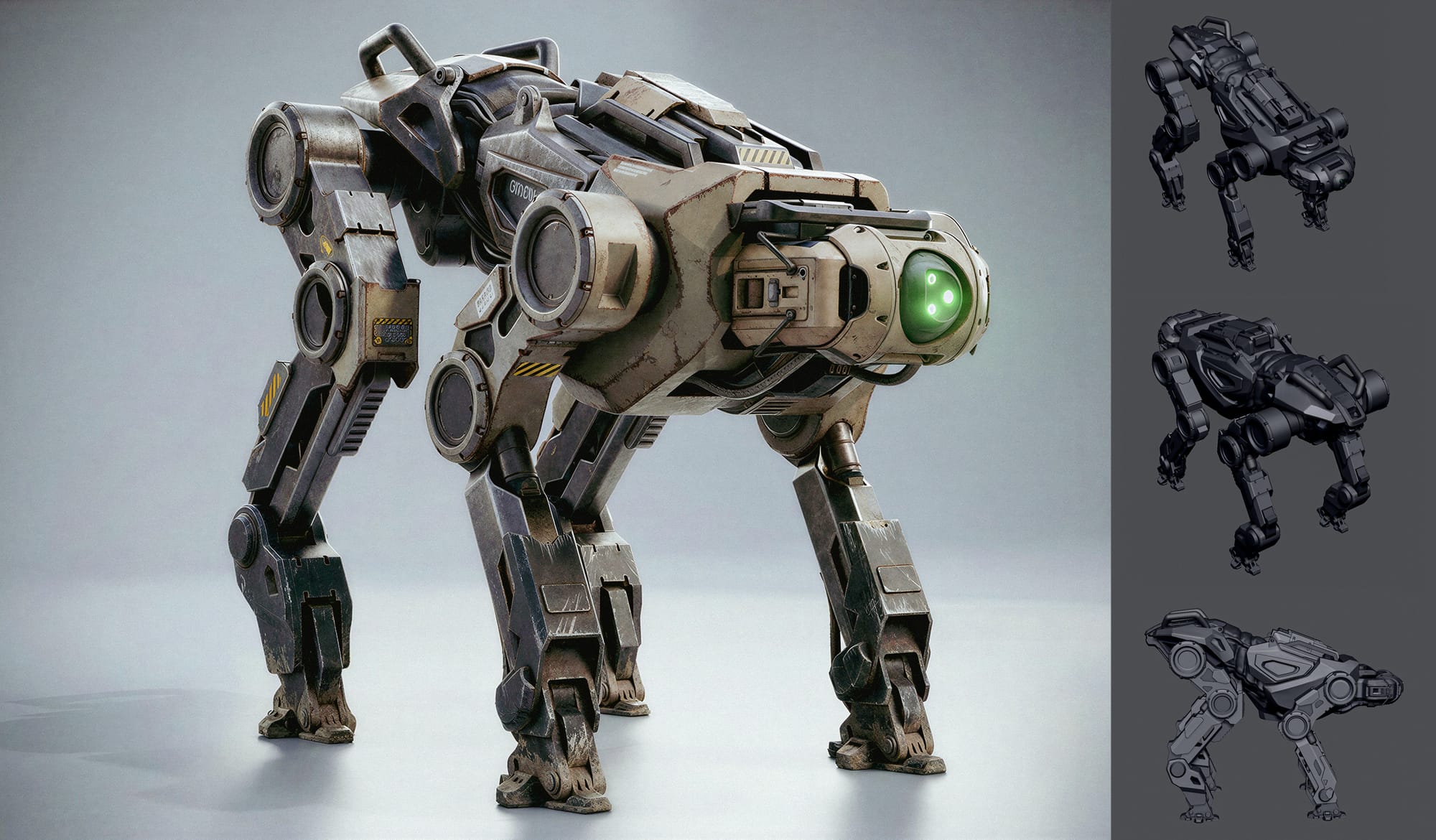
The AVA-TEK Tactical Rover is an active concept exploring a specialised support unit for high-demand law enforcement scenarios. Designed to operate alongside Police Droids, the Rover uses a four-legged configuration to prioritise stability, mobility, and controlled movement in complex environments.
Currently in an early prototype stage, the Tactical Rover expands the AVA-TEK lineup beyond humanoid units, introducing a mechanically distinct platform intended for support and enforcement roles within the city.
AVA-TEK Tactical Riot Shield
The Mobile Advanced Energy Fusion Shield is a specialised configuration available to AVA-TEK Droids, designed for riot control and high-intensity tactical scenarios. While the droids are constructed from durable, military-grade materials, the shield adds an additional defensive layer and functions as a visible marker of enforcement authority during confrontations.
The shield is compact and engineered to integrate directly onto the unit’s forearm, enabling rapid deployment without restricting mobility. As an integrated system rather than a standalone accessory, it extends the operational capability of AVA-TEK Droids in dense urban environments where sustained defense and controlled crowd engagement are required.
NPC Prop Assets
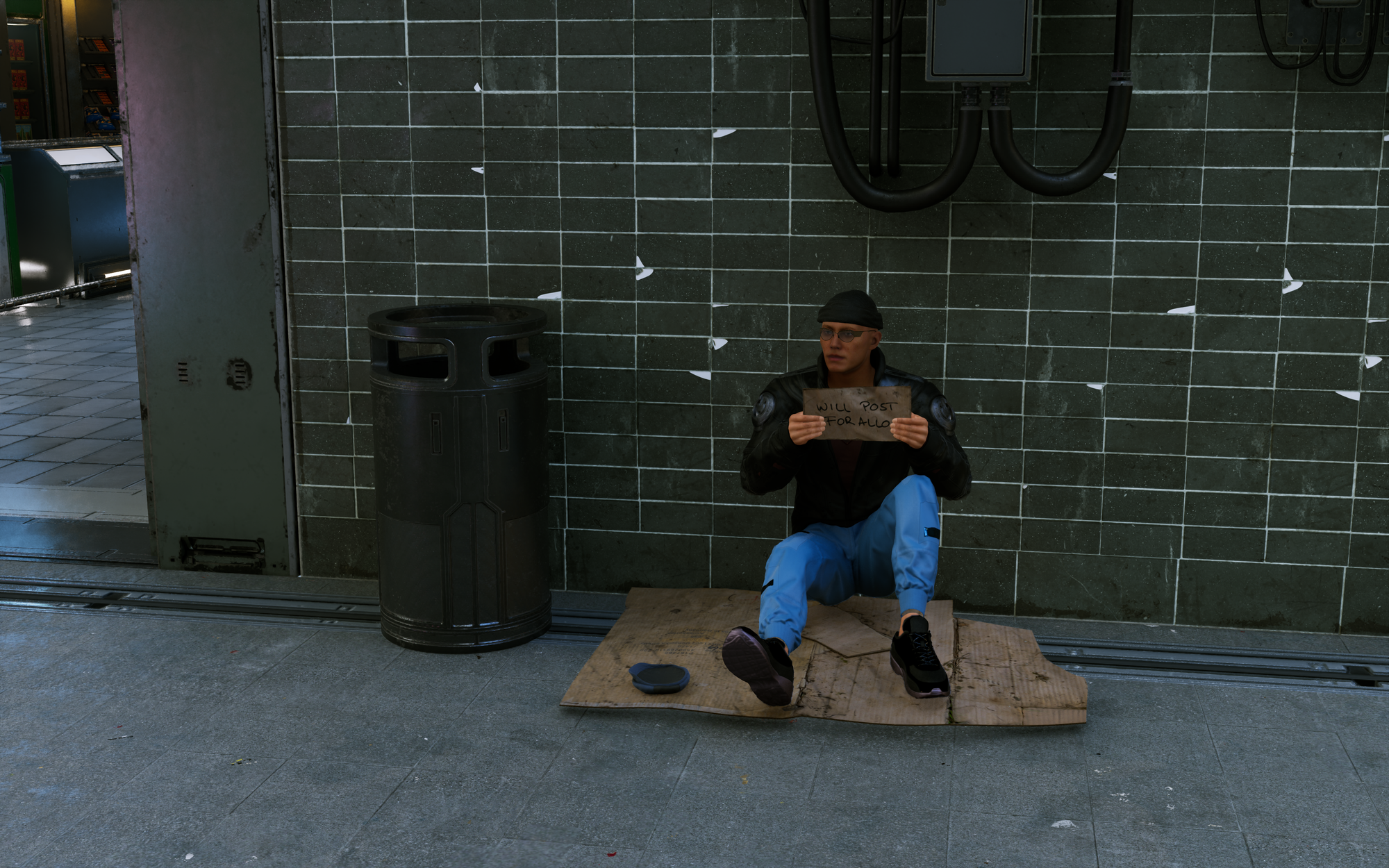
A range of NPC props and environmental assets was developed to support everyday activity across the world. These assets depict routine behaviors such as shopping for essentials, using personal devices linked to Wiami socials, and consuming food items like Hot Fresh Noodles.
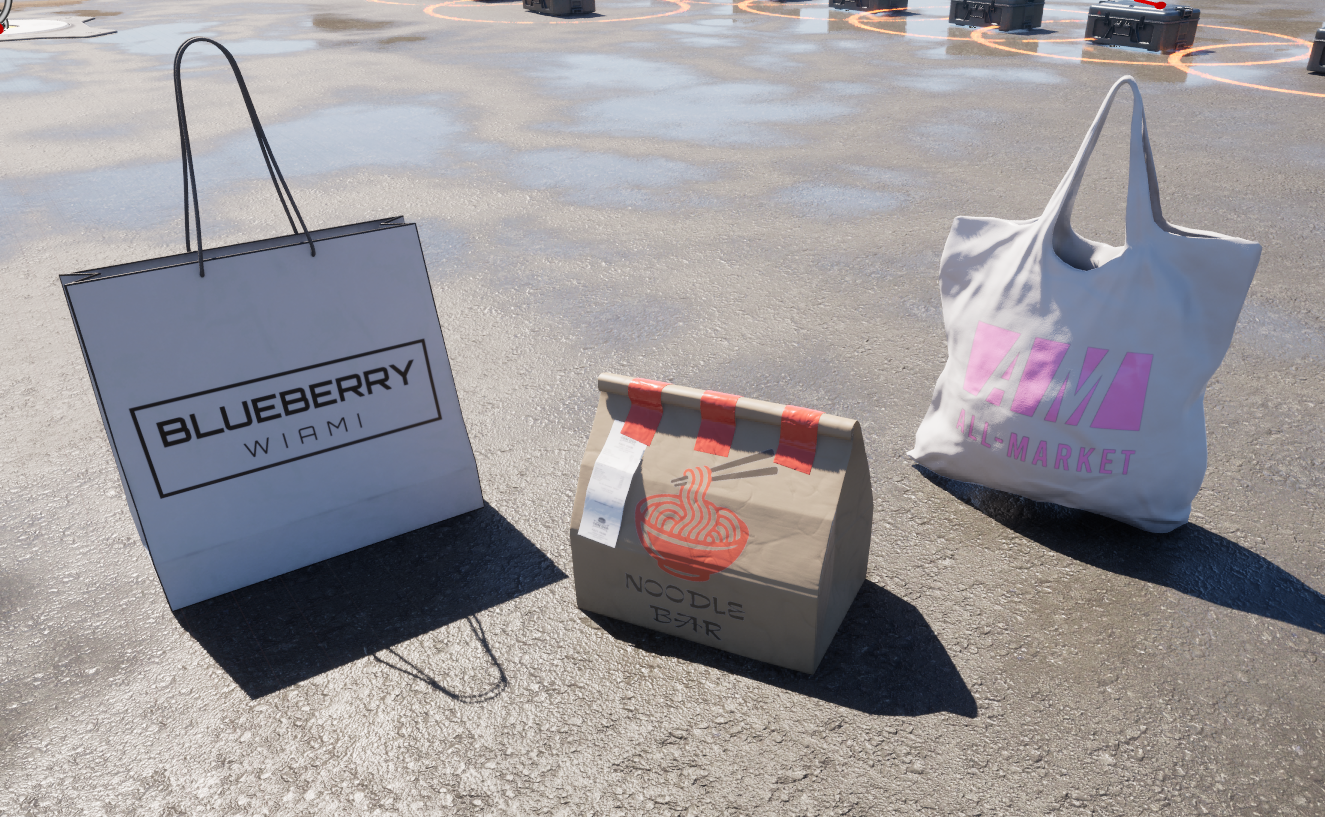

Not everyone is thriving! Additional props represent NPCs in more difficult circumstances, introducing contrast across different areas of the city. Together, these assets support environmental storytelling by presenting varied slices of daily life, from routine activity to moments of personal hardship.
Rooftop Prop Redesigns
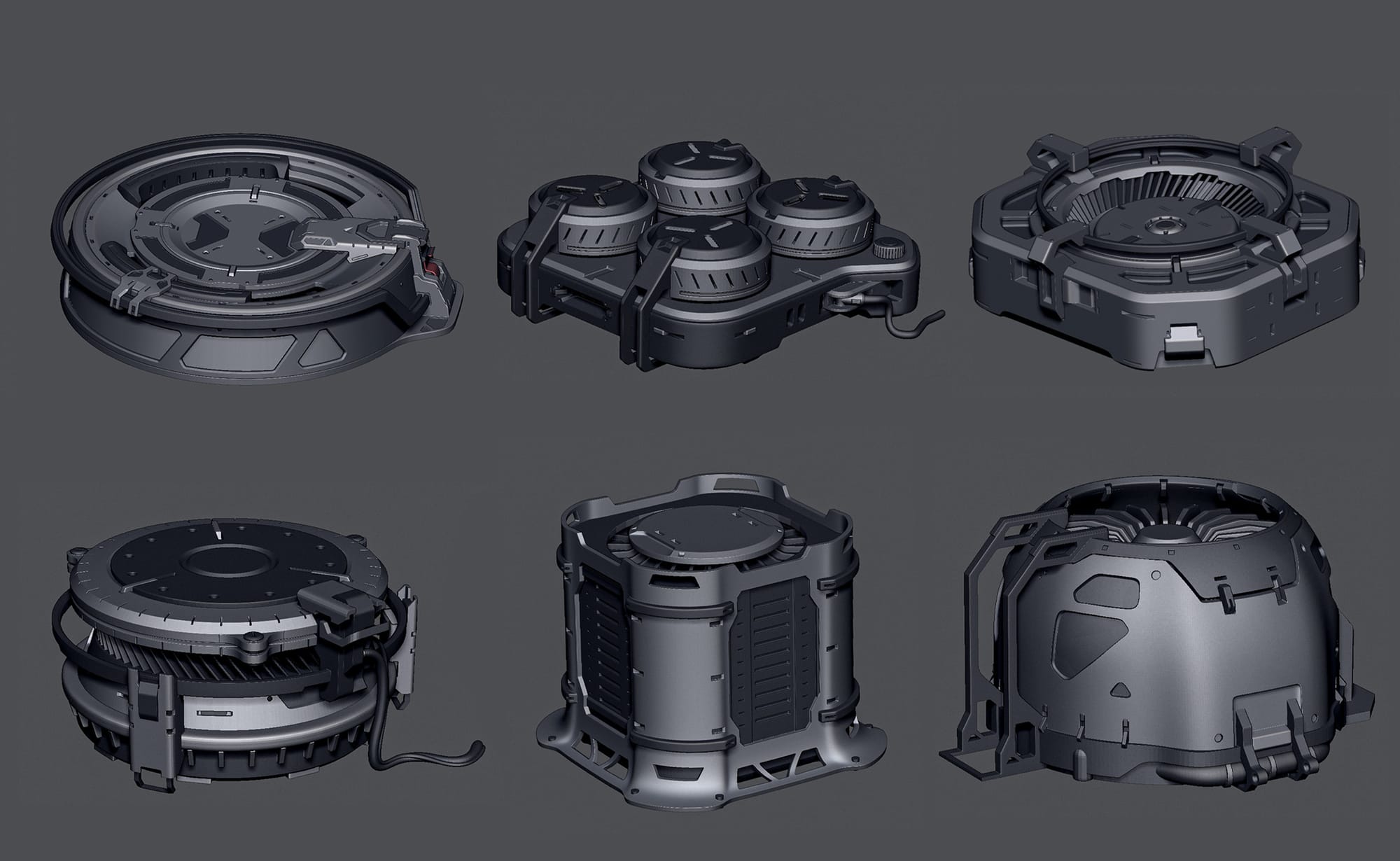
Rooftop environments across the city were redesigned to meet the same visual and structural standards as street-level spaces. These areas, while less frequently encountered, are treated as fully realised environments rather than background geometry.
The redesign includes updated mechanical assets such as AC units, structural elements, and contextual props that support environmental storytelling. Together, these additions ensure rooftop spaces remain visually coherent, functionally believable, and consistent with the broader urban environment.
Abris Shotgun
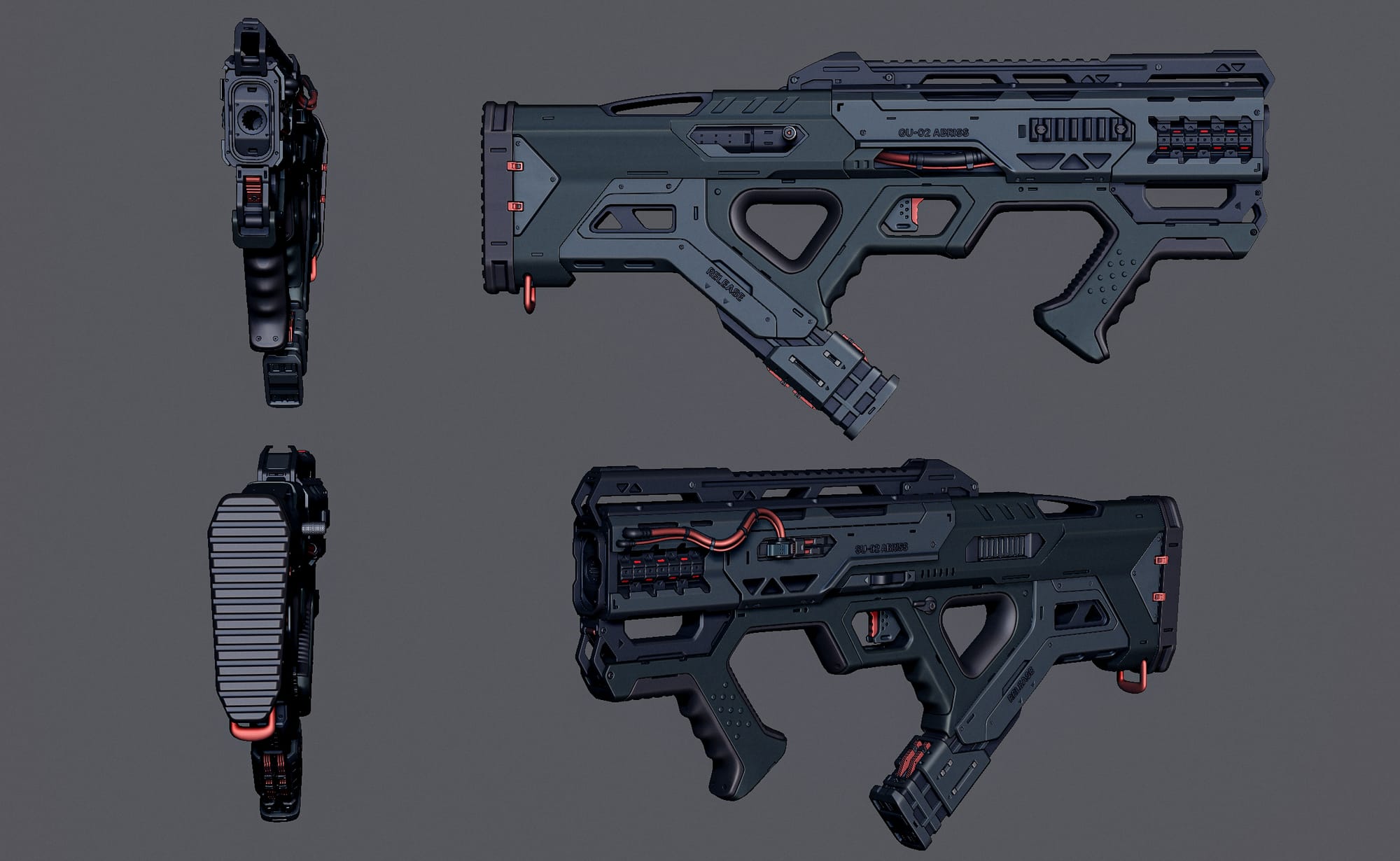
The Abris is a semi-automatic, magazine-fed shotgun concept designed for close-quarters combat. It uses a hybrid 12-gauge plasma buckshot system that combines ballistic projectiles with energy-based components, increasing impact force and penetration.
The weapon is built to military-grade specifications, with internal systems designed to support consistent firing and operational reliability under demanding conditions. Advanced materials are used to balance durability with handling and control. The Abris represents an exploration of hybrid ballistic–energy weapon design within the current arsenal.
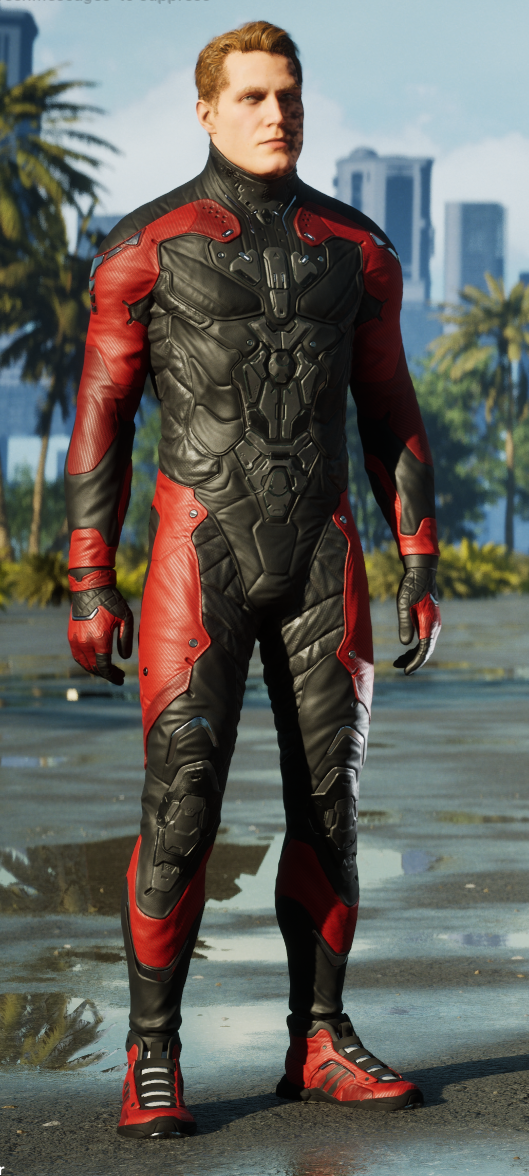
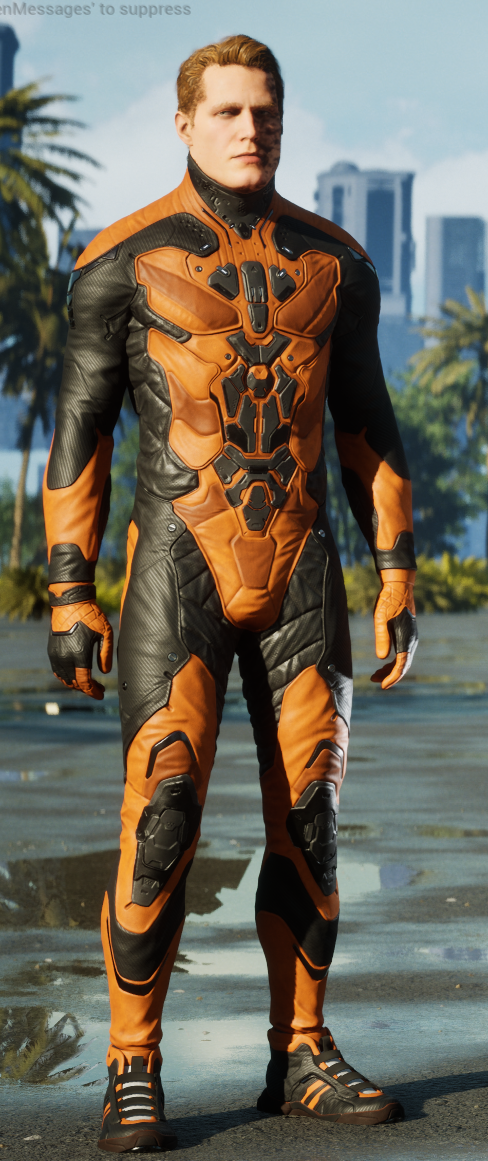
Trinity MK2 Undersuit
The Trinity MK2 Undersuit is a base-layer garment designed for use beneath Trinity armour systems. It is constructed from breathable technical materials intended to support performance in demanding conditions while maintaining flexibility during extended use.
The undersuit features refined construction and precision-finished surfaces, serving as the primary foundation layer before full armour is equipped. It functions as a core component of the Trinity system, providing structural and material support at the base of the loadout.
SYSTEMS
Mission Design Framework
A new Mission Design Framework was introduced during this development cycle to support the creation of player missions with a wide range of objective types. These include location-based objectives, enemy elimination, environmental destruction, and item collection.
The framework is fully data-driven, using simple data inputs to define mission structure. It automatically manages mission state, tracks relevant actors and items, displays objective markers when required, and triggers associated UI notifications and audio cues. This system standardises mission behavior while supporting flexibility and scalability across different mission designs.
Breach Mode
Breach Mode is a procedural open-world game mode introduced for the first open-world demo release. In this mode, breach portals spawn at random locations across the city, allowing Forum Agents to enter and attempt to take control of strategic areas.
The objective is to eliminate all agents emerging from each portal and close every active breach. The mode is designed to generate dynamic encounters across the open world, with further expansion planned to introduce additional threats, mechanics, and rewards.
Datapad Item
A new Datapad item was added to support the display of mission information and the presentation of lore content. The Datapad is used to surface objectives, updates, and written narrative elements during gameplay.
Showroom Level
Design experimentation began on a new level intended for inspecting player loadouts. The space is being explored as a dedicated environment where equipment, weapons, and vehicles can be viewed together outside of active gameplay.
Aim Behavior While in Cover
Aim behavior while in cover was revised to address issues caused by the automatic weapon holstering system. The holstering logic, originally introduced to prevent weapons intersecting with walls or nearby characters, could leave players unable to immediately return to an aiming stance without manually re-aiming or firing. This interaction also suffered from slow transition timing between holstered and aiming states.
The updated implementation automatically unholsters the weapon as soon as the player moves away from the blocking surface. Transition speeds between holstered and aiming states were increased, and an additional cover interaction was introduced, allowing players to enter and exit cover by holding the aim input while crouched behind low cover such as parapets.
Explosives Logic
Explosive damage handling was updated to resolve cases where players were receiving damage despite being protected by cover or positioned on different floors. The issue stemmed from insufficient checks determining whether a player should be affected by an explosion.
The logic was refined to more accurately evaluate line-of-effect and spatial separation, ensuring damage is only applied when appropriate. This update functions consistently across all explosive types, including fast-moving projectiles such as RPG rounds.
Grenade Throw Improvements
Grenade collision handling was adjusted to resolve cases where grenades were interacting with invisible collision volumes. The collision mode was updated to prevent unintended impacts during throws.
The throwing logic was also refined to ensure grenades are launched from the character’s hand position. This allows grenades to be thrown correctly while the player is in cover, including when crouched behind parapets.
Weapon Melee Improvements
Weapon melee logic was updated to improve reliability during lunge-based attacks. Previously, the attack was triggered at the start of the lunge, which could cause missed hits if the attacker had not yet reached the target.
The revised logic triggers the melee attack once the attacker is within close range of the enemy. This ensures the attack connects more consistently during lunge events.
NPCs
New non-player character (NPC) systems have been integrated into the open world to support population, interaction, and ambient activity.
An interaction system was implemented for both players and NPCs, allowing interaction with shared world objects. These objects can be claimed while in use, preventing simultaneous interaction by multiple avatars and ensuring consistent behavior during animations and actions.
A range of animated world interactions and general NPC behaviors were added to populate the environment and support everyday activity across the city.
NPC density is adjustable through graphics settings, allowing higher crowd density on high-end hardware and reduced density on lower-end systems to maintain performance.
Clothing
Character customization was expanded to support per-armour-piece configuration. Individual components can now be swapped independently, including the undersuit, helmet, chest, pelvis, and left and right variants of shoulder pads, forearms, gloves, thighs, calves, and boots. This system allows armour sets to be mixed and matched across components rather than treated as a single fixed outfit.
Service droids also received a range of new clothing accessories for use as NPCs within the world, adding variation across their appearances.
Networked Interaction Improvements
Several networked interaction systems were refactored to improve reliability for players experiencing higher latency. These updates affect traversal mechanics such as man cannons and teleporters, improving consistency and reducing desynchronization.
AR-AM First-Person Animation Updates
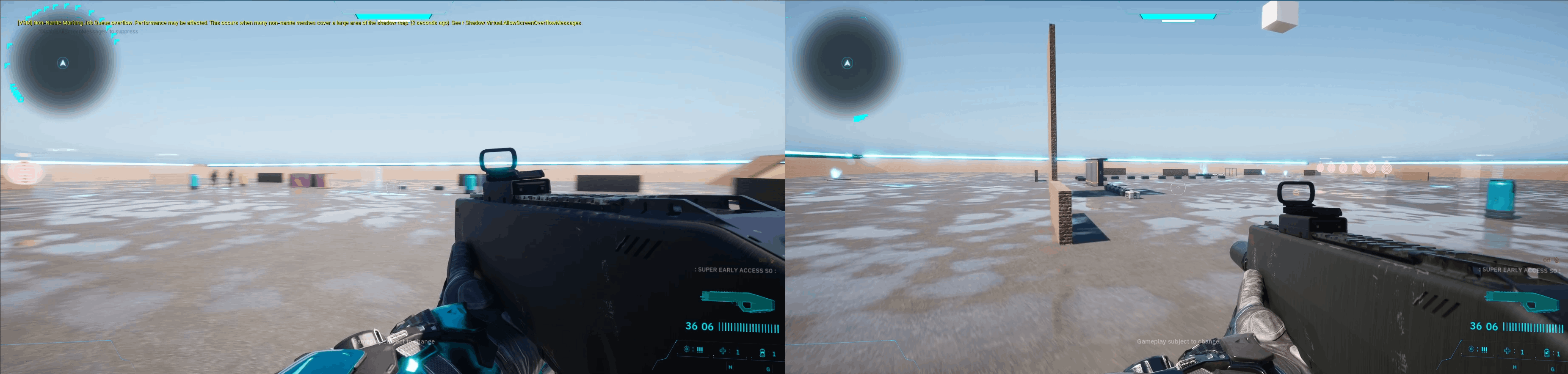
First-person animations for the AR-AM were updated to better align with its current role in the sandbox. The original animations occupied a larger portion of the screen, consistent with power-weapon presentation. As the AR-AM has since been balanced as a standard weapon, its animations were adjusted to follow standard first-person weapon perspective rules, reducing screen coverage and improving visual consistency during use.
Vehicle Entry Animation Improvements
Vehicle entry systems were expanded to support passenger-side entry for both drivers and passengers. Additional transition animations were added to allow movement between passenger and driver seats, improving continuity and consistency during vehicle interactions.

Wheels
Garage Selector
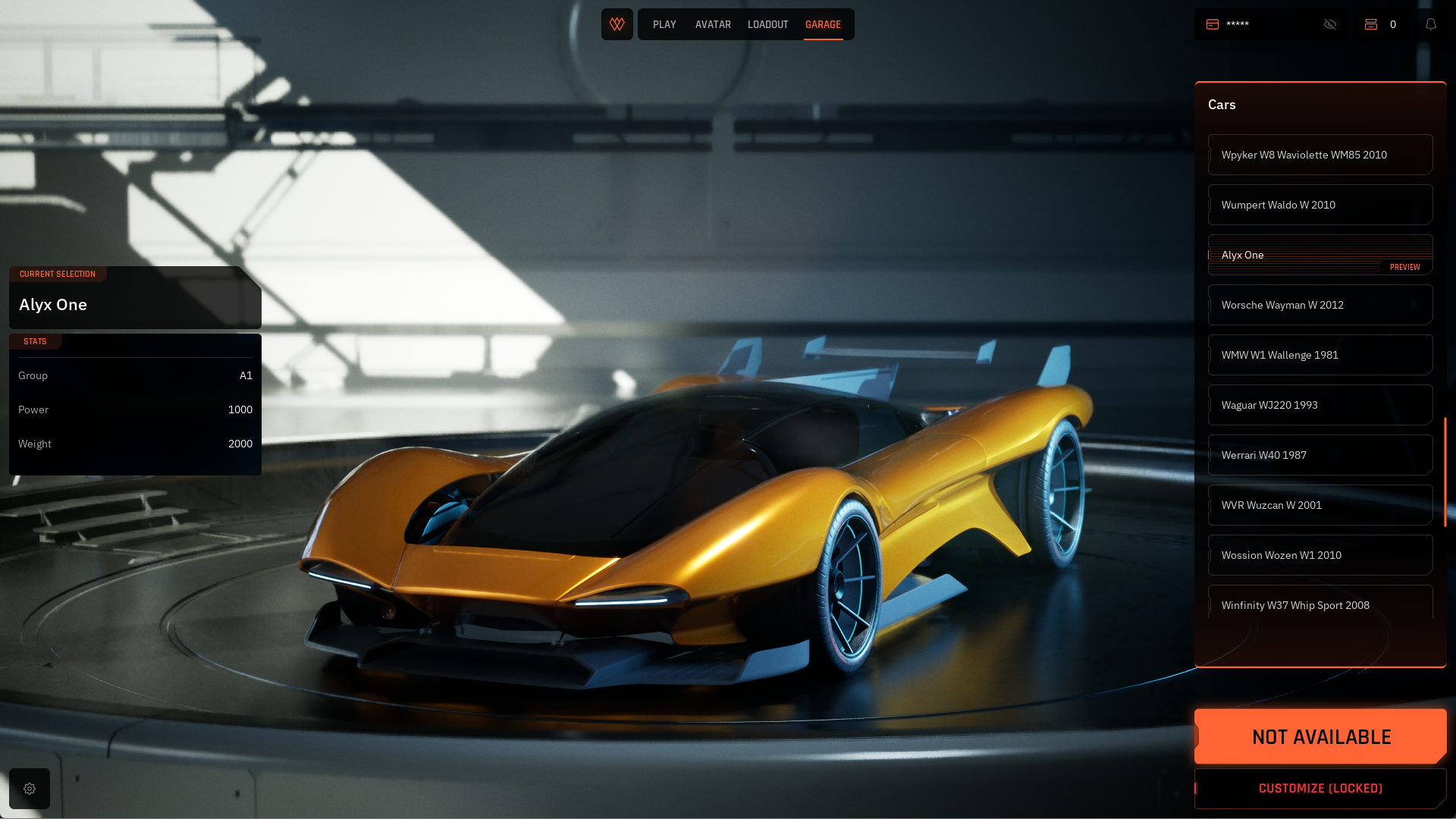
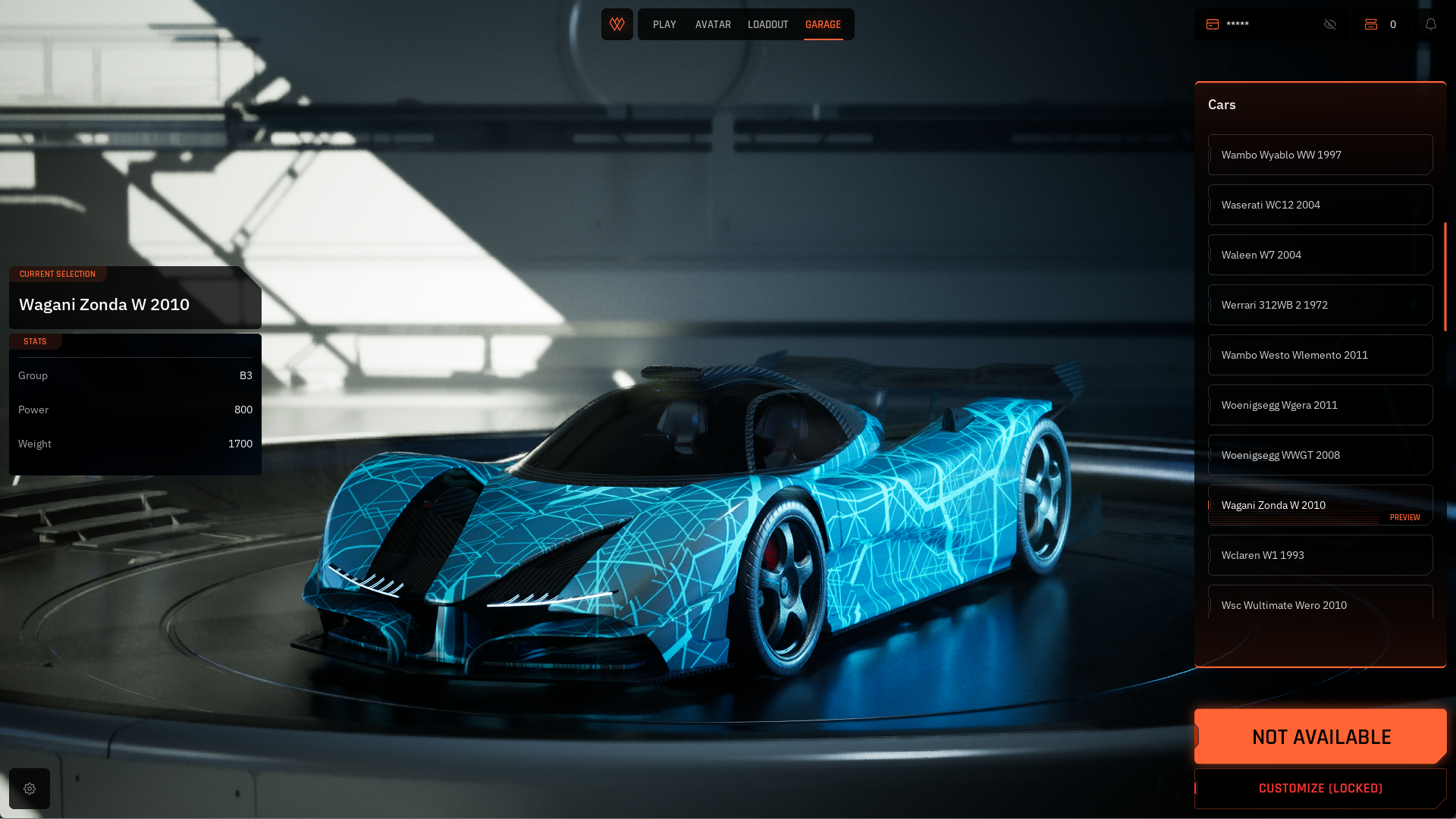
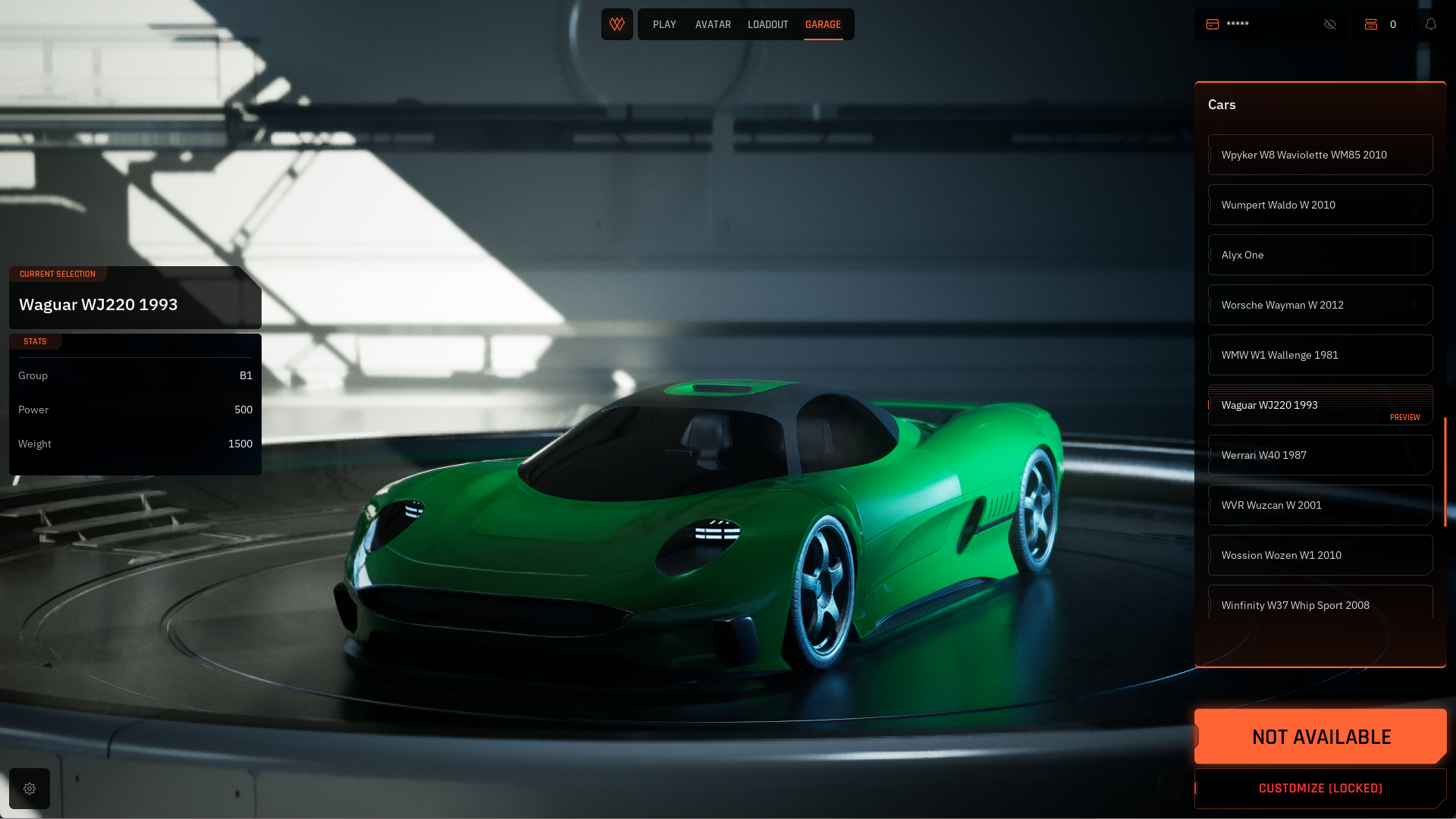
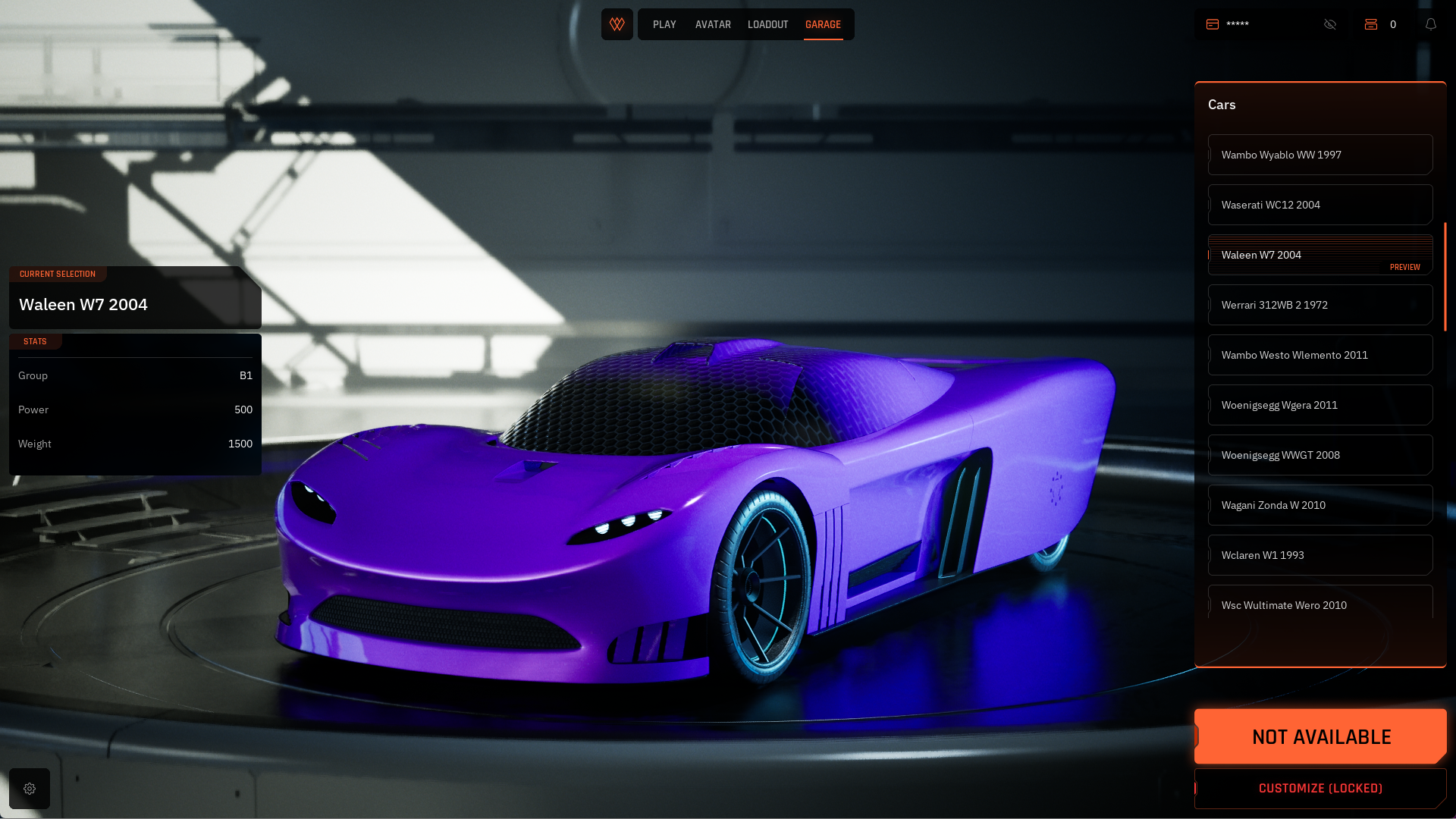
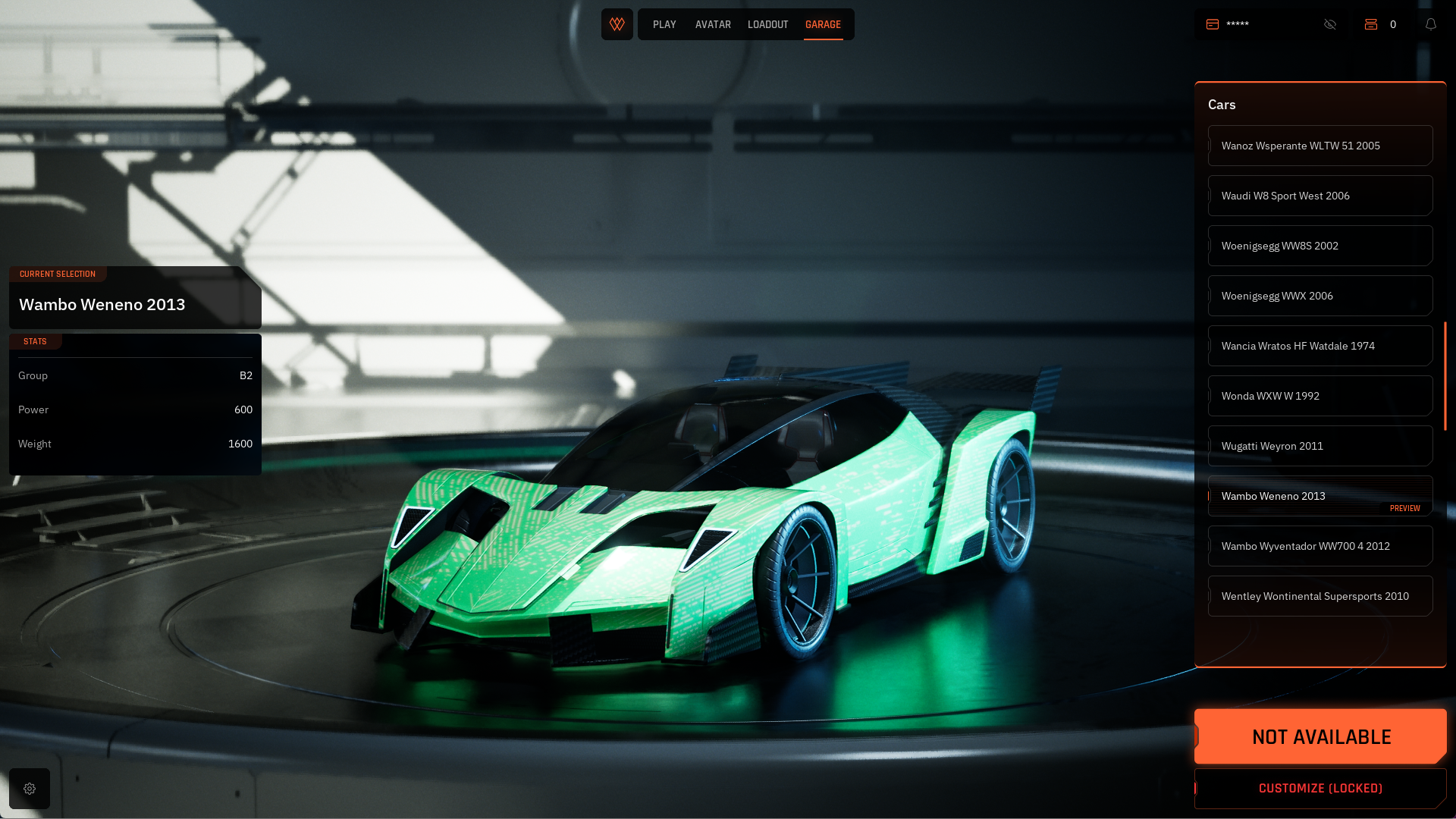
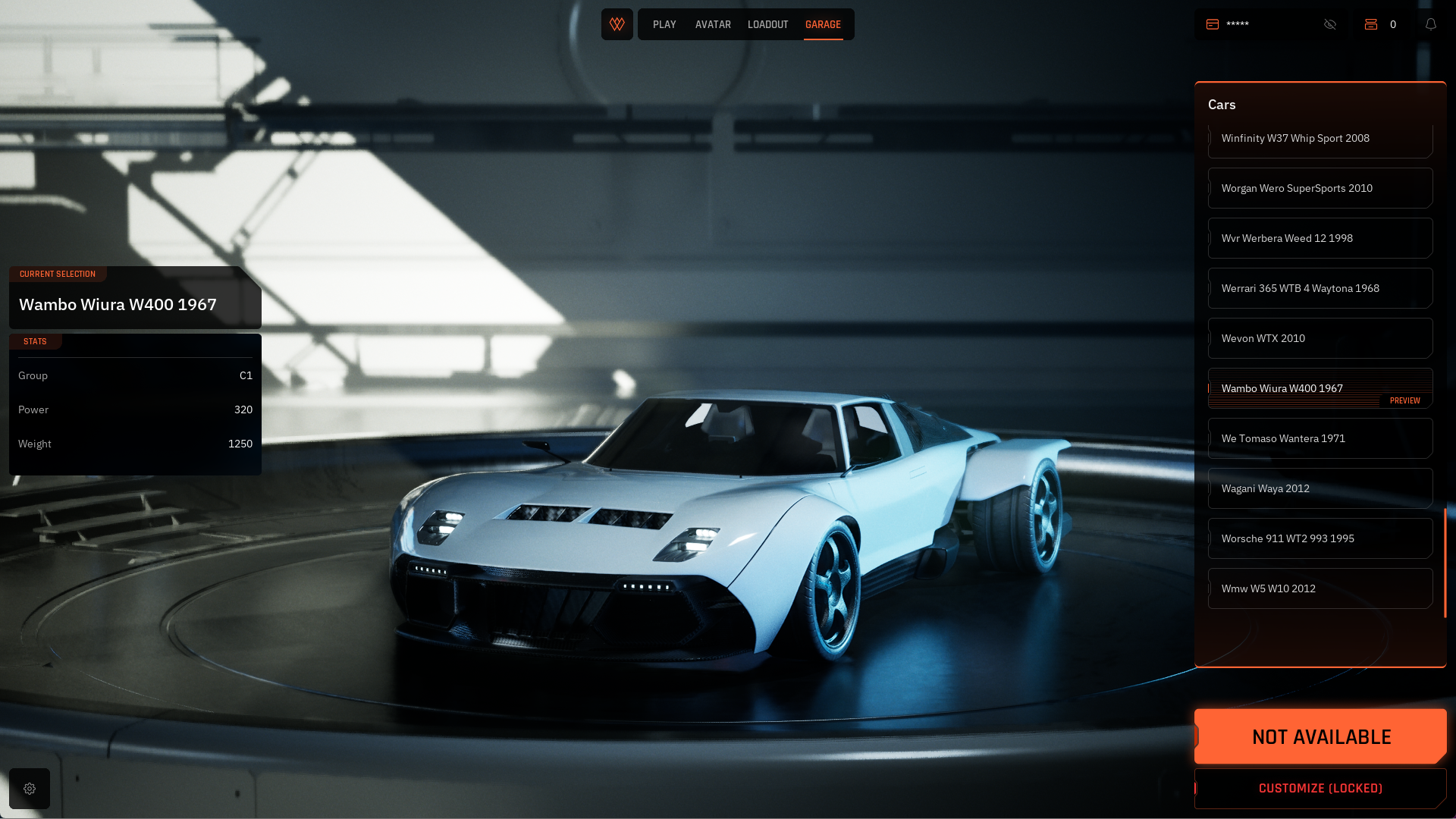
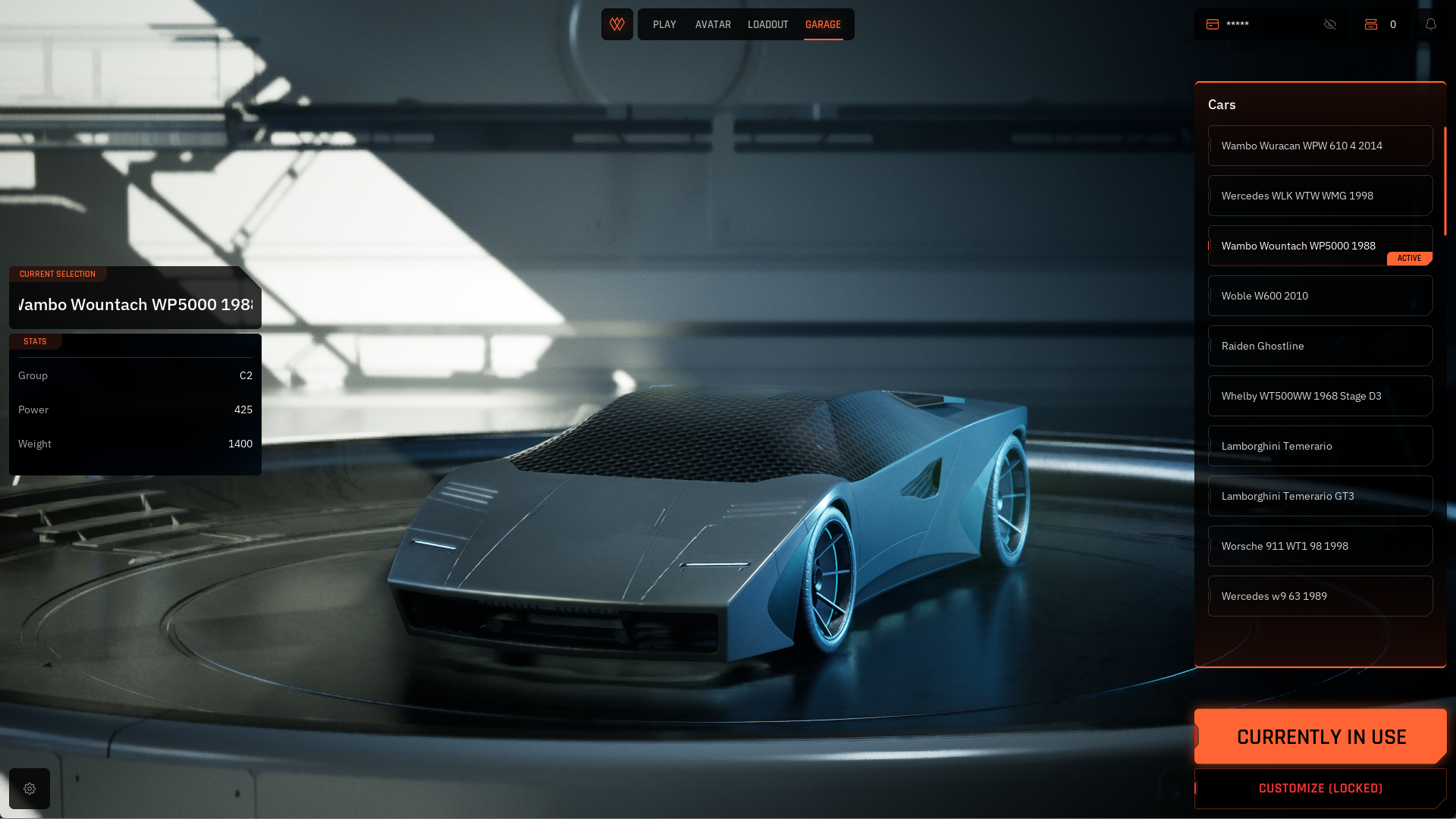
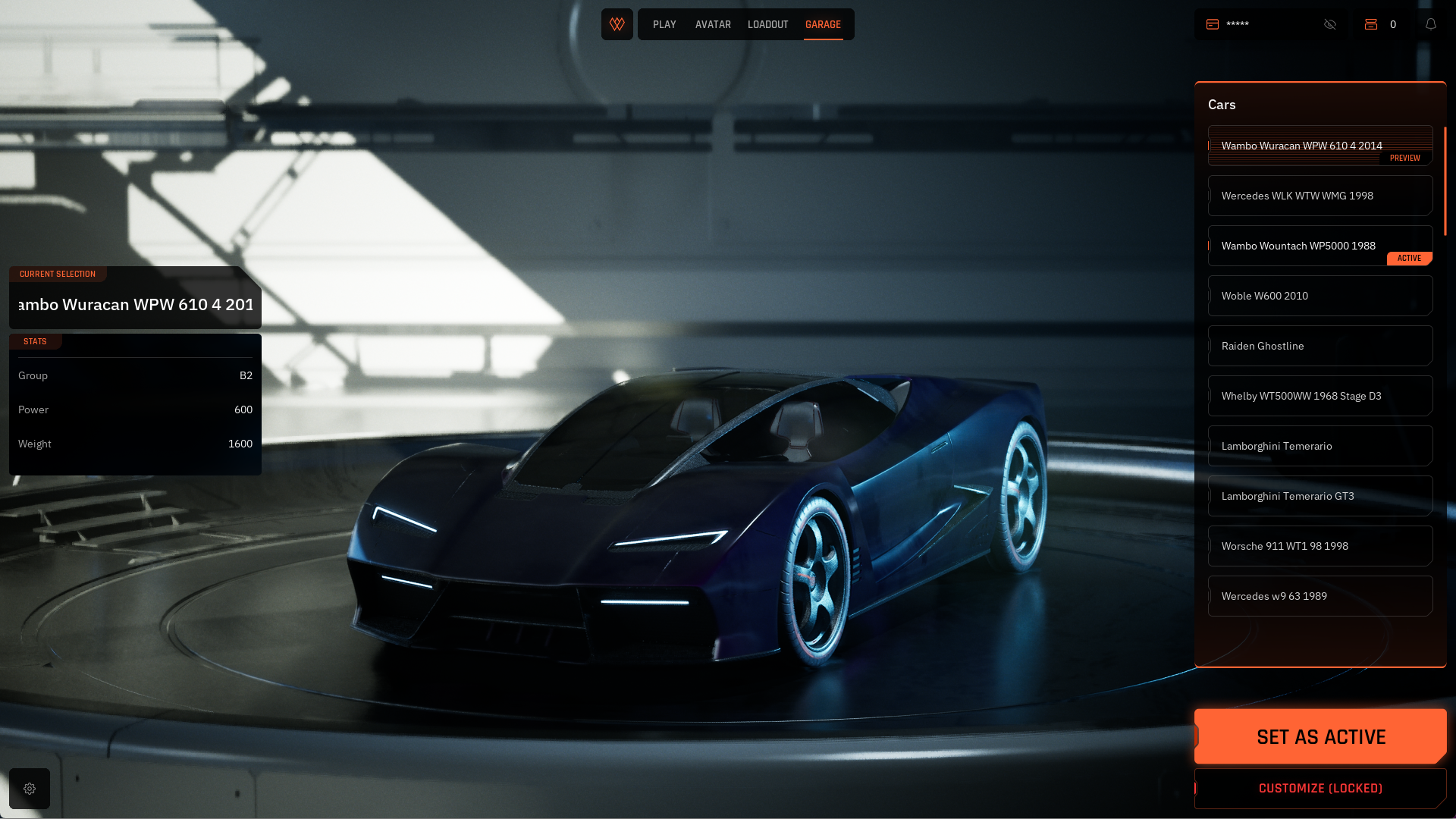
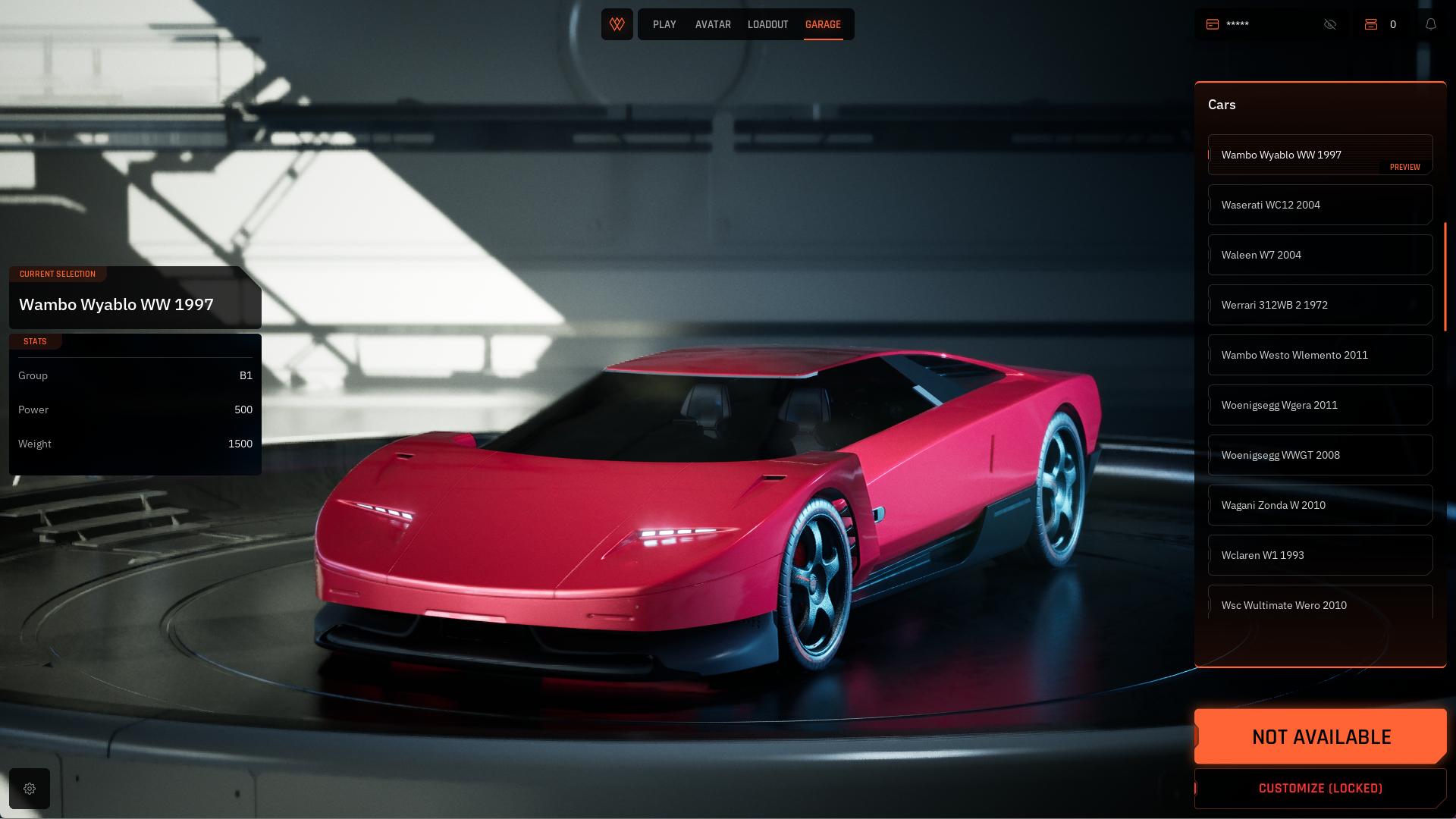
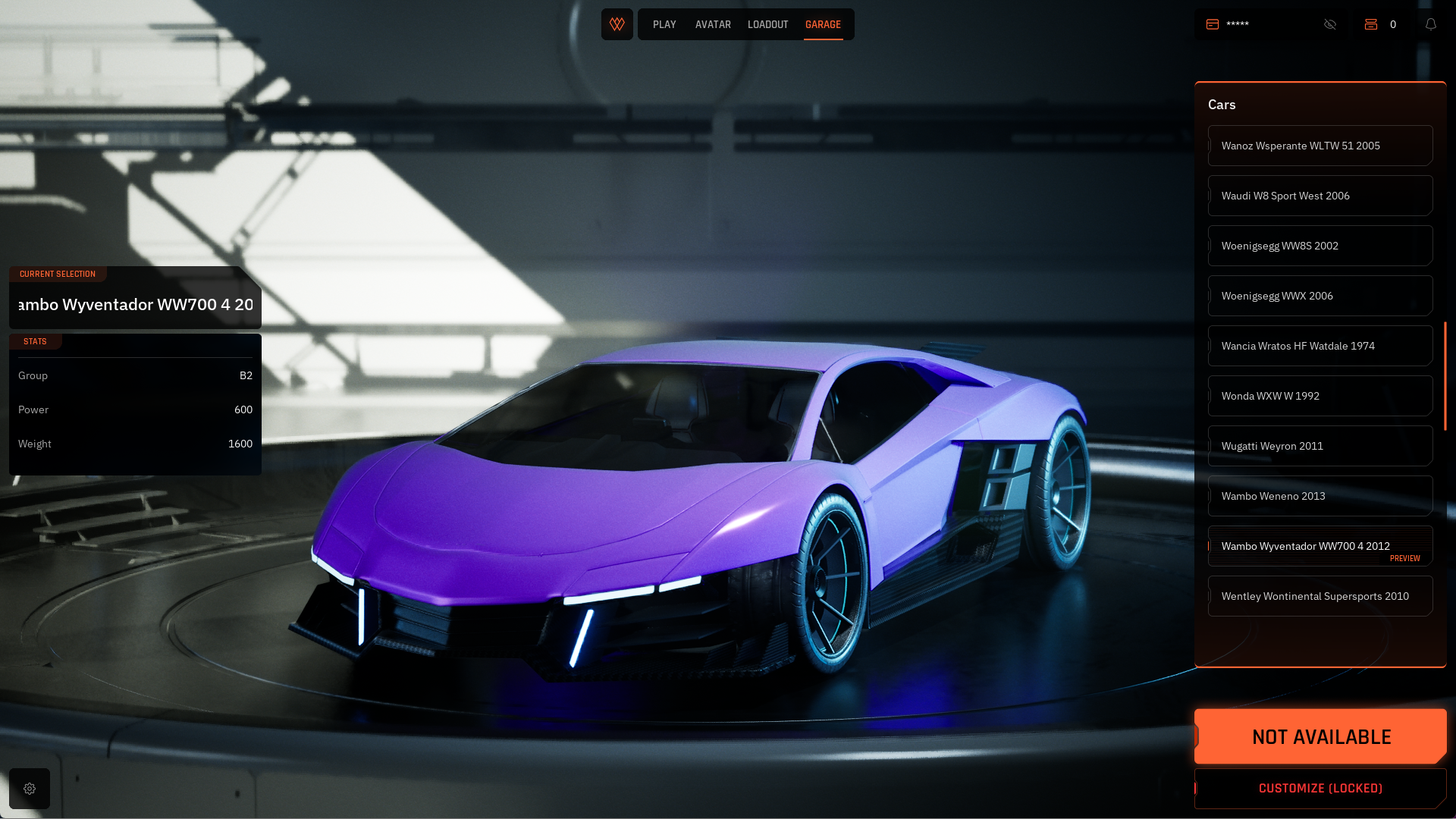
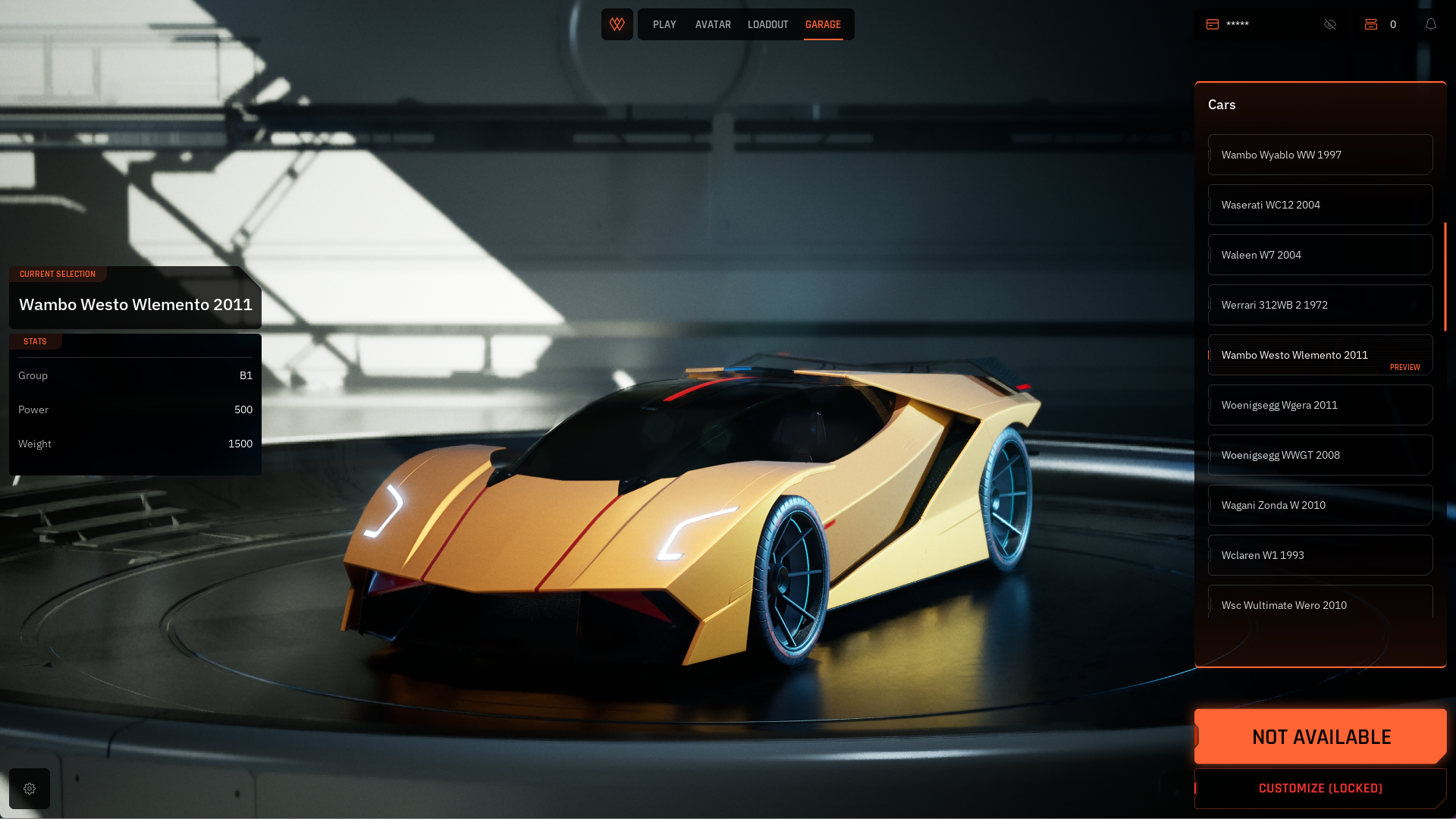
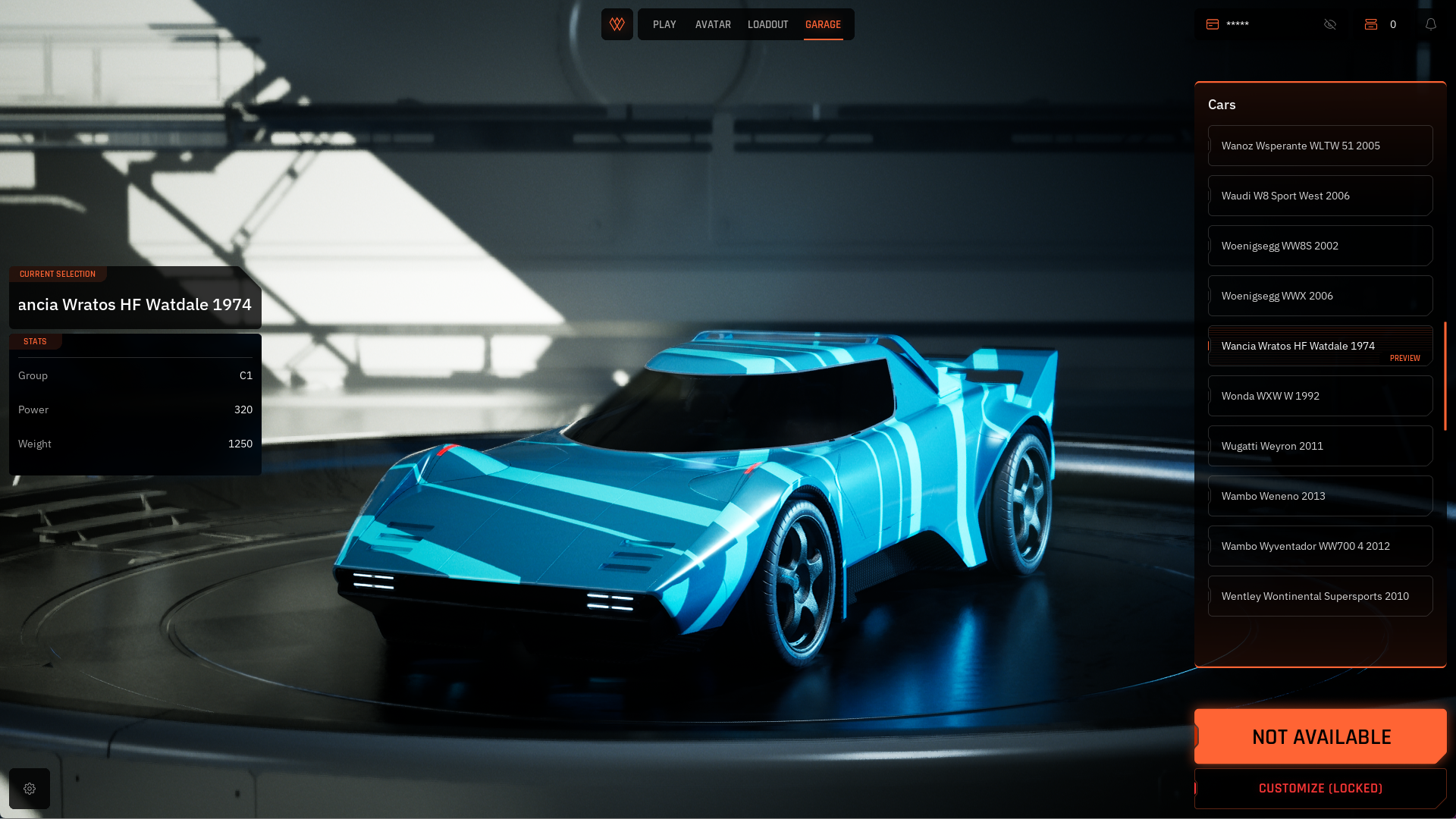
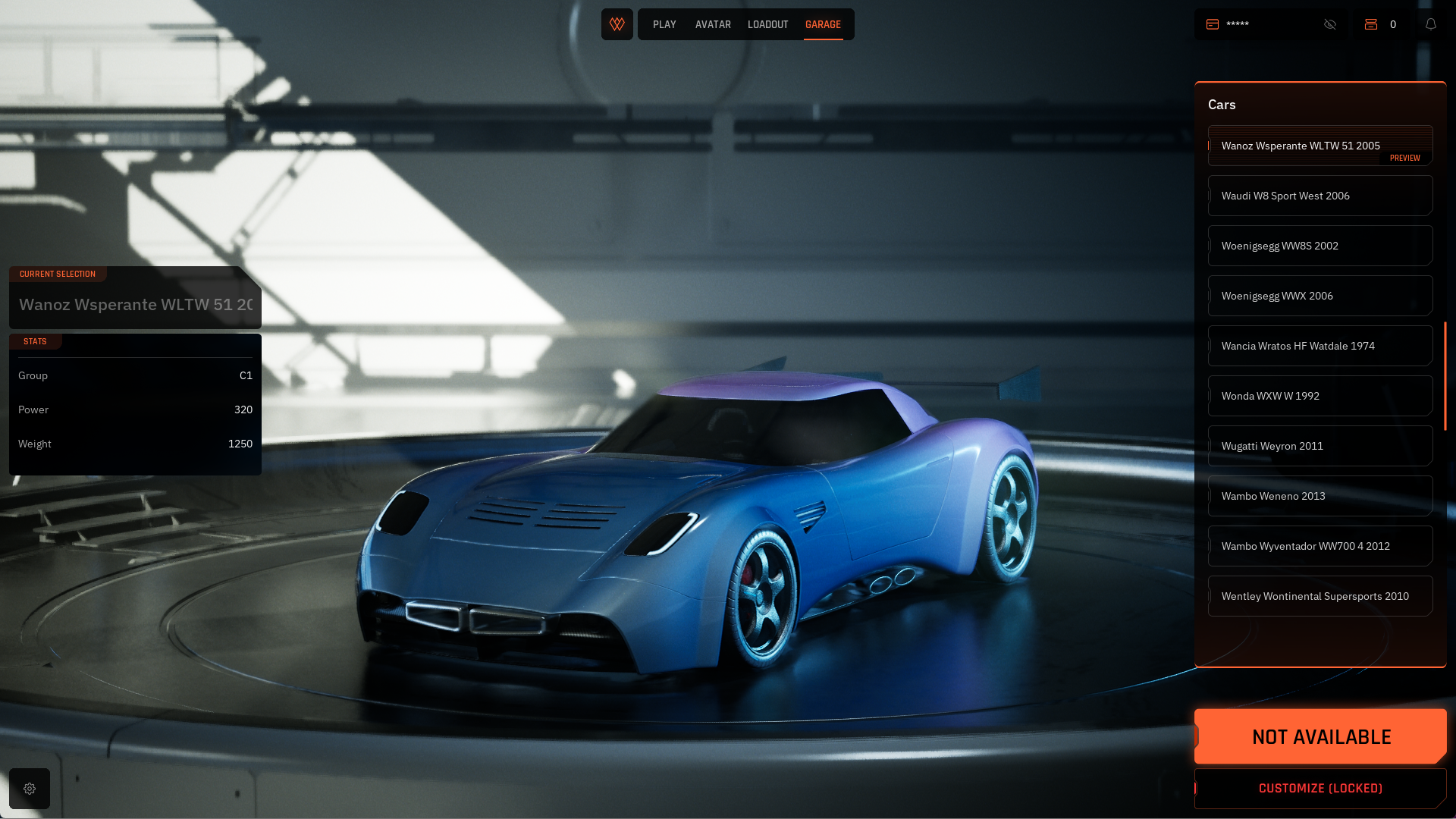
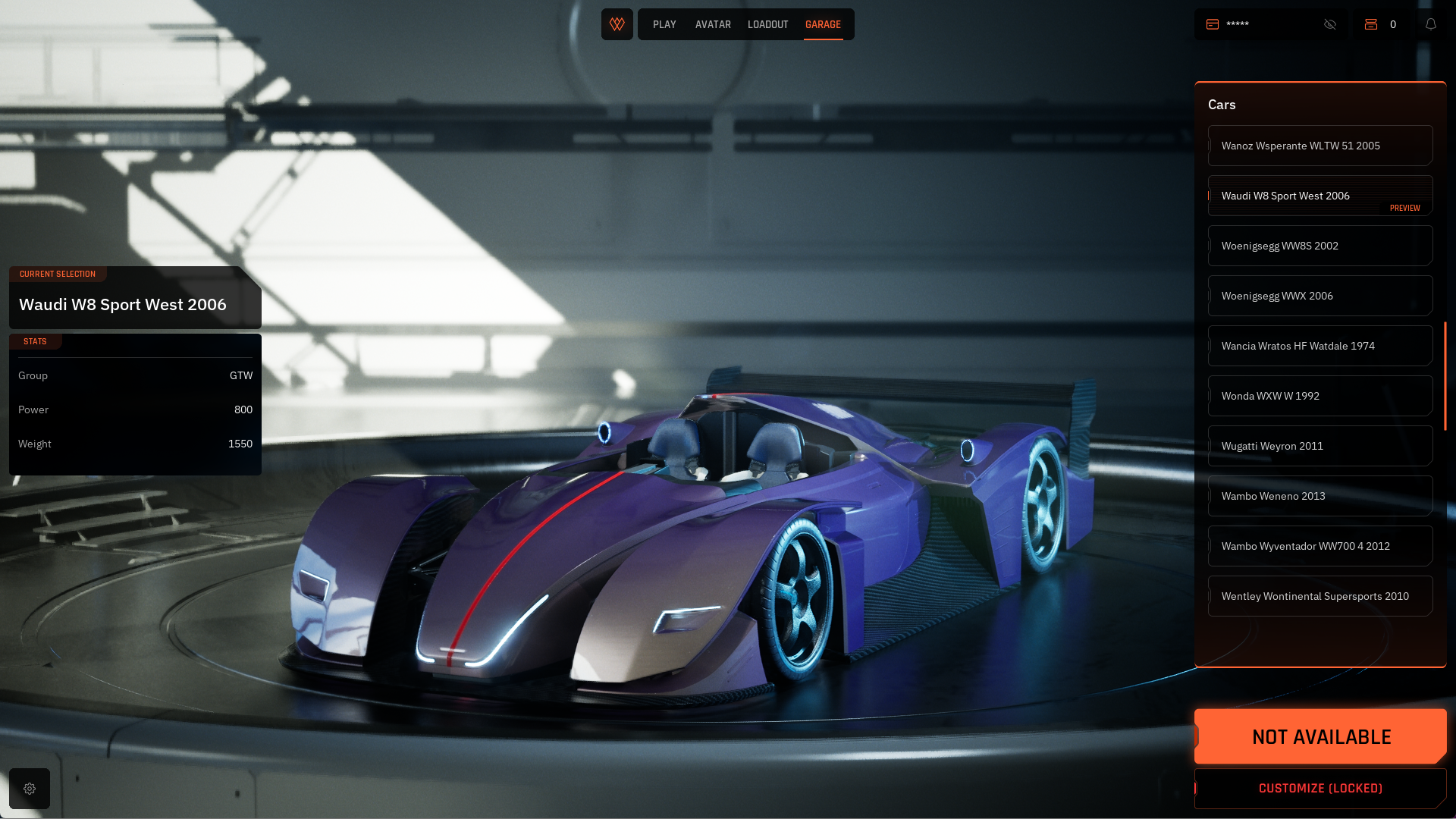
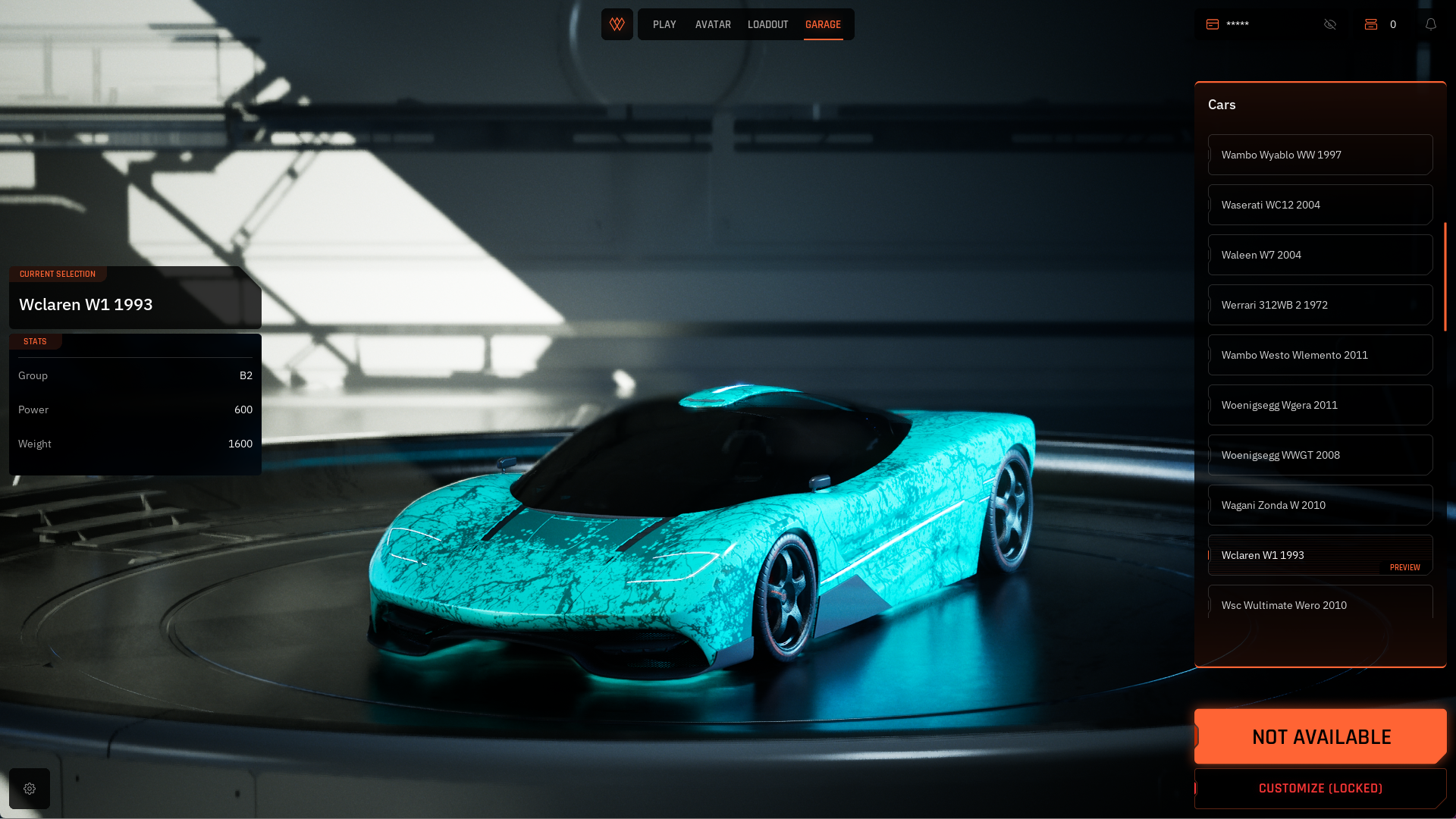
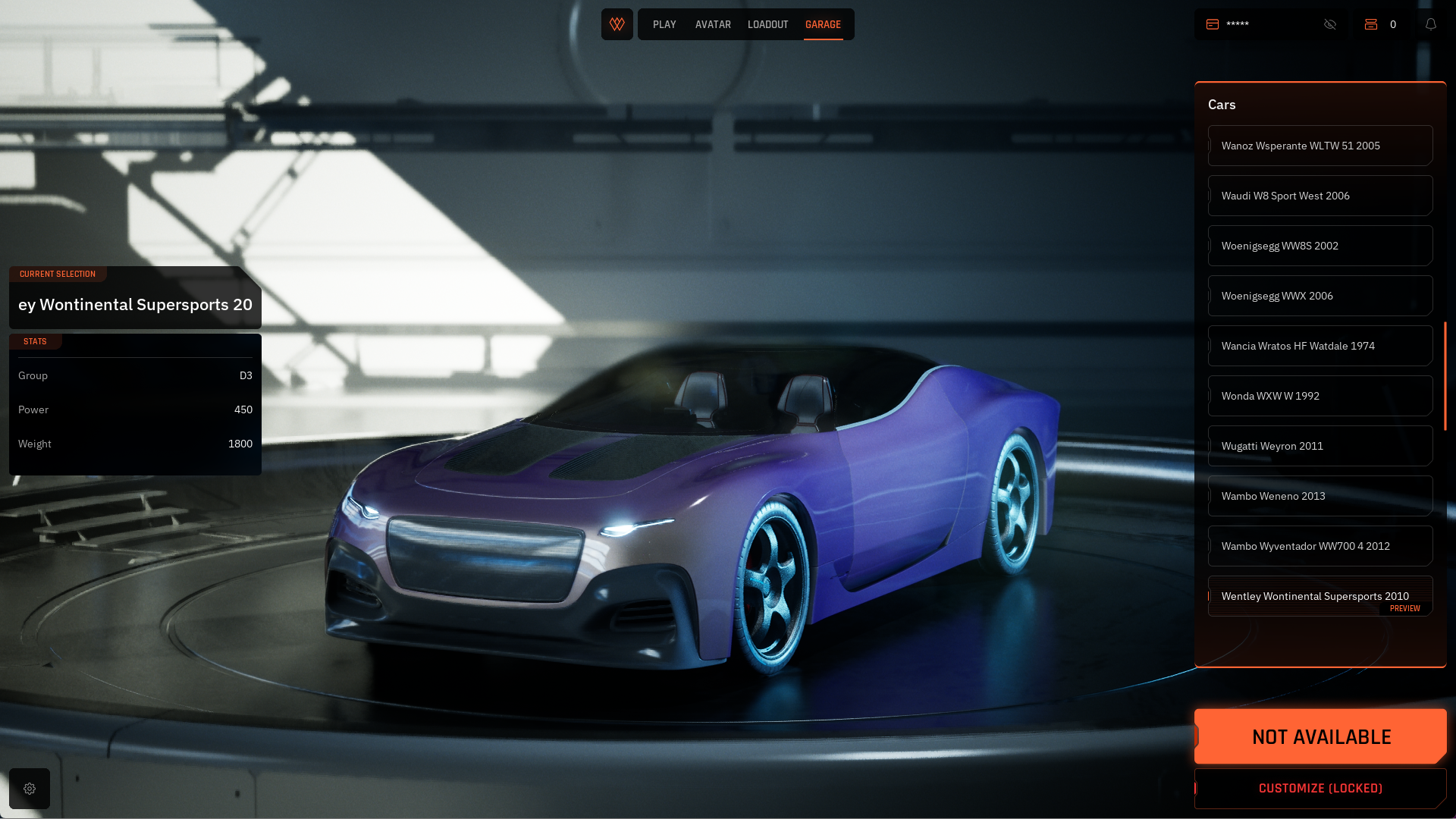
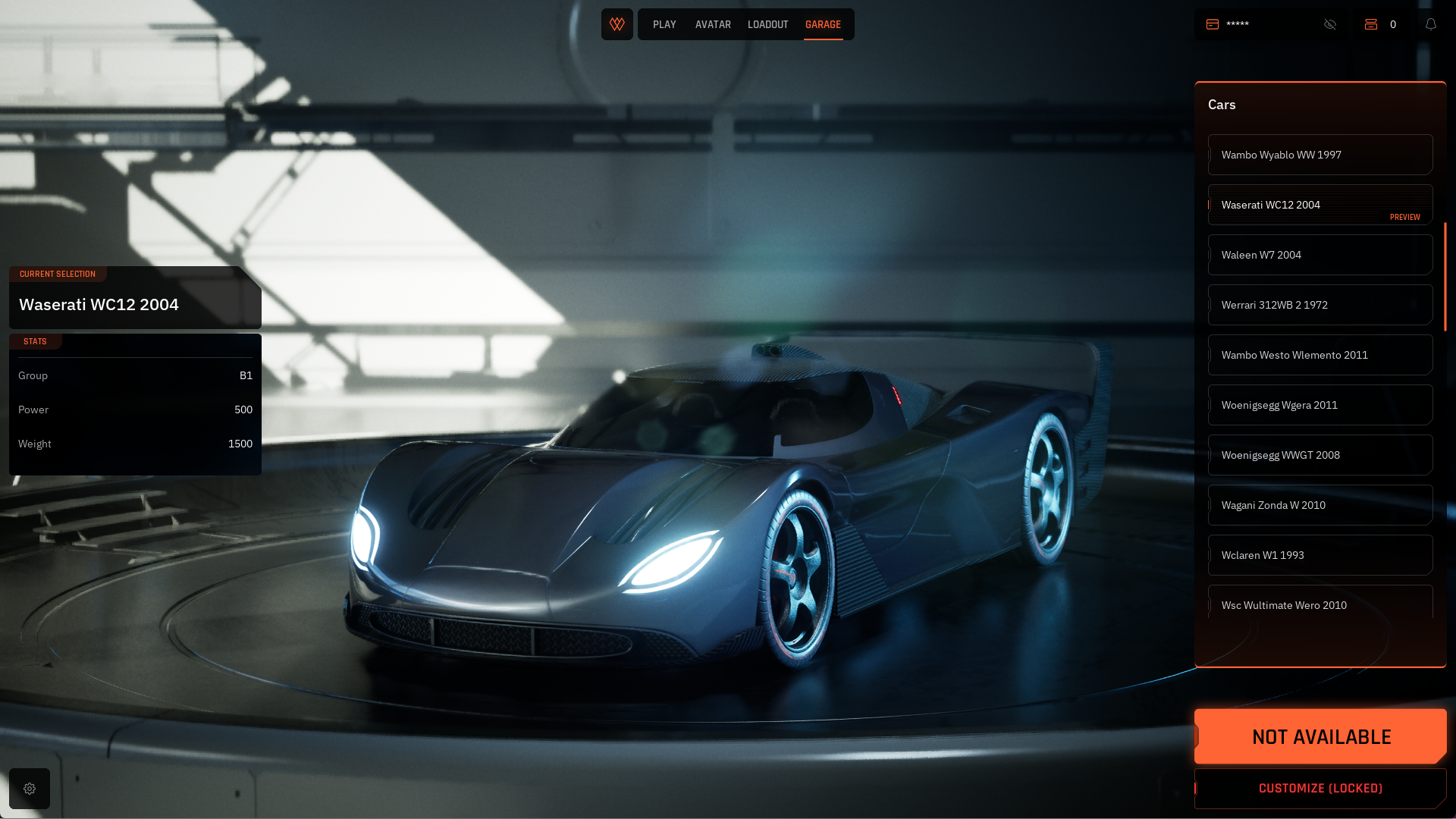
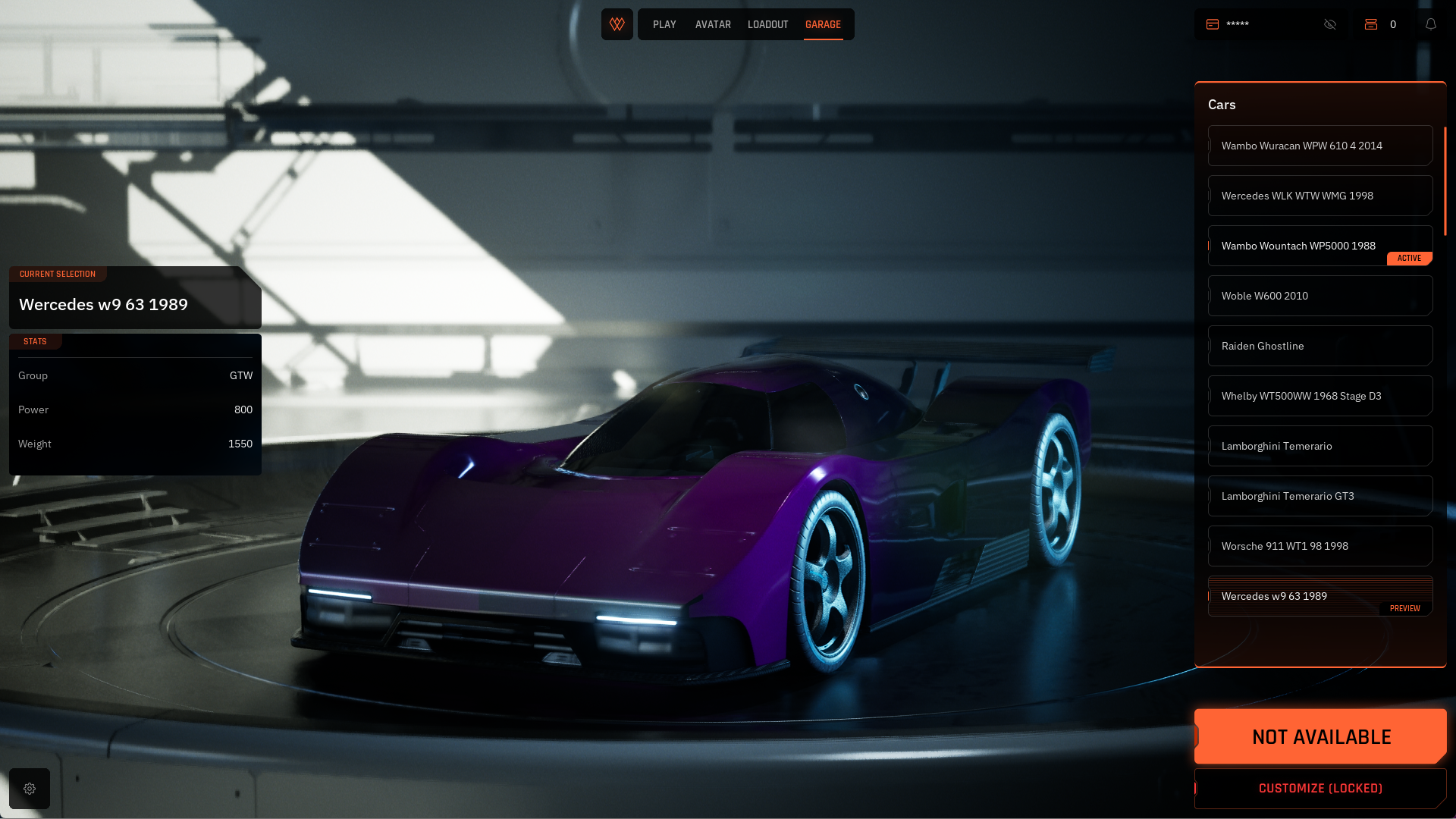
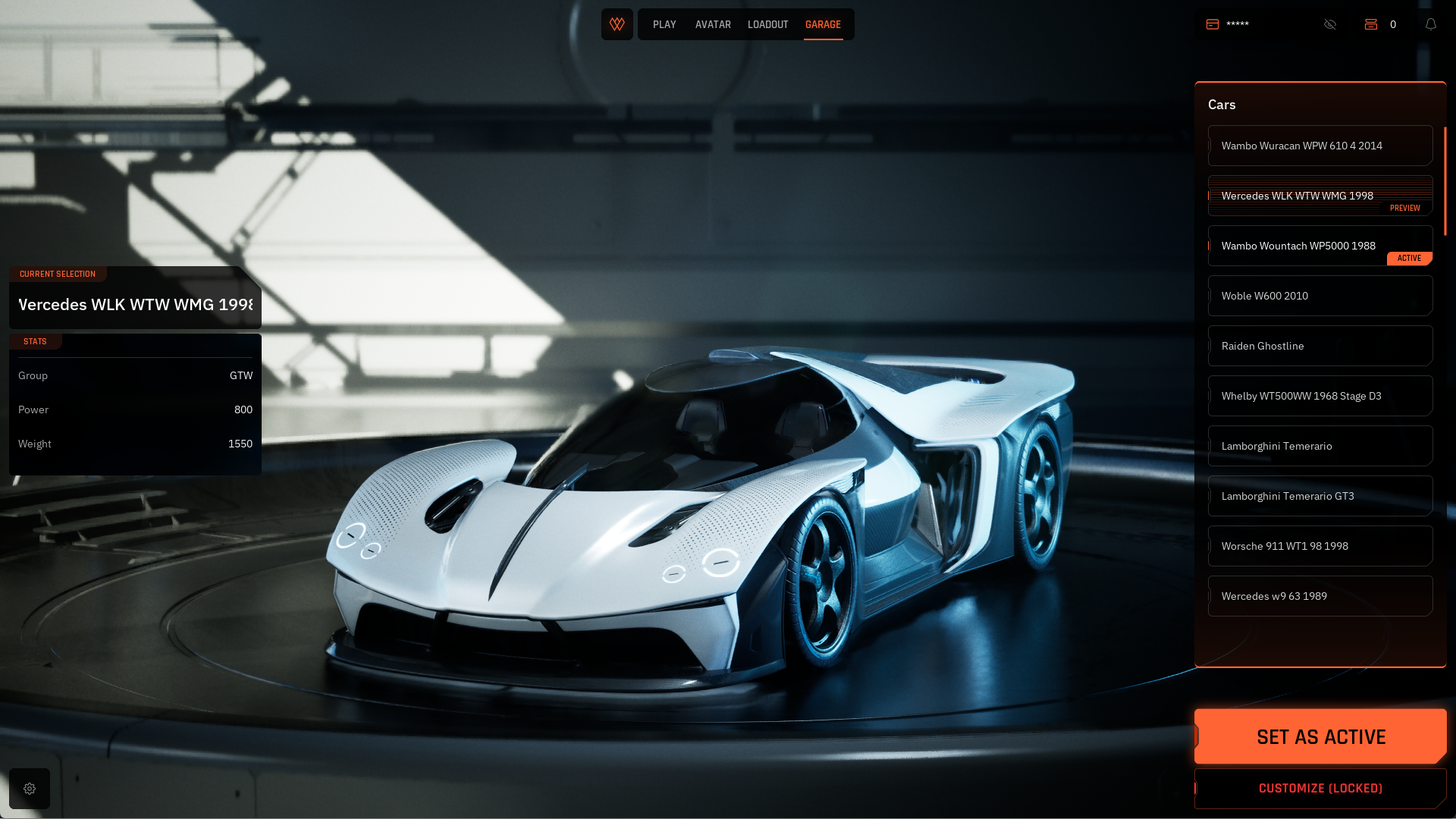
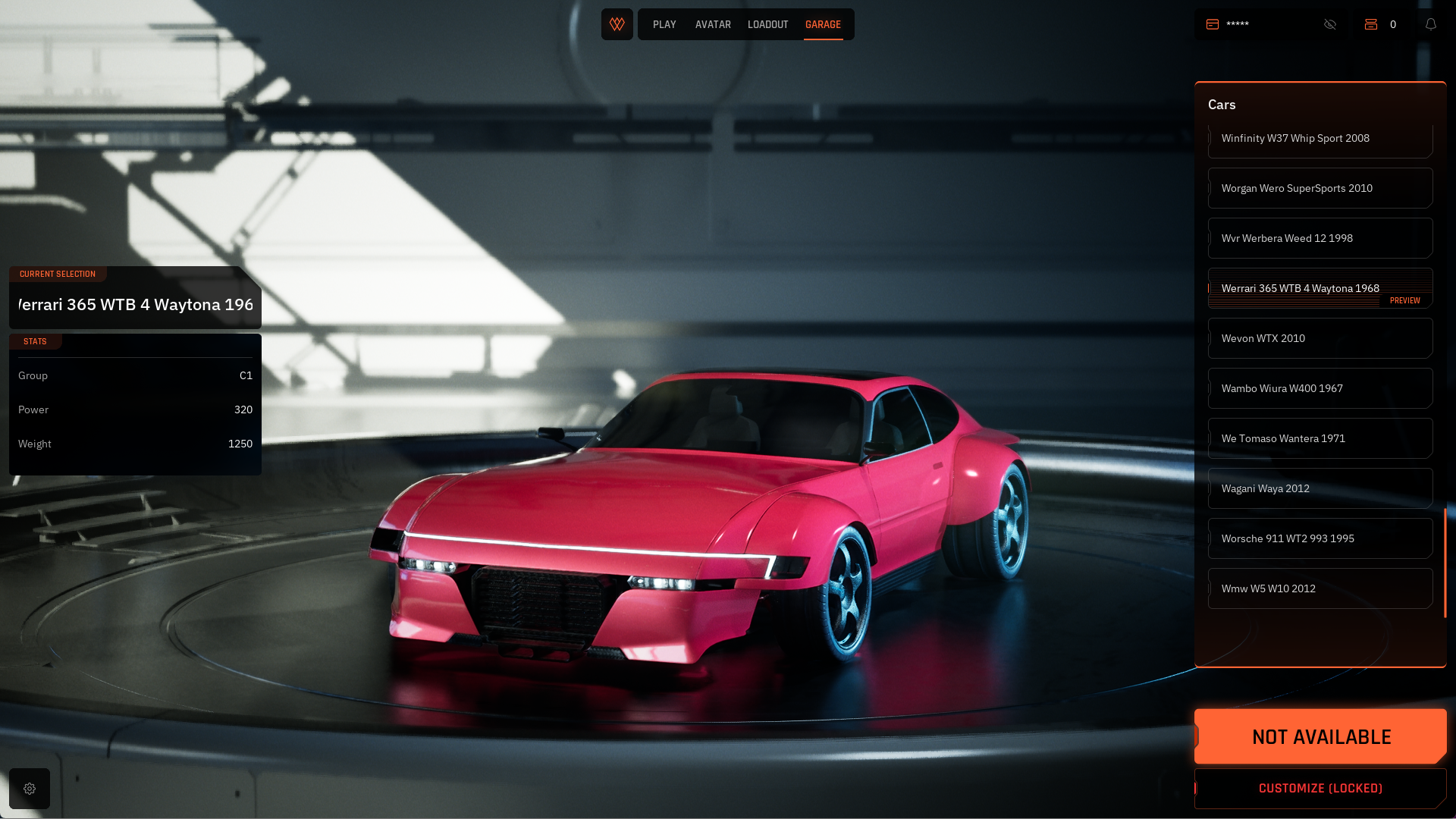
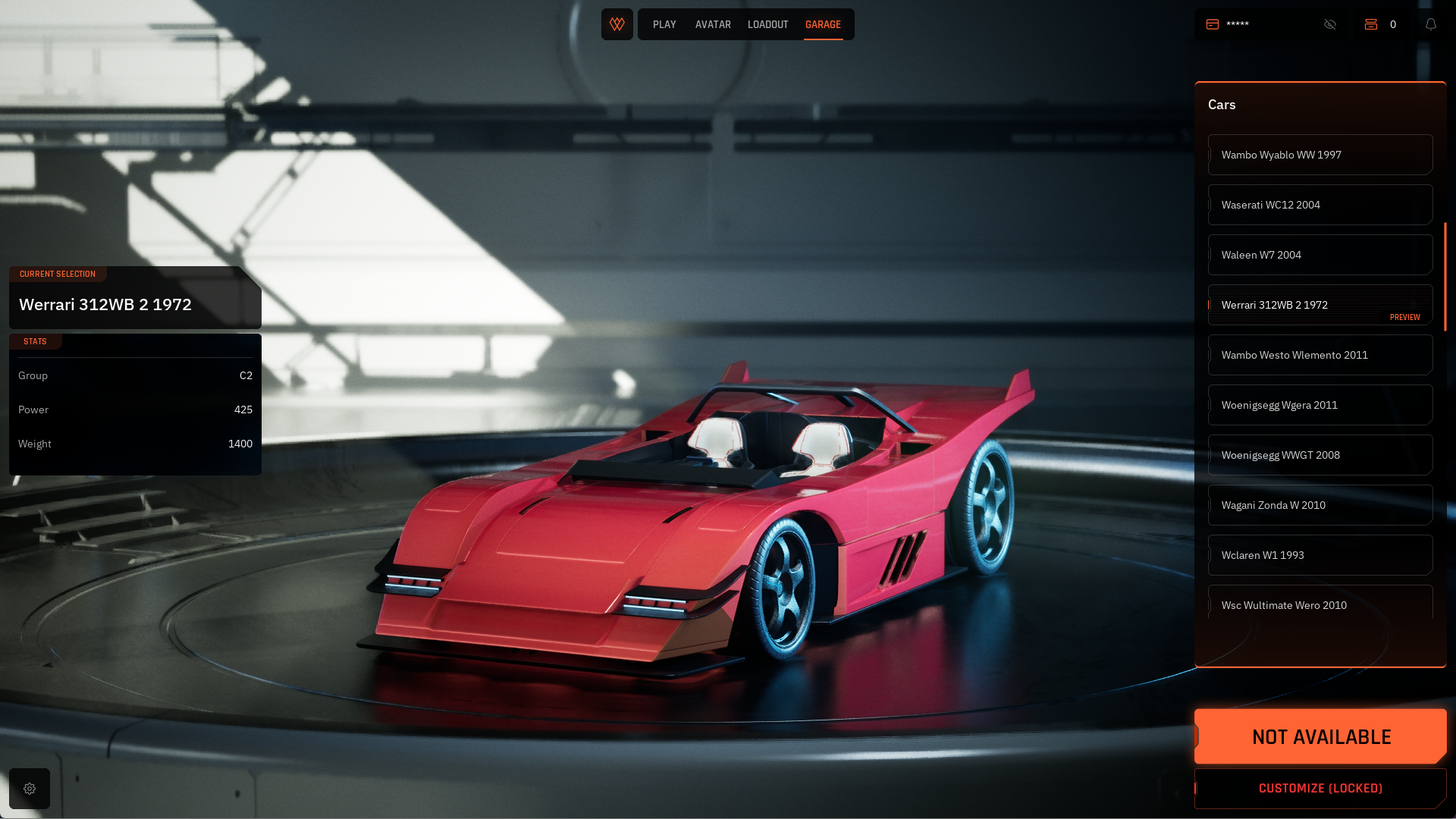
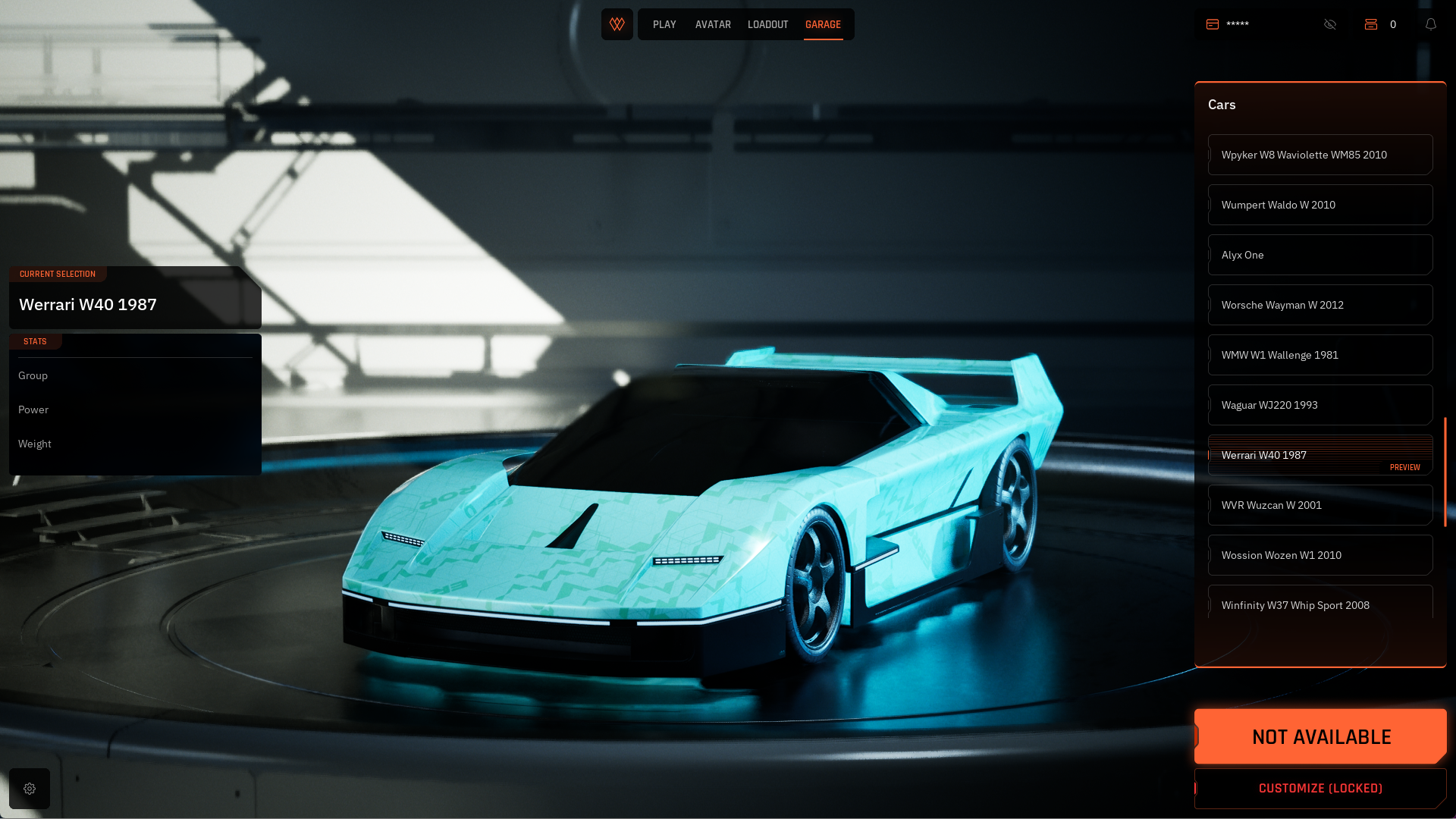
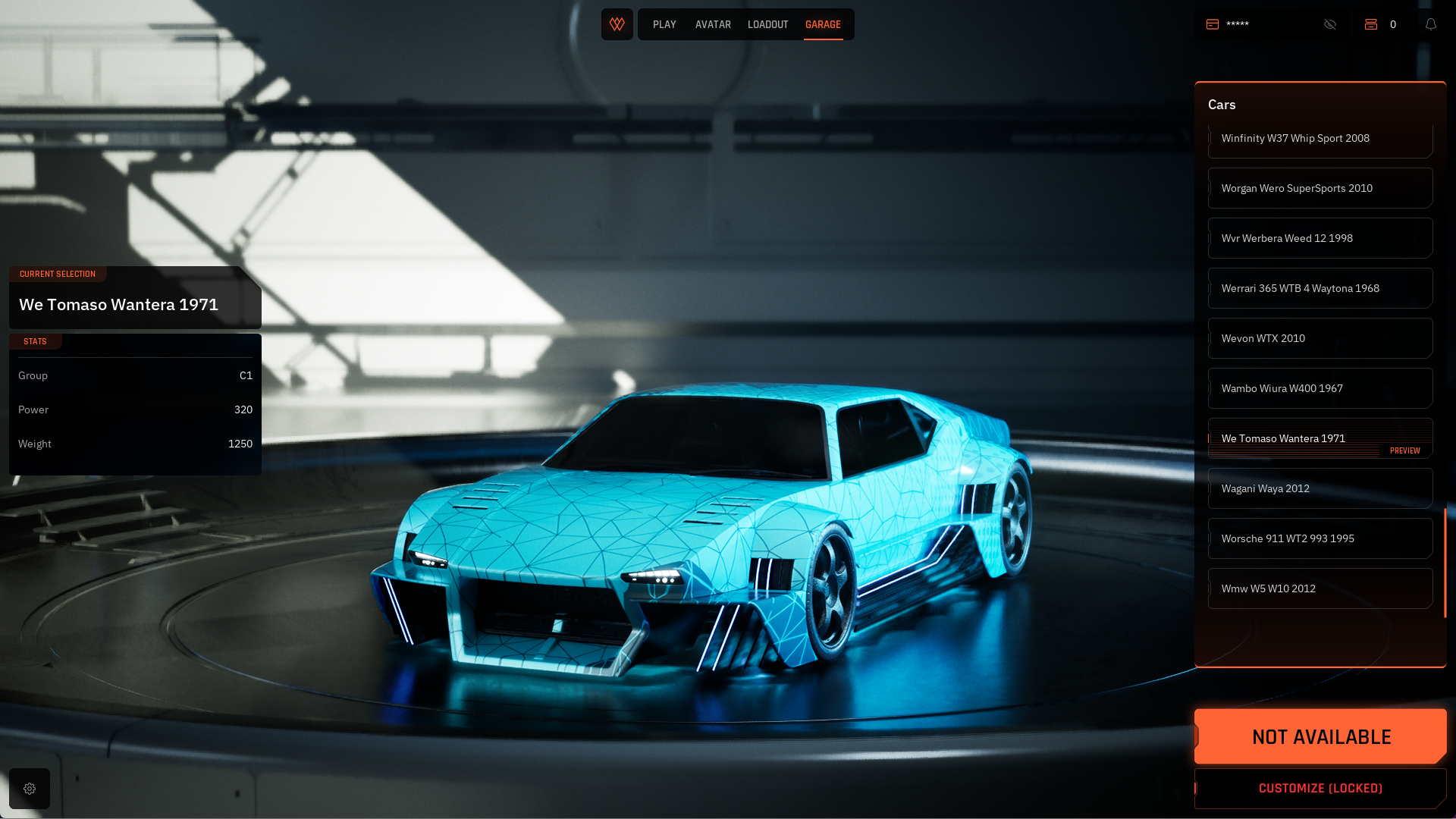
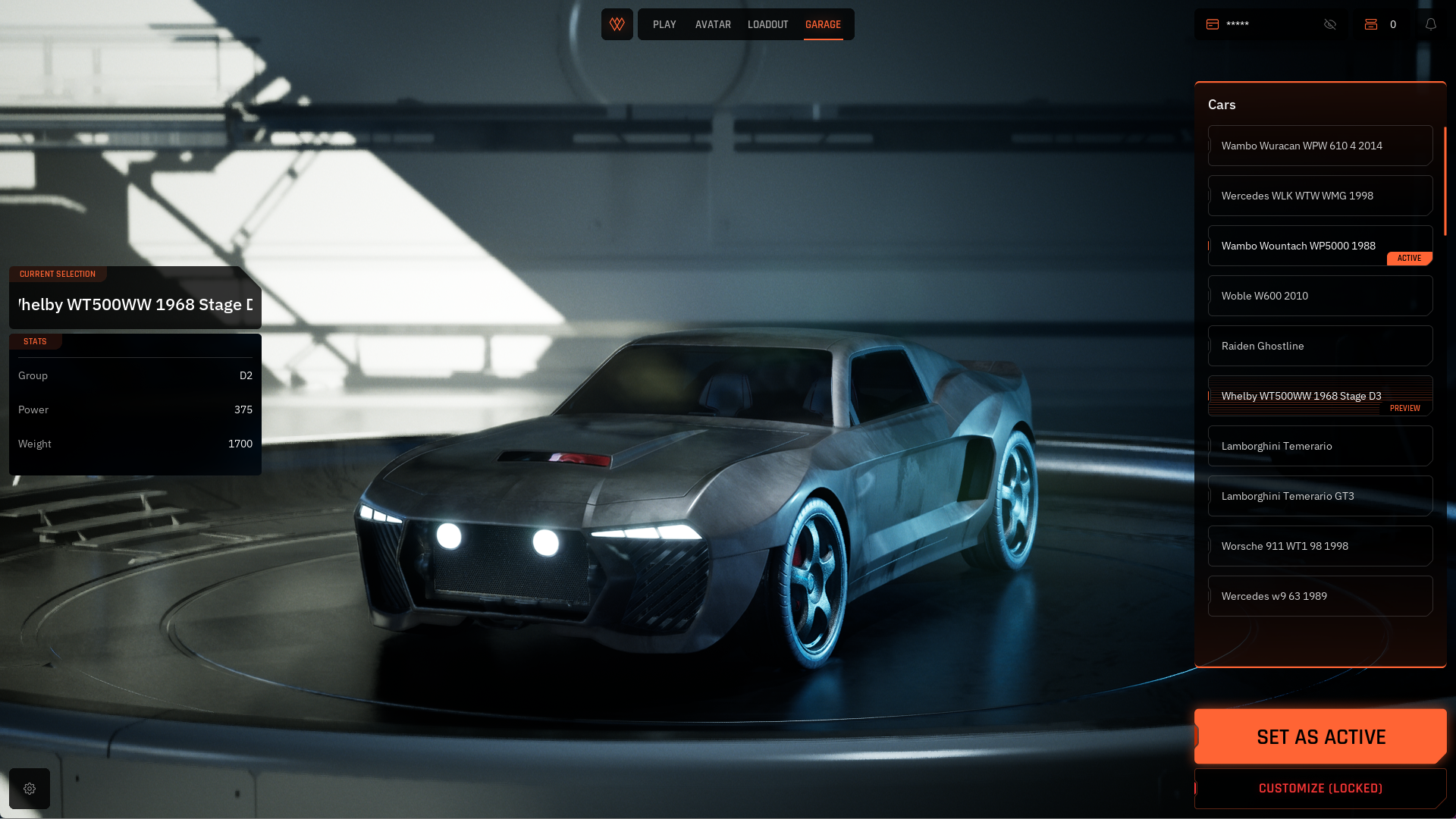
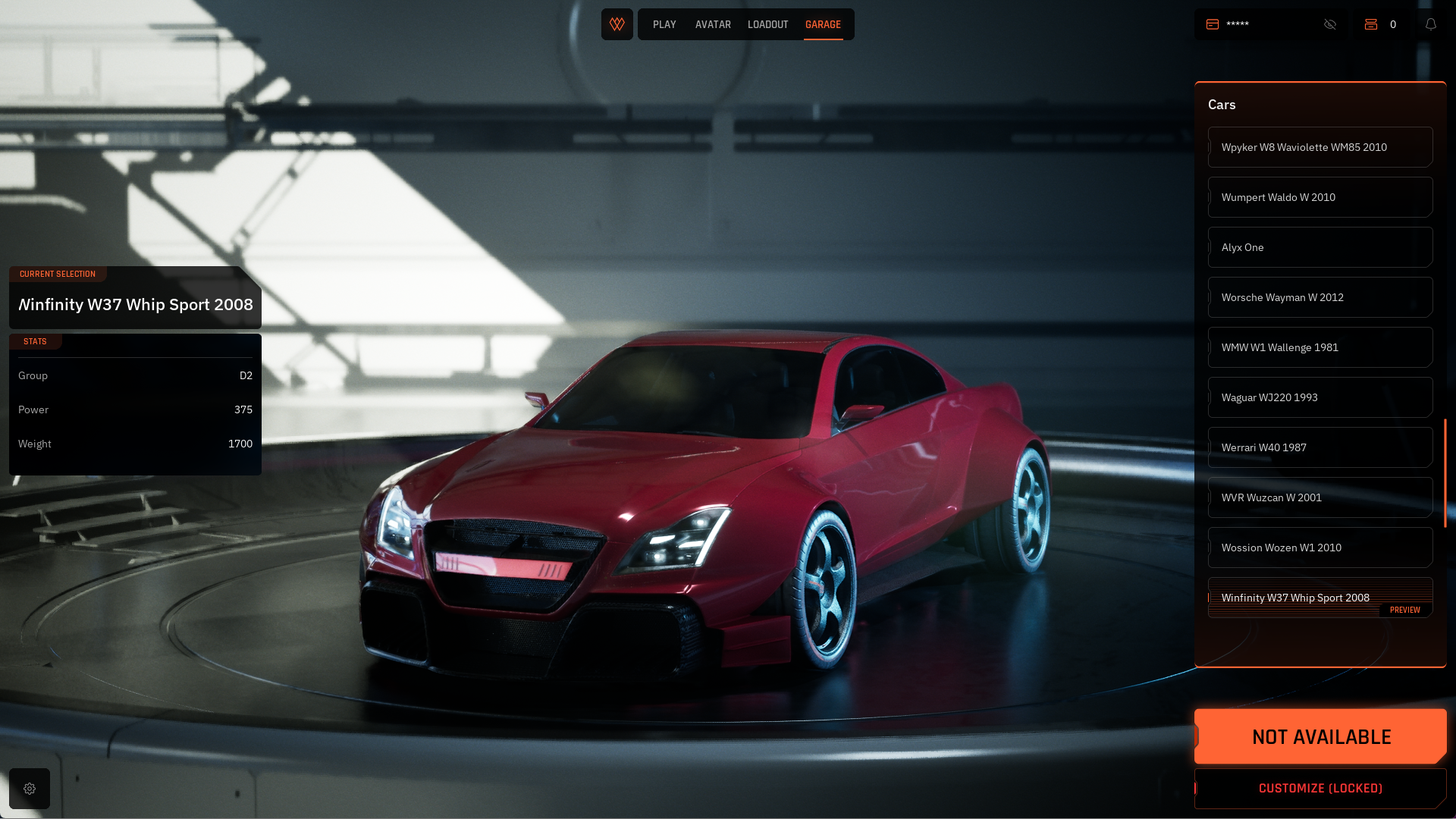
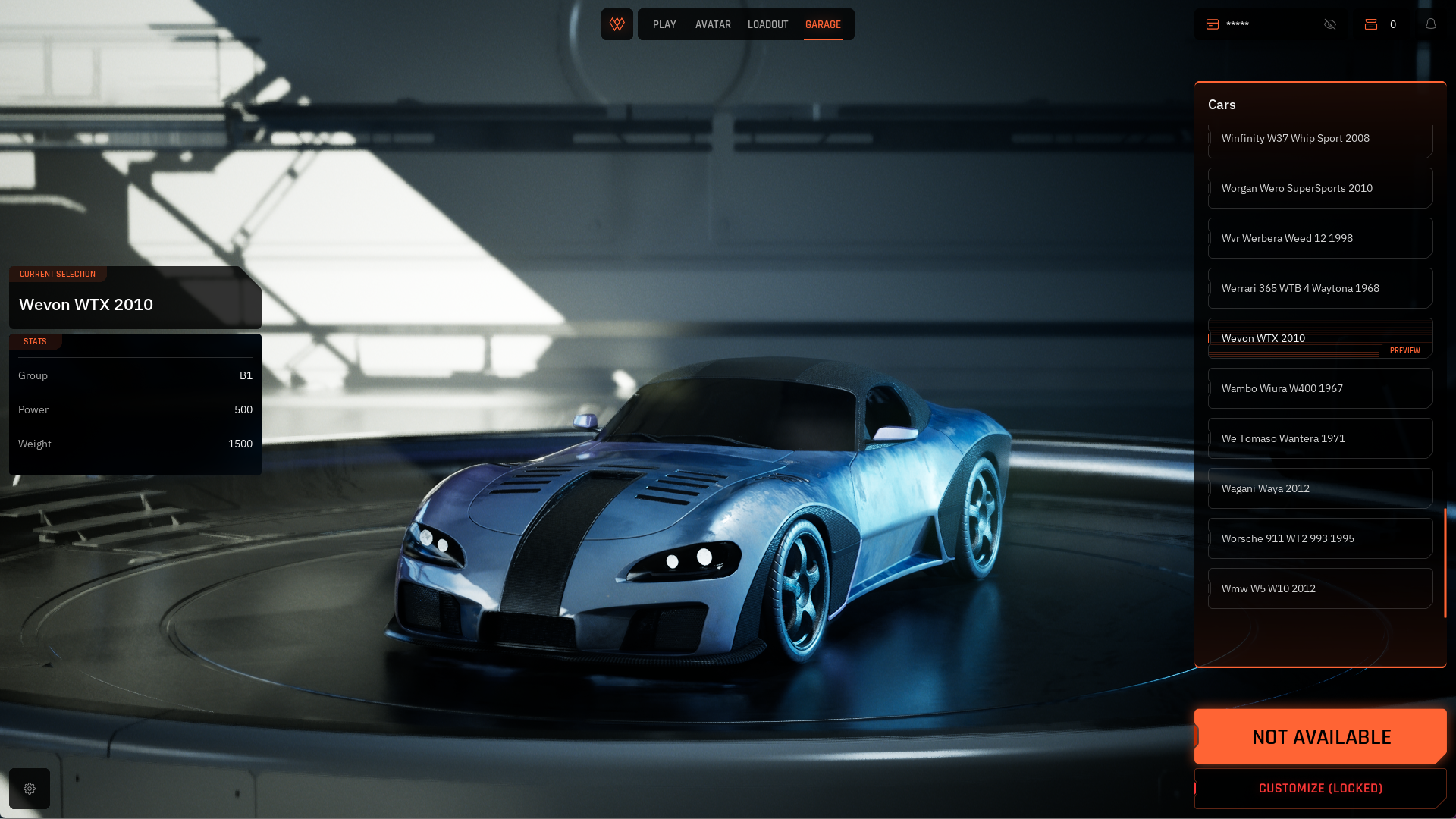
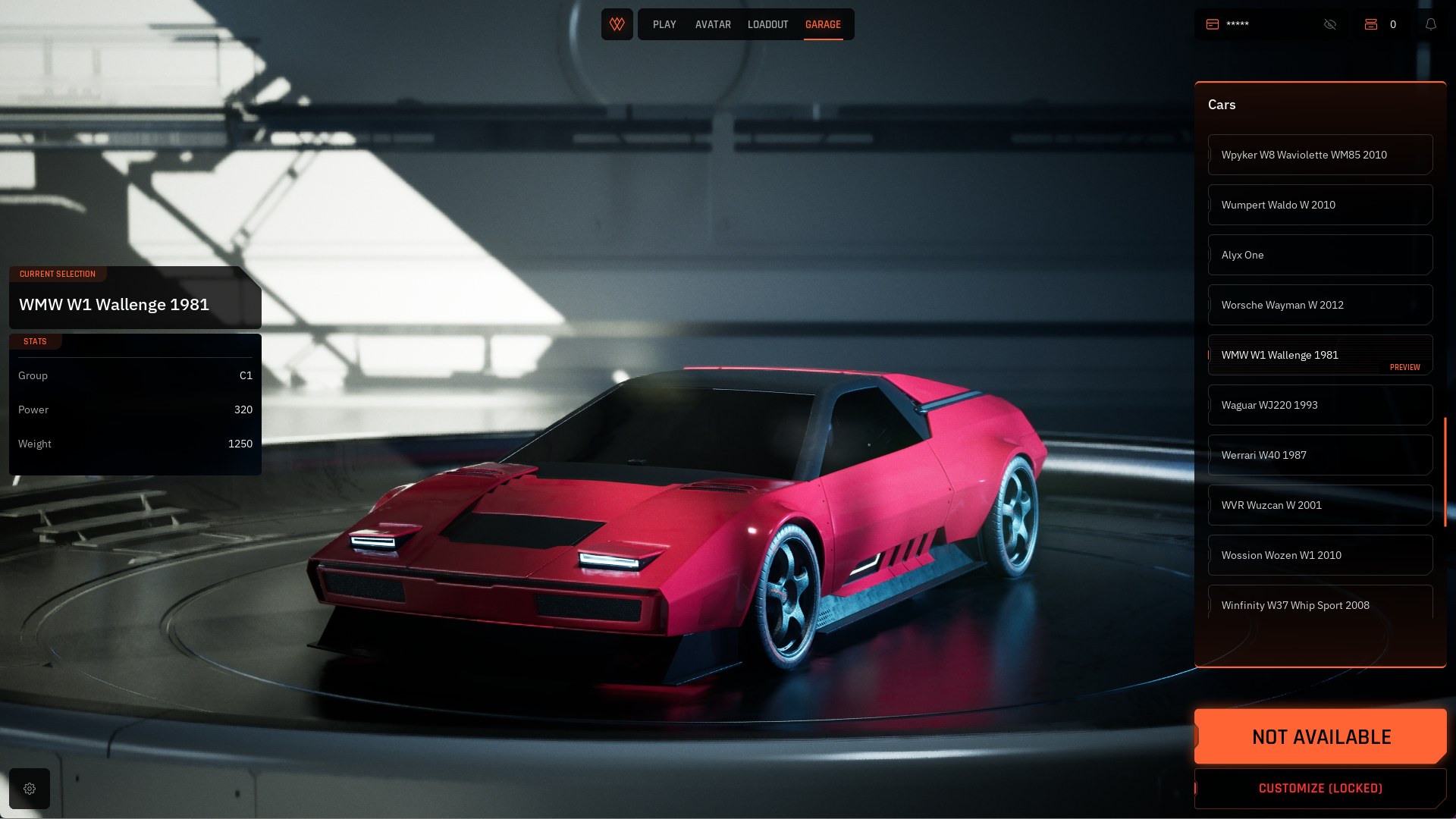
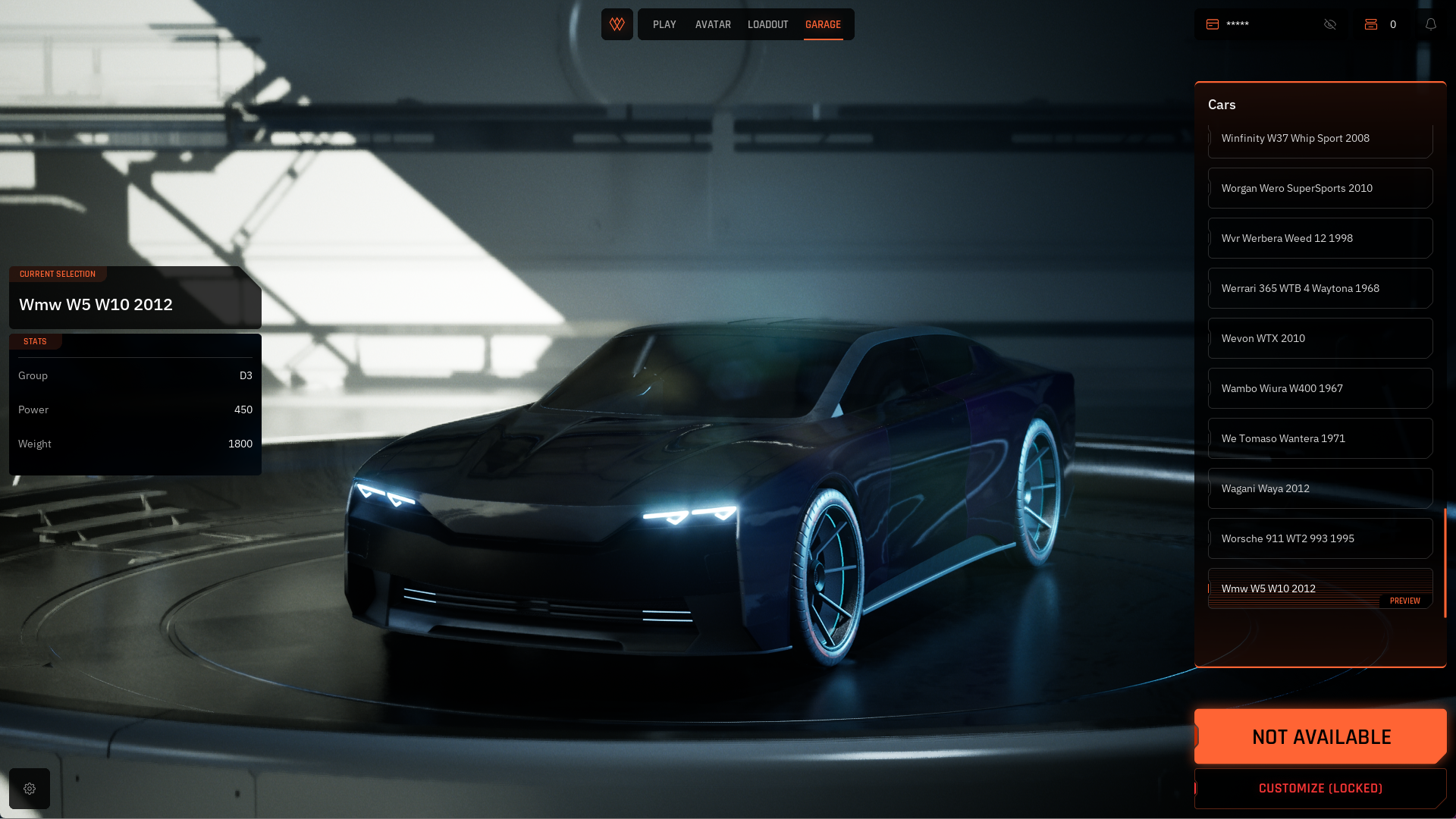
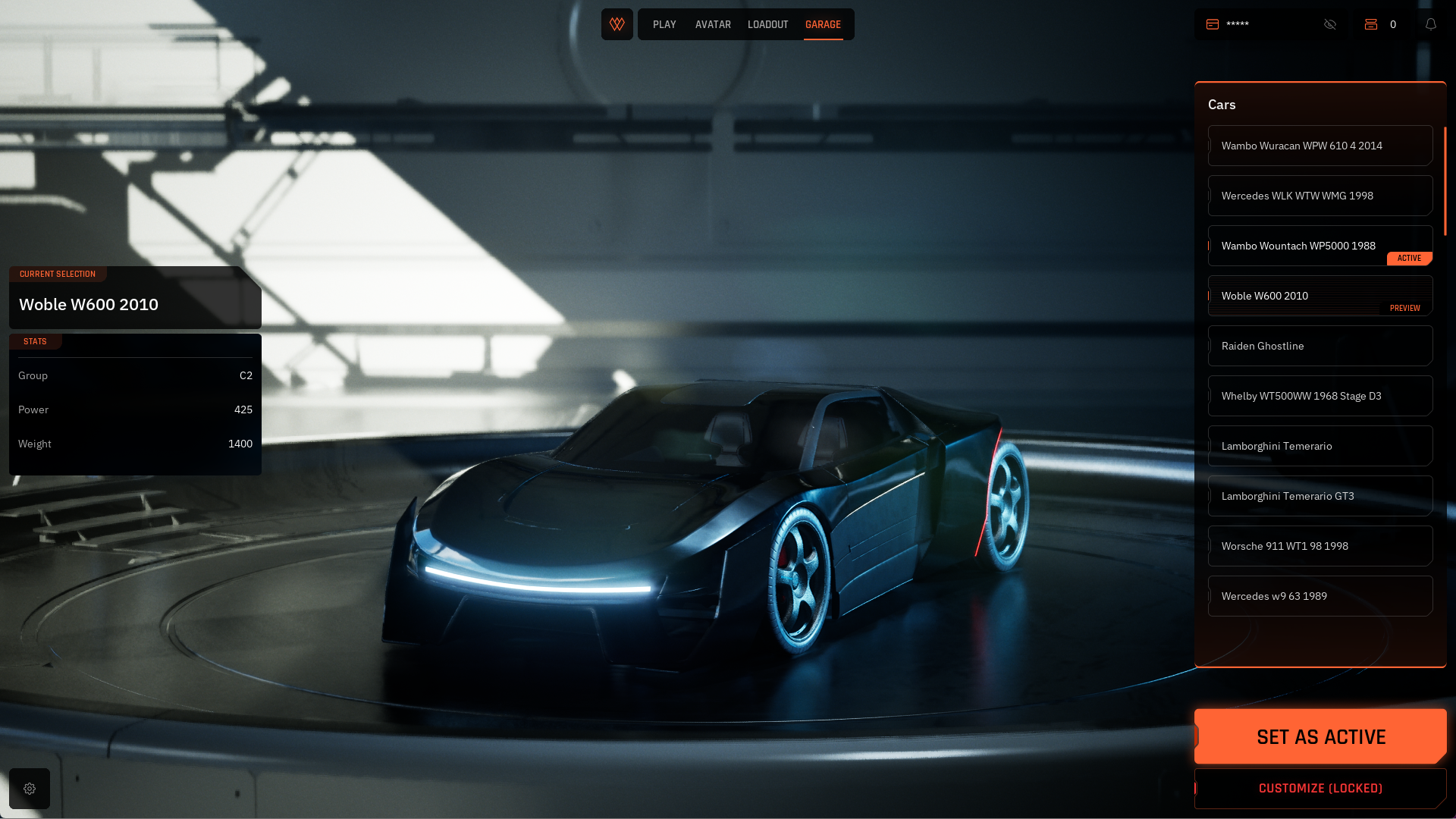
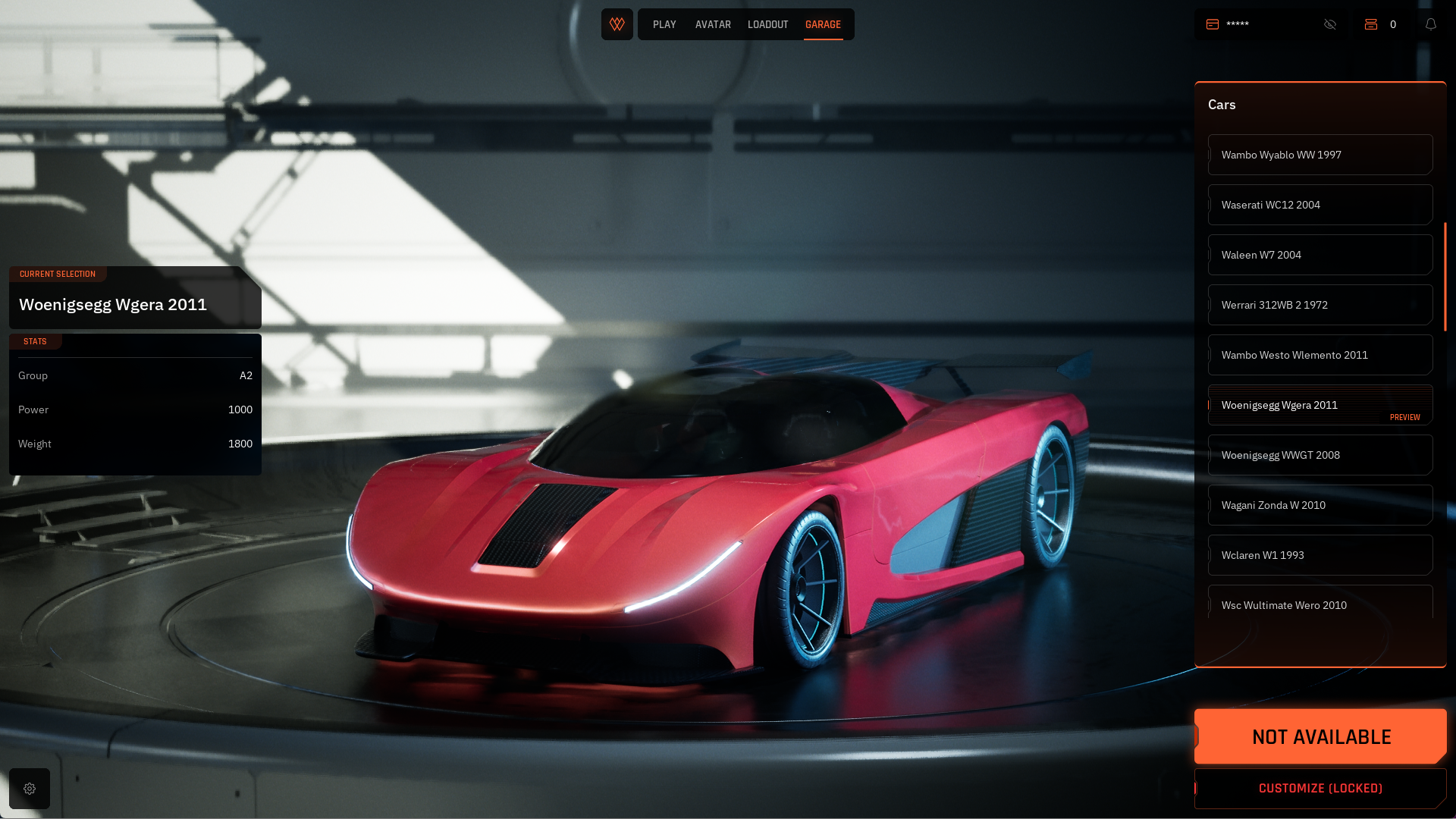
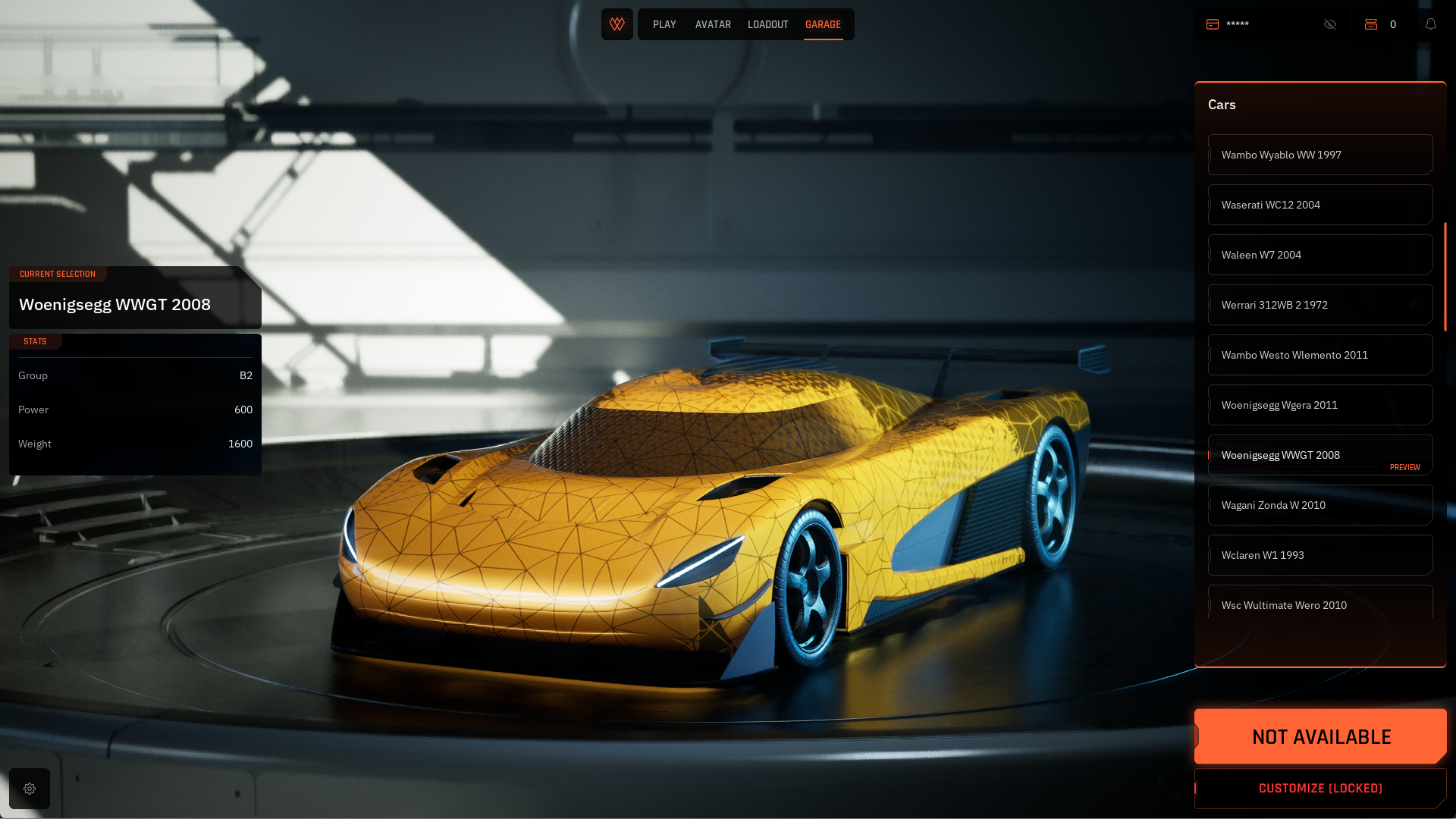
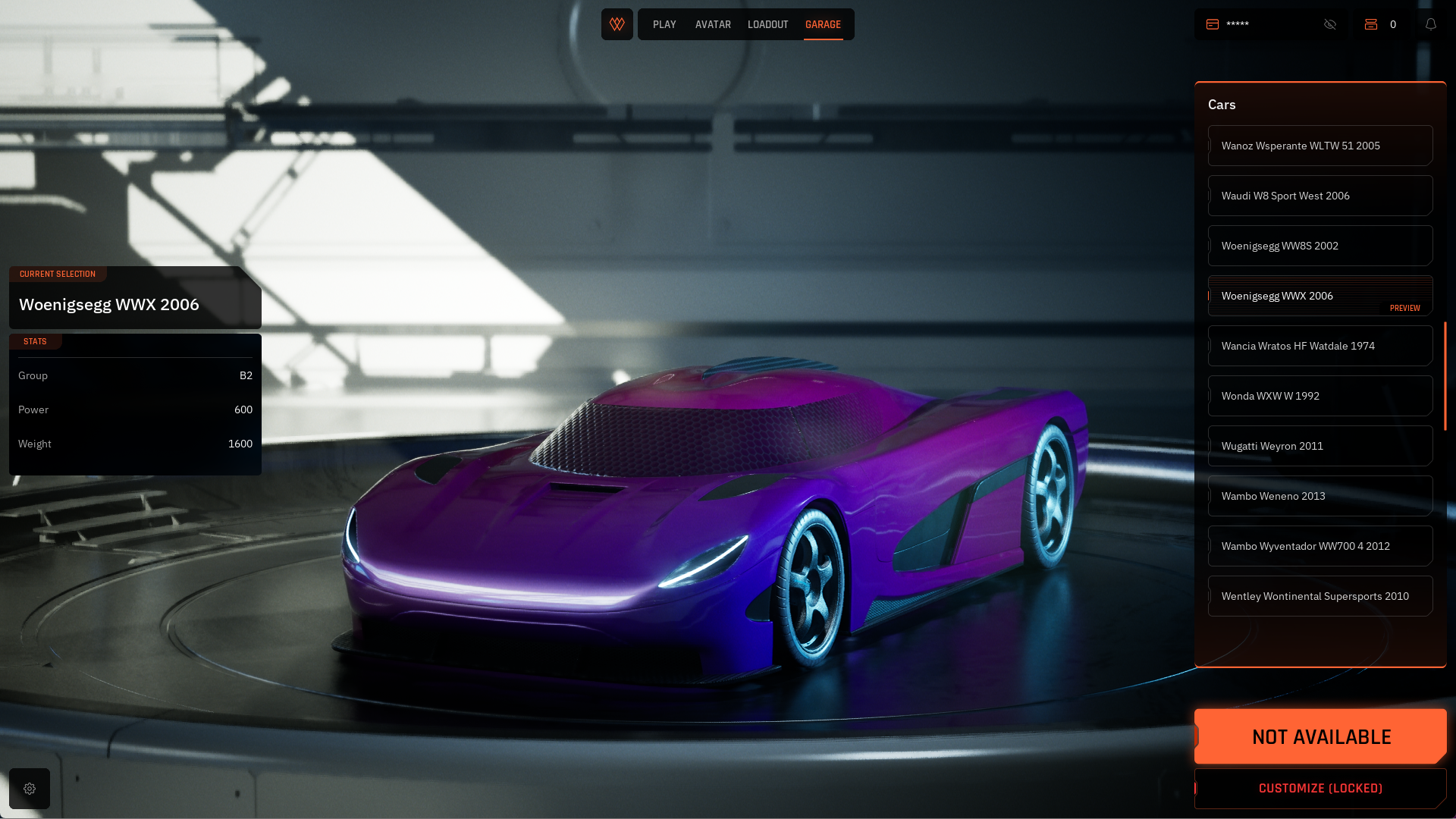
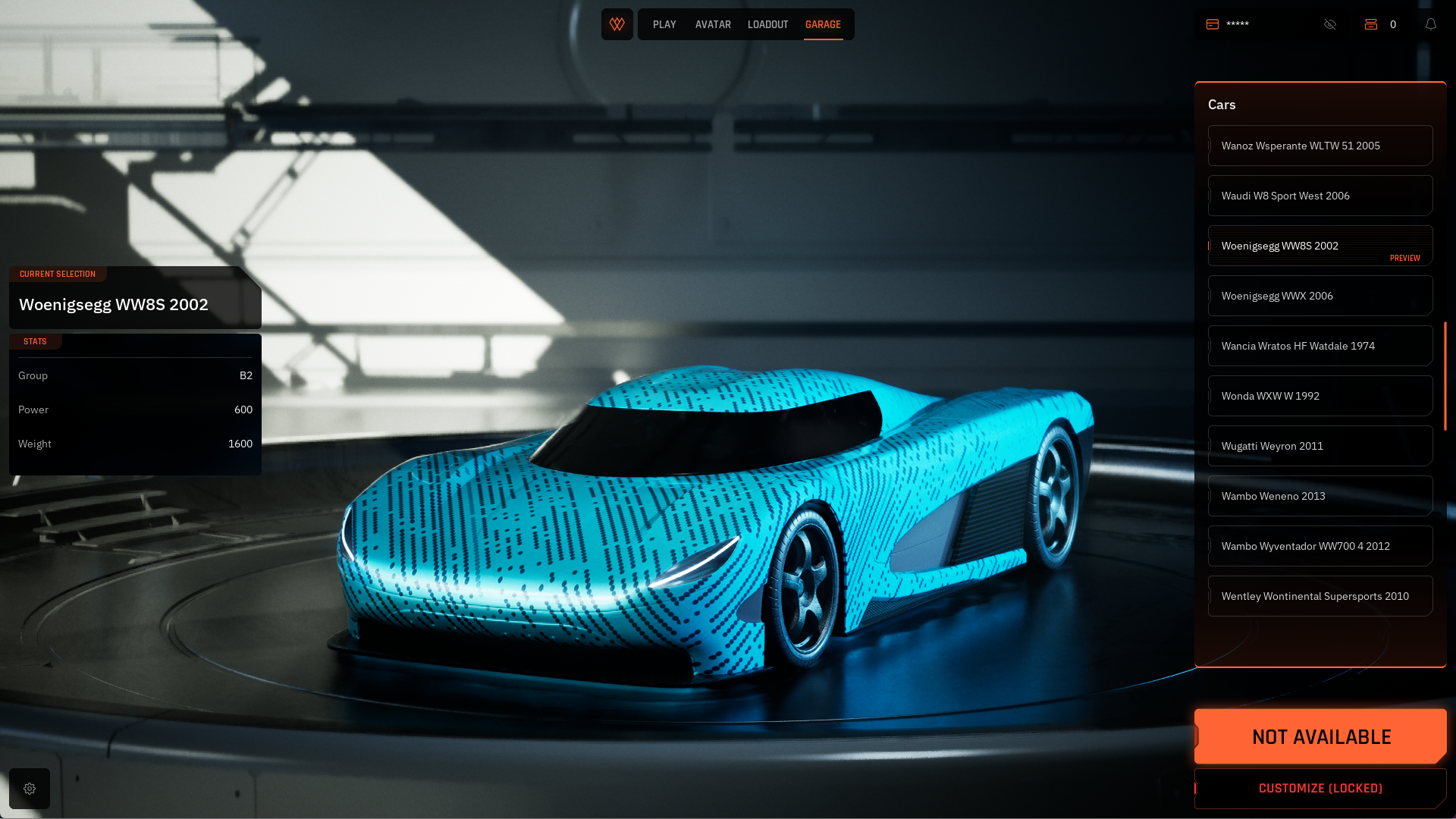
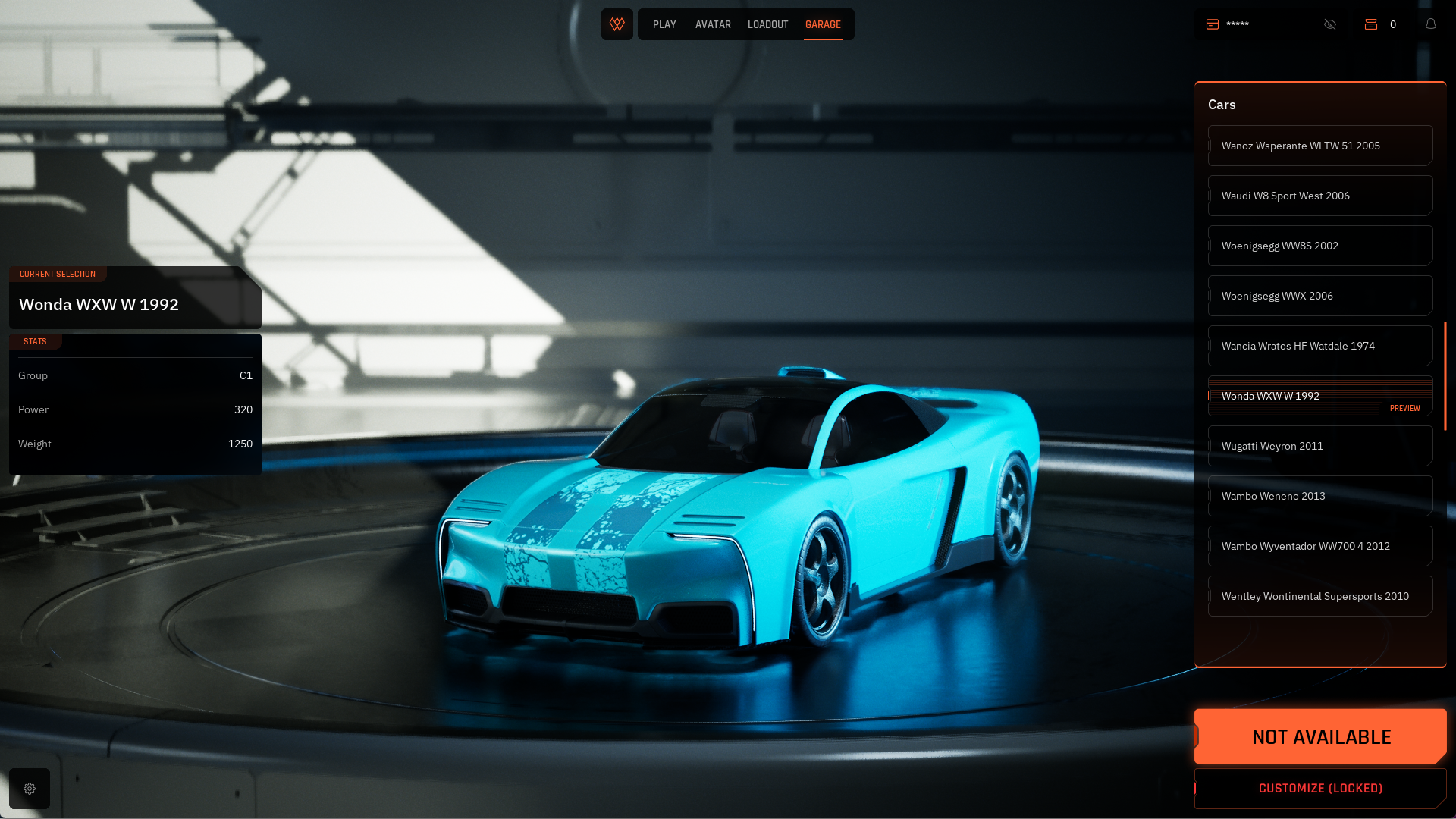
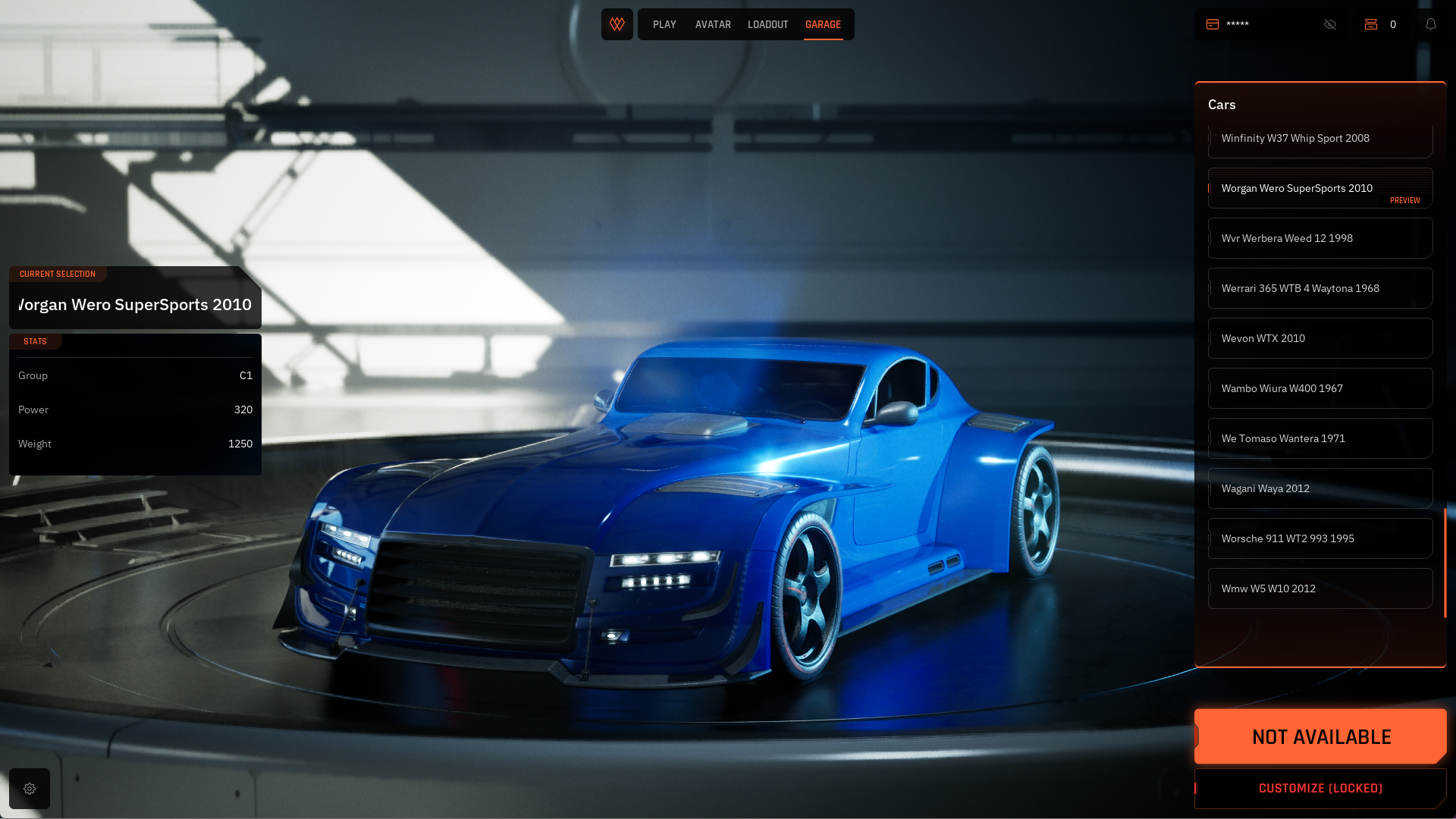
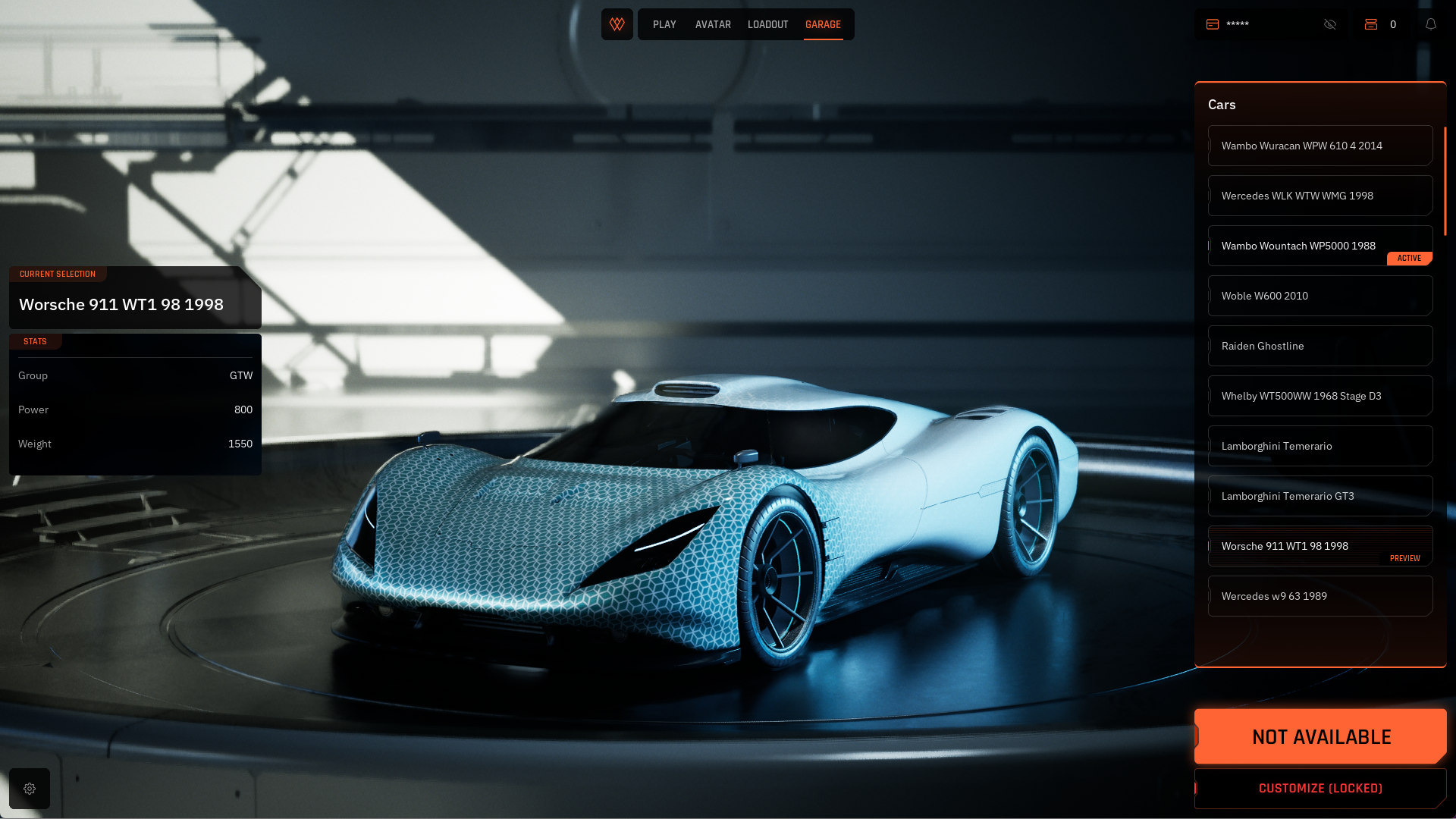
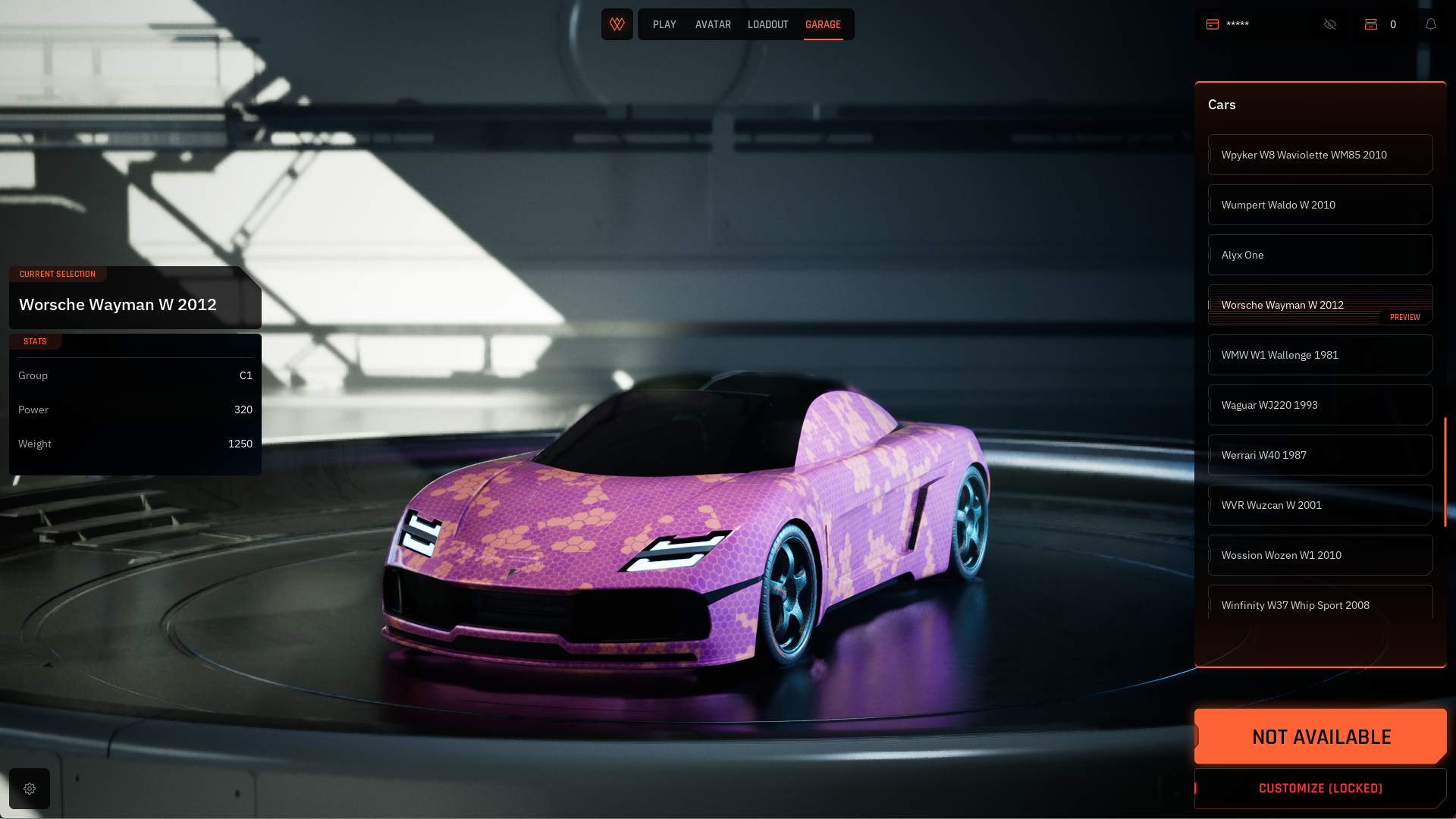
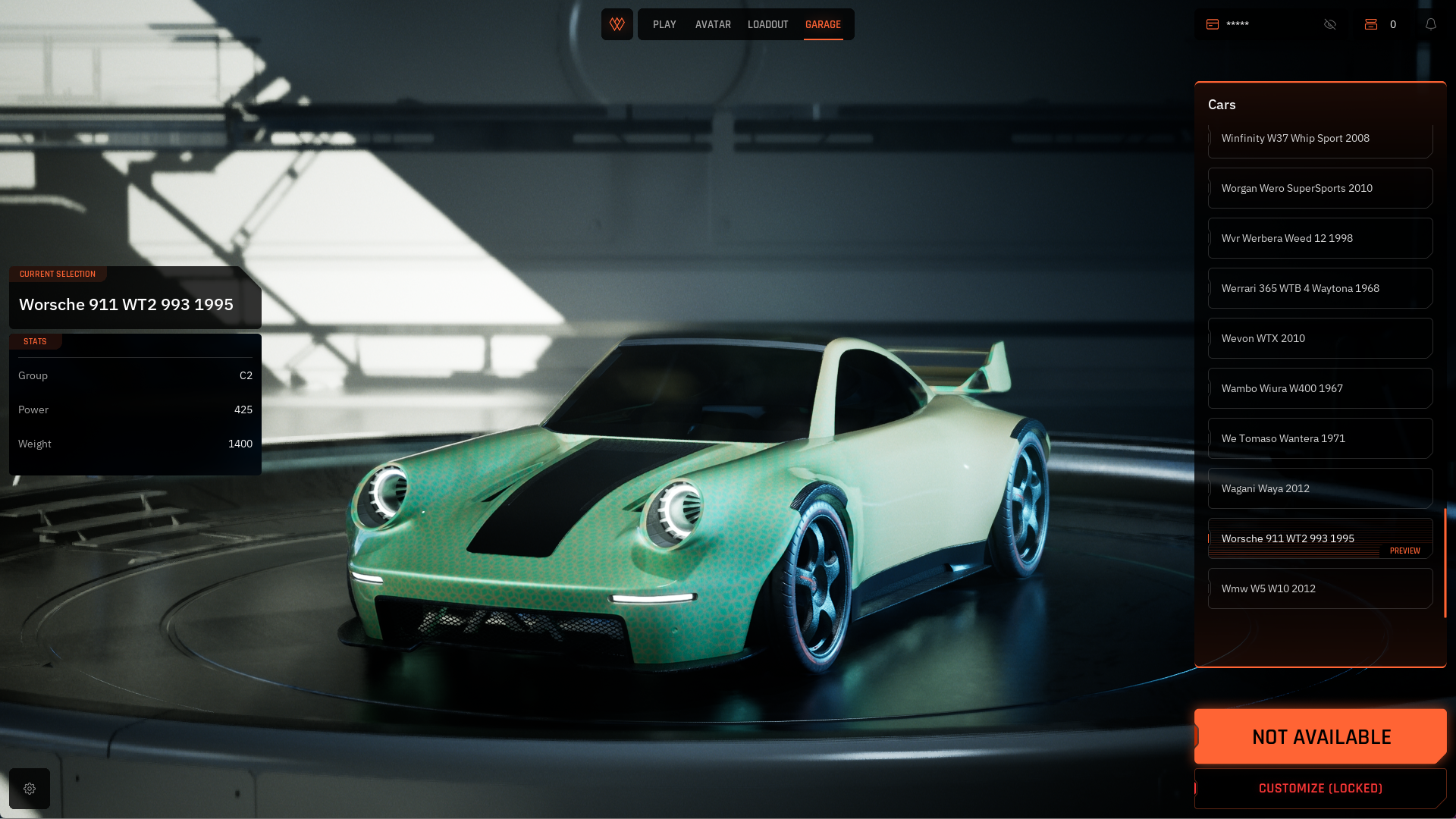
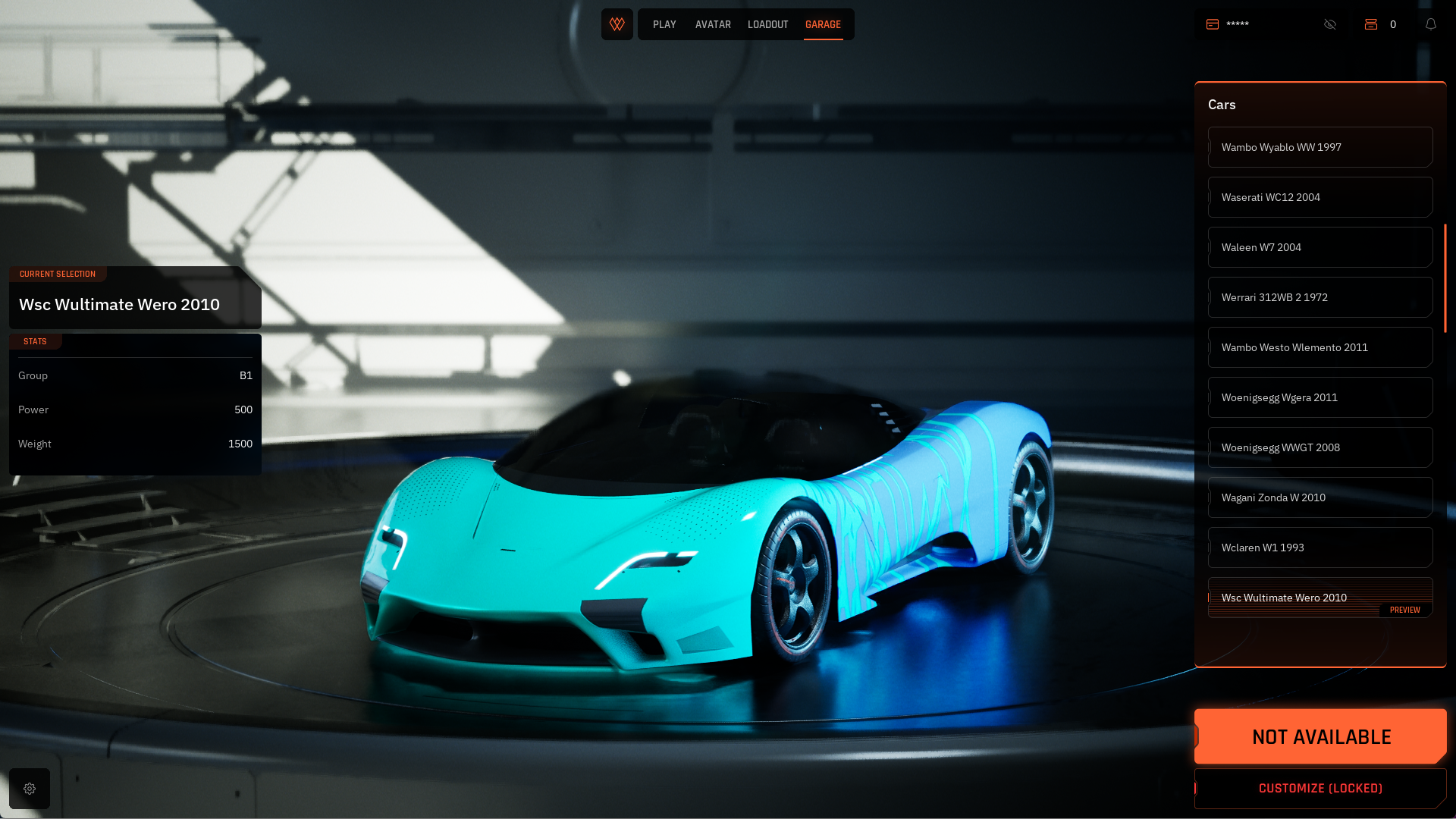
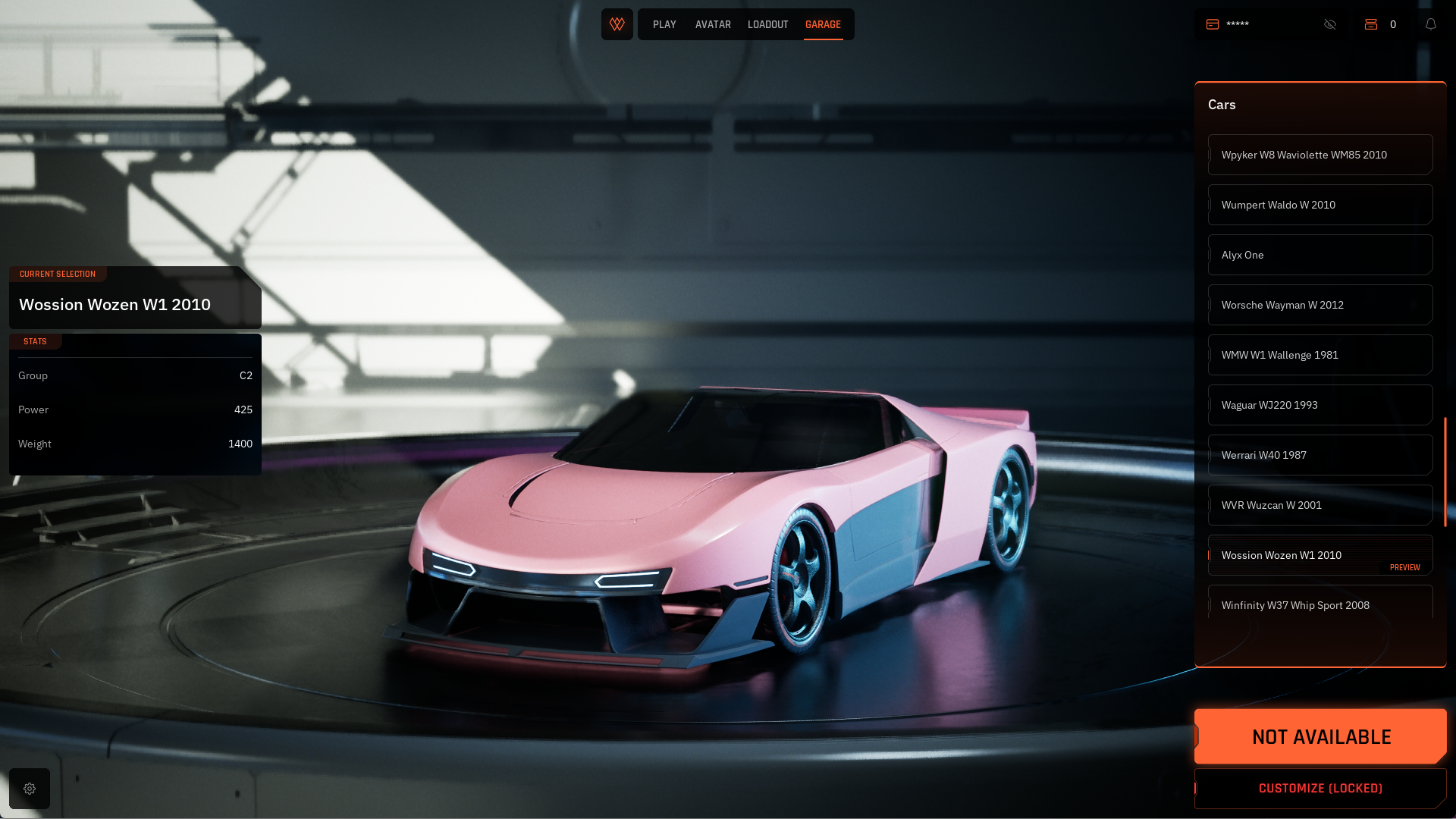
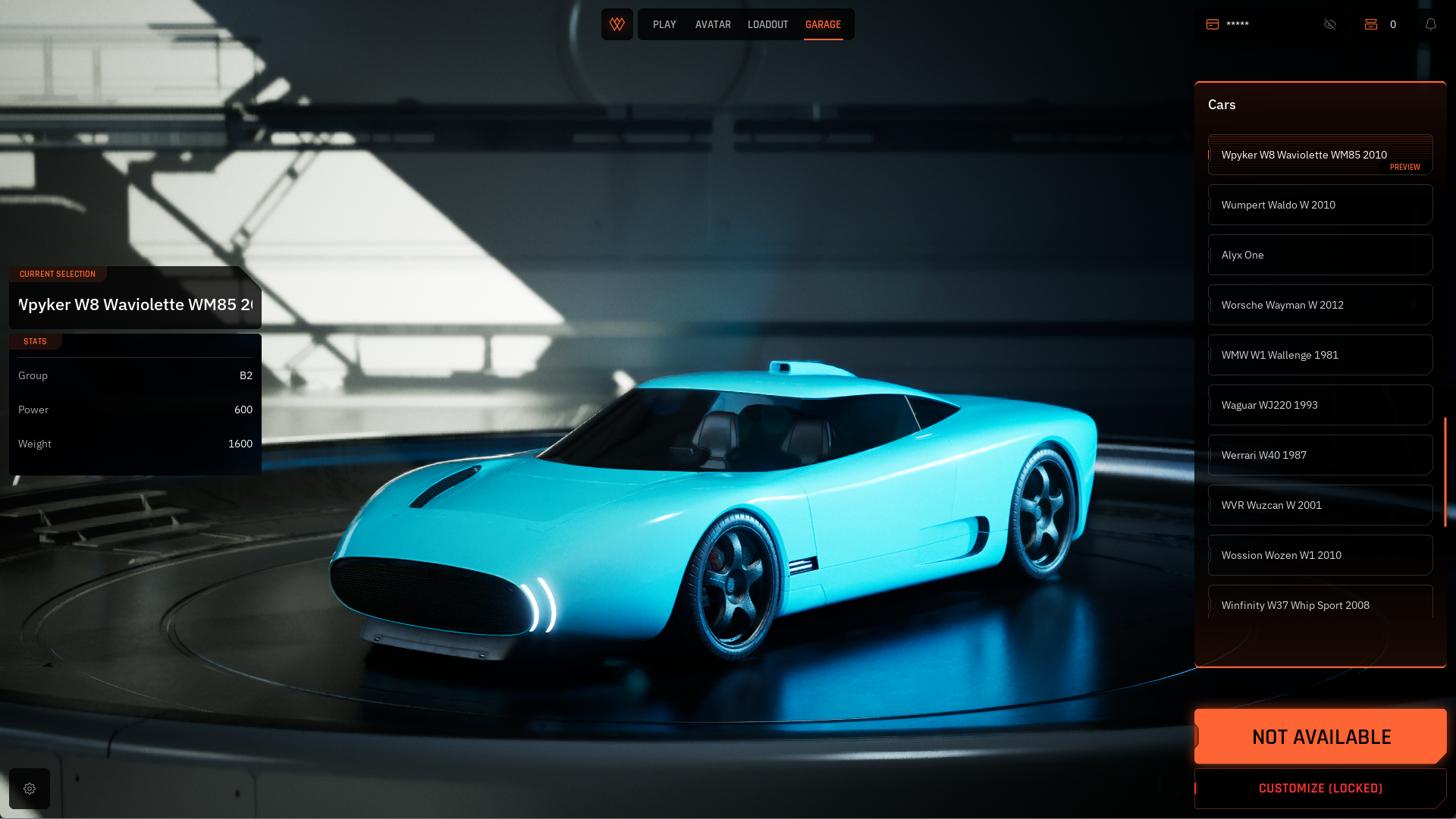
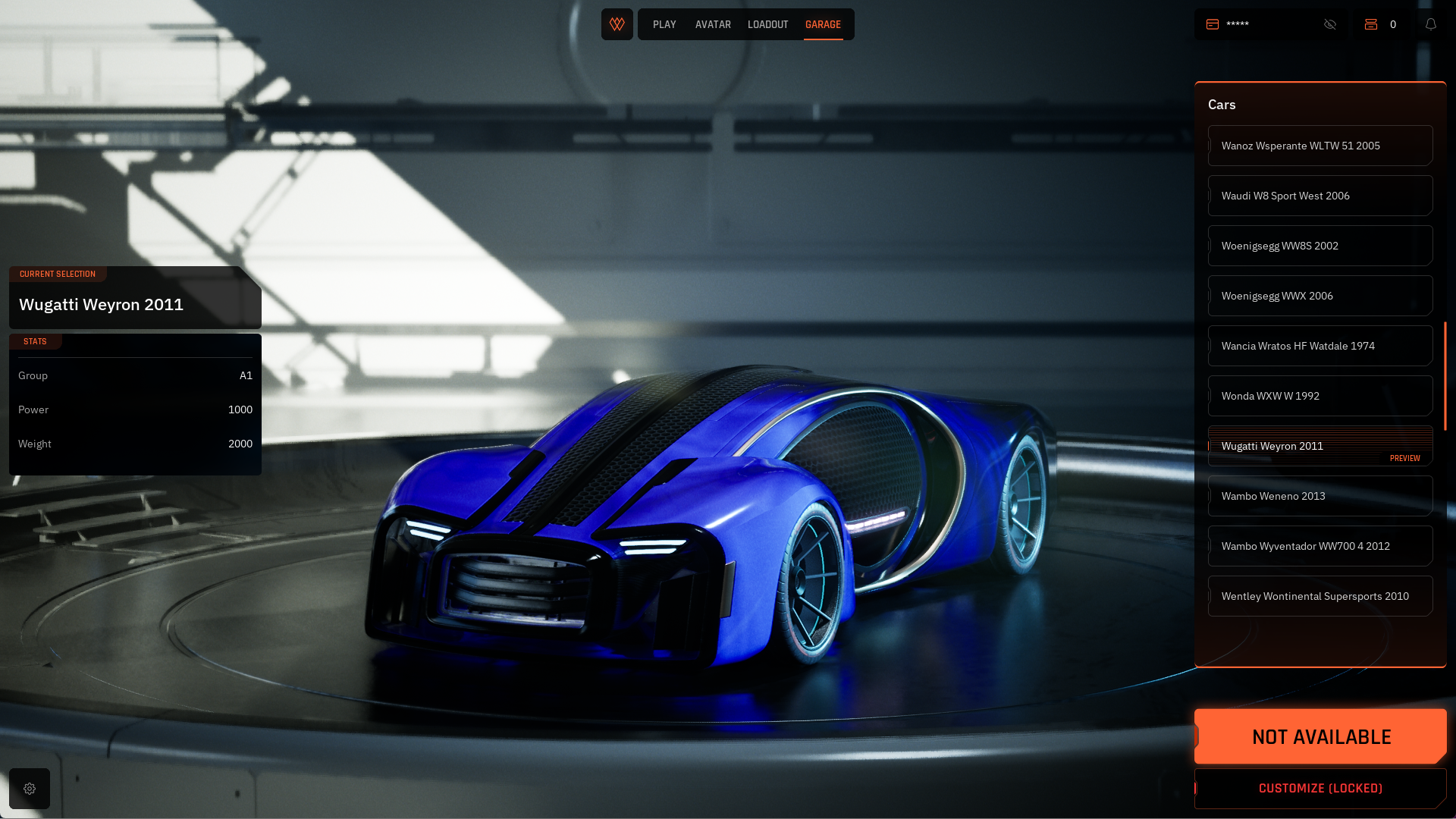
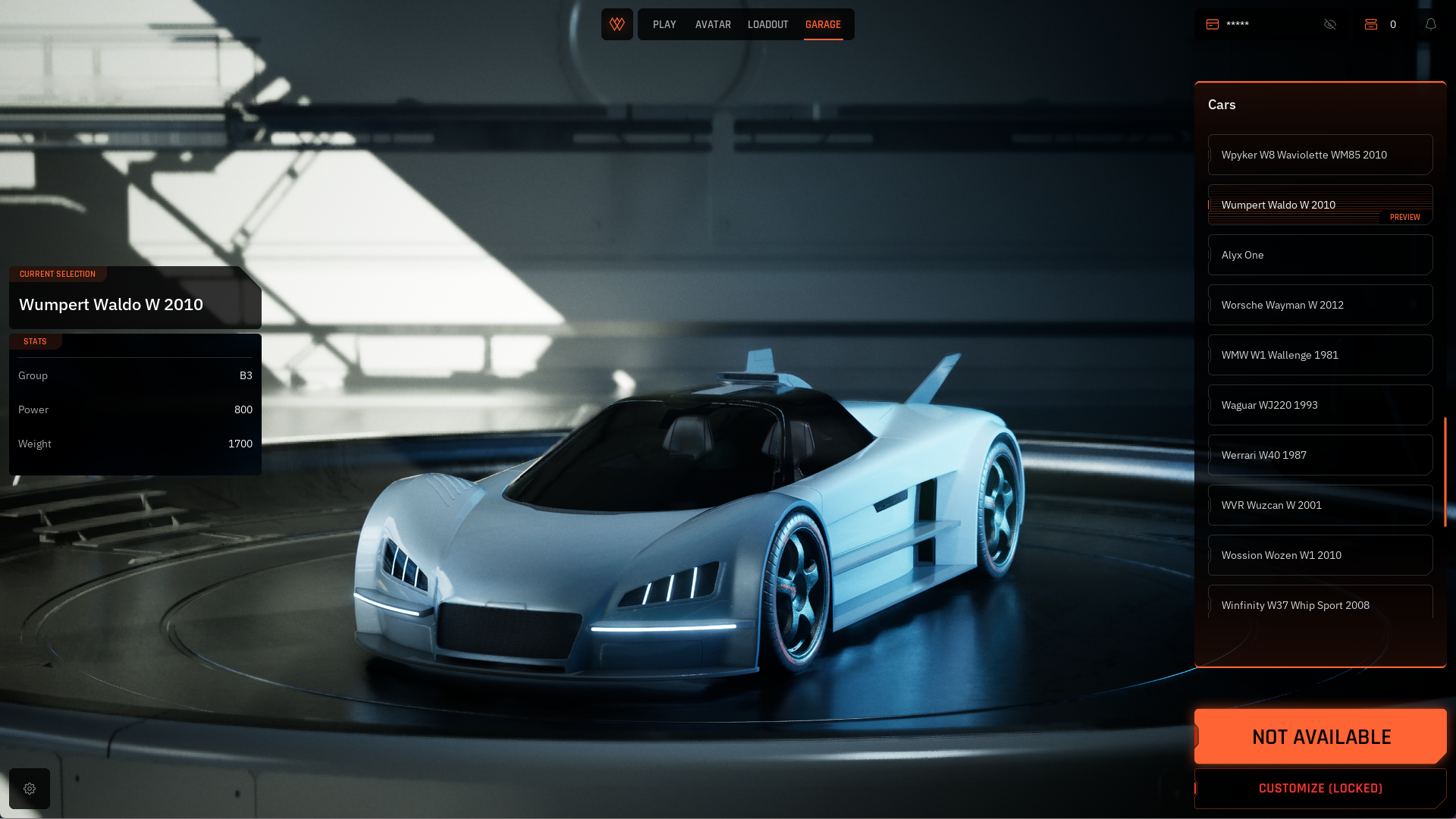
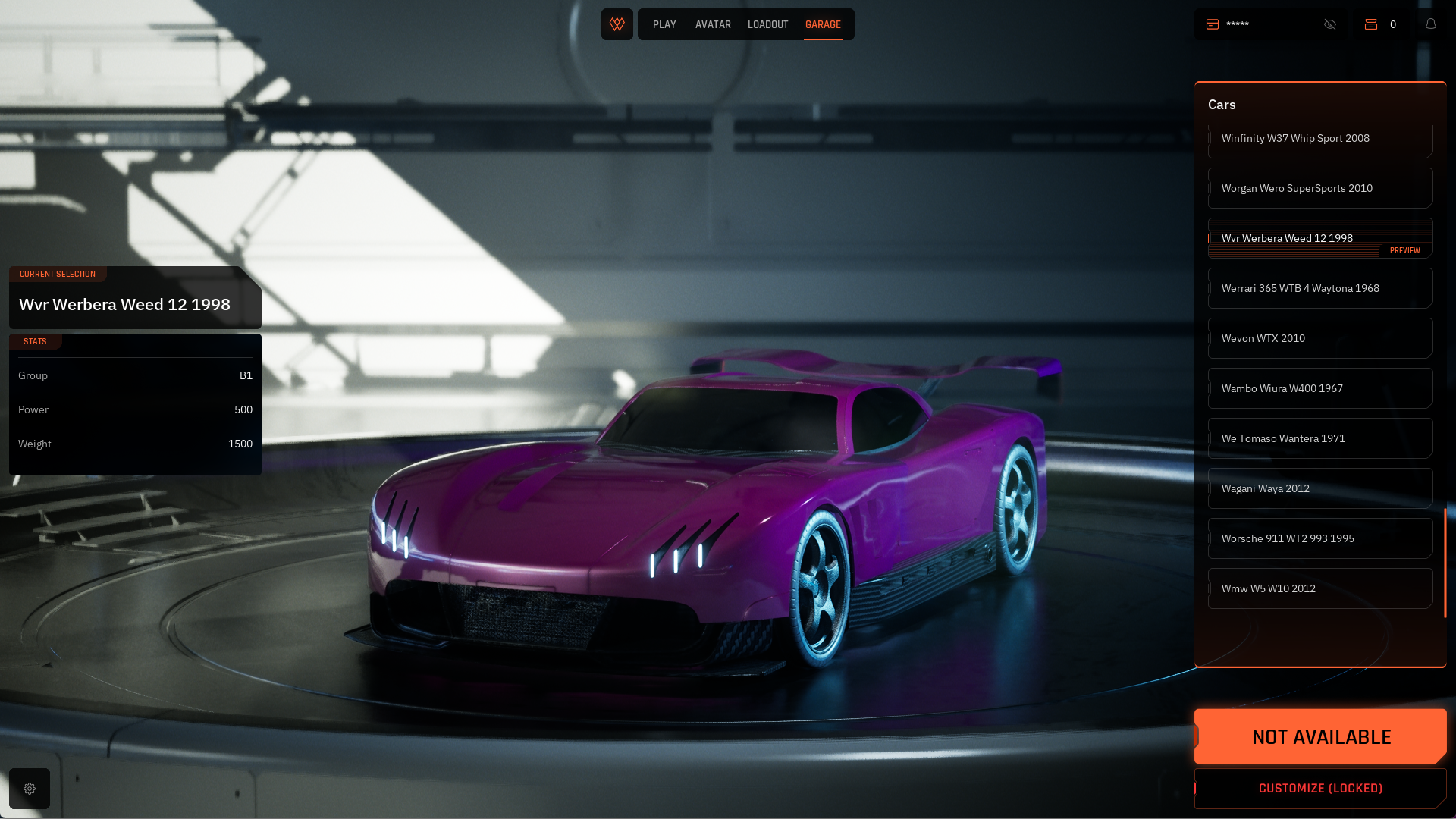
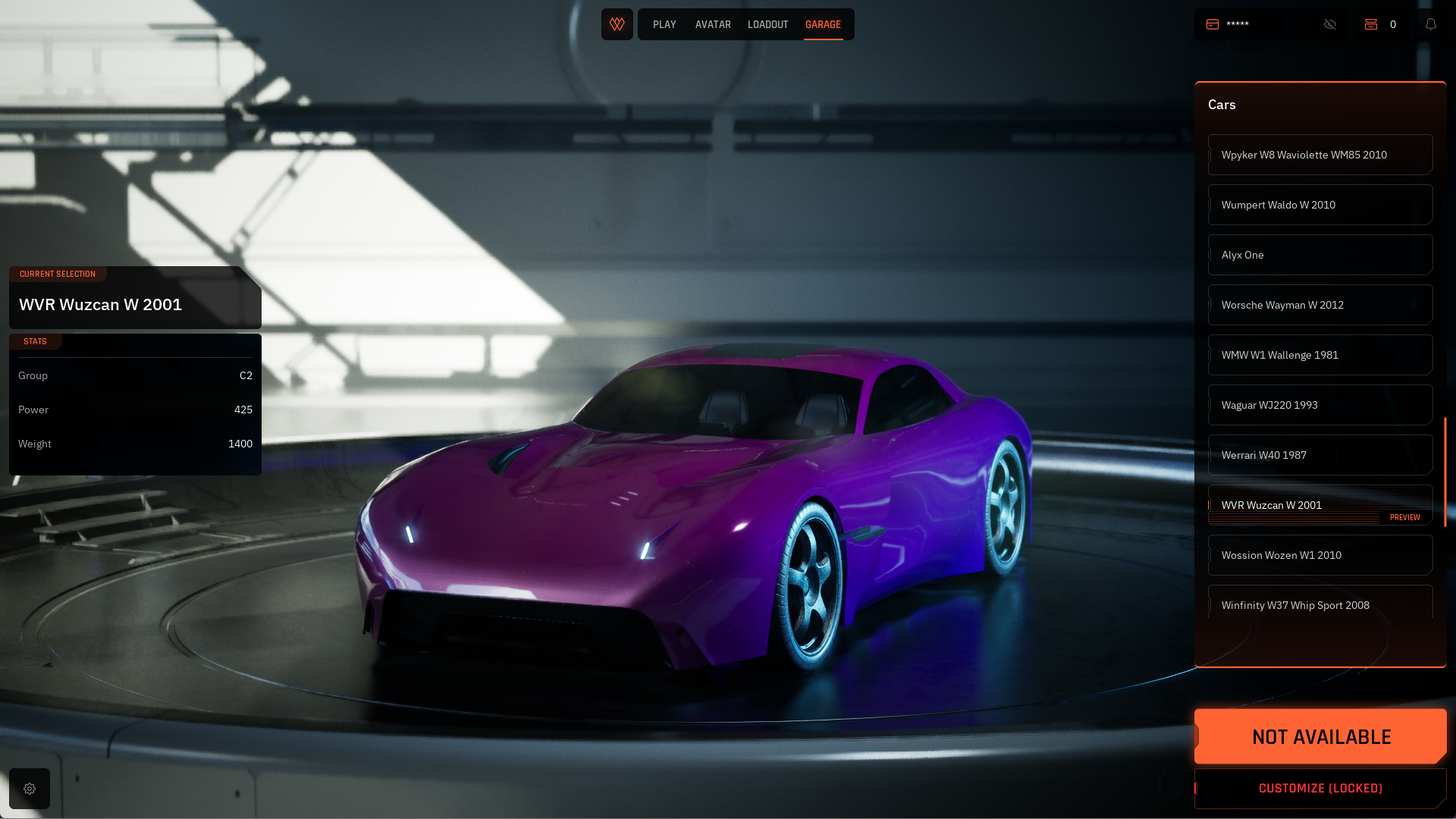
The Garage Selector presents a roster of 50 available vehicles, allowing players to view and switch between owned cars. Each vehicle is displayed with its associated performance data, providing a clear overview before entering the open world or activities
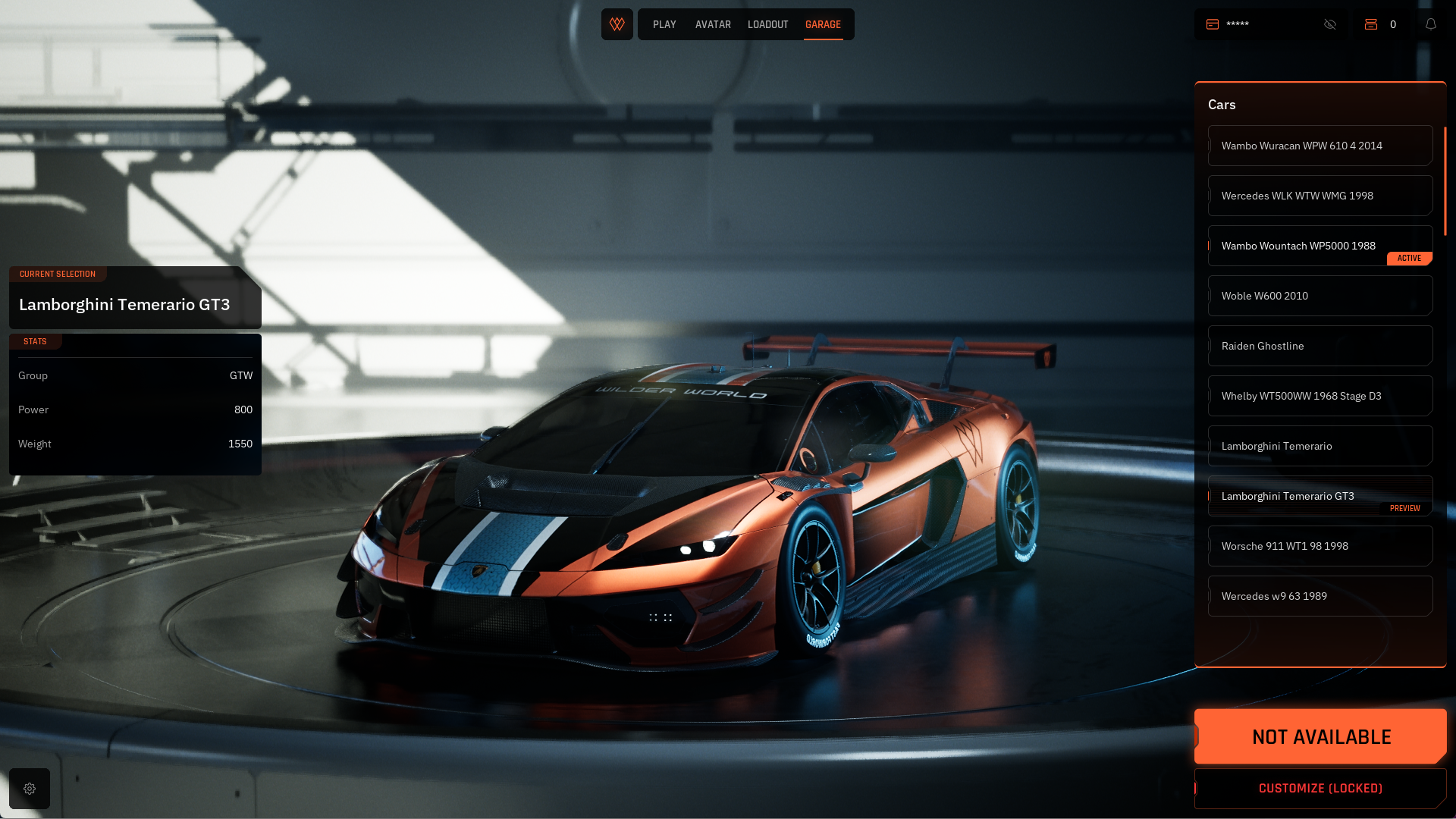
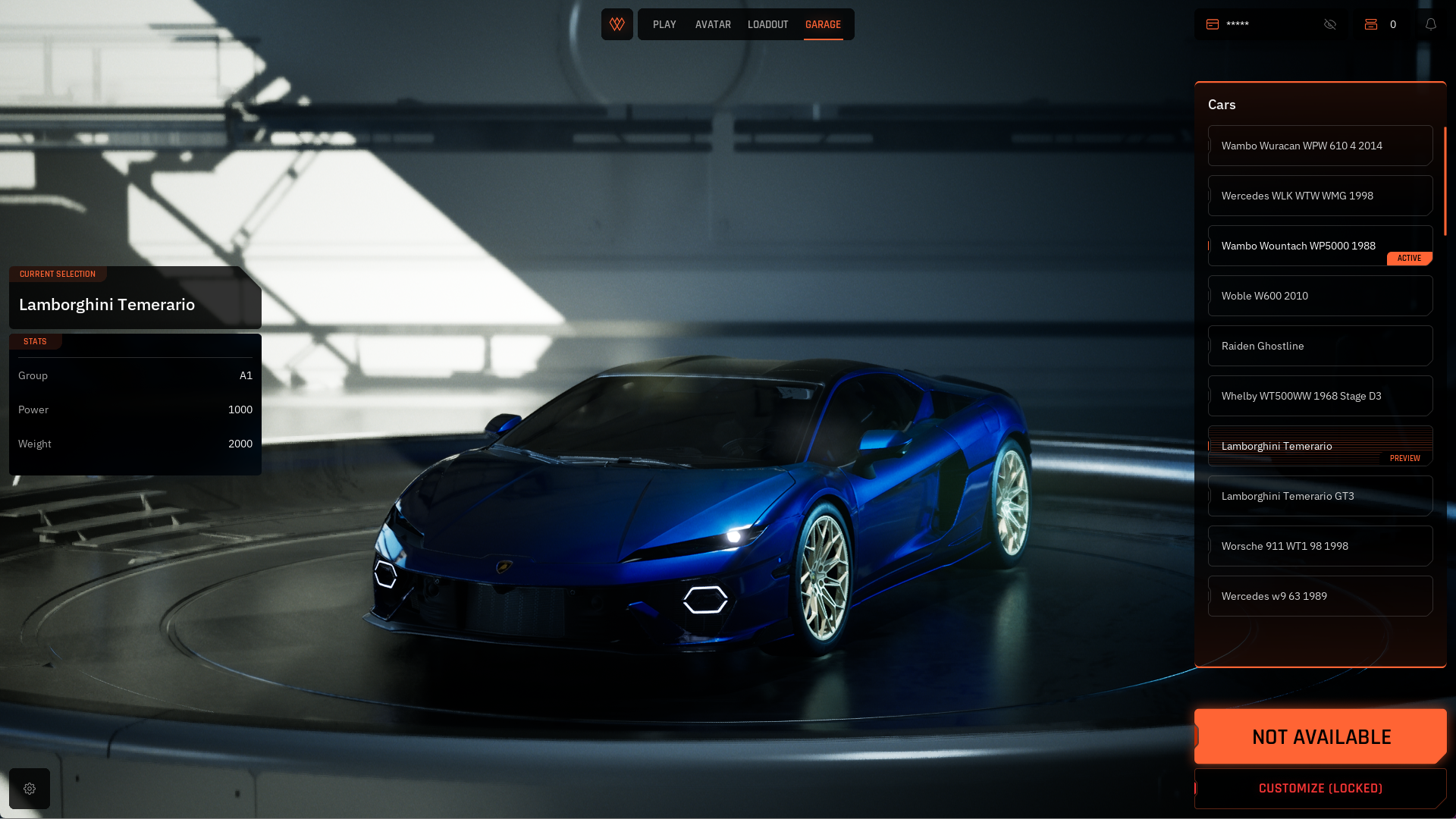
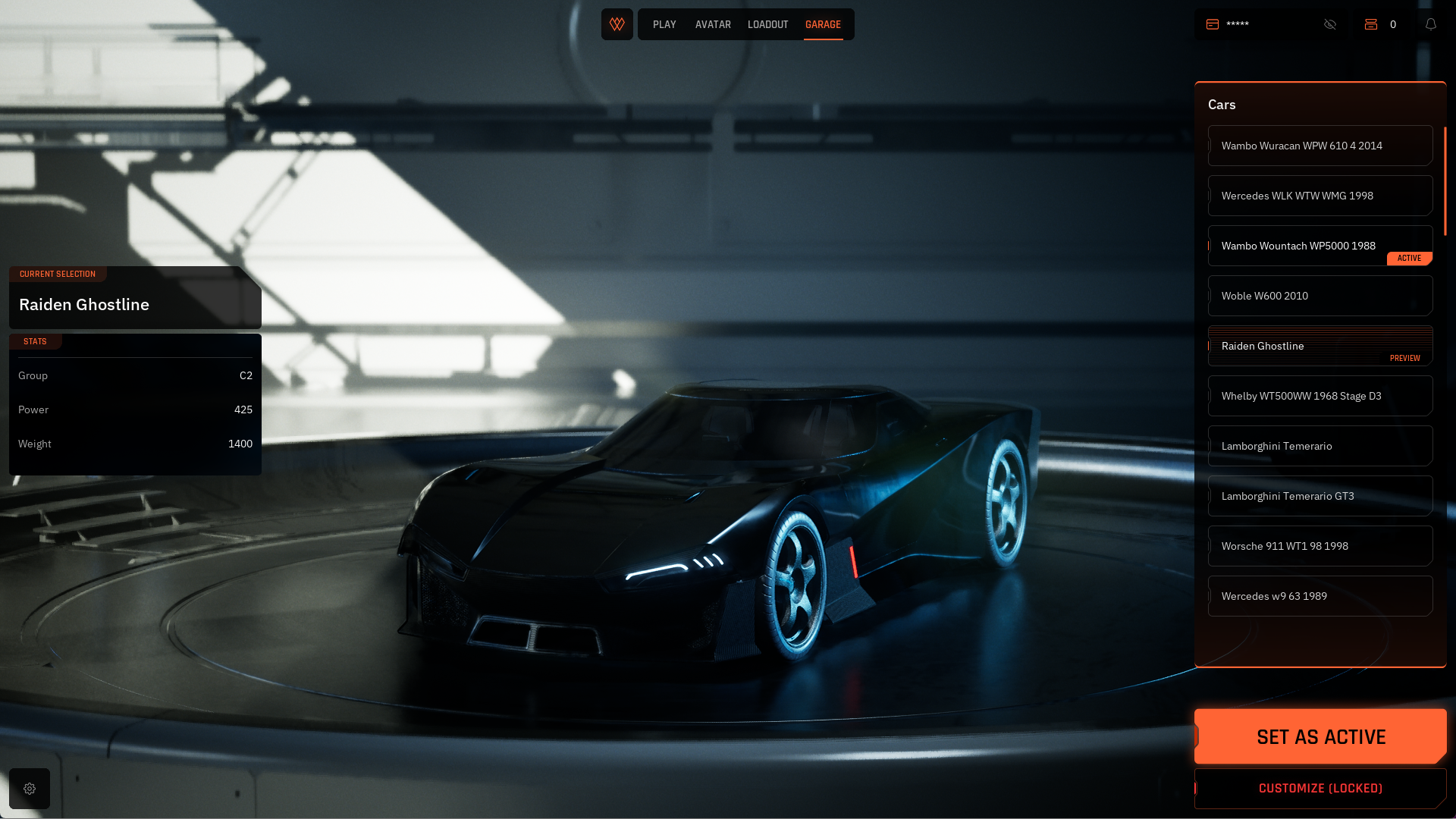
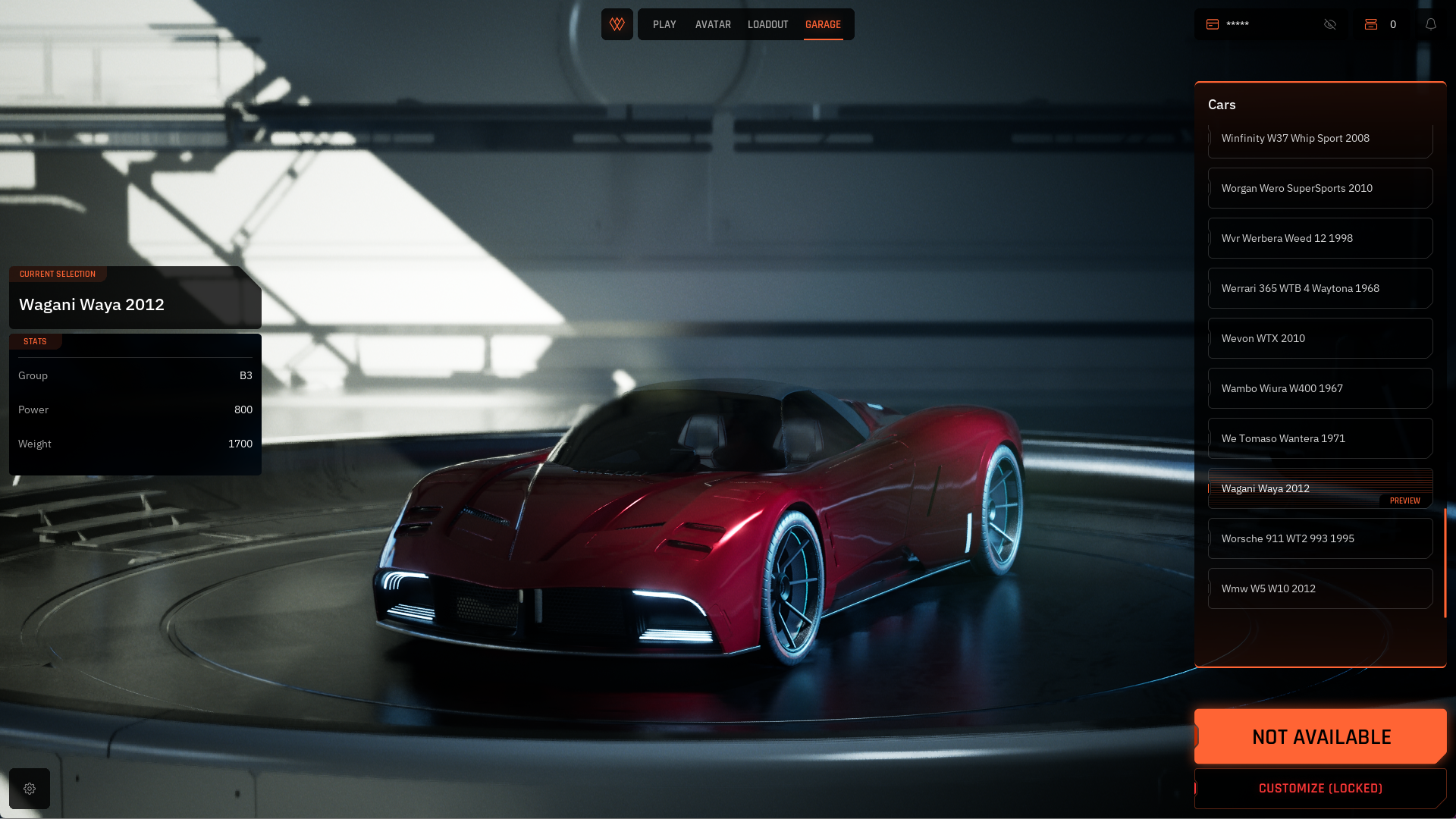
New Engine Physics
A new vehicle physics engine was introduced, rebuilding how cars behave across the open world. The system replaces the previous handling model and defines how vehicles respond to player input, road surfaces, and environmental conditions.
This update establishes the core driving foundation used across all vehicle classes and open-world scenarios.
Performance Group–Specific Physics
Each Performance Group now uses dedicated physics and handling profiles aligned with its class. These profiles define how vehicles manage grip, power delivery, and rotation under load.
- D-Class: Stable and responsive handling that rewards smooth inputs and momentum management.
- C-Class: Balanced grip and adjustability, supporting both stability and cornering flexibility.
- B-Class: High mechanical grip with progressive breakaway and clear traction feedback.
- A-Class: High-precision handling where steering input accuracy directly affects vehicle response.
- GTW-Class: Endurance-focused physics combining power, downforce, and racing aerodynamics.
- S-Class: Hypercar-level handling with extreme acceleration, grip, and input sensitivity.
Dynamic Traction Control
A multi-level Dynamic Traction Control system was introduced, affecting wheelspin, power delivery, and vehicle stability. Traction levels can be adjusted in real time while driving without entering menus.
Transmission System
Automatic and manual transmission modes are supported, with the ability to switch between them at any time while driving. Automatic mode uses class-tuned shift logic, while manual mode provides direct gear control with engine braking support.
Real-Time Vehicle Controls
Vehicle handling parameters such as traction control and transmission mode can be adjusted in real time through direct inputs, allowing immediate adaptation to changing driving conditions.
Open-World Driving Behavior
Vehicle handling is tuned for dense open-world city driving, maintaining predictable responses at both low and high speeds. Road surface variations influence grip and vehicle behavior across the city.
Drift Support
The physics engine supports controlled drifting driven by weight transfer, throttle input, and steering. Slide behavior follows predictable physical responses rather than scripted effects.
Technical Implementation
The physics engine uses high-frequency simulation with per-wheel tyre modelling, real-time suspension and drivetrain calculations, and dynamic road surface grip variation to ensure consistent handling.

Engine Tuning System
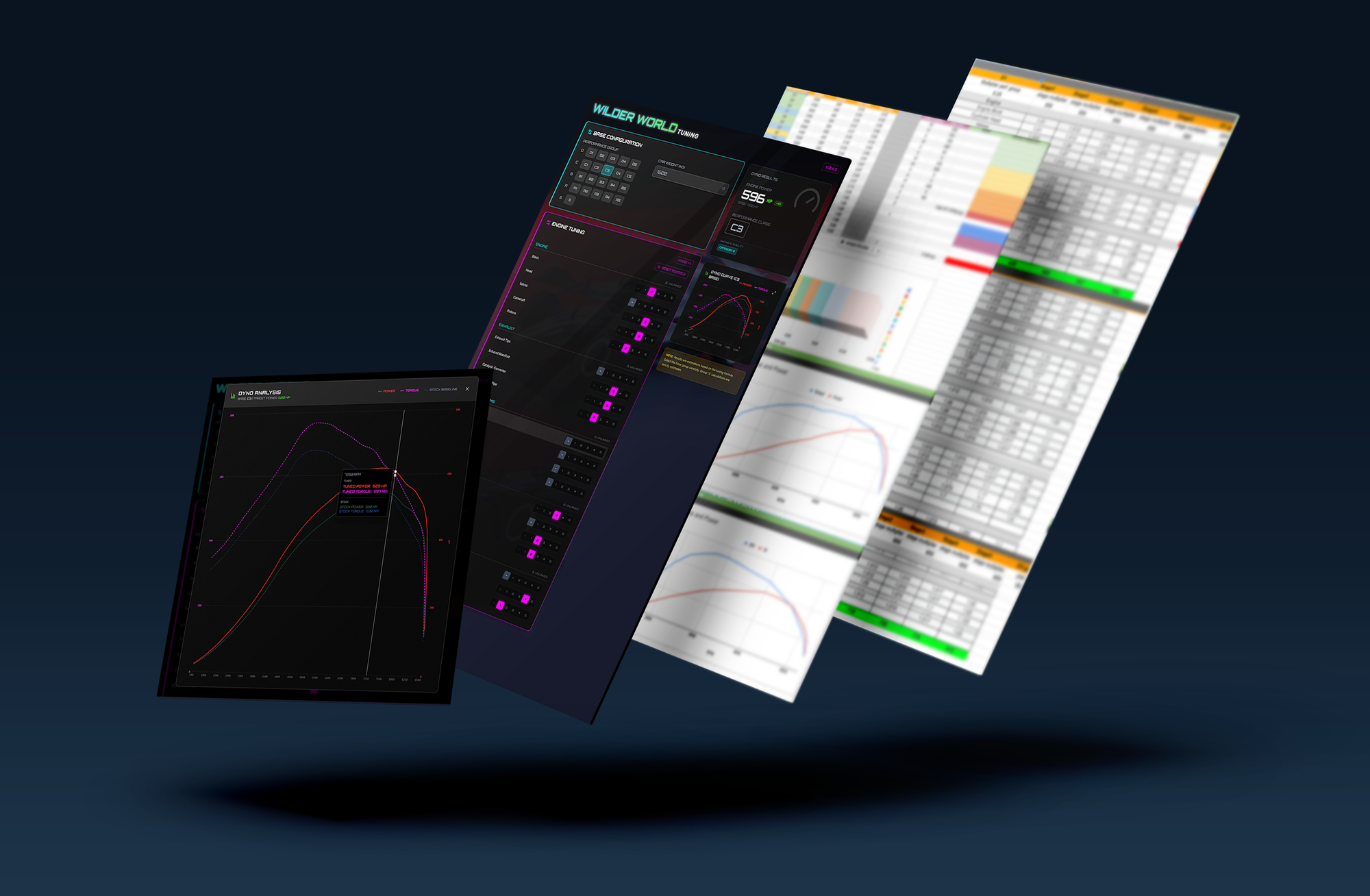
An engine tuning system was introduced to allow performance upgrades across vehicles. Each car belongs to a Performance Group based on its power-to-weight ratio, with tuning upgrades capable of increasing output and shifting a vehicle into higher performance brackets.
The system supports multiple upgrade categories and staged progression, enabling vehicles to be tuned incrementally rather than through fixed presets.
Performance Groups and Brackets
Vehicles are assigned to Performance Groups based on power-to-weight ratio, defining competitive brackets and eligibility for activities and events. Tuning upgrades can shift a vehicle within or beyond its bracket, making group placement a key constraint when increasing output.
Tuning Parts and Categories
The tuning system includes performance parts across core categories such as engine internals, exhaust, intake, fuel delivery, and electrical systems. Parts can be combined to modify engine output and overall vehicle performance.
Upgrade Stages
Each tuning part supports multiple upgrade stages, allowing performance increases to be applied incrementally. Higher stages contribute more significantly to power-to-weight changes, enabling precise tuning within a target bracket.
Strategic Tuning and Class Positioning
Upgrade choices affect whether a vehicle remains competitive within its current bracket or moves into a higher Performance Group. Tuning decisions therefore balance output gains against class eligibility.
Future Wheels Systems
Competitive Structure
Scheduled races, missions, and events are planned to use Performance Group requirements as eligibility constraints, segmenting competition by class and power-to-weight brackets.
Tuning Parts Marketplace
A marketplace system is planned to support the buying, selling, and trading of tuning parts independently of vehicles, allowing performance components to circulate based on demand.
Tuning Simulator
A tuning simulator is in development to allow performance configurations to be tested outside of active gameplay, showing how part combinations affect output and Performance Group placement.
Burning Questions
Q: When can we expect to receive MMED rewards?
A: We have the MMED rewards final list and transactions ready to go and are arranging to send them this month.
Q: When will Open World launch as a public release?
A: We’re aiming for Q2.
Q: When will Packs be made available for purchase outside of the game?
A: This recently launched at packs.wilderworld.com.
Q: Will bullets be included in Packs, or will we need to purchase bullets to play?
A: Bullets will be a consumable, not included in packs.
Q: What does the Pack reveal process look like, and when will it start?
A: Aiming for our next game update. There is a full opening and reveal experience in-game for every pack you open.
Q: When can we use Pack items in-game?
A: Aiming for by the end of Q1.
Q: How will multiplayer access work in the Open World, and when will Wilders be able to explore together?
A: Multiplayer will start with co-op and be released with the Open World public release. We will scale up players per server in subsequent releases.
Q: How will mission variety expand within the Open World over time?
A: We will have a procedural mission system where Breaches happen at key locations around Wiami. Always with a variety of loot to extract.
Q: What is the roadmap for combat tournament modes and custom lobbies?
A: We have a few ideas, but we’d love to hear the communities take on this. Please provide ideas/feedback in the Discord or at dev.wilderworld.com.
Q: When player-owned assets such as Wheels are integrated into gameplay, will bridging to Z Chain be required?
A: Your in-game wallet will read your Z wallet address and you'll be able to connect your ETH wallets through ZERO, so you won’t have to bridge mainnet assets. We are aiming to get all of the available Wheels ready for holders in-game by the end of Q1.
Q: What is the current status and timing for the Dubai finals of the Legend of the WILD tournament?
A: Given market conditions and logistical complexity we have decided we will host the finals online. Finals participants will receive the allocation for their travel budget (flights, room, meals costs), in addition to their finals earnings. We are currently organizing details for the finals online tournament and will share an update once ready.
Conclusion
Dev Log 17 marks a defining step in Wilder World’s evolution, as the project transitions fully into a live service environment. With the Open World Preview now live, core gameplay systems operating under real player conditions, and Super Early Access demonstrating sustained growth, Wilder World has moved beyond experimentation and into active operation.
This phase focused on validating foundational systems at scale, from traversal and combat to vehicles, NPCs, progression, and infrastructure. Feedback gathered during this period has directly informed refinements, fixes, and balance changes, shaping the next stage of development with real-world data rather than assumptions.
With a clearer understanding of how Wiami functions as a living city, development now continues toward expansion, stability, and broader access. Each iteration brings the Open World closer to scale, depth, and long-term sustainability.
With Blessings,
The Wilders